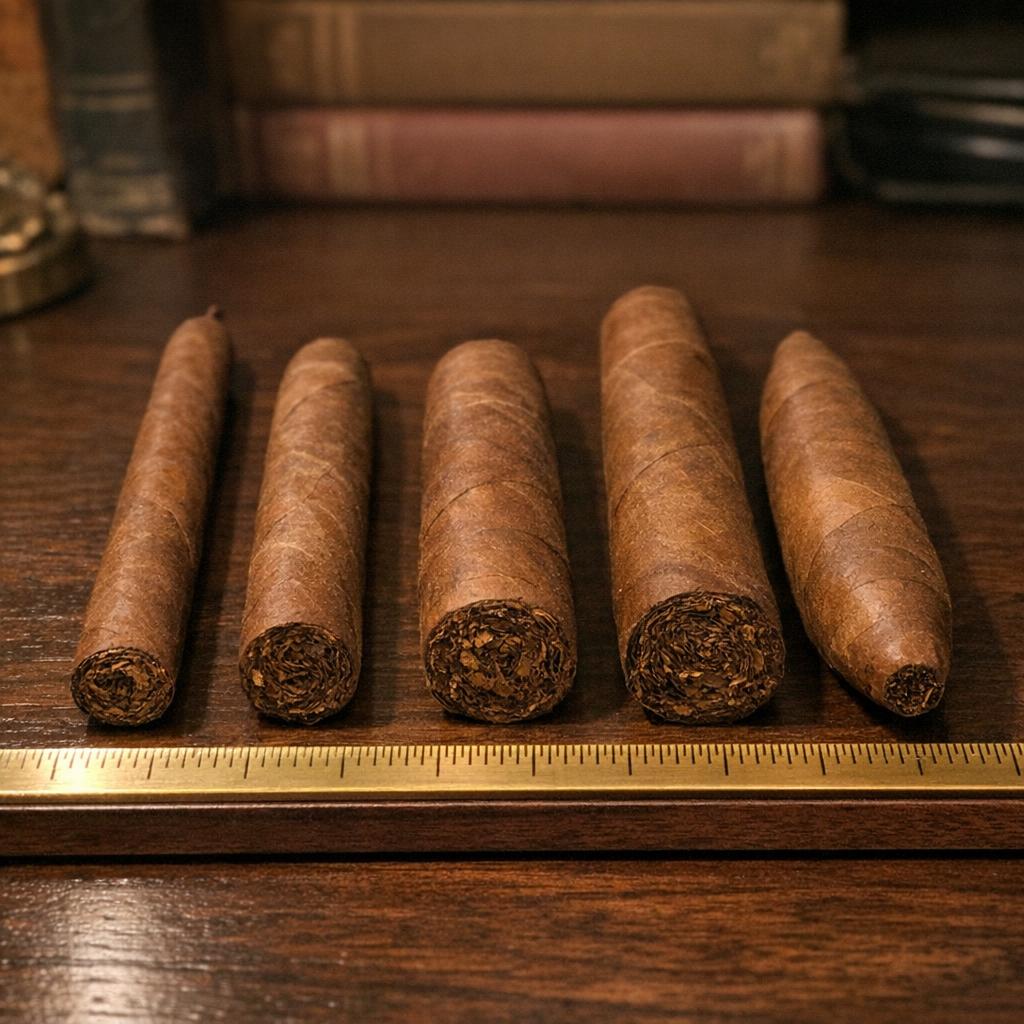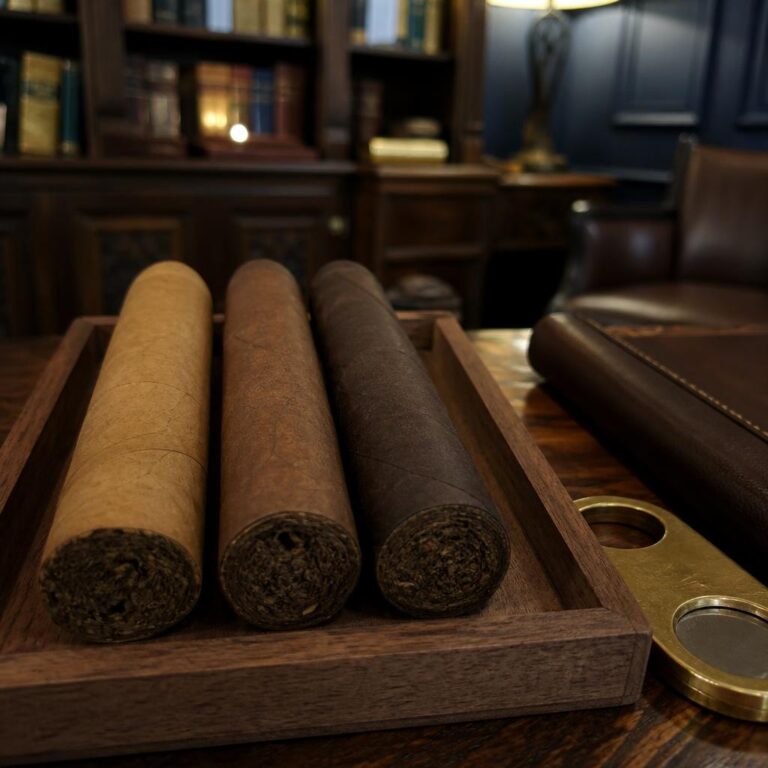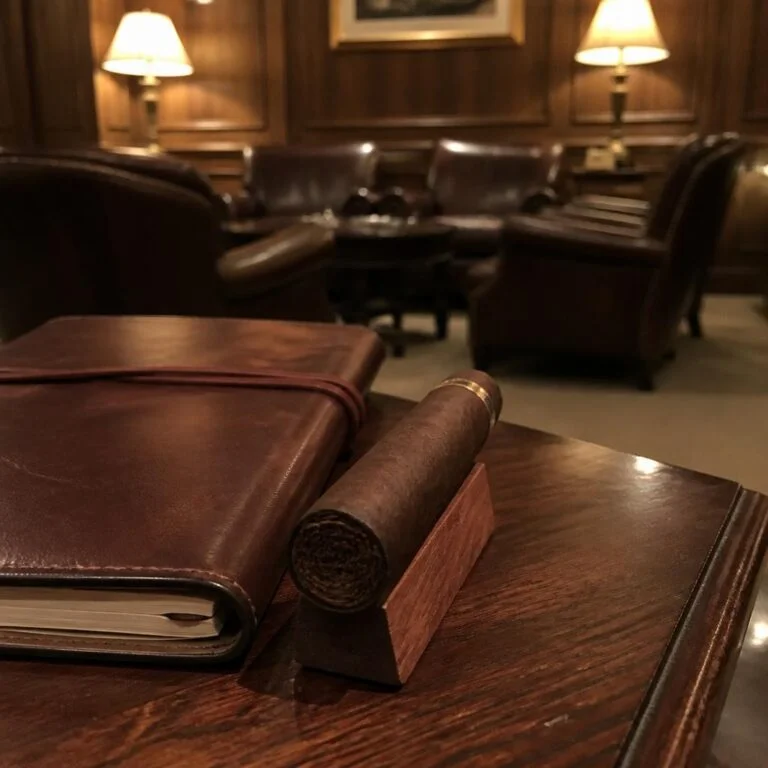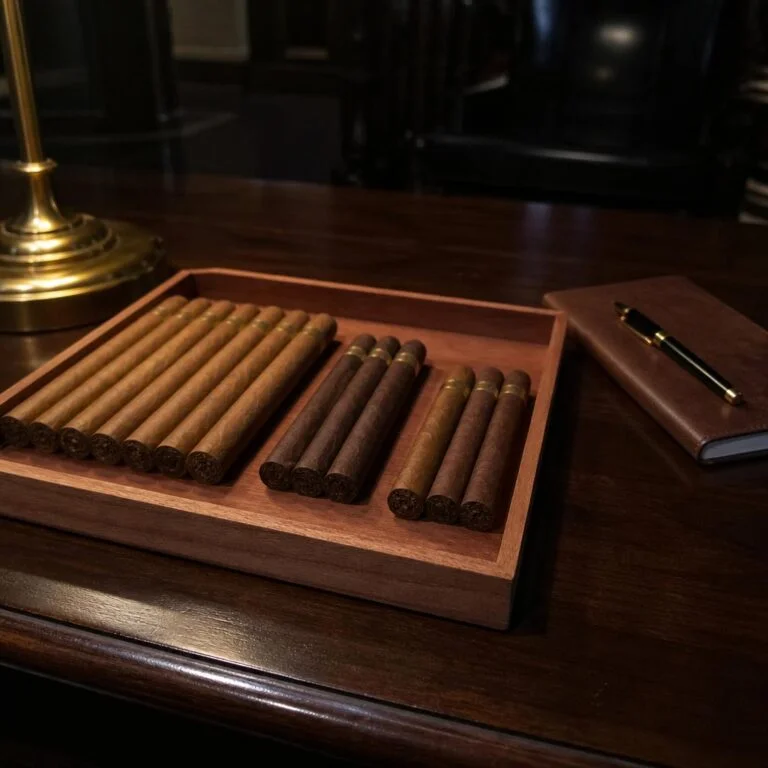
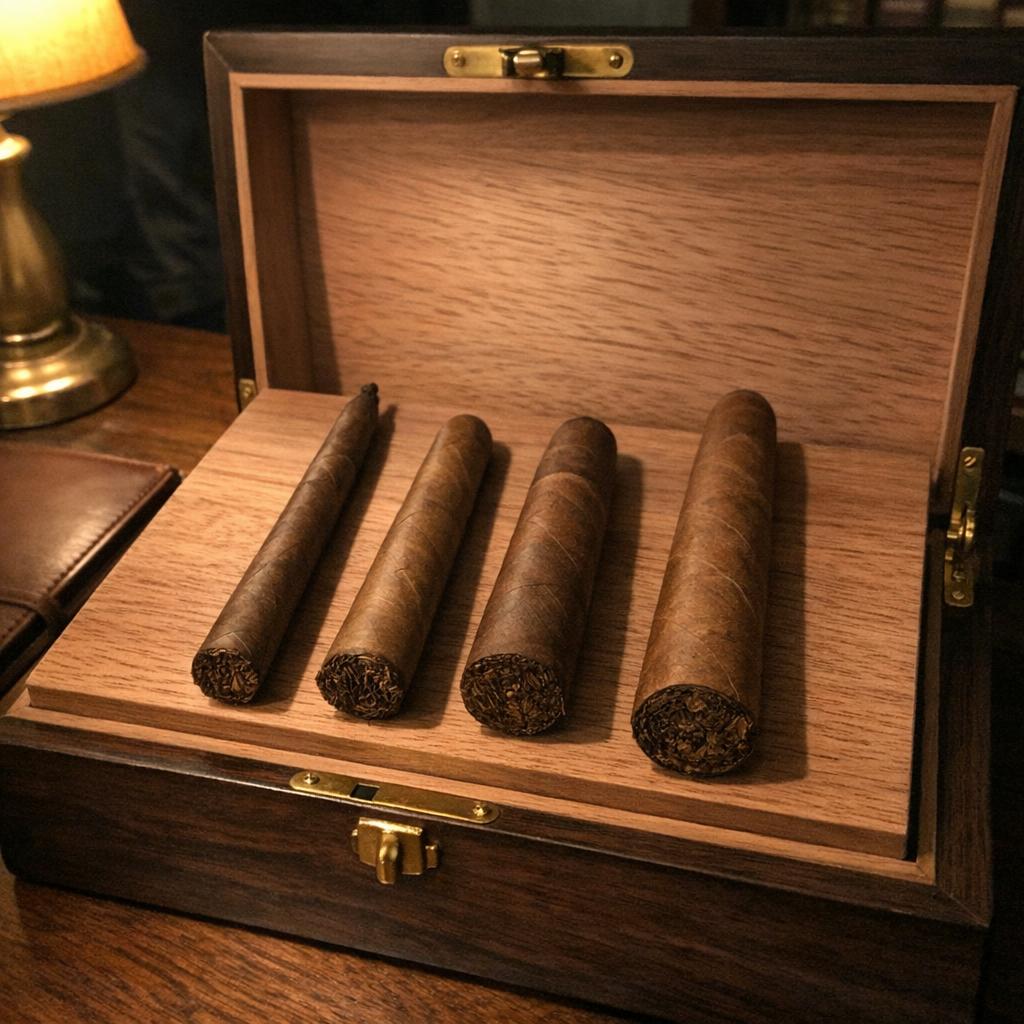
Vitola is the Spanish word the cigar industry uses to mean shape and size. Every cigar you have ever picked up has one. Most of the time it is printed on the band, often abbreviated, and most of the time the reader does not give it the second of attention it deserves. This article is a short dictionary of the vitolas worth knowing, and a longer argument for why the shape of a cigar quietly changes the cigar you smoke.
Two cigars with the same blend, rolled in the same factory by the same pair of hands on the same morning, will smoke differently if one is a Robusto and the other a Churchill. The blend has not changed. The proportion of wrapper to filler has. The way the smoke cools as it crosses the foot has. The rate at which the cigar burns has, and the length of the evening you have committed to has. Vitola is not decoration. It is the third variable, alongside blend and wrapper, that the maker uses to shape what the smoke does in your mouth.
What follows is the working set. Fourteen-odd vitolas that an enthusiast will meet often, a few more on the edges, and a small framework that lets you choose between them with a little more deliberation than the cabinet usually invites.
What is a Vitola
A vitola is what cigarmakers and the trade press call the specific shape and size of a cigar. Cigar Aficionado’s working definition, taken from its glossary, is “a cigar factory term for a cigar shape,” and most enthusiast vocabulary borrows from the Cuban factory tradition, where every blend is offered in multiple vitolas and each one carries a name. The name carries two pieces of information: a length in inches and a ring gauge, which is the diameter measured in sixty-fourths of an inch.
A 50 ring gauge cigar is fifty sixty-fourths of an inch across, just over three-quarters of an inch in diameter. A 42 ring gauge cigar is about two-thirds of an inch across. The numbers feel arbitrary on first reading and stop feeling arbitrary once you have held a dozen examples in your hand. Anatomy is worth a brief detour here. The construction of a cigar (wrapper, binder, long filler) does not change with vitola; the proportions in which those three parts meet your mouth do. A short primer on those parts lives in the anatomy of a cigar.
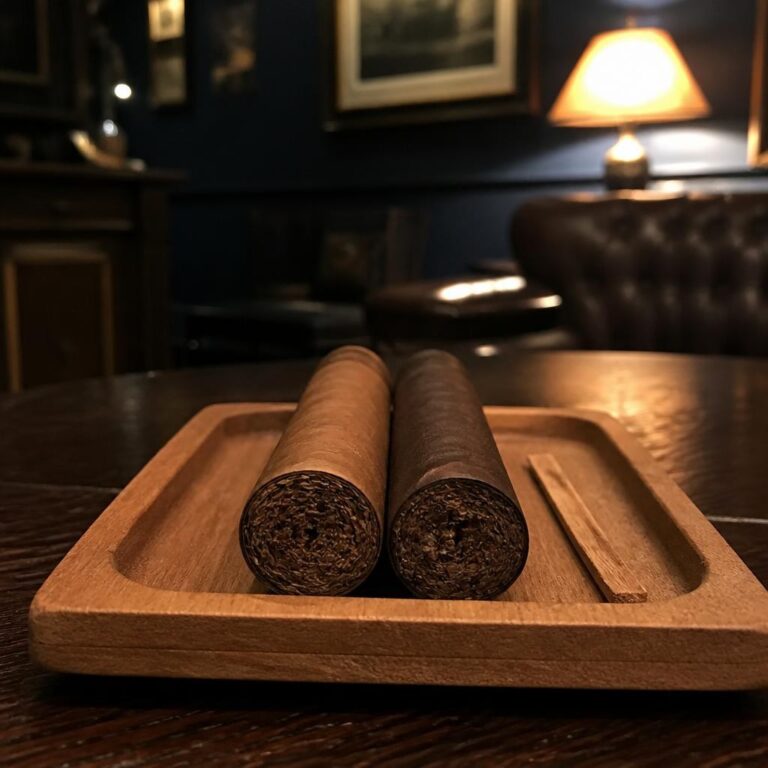
Within the same blend, two vitolas can produce surprisingly different experiences. A thinner cigar burns hotter because more wrapper is meeting the air per unit of filler, and the wrapper’s flavour pulls forward. A thicker cigar burns cooler and lets the filler do more of the talking, which is part of why the recent fashion for wider ring gauges is often described, in trade press, as a fashion for filler-forward smoking. Neither is better. They are different ways of presenting the same blend to your palate.
The Dictionary at a Glance
A reference table for the vitolas that show up most often in a serious humidor. Dimensions follow modern Cigar Aficionado conventions; individual brands occasionally vary by a quarter-inch or two ring gauges, and Cuban dimensions for the same name are sometimes slightly different from their non-Cuban counterparts.
| Vitola | Length (in.) | Ring gauge | Family |
|---|---|---|---|
| Petit Corona | 4.5 | 40-42 | Parejo |
| Robusto | 5 | 50 | Parejo |
| Corona | 5.5 | 42-44 | Parejo |
| Corona Gorda | 5.625 | 46 | Parejo |
| Toro | 6 | 50-54 | Parejo |
| Lonsdale | 6.5 | 42-44 | Parejo |
| Panetela | 6-7 | 34-38 | Parejo |
| Lancero | 7-7.5 | 38-40 | Parejo |
| Churchill | 7 | 47-50 | Parejo |
| Double Corona | 7.5-8 | 49-52 | Parejo |
| Gran Corona | 9.25 | 47 | Parejo |
| Pyramid | 6-7 | 40-54 (foot to head) | Figurado |
| Torpedo | 6-7 | 50-54 | Figurado |
| Belicoso | 5-5.5 | 50-52 | Figurado |
| Perfecto | varies | varies | Figurado |
| Diadema | 8.5+ | 40-55 | Figurado |
| Culebra | ~6 | ~38 (each strand) | Figurado |
Read the chart as a starting place, not a verdict. Brand catalogues bend the numbers.
Tool one
Ring gauge converter
Ring gauge is measured in sixty-fourths of an inch. Move the slider, or type a figure, and the width appears in millimetres and inches.
Tool two
Vitola comparator
Choose two vitolas and see them drawn to the same scale, length against length and width against width. Dimensions follow common trade convention and vary a little between makers.
Robusto
Lancero
Drawn to scale
Parejo vs Figurado
Every vitola belongs to one of two families. A parejo is the standard cigar shape, with straight parallel sides and a rounded head. The Spanish word means flush, even, or straight, which is exactly what these cigars are. Most of what fills a tobacconist’s wall is parejos. A box-pressed cigar is a parejo squared under pressure in the box. They are easier to roll consistently at scale, easier to predict in their burn, and accordingly cheaper to make.
A figurado is any cigar that is not a parejo. The category covers every shape that tapers, bulges, twists, or otherwise deviates from the straight cylinder. Figurados ask more of the roller, lose more leaf at the cutting bench, and are correspondingly more expensive. Some are deliberately theatrical, like the Diadema. Some, like the Torpedo, are now as commonplace as the Robusto. Figurados were the dominant shape in nineteenth-century Cuba; the parejo’s rise to dominance was largely a twentieth-century industrial efficiency story rather than a flavour story. We set out what a figurado is in its own guide.
There is a small but real flavour effect to the figurado’s tapered head. The smoke pulls through a narrower opening at the lip, which concentrates the draw. Critics describe the effect as a more focused presentation of the blend’s top notes, especially in the first third. Whether the effect is worth the higher price is one of the older debates of the cigar lounge.
The Parejos Worth Knowing
Beginning at the smaller end of the bench.
The Petit Corona, four and a half inches by about forty, is the cigar to reach for when you have forty minutes. It burns quickly enough to deliver the blend’s complete arc inside a coffee break and slowly enough to be civilised. The Cuban Montecristo No. 4 is the canonical Petit Corona in the Habanos catalogue.
The Corona, five and a half by forty-two, is the historical reference vitola. Until the late twentieth century, this was the size against which most blends were measured. The classical Corona produces a balance between wrapper and filler that wider cigars cannot quite replicate, which is why a great many critics still call the Corona the truest test of a blend.
The Corona Gorda, five and five-eighths by forty-six, is a Cuban favourite that has gained ground globally over the last quarter-century. It is the cigar most often described as the goldilocks size: enough wrapper to add structure, enough filler to give the blend room, an hour of smoking time.
The Robusto, five inches by fifty, is the modern American default. It is the cigar most likely to be reviewed first when a new blend launches, the cigar most carried in lounge selections, and the cigar most enthusiasts learn the Method on. A Robusto’s hour is forgiving; it asks nothing extraordinary of the calendar.
The Toro, six inches by fifty (sometimes fifty-four), has displaced the Corona in many critical tastings, because the longer body gives the wrapper more time to deliver its character. Plan ninety minutes. A Toro asks for attention but pays it back.
The Lonsdale, six and a half by forty-two, bridges the Corona and the Panetela. It is the elegant evening cigar of the old guard: longer than a Corona, slimmer than a Toro, and patient in return for a more subtle delivery. Cigar Aficionado’s glossary describes the Lonsdale as the bridge between Corona and Panetela; the wider trade tends to agree.
The Panetela family, six to seven inches by thirty-four to thirty-eight, covers the slim cigars, where the wrapper does most of the talking. The narrower the cigar, the more the wrapper matters.
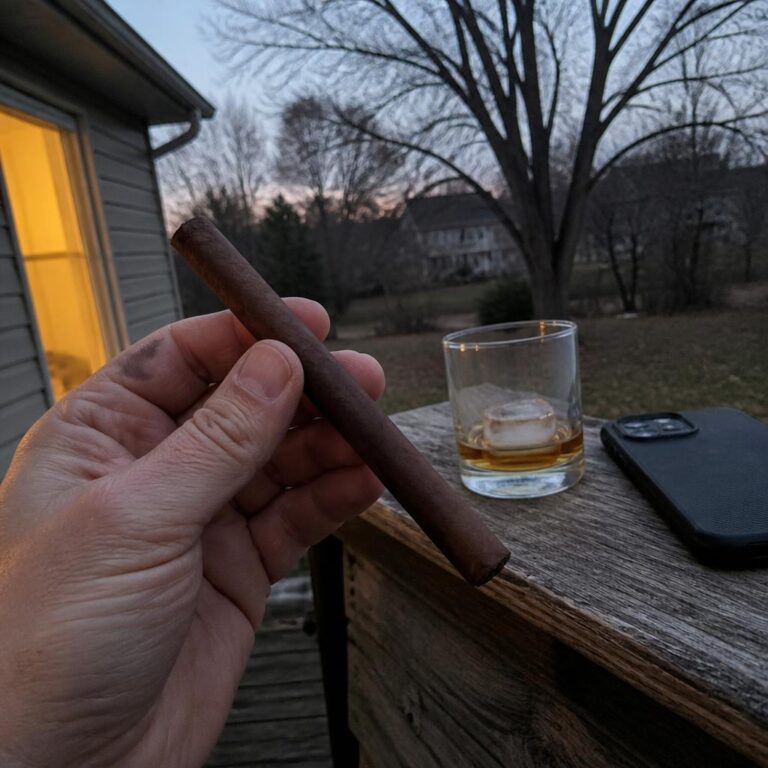
The Lancero, the tallest member of the Panetela family at seven to seven and a half inches by thirty-eight, often carries a small pigtail cap that is unwound rather than cut. Cigar Aficionado classifies the Lancero as a gran panetela; the Cuban standard is 7.5 by 38, and non-Cuban examples sometimes run slightly shorter or fatter. The wrapper-forward presentation makes the Lancero a connoisseur’s vitola. Many enthusiasts try one and find the cigar too austere; others find it the most precise smoking experience in the cabinet.
The Churchill, seven inches by forty-seven, takes its name from Sir Winston, the twentieth century’s most photographed cigar smoker. It is the long evening cigar: an hour and a half of smoking time minimum, often two, and the size that asks for the right pairing because there is no rushing through it.
The Double Corona, seven and a half to eight inches by forty-nine to fifty-two, is the long-form essay of the cigar world. Two hours plus, an obvious commitment, and a vitola that few houses make well. The Hoyo de Monterrey Double Corona is the historical reference.
The Gran Corona, nine and a quarter inches by forty-seven, exists at the edge of practicality. Few examples are produced. It is more a piece of theatre than a regular smoke, and is usually reserved for special editions.
For a closer look at the three sizes most people actually choose between, see Churchill, Toro and Robusto compared.
The Figurados, Fewer and Stranger
The figurados are fewer and considerably stranger.
The Pyramid is thickest at the foot and tapers uniformly toward the head, usually six to seven inches in length with a foot around fifty-two and a head around forty. The shape concentrates smoke at the lips. The Cuban Montecristo No. 2 is the reference Pyramid in the Habanos catalogue and the cigar most commonly cited when the shape is taught.
The Torpedo is similar in idea but different in execution. The body is straight-sided like a Robusto or a Toro, and only the head tapers, ending in a sharper point. The result is a cigar that smokes like a parejo through the first third and a figurado through the third where the head matters most. For the shape in full, including how to cut one, see what a torpedo cigar is.
The Belicoso is, in its Cuban form, a Pyramid-like cigar with a softer, shorter point, typically on a body around five to five and a half inches by fifty. In modern non-Cuban catalogues, Belicoso has come to mean any short tapered cigar; purists still hold the original distinction, which is that a Belicoso’s taper begins very close to the head, not at the foot.
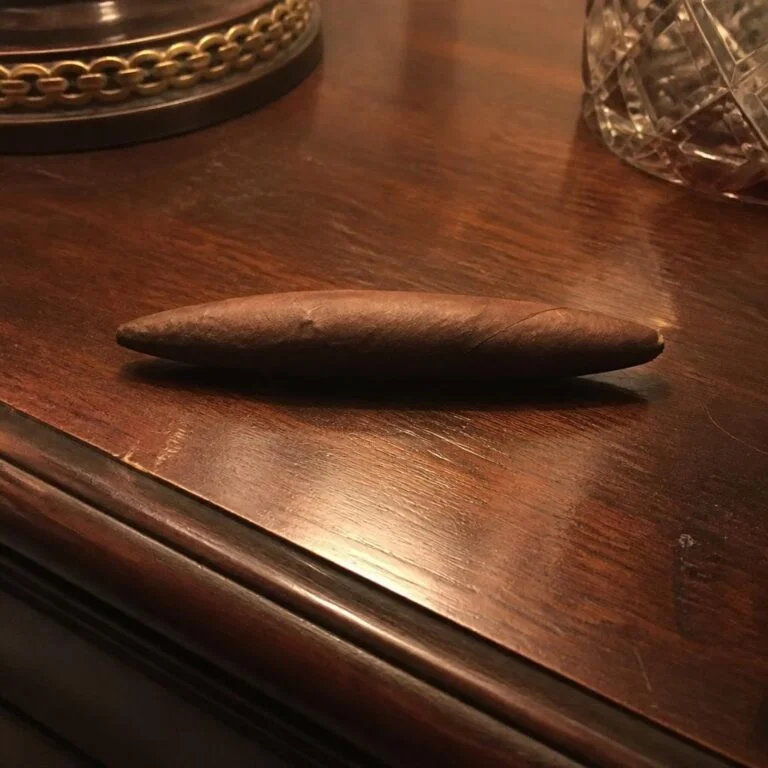
The Perfecto is the showpiece. Both ends taper, the foot to a closed point and the head to a rounded cap, and the body bulges in the middle. Arturo Fuente‘s Hemingway line, revived in the 1980s after Carlos Fuente Sr. found old perfecto-shape molds in a Florida warehouse, is the cigar that brought the Perfecto back into modern production. The Hemingway Short Story, four inches with a wide middle, is now among the most photographed cigars in the world.
The Diadema is a Perfecto with ambition. Eight and a half inches or longer, with a tapered foot and a closed head, the Diadema was a status cigar in nineteenth-century Cuba and has become a curiosity. Few makers still produce them. When they do, the run is small.
The Culebra is the strangest entry in any cigar dictionary. Three thin Panetelas, each around a thirty-eight ring gauge and slightly underfilled to keep them flexible, are braided together and tied at each end with a ribbon. To smoke one, you untie the bundle, take a single strand, and offer the other two to friends. The popular origin story holds that nineteenth-century Cuban factory workers were given a daily cigar allowance and that the braided shape was introduced so foremen could detect theft; historians regard the story as plausible folklore rather than verified history. La Aurora and Davidoff have both released Culebras in recent decades. They are not for daily smoking. They are for the evening when three friends are sitting around the same table and one of you has just done something worth marking.
Why Ring Gauges Got Bigger
Through most of the twentieth century, a ring gauge above fifty was a curiosity. The Cuban Cohiba Esplendido, the brand’s seven-inch flagship, is a forty-seven. The Hoyo de Monterrey Double Corona, the most celebrated long cigar of its era, is a forty-nine. Fashion for the wider end of the cabinet is a recent development.
The turn began with the J.C. Newman Diamond Crown in 1995, the first major brand to release every vitola at a fifty-four ring gauge. Cigar Aficionado’s “Timeline of Fat Ring Gauge Cigars” places the launch as the moment when girth stopped reading as gaudy. The early 2000s carried the trend forward. In February 2001, none of the ninety-six corona gordas reviewed in that month’s issue of Cigar Aficionado had a ring gauge above fifty-four. A year later, half did. By the 2010s the magazine had been forced to create a new tasting category, the Grandes, for cigars too wide to fit the Toro section. Sixty ring gauges are now common at the tobacconist.
There are several explanations. Smokers cite value: more tobacco per cigar means more smoke per dollar. Manufacturers cite construction: a wider cigar is more forgiving of draw issues, easier to roll, less likely to burn unevenly. Critics cite preference shift: a generation that came up smoking fifty-ring Robustos has stayed in the wider end of the cabinet as those Robustos crept toward fifty-two and fifty-four.
A counter-trend is under way at the boutique end. Several smaller brands have reissued thinner vitolas, the Lancero and the Lonsdale in particular, and the reviews have been kind. The enthusiast who has only smoked sixty-ring monsters has missed something specific. The enthusiast who refuses to smoke anything over fifty has missed something else. Both ends have their pleasures. For the full picture of what that number on the box means for the smoke itself, see our cigar ring gauge guide.
Choosing by Occasion
The practical question for any reader is which vitola to reach for, and on what evening. A short framework follows. It is not a rule, it is a starting place.
A Petit Corona or a Corona for the short break. Forty to fifty minutes, coffee, a single chapter of a book, an afternoon between work calls.
A Robusto for the default cigar. The hour-long smoke. The cigar that travels in your humidor case. The one to bring to a friend’s house when you do not know what they smoke. Most blends are reviewed first as Robustos for good reason. For twenty-five worth keeping on the shelf, see The Best 25 Robustos of 2026.
A Toro or a Torpedo for the long evening with intent. Ninety minutes to two hours. A spirit chosen to pair. A book or a conversation that deserves not being rushed. If you keep both Dominican and Nicaraguan cigars in the humidor, the Toro is the vitola in which the two countries’ differences read most clearly.
A Churchill or a Double Corona for the occasion. The birthday, the celebration, the cigar that goes with a dinner that ran long. Plan for the second half to be the better one; the longer the cigar, the more the blend evolves.
A Lancero or a Panetela for the curious. The wrapper-forward presentation rewards a careful reader. Pair with coffee or with nothing at all.
A Perfecto or a Pyramid for the cigar that wants to be looked at. Photograph it. Give it a slower draw. Let the tapered head do its work.
A Culebra for the evening that is already strange. Friends, an open bottle, a small story that needs marking.
The discipline of writing down which vitola you smoked, alongside which blend produced which note in which third, turns these tendencies into a working knowledge over time. The Cigarro Method is built to make that record easy to keep, and a longer cigar in particular benefits from notes split by thirds rather than a single end-of-evening verdict. A guide on how to rest a cigar properly is a useful companion read; the longer vitolas reward the same patience before the cut.
Frequently Asked Questions
What does the word vitola mean?
Vitola is the cigar industry’s word for the specific shape and size of a cigar. Each vitola has a length in inches and a ring gauge, which is the diameter measured in sixty-fourths of an inch. Corona, Robusto, Toro, Churchill, and Lancero are all examples of vitola names.
What is the difference between a parejo and a figurado?
A parejo is a cigar with straight parallel sides and a rounded head, the standard shape. A figurado is any cigar that is not a parejo, including the Pyramid, Torpedo, Belicoso, Perfecto, Diadema, and Culebra. Figurados require more skilled rolling and are typically more expensive than comparable parejos.
What is a ring gauge?
Ring gauge is the diameter of a cigar measured in sixty-fourths of an inch. A 50 ring gauge cigar is fifty sixty-fourths of an inch across, just over three-quarters of an inch in diameter. The ring gauge is the second number in a cigar’s vitola specification, after length in inches.
What is the most popular cigar size today?
The Robusto, five inches by fifty ring gauge, is the modern American default and the cigar most commonly reviewed first when a new blend launches. The Toro, six inches by fifty to fifty-four, has overtaken the Corona in critical tastings because the longer body gives the wrapper more time to develop.
Are bigger cigars stronger?
Not necessarily. Strength comes primarily from the blend, especially the long filler. A larger vitola does generally smoke cooler and pull the filler’s character forward, which can make a powerful blend feel more intense in a longer or wider format. A milder blend in a Toro will still smoke milder than a fuller blend in a Robusto.
What is the difference between a Torpedo and a Pyramid?
A Pyramid is thickest at the foot and tapers uniformly along its full length to a pointed head. A Torpedo has a straight-sided body, like a parejo, and only the head tapers to a sharp point. Both are figurados and both concentrate smoke at the lips, but they are different shapes.
What is a Lancero?
A Lancero is a long, thin cigar, traditionally seven to seven and a half inches by a thirty-eight ring gauge, often finished with a pigtail cap. It belongs to the Panetela family, and Cigar Aficionado classifies it as a gran panetela.
What is a Culebra?
A Culebra is three thin Panetelas braided together and tied at each end with a ribbon, traditionally smoked by untying the bundle and sharing the strands with two friends. The shape is a nineteenth-century Cuban tradition; the most-told origin story is that braiding helped factory foremen detect theft, though historians treat the explanation as folklore.
Why have ring gauges grown over the past thirty years?
The shift began with J.C. Newman’s Diamond Crown in 1995, the first major brand to release every vitola at a fifty-four ring gauge. Smokers cite value (more tobacco per cigar), manufacturers cite easier construction, and critics cite generational preference for filler-forward smoking. Sixty ring gauges are now common at the tobacconist.
Which vitola should a beginner smoke first?
A Robusto, five by fifty, is the easiest starting place. It is the modern reference size, the cigar most reviews are anchored to, and an hour of smoking time. Most blends are launched as a Robusto first.
A Library of Shapes
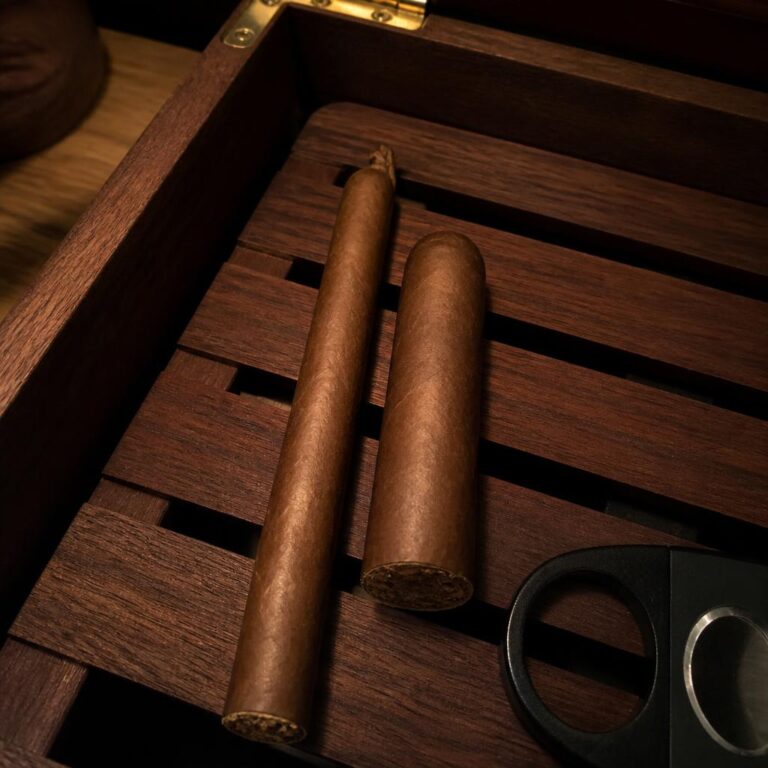
Two cigars on the desk this evening. A Robusto on the left, a Lancero on the right, both from the same maker, both meant for roughly the same hour. They will not smoke the same. The Robusto will be fuller in the middle and softer through the foot. The Lancero will be tighter in the draw and more aromatic in the wrapper. Both will tell me something about the blend that the other would have hidden.
A vitola dictionary is a working document, not a wall chart. The shapes change what you taste, and the more shapes you have smoked, the more accurately your record of any one cigar reflects what was actually in your mouth. Keep notes. Compare across vitolas. The library you build will eventually argue with itself, which is the point. The job of Cigarro is to make that library easy to keep, and to give you something to look back on when you wonder, two years from now, what a Lonsdale ever did differently from a Corona.