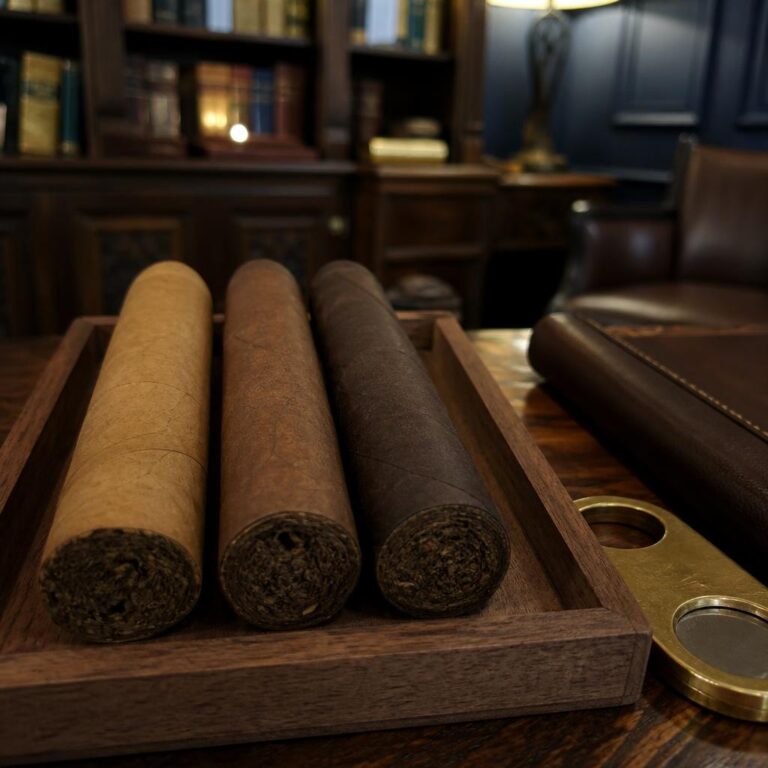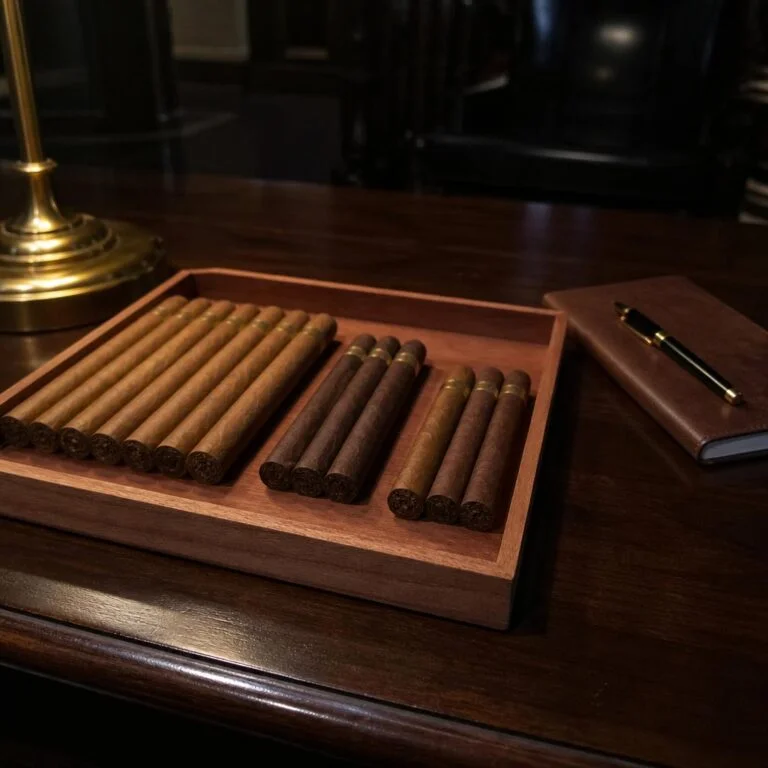
Most cigars are smoked too soon. Not by minutes, by months. The cigar arrives Friday afternoon, often by post, sometimes from a shop counter, and is in someone’s hand by Friday evening. The wrapper is a touch dry from transit, the binder still smells faintly of ammonia, the filler has not yet settled into agreement with itself. None of this is fatal. It is, however, a poor introduction.
What follows is the case for waiting. Not for years, though that is its own pleasure. For a few weeks, sometimes a few months, on a shelf you trust at conditions you control. The argument is mostly chemical, partly atmospheric, and entirely unromantic until you taste the difference. After that, it becomes very difficult to go back.
This guide is built around that case. It explains what happens to a cigar when it rests, why time at controlled humidity is doing more work than the box implies, when to rest briefly and when to rest long, and how to keep an honest record of what you have aged and for how long. Where it speaks in absolutes, those absolutes come from the trade press and the manufacturers themselves. Where it expresses a preference, that preference is mine. A cigar rested properly does not announce itself, it simply stops arguing with you.
What Rest Means
Rest is not aging. The two are confused often, and sometimes deliberately, so it is worth separating them at the start. While we are about it, there is a third word that gets folded in with the first two: acclimatisation. They are different things at different scales, and treating them as one is how good cigars get smoked badly.
Acclimatisation is the few days during which a cigar adjusts to a new environment, the moisture and temperature beginning to even out across its body. Rest is the few weeks to a few months that follow, during which the components settle into agreement with each other and any residual youth fades. Aging is the year and beyond, where the leaf begins to change character rather than just condition, and it has a guide of its own.
Acclimatisation fixes location. Rest fixes condition. Aging changes character.
A cigar that has just arrived in your humidor has been through a great deal. Someone else’s storage, someone else’s humidity, a courier van, a sorting depot, perhaps a flight, then your front step on a day that may have been thirty degrees colder than the one inside the truck. The wrapper has been flexing. The filler has been losing or gaining moisture in fits. The binder, being the engineering component of the whole assembly, has been doing its best to hold things together while the conditions around it changed by the hour.
A cigar bought from a serious local shop with its own walk-in may want only the first of the three, a few days while it forgets the journey home. A cigar shipped to you wants the second, weeks rather than days. Only certain cigars reward the third.
The clearest way to think about it: acclimatisation is recovery from a few hours’ upset. Rest is recovery from real travel. Aging is what happens once recovery is complete and the cigar starts to change in your favour.
The First Thirty Days
Thirty days is the floor in my house, not a law of nature. A shipped cigar gets thirty days of controlled humidity, undisturbed, before I judge it. Some retailers suggest as little as a few days for a cigar that arrived in mild weather. I prefer the longer cushion. Cigars are patient with us; the least we can do is return the favour.
The reasoning is mechanical before it is romantic. A wrapper that has been at fifty-five percent relative humidity in a depot and is suddenly moved to sixty-five will not absorb that moisture instantly or evenly. The outer leaf rehydrates first, the binder next, the filler last. If you smoke too soon, the difference often shows up in the burn: the wrapper races ahead of the bunch underneath, the ash comes off in flakes, the draw feels tight at the head and slack at the foot. None of this is the cigar’s fault. The cigar has not yet finished arriving.
Thirty days is enough that the moisture gradient across the three components has had time to even out. The wrapper, binder, and filler arrive at something close to the same place, the oils in the wrapper redistribute, and the cigar feels the same in your fingers from foot to head. That uniformity is what an even burn pattern depends on.
If a cigar has come a long way, in cold weather, by air, I extend that to forty-five days. The principle there is one I have seen repeated across cigar advisor pages and forum consensus: rest at least twice the time the cigar spent in transit. A cigar that took ten days to reach me, including a customs hold, gets twenty days minimum on top of acclimatisation. There is no harm in being patient with someone else’s tobacco.
The Smell of Ammonia
A fresh cigar smells of more than tobacco. Underneath the cocoa and barnyard and bread is a faint, sharp note that makes the inside of the nostril clench slightly. That is ammonia, and it is a by-product of fermentation.
Tobacco leaves are fermented in pilones, large stacks in the curing barn that heat up under their own weight. Fermentation breaks down sugars, pulls out bitter compounds, and, as a side effect, produces ammonia. Manufacturers ferment carefully and at length precisely to bleed off as much ammonia as possible before the leaves are rolled. Some always remains. After rolling, the cigar continues to off-gas slowly for months.
Industry writers describe a sick period in the first months of a cigar’s life during which ammonia is still off-gassing and the flavours read as muted or closed. The shape of that curve depends on the cigar. By most accounts, the sharp ammoniac smell fades substantially within the first few months, is mostly gone by the end of the first year, and is essentially gone by the second. Smoke a cigar deep in its sick period and you may, depending on your sensitivity, feel slightly off afterwards. There is nothing wrong with the leaf. There is too much ammonia in the air around your palate.
This is the argument for rest extending into months rather than weeks for a cigar that has come to you fresh from the factory. A bundle that arrived at your retailer two weeks after rolling and reached you within the same month has not had a chance to do what cigars do quietly on their own: lose ammonia, soften acidity, marry the components together. A few months on your shelf at sensible humidity will move the cigar out of that closed phase and into something you will recognise as the blend’s actual character.
You cannot tell from a label whether a cigar is in or out of its sick period. You can tell from the nose. Hold an unlit cigar an inch from your face, breathe in slowly, and pay attention to what happens at the back of your throat. A clean, sweet barnyard nose with no clenching is a cigar ready to smoke. A sharp note that makes you instinctively pull back is a cigar that wants more time.
- First few months: ammonia is heaviest. The bulk of off-gassing happens here. The cigar reads sharp or closed.
- By end of year 1: the sharp ammoniac smell is mostly gone. Many cigars now show their proper character.
- Year 2 onward: ammonia is essentially gone. Whatever changes from here is the leaf, not the leftover chemistry.
Six Months and the Marriage
If thirty days is recovery and a few months is patience, six months is when something more interesting begins.
The trade convention is that a cigar’s components want a period to marry after rolling, during which the wrapper, binder, and various filler tobaccos exchange oils and aromas and cohere into one flavour rather than three or four. Some manufacturers age finished cigars for weeks or months before release, others move them faster; the practice varies, and the figure of ninety days that gets quoted is convention rather than rule. By the time a cigar reaches a careful retailer, it has often had at least some of that. By the time it has been on your shelf for another six months, the marriage is well along, even if it is not strictly finished.
What changes between the thirty-day mark and the six-month mark is subtle but real. Edges soften. The cocoa note that was sitting on top of a vegetal one in the first third begins to integrate. Pepper, which sometimes arrives with a pinprick quality on a fresh cigar, rounds into a steadier warmth. The wrapper, particularly on a maduro, sweetens. The retrohale opens. None of this is dramatic. All of it is consistent.
I tend to think of six months as a useful checkpoint, not a finish line. A serious blend that was good on arrival often stops being merely good and starts being interesting around then. Padrón 1964, Arturo Fuente Hemingway, Davidoff Aniversario, Oliva Serie V, the second-tier limited editions from RoMa Craft and Crowned Heads, all of these reward six months on a shelf far more than they reward smoking on the day of arrival. Six months is also when I start considering whether to lay down a few examples for longer.
A working rule for the patient cellar: keep enough of each blend you love that you can spare two or three for a six-month rest while you smoke down a fresher box. The fresh box teaches you the cigar. The rested box teaches you the cigar.
One Year and Beyond
The one-year mark is the earliest point at which most premium cigars can be said to have aged, in the proper sense, rather than rested.
Above a year, the changes become slower and the question becomes whether the blend will reward your patience. Not every cigar is built for long aging. In broad strokes, the cigars that age well are those with enough strength and structure in the leaf to soften gracefully over years. Padrón 1926, the 1964 Anniversary Series, the Cohiba Behikes, Davidoff Millennium and Aniversario, Fuente OpusX, certain regional Habanos releases. These are cigars whose makers expect them to reward five and ten years on a shelf, and they do.
Cigar Journal and other industry references describe broad aging stages: a green or sick stage in the first one to three years, an aged stage from three to five years where flavours continue to develop pleasantly, and a mature stage from six years onward where tannic compounds decompose further and flavours reach what many consider their peak. Past fifteen or twenty years, opinion divides. Some palates find the cigar has hollowed out. Others find a beauty in the hollowing.
What does not age well is mild, mass-market, short-filler tobacco. A budget Honduran sandwich cigar will not, after five years on your shelf, become a Padrón 1964. It will become exactly the same cigar with slightly fewer rough edges. Aging cigars is an investment in tobacco that already has somewhere to go.
If you are starting to age cigars deliberately, which is to say beyond a year, my one rule is to keep a record. You will not remember when the box came in, what the date of manufacture was, what humidity you held, or which examples you have already pulled. Without a record, two years from now you will be guessing. Guessing is the enemy of a well-aged cigar.
- 1 to 3 years: the green or sick stage. Ammonia still present in trace amounts, flavours not yet at peak integration.
- 3 to 5 years: the aged stage. Edges soften, components marry, the blender's intention emerges in full.
- 6 to 15 years: the mature stage. Tannic compounds decompose further, flavours reach what many palates consider peak.
- 15 to 20 years and beyond: opinion divides. Some find the cigar has hollowed out. Others find a beauty in the hollowing.
Humidity and Temperature
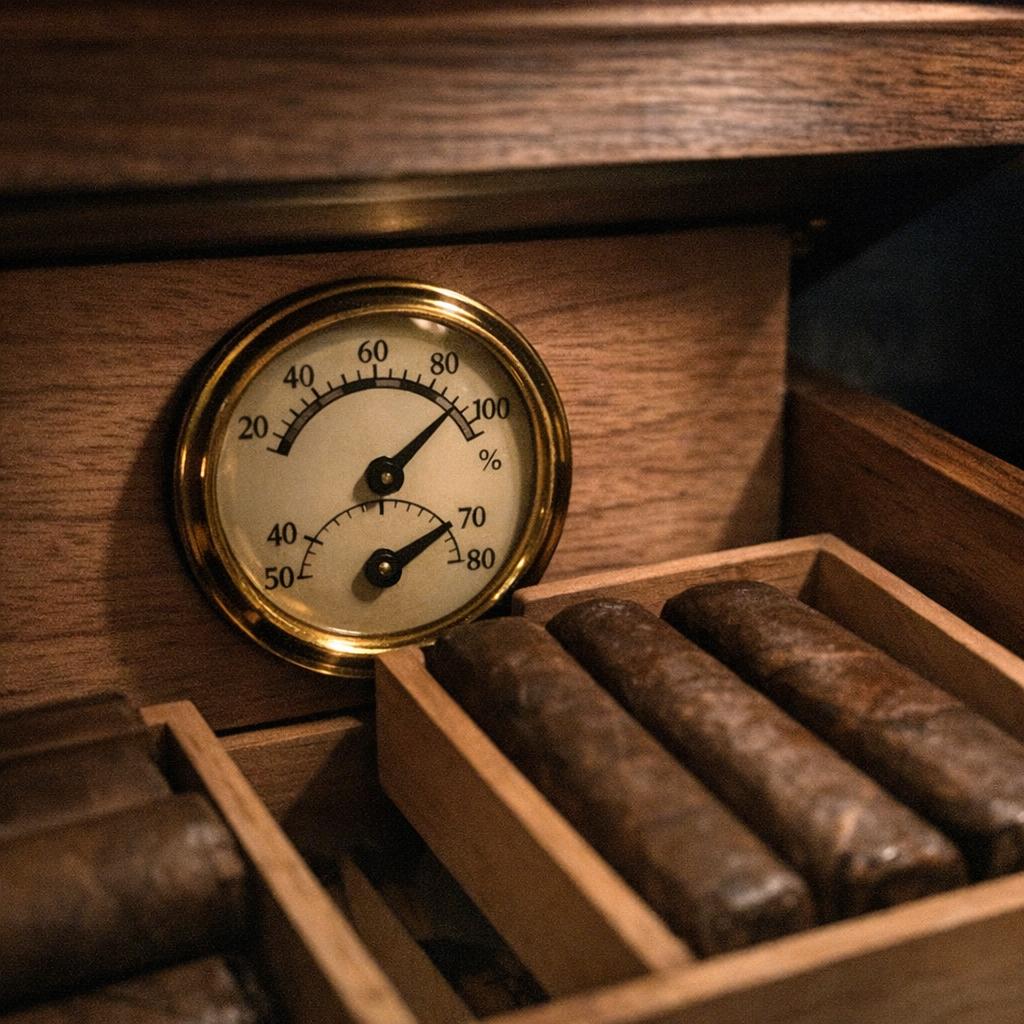
The numbers matter, and they are not what most beginners are told.
The traditional rule is seventy-seventy: seventy percent relative humidity at seventy degrees Fahrenheit. It is a serviceable rule that has been in print since well before any of us started smoking. It is also, by the lights of most modern enthusiasts I respect, a touch high on both axes.
The case for lower humidity is straightforward. At seventy percent RH, a cigar’s wrapper holds enough moisture that the burn slows and sometimes wanders. At sixty-five percent, the burn is brisker and more even, the ash holds longer, and many smokers report flavours coming through more cleanly. The Cuban official guideline for aging finished cigars is sixty-five to seventy percent RH at sixteen to eighteen degrees Celsius, which is firmly on the cooler, drier side of the older rule. My own humidor sits at sixty-five percent at sixty-five degrees Fahrenheit, which is roughly eighteen degrees Celsius, and it has produced a more consistent draw than anything I held at seventy-seventy.
Temperature matters for two reasons. The first is the burn itself: a cigar that has been kept at warmer temperatures smokes hotter and more aggressively at the foot. The second is the cigarette beetle, Lasioderma serricorne, whose eggs can lie dormant in tobacco for months and hatch when conditions become favourable. Beetle risk rises with warmth and humidity. Tobacconist University describes beetles becoming active above roughly seventy-three degrees Fahrenheit, particularly at higher humidity. Eggs do not hatch at fifteen degrees Celsius (about fifty-nine Fahrenheit) at the lower end. The practical advice is the same regardless of where exactly you draw the line: keep your humidor cool, stable, and out of direct heat. Below seventy is a sensible target. Above the low seventies, especially with higher humidity, you are making the beetle’s job easier.
Two practical consequences. First, a humidor on top of a fridge or near a radiator is a humidor in trouble. Pick a corner of the room that is consistently cool. Second, if your humidification system ships at seventy-two percent, consider what it is for. Boveda makes their packs at sixty-two, sixty-five, sixty-nine, and seventy-two percent. Sixty-five gives me the cleanest burn and the longest ash, and works for long-term storage of cigars I plan to age. Sixty-nine is the safer middle ground for many smokers and is what the brand itself positions as broadly preferred for premium cigars. Seventy-two has its uses in drafty humidors or genuinely dry rooms, but I would not aim for it inside a tight-sealing cabinet.
A note on stability over absolutes: the worst thing for a cigar is not slightly too wet or slightly too dry, it is bouncing between the two. A humidor that sits at sixty-eight percent year round will produce better cigars than one that swings from sixty-two in winter to seventy-four in summer. In cold dry climates, winter is the real test. A humidor that behaves in July can become a problem in January. Forced-air heating, exterior walls, and sudden temperature changes can pull a humidor around more than beginners expect. Stability matters more than chasing a perfect number.
- 70 / 70 (the old rule): 70 percent RH at 70°F. Traditional, in print for decades. Burn slows, ash flakes, wrapper holds too much moisture.
- 65 / 65 (my preference): 65 percent RH at 65°F. Brisker burn, ash holds longer, flavours come through cleanly.
- Cuban official guideline: 65 to 70 percent RH at 16 to 18°C (61 to 64°F). Cooler and slightly drier than the old American rule.
- Boveda packs (working humidor): 62 (very dry, niche) · 65 (drier profile, long-term aging) · 69 (broadly preferred all-purpose) · 72 (drafty humidors / dry rooms).
- Beetle threshold (TU guidance): tobacco beetles become active above ~73°F, especially at high humidity. Eggs do not hatch at 15°C / 59°F. Below 70 is a sensible target.
- Stability beats absolutes: a humidor at 68 percent year round beats one swinging from 62 in winter to 74 in summer. Pick your number, then defend it.
Resting Short or Long
Not every cigar wants the same amount of rest, and my own habit of a thirty-day minimum is a floor, not a target.
The first variable is the cigar’s age when it reaches you. A cigar that is two months out of the factory has had no time to lose ammonia and will benefit from months on your shelf, not weeks. A cigar that has been resting at a serious shop for a year is almost certainly ready to smoke after two weeks of acclimatisation in your humidor. The shop has done the patient work for you.
The second variable is the construction. A thick-ringed double corona with a heavy maduro wrapper holds more leaf in every dimension and takes longer to settle. Let it have two months. A petit corona or a small panatela has less mass and less wrapper to integrate, and is often ready after a month. The Padrón 1964 Principe in maduro, four and a half by forty-six in a box-pressed format, sits comfortably in the middle: thirty days minimum on arrival, sixty days if you can spare them, six months if you have a second box to smoke down.
The third variable is the wrapper. Maduro wrappers, fermented harder and longer, often carry more residual ammonia and reward longer rest more than natural wrappers. Connecticut shade wrappers, lighter and milder, are more vulnerable to drying out and benefit from a faster rest at slightly higher humidity. Sun-grown wrappers fall in between.
The fourth variable is whether the cigar is meant to age at all. A daily-driver Connecticut bundle is built to be smoked young; do not lay it down for two years and expect it to become something it is not. A limited release with deliberate aging on the components, a Padrón Family Reserve, an OpusX, an Aniversario, will tell you over five and ten years what the blender was thinking.
A compact rule for the working humidor: thirty days for everything, sixty days for thick-ringed maduros, six months when you can manage the discipline, and a separate sealed cabinet for anything you intend to age beyond a year. Mark the boxes. Trust the calendar.
- 1. The cigar's age when it reaches you. Two months out of the factory wants months on your shelf. A year on a serious shop's walk-in is almost ready after two weeks of acclimatisation.
- 2. The construction. A thick-ringed double corona in maduro wants two months. A petit corona or panatela is often ready after one. The Padrón 1964 Principe sits in the middle.
- 3. The wrapper. Maduro carries more residual ammonia, rewards longer rest. Connecticut shade is more vulnerable to drying. Sun-grown falls in between.
- 4. Whether the cigar is meant to age at all. A daily-driver bundle is built to be smoked young. A Padrón Family Reserve, OpusX, or Aniversario will tell you over years.
A Worked Example: Padrón 1964 Principe
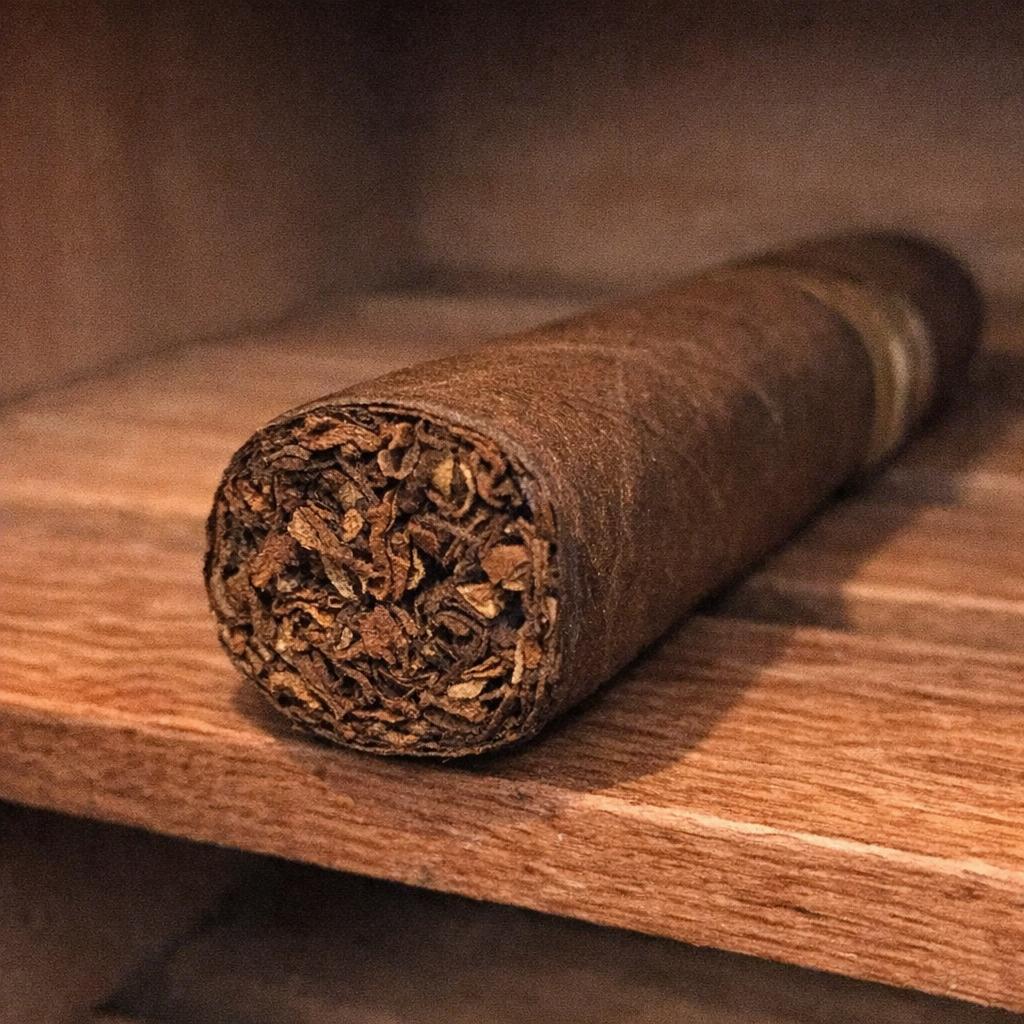
- 4.5 × 46
- Box-pressed
- All-Nicaraguan puro
- 4 yr pre-roll aging
- Maduro / Natural
Take the Padrón 1964 Anniversary Series Principe, a four and a half by forty-six box-pressed Nicaraguan puro from Padrón’s 1964 line. Padrón ages the tobaccos in the 1964 series for four years before rolling, so the cigar arrives at your shop already with substantial pre-roll aging. It is built from leaf with somewhere to go.
The Principe usually reaches an attentive retailer in good condition. If you bought it in person, it has likely been resting in their walk-in for some months. A two-week acclimatisation in your humidor at sixty-five percent and sixty-five Fahrenheit is usually all it needs to settle. It will smoke cleanly, with the cocoa and espresso notes Padrón is known for, and a sweet spice that comes from the box-press.
If you ordered it online and it arrived in a fortnight, give it the standard thirty days. If you have a second box, set one aside and smoke the other. After six months, the rested examples will read more integrated. The wrapper sweetens. The faint pepper at the back of the nose softens into something rounder. The cigar that was pleasant becomes precise.
I have a few Principes from a 2024 box that I have kept at sixty-five-sixty-five for eighteen months. The flavour line has not changed in kind, but it has narrowed. Where the fresher examples flick between cocoa, leather, and spice in the first third, the rested examples sit in cocoa and slowly deepen. The Padrón signature is more present, not less. This is what good aging does. It does not change a cigar into another cigar. It clarifies the cigar already there.
It does not change a cigar into another cigar. It clarifies the cigar already there.
Hugh Ashby Tweet
Tracking Rest in Cigarro
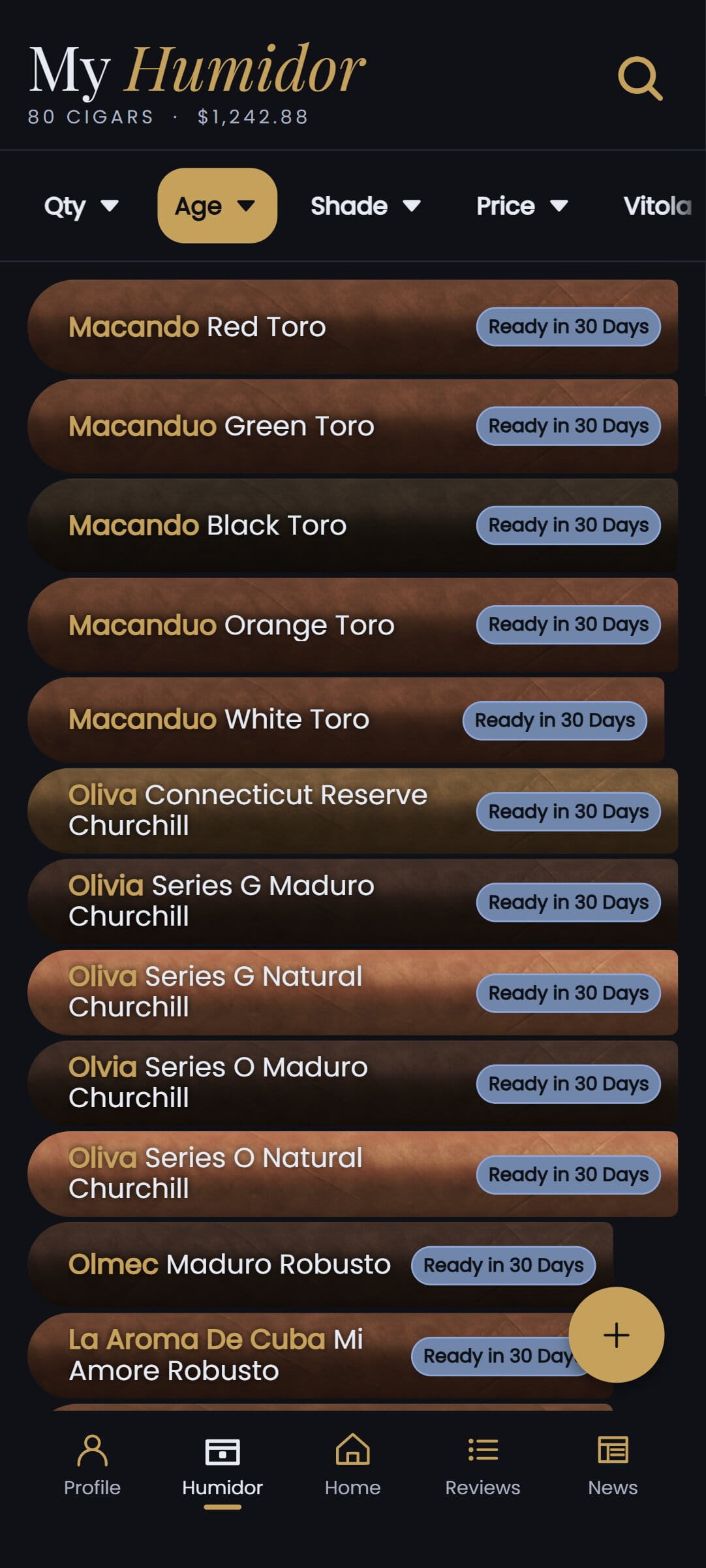
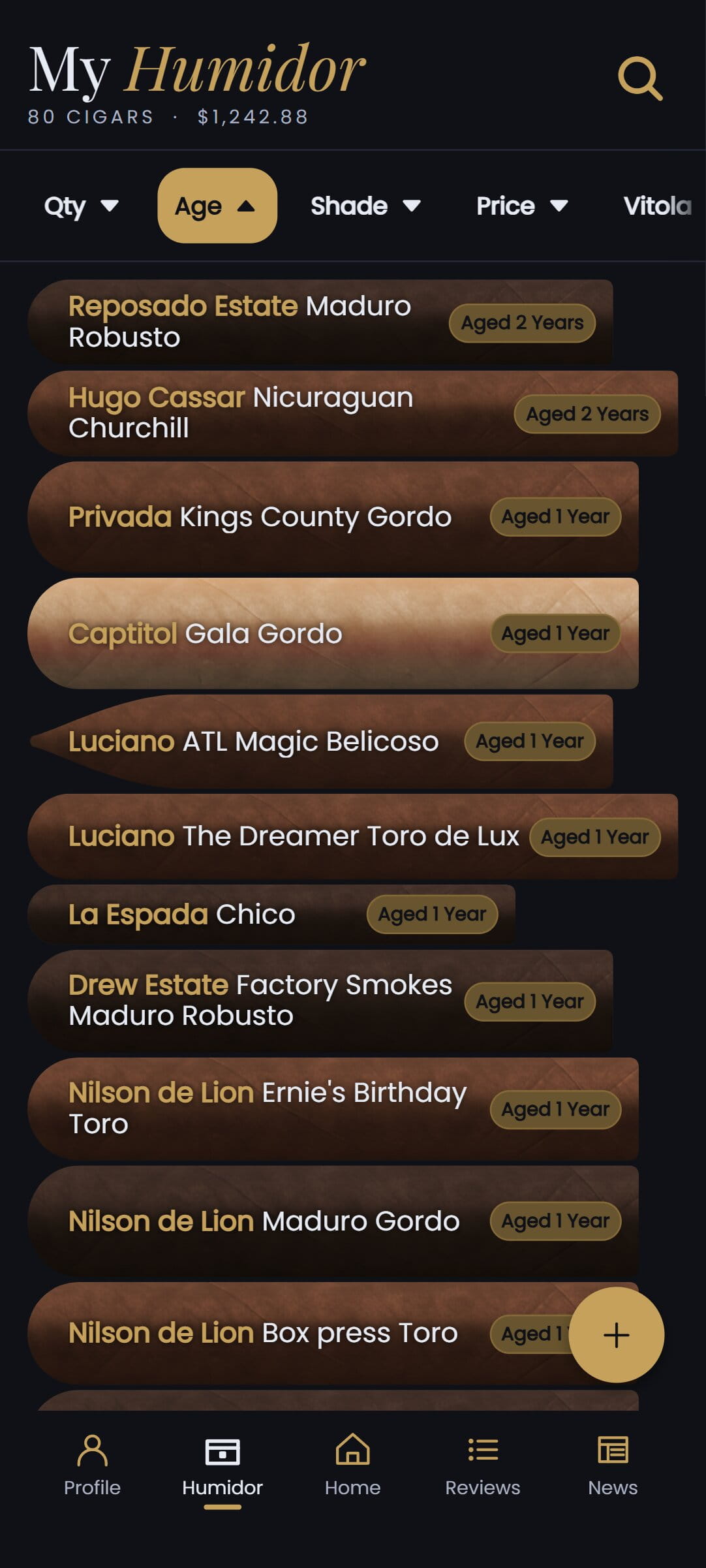
Records are the part of aging that nobody enjoys and nobody can do without.
The Cigarro app, briefly. Every box and every cigar in your humidor takes a date of acquisition, a country and brand, a vitola, a wrapper note, and a rest tracker that ticks forward each day. When you light one, you log it. The app then tells you how long that cigar rested, what your humidity averaged during the rest, and where it sits in the line you have smoked from the same box. After six months of casual use, your humidor is no longer a guess.
This is not a sales pitch, exactly. There is nothing in Cigarro that you could not do with a paper notebook, a moisture meter, and a small amount of self-discipline. The app is what I use because I am not consistent enough to keep the notebook for years. If you have a system that works, keep using it. If you do not, and you have ever opened a box and wondered when on earth you bought it, the value is in the answer arriving without you having to remember.
The features I rely on: humidity logging from a Bluetooth hygrometer so the rest record is honest, box-level grouping so I can see the shape of an aging line at a glance, and a journal that pairs each smoking session with the cigar it came from. Reading my own notes from a year ago is a quiet pleasure I did not know I was missing.
- Per-cigar rest tracker. Date of acquisition, country, brand, vitola, wrapper note. The counter ticks forward each day until you light it.
- Bluetooth hygrometer logging. Humidity from the actual sensor in your humidor, not a guess. The rest record is honest because the data is.
- Box-level grouping. See the shape of an aging line at a glance. Which examples have you smoked, which are still resting, what was the average humidity over the rest.
- Smoking journal. Pair every session with the cigar it came from. Reading your own notes from a year ago is a quiet pleasure most cigar smokers do not know they are missing.
How to Tell If A Cigar Is Ready
There is a difference between a cigar that is rested and a cigar that has rested. The first is ready to smoke. The second has merely been waiting. The way you tell, in the absence of a calendar you trust, is with your hands and your nose. Five quick checks before you light.
- Smell. A ready cigar smells clean and sweet: cocoa, leather, barnyard, faint cedar, perhaps a touch of bread. A sharp note that pulls your nostrils back, or anything chemical or sour, is a cigar that wants more time.
- Touch. A gentle squeeze should feel lightly springy, with no soft spots or hard knots. Crunchy means dry. Spongy means too wet. Even firmness from foot to head means the moisture has settled.
- Cold draw. Take a small puff before lighting. The air should move with light resistance and carry the cigar's character: sweetness, earth, a hint of pepper. Tight or papery means stop and reassess.
- Burn. Light it and watch the first inch. A rested cigar burns evenly, ash holds in long sections, smoke arrives at room temperature. A wandering line, flaking ash, or repeated relights usually means moisture is uneven or the cigar is genuinely too fresh.
- Taste. Flavours should arrive integrated, not in pieces. A ready cigar reads as one composition. Bitter, grassy, sour, or metallic notes that overwhelm the rest are signs it wants more time.
When a Cigar Goes Wrong
Three patterns turn up most often when a cigar is not yet ready, or has been kept badly. Each has its own signature and its own remedy. Rest fixes some of them and not the others; knowing which is which saves cigars.
Dry
Signs
Cracking wrapper, fast burn, hot smoke, harsh first inch, loose draw, flaky ash that falls in pieces.
Fix
Raise humidity slowly. Park the cigar at sixty-five percent for weeks, not days. Do not blast it with seventy-two-percent moisture or you will crack the wrapper a second time.
Wet
Signs
Tight draw, repeated relights, heavy smoke, sourness, swollen feel under the fingers, uneven burn that wanders or tunnels.
Fix
Drop humidity to sixty-two or sixty-five percent and wait. Patience does the work. Forcing dryness with desiccant ruins the wrapper.
Too Fresh
Signs
Sharp ammoniac smell that pinches the nostril, sour taste, muted flavours, harsh finish, pinprick pepper that overwhelms the rest.
Fix
Months, not days. Set the cigar aside at sixty-five percent and revisit at sixty days, ninety, six months. Do not judge the blend yet.
What rest cannot fix: bad construction, plugged bunches, mould, beetle damage, a split wrapper, or years of poor storage. If the same issue repeats after weeks of patient rest at stable conditions, the cigar itself is the problem. Move on.
Common Questions
How long should I rest a cigar after shipping?
Thirty days is the working default. Less if it arrived in mild weather and feels right; more if it travelled through extreme heat or cold. The rule of thumb I follow: rest at least twice the time the cigar spent in transit. A cigar that took ten days to reach me, including a customs hold, gets twenty days minimum on top of that.
Can I smoke a cigar the same day I buy it?
Sometimes, yes. A cigar bought from a serious local shop with its own walk-in humidor may need only a day or two to forget the journey home. A cigar shipped to you wants weeks rather than hours. The smell and feel will tell you before the calendar does.
Is 65% or 69% humidity better for cigars?
Both work. Sixty-five gives the cleaner burn and longer ash, and is what I keep my own humidor at. Sixty-nine is the safer middle ground for many smokers, particularly those who prefer slightly fuller flavour, and is what Boveda itself positions as broadly preferred for premium cigars. Pick a number you can hold steady.
How do I tell if a cigar is too dry, too wet, or too fresh?
Too dry: cracking wrapper, fast hot burn, harshness in the first inch, loose draw, flaky ash. Raise humidity slowly, in weeks rather than days.
Too wet: tight draw, repeated relights, sour or heavy smoke, swollen feel under the fingers, uneven burn. Drop humidity to sixty-two or sixty-five percent and wait.
Too fresh: sharp ammoniac note, sour or harsh first third, muted flavour, pinprick pepper that overwhelms everything else. Months, not days. Do not judge the blend yet.
What happens if I smoke a cigar too soon?
Two things, usually. The burn pattern goes uneven because moisture has not equalised across the wrapper, binder, and filler. And the flavour reads sharp, sour, or muted because residual ammonia from fermentation has not finished off-gassing. Nothing is wrong with the leaf. The cigar has not yet finished arriving.
Can resting fix a harsh or unbalanced cigar?
Sometimes. Rest fixes moisture imbalance, shipping shock, mild ammonia, and the rough youth of a freshly rolled cigar. Rest does not fix bad construction, mould, beetle damage, a split wrapper, or years of poor storage. If the same issue repeats after weeks of patient rest at stable conditions, the cigar itself is the problem.
Should I rest cigars in cellophane?
For short-term resting after shipping, leave the cellophane on if the cigar came in cello. It slows moisture exchange in a useful way and protects the wrapper. For long-term aging, the choice becomes personal. Cello on protects the wrapper. Cello off lets the cigar interact more directly with cedar and box. Most aging cabinets I have seen contain a mix.
How long do cigars need to age before smoking?
For the smoker at home, I treat anything under a year as rest and anything beyond a year as aging. The industry itself is less tidy. Tobacco may already have years of bale aging before rolling, and finished cigars can sit anywhere from weeks to more than a year before release. Aging proper is reserved for cigars built to reward five and ten years on a shelf.
The Reward of Patience
A cigar that has rested properly is a different proposition from one that has not. The same blend, the same ring gauge, the same rolling, but a steadier burn, a cleaner ash, a more integrated flavour line, and a cigar that tastes the way the blender intended. The improvement is not enormous, by the standards of single-malt whisky or vintage bordeaux. It is reliable, and it is yours to claim with patience and a hygrometer.
The case for resting cigars is, in the end, the case for letting tobacco do its slow chemical work without our impatience getting in the way. Buy in advance of when you mean to smoke. Keep your conditions stable rather than perfect. Mark the boxes. Trust the calendar. Pour something good while you wait.
The Cheat Sheet
A working rule of thumb for the patient cellar.
- Same day to 1 week · Well-kept cigar from a serious local walk-in. Light if it feels and smells right.
- 2 weeks · Local shop purchase needing light acclimatisation.
- 30 days · The safe default for any shipped cigar. Non-negotiable in my house.
- 60 days · Thick-ringed maduros, double coronas, anything that arrived dry, wet, or unsettled.
- 3 to 6 months · Serious blends. Useful integration window, not a finish line.
- Sharp / ammoniac smell? · Months, not days. Do not judge the blend yet.
- 1 year + · Aging proper. Reserved for cigars built to reward years on a shelf. Use a sealed cabinet.