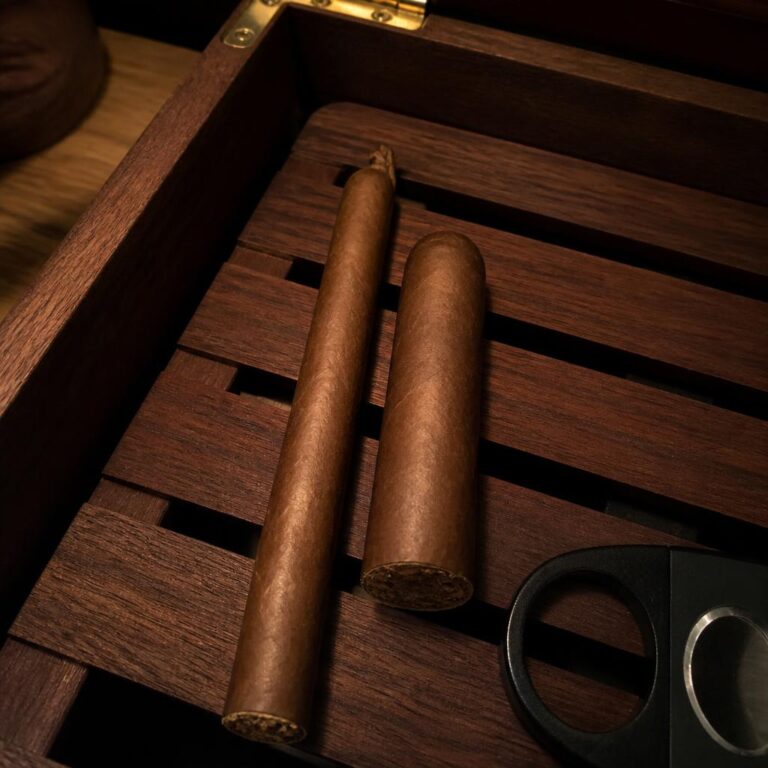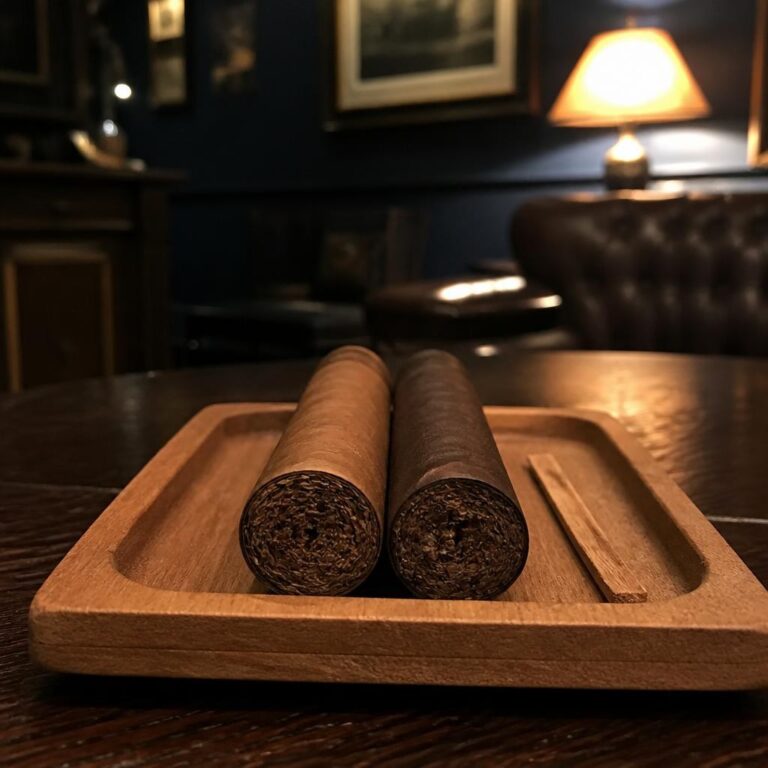
The question gets asked weekly in every cigar forum on the internet, and it tends to get the same answer dressed up in different prose. The cigar arrived yesterday. The reader wants to know whether tonight is too soon, whether the weekend is acceptable, and whether anyone is going to mind if he simply lights one now and gets on with the business of enjoying it.
This piece is the straight answer. There is a number, there is a reason for the number, and there are a small handful of cases where the number bends in either direction. None of it is mystical. All of it is the difference between a cigar that performs and a cigar that has not yet finished arriving.
The Short Answer
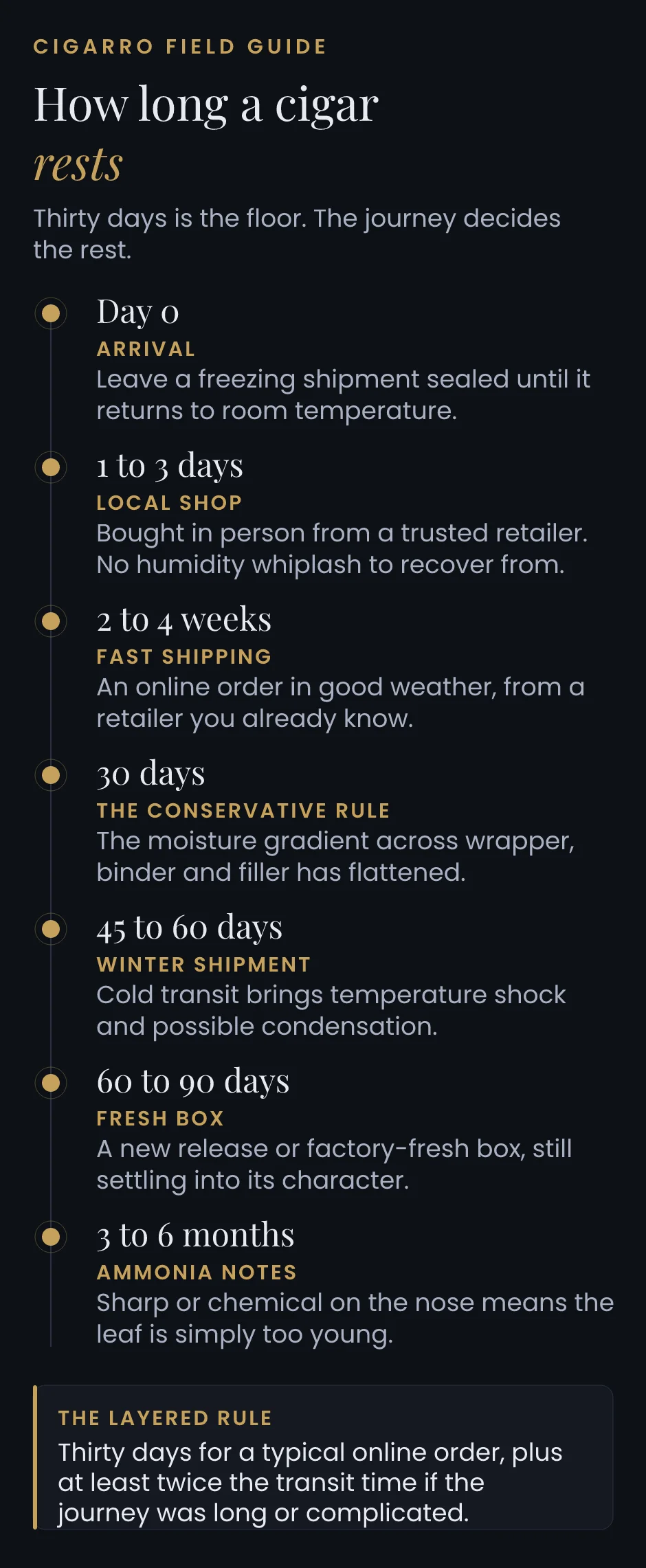
Thirty days is the conservative answer. Some retailers suggest a few days to a couple of weeks, and plenty of enthusiasts light up sooner. But if you want a simple rule that avoids most shipping-related problems, give a newly delivered cigar thirty days in your humidor before judging it. A cigar that arrives today is, in the unhurried view, ready to smoke roughly a month from now. Smoke it sooner and you may still enjoy it. Smoke it at thirty days, and you are smoking it on its own terms.
A useful working rule on top of that is to rest the cigar for at least twice the time it spent in transit, especially if the shipment was slow, cold, hot, or delayed. A cigar that took ten days to reach you, including a customs hold and a stretch in a sorting depot, gets twenty days minimum on top of basic acclimatisation. The two rules layer rather than compete. The thirty-day floor catches the steady cases. The twice-transit overlay catches the long, complicated journeys.
Quick Reference by Scenario
Scan-friendly version, before the details. Pick the row that matches the cigar in front of you.
| Scenario | Rest time |
|---|---|
| Local shop purchase from a trusted retailer | Overnight to 3 days |
| Online order, good weather, fast shipping | 2 to 4 weeks |
| Conservative rule for any online order | 30 days |
| Long shipping or customs delay | 30 days, or at least twice the transit time |
| Winter shipment (cold transit) | 45 to 60 days |
| Fresh box or new release straight from the factory | 60 to 90 days |
| Very fresh cigar with ammonia notes | 3 to 6 months |
| Already-aged cigar from trusted storage | A few days to 1 week |

Why a Cigar Travels Badly
Shipping is genuinely hard on tobacco. A cigar bound for your house may sit in a humid retailer’s storeroom on a Monday, then in a cold air-freight pallet at thirty thousand feet on Tuesday, then in a heated sorting depot on Wednesday, then in the back of a delivery van on a frosty Thursday afternoon, then on your front porch for two hours after the driver leaves. The wrapper has been flexing the entire time. The filler has been gaining or losing moisture in fits, depending on which leg of the trip it was on.
None of this destroys the cigar. What it does is leave the wrapper, the binder, and the filler at slightly different points on the moisture curve. A cigar in that state burns unevenly, draws inconsistently, and tastes muted. The fix is not difficult. You set conditions in your humidor and let the cigar settle. The wrapper rehydrates first, the binder follows, the filler last. By thirty days, the moisture gradient across the three components has flattened, the oils have redistributed, and the cigar burns the way the blender intended.
The shorter the rest, the more you are gambling on a cigar that happens to have travelled gently. Some do. Most do not.
When to Rest Longer
Three situations call for more patience than the standard month.
The first is winter shipping. A package that has spent a leg of its journey in a sub-zero cargo bay arrives at your door cold, sometimes condensation-damp under the cellophane. The cigar inside has been through temperature shock, possible condensation, and uneven moisture movement. Let it return slowly to stable humidor conditions before judging it. Forty-five days is the minimum to give a cigar that arrived between November and March in any climate cold enough to scrape the windscreen. Sixty is more honest.
If the package arrives freezing cold, leave the cigars sealed in their shipping wrap until they come back to room temperature. Do not open a cold shipment into warm indoor air and invite condensation onto the wrapper.
The second is a full box from the factory. A fresh ten or twenty-five count box of a premium brand may have had post-roll aging at the manufacturer, but the length varies by brand and factory. Ninety days is often cited as a convention, not a law. Either way, a fresh box has not had time on a retailer’s shelf to settle into its character. A cigar in that state is technically rested but not yet married. Sixty to ninety days at controlled humidity allows the components to finish coming into agreement before you start sampling the box in earnest.
The third is anything described as a fresh release. A new vitola ordered the week it hits shelves may be younger than regular production stock, depending on the factory and release schedule. The trade press describes a sick period in the early life of a cigar, during which residual ammonia from fermentation is still off-gassing and the flavours read as muted or closed. Three to six months often helps. If the cigar still smells sharp, chemical, or ammoniac, it wants more time. There is nothing wrong with the leaf. It is simply too young.
When You Can Smoke Sooner
Two situations let you cut the rest short without paying for it.
The first is a cigar bought in person from a brick-and-mortar shop. The stick has been sitting on a humidified shelf at conditions that match what you have at home, and the journey from counter to humidor took fifteen minutes in your coat pocket. There is no humidity whiplash to recover from. Most experienced smokers will rest such a cigar overnight as a courtesy and smoke it the next day without a second thought. Some will not bother resting it at all. Both are reasonable.
The second is a cigar that has already been aged. Boxed inventory from a retailer who sells dated stock, a shop release with two or three years on the band, a friend’s gift from a cabinet that has been sitting under controlled conditions for a decade. These cigars have done their settling. A short rest after they reach your humidor is sensible (a week, perhaps, to let the moisture content match yours) but the months of patience that a fresh release demands have already been served. The retailer Holt’s notes that previously-aged cigars require less time on your end before they reward smoking. The math works in your favour.
One caveat applies in both cases. Your humidor’s relative humidity should be reasonably close to where the shop or the previous owner kept the cigar. A jump from sixty-two percent to seventy will still take a week or two to settle, no matter how aged the stick.
How to Tell It Is Ready
The calendar is a guide, not a verdict. Before the date you wrote on the cellophane comes due, the cigar itself will start to tell you whether it has settled. Five small checks.
Smell. Hold the foot to your nose. It should smell clean, sweet, earthy, woody, leathery, or bready. If it smells sharp, sour, chemical, or ammoniac, give it more time.
Touch. Roll the cigar lightly between thumb and forefinger. It should feel lightly springy, not crunchy and not spongy. A dry-rattle is too dry. A pillow squeeze is too wet.
Wrapper. The leaf should not be cracking, flaking, or visibly swollen. Faint veins are normal. Splits, lifted seams, or a soaked-looking sheen are not.
Draw. After lighting, the first draw should not feel tight at the head and loose at the foot. Uneven feel through the cigar usually means the moisture has not finished evening out.
Burn. If the wrapper races ahead of the filler, or the filler tunnels while the wrapper lags, the layers are still adjusting at different rates. A rested cigar burns roughly even.
If three of the five feel off, put the cigar back and give it another week or two. Cigars have many layers, and most of the problems people blame on bad cigars are simply layers gaining or losing moisture at different rates.
A Working Rule of Thumb
Hold the rule in your head as a layered checklist rather than a single number.
Thirty days for a typical online order. More for a winter shipment. More again for a fresh-release box straight from the factory. Twice the transit time on top of any of those, if the journey was long or complicated. Less if the cigar came home in your coat pocket from a shop you trust. Less still if the cigar already has the years on it.
Resting only works if the humidor is right. Keep the cigars somewhere stable, around sixty-five to sixty-nine percent relative humidity for most modern blends, and keep temperature steady and cool. The exact number matters less than avoiding swings.
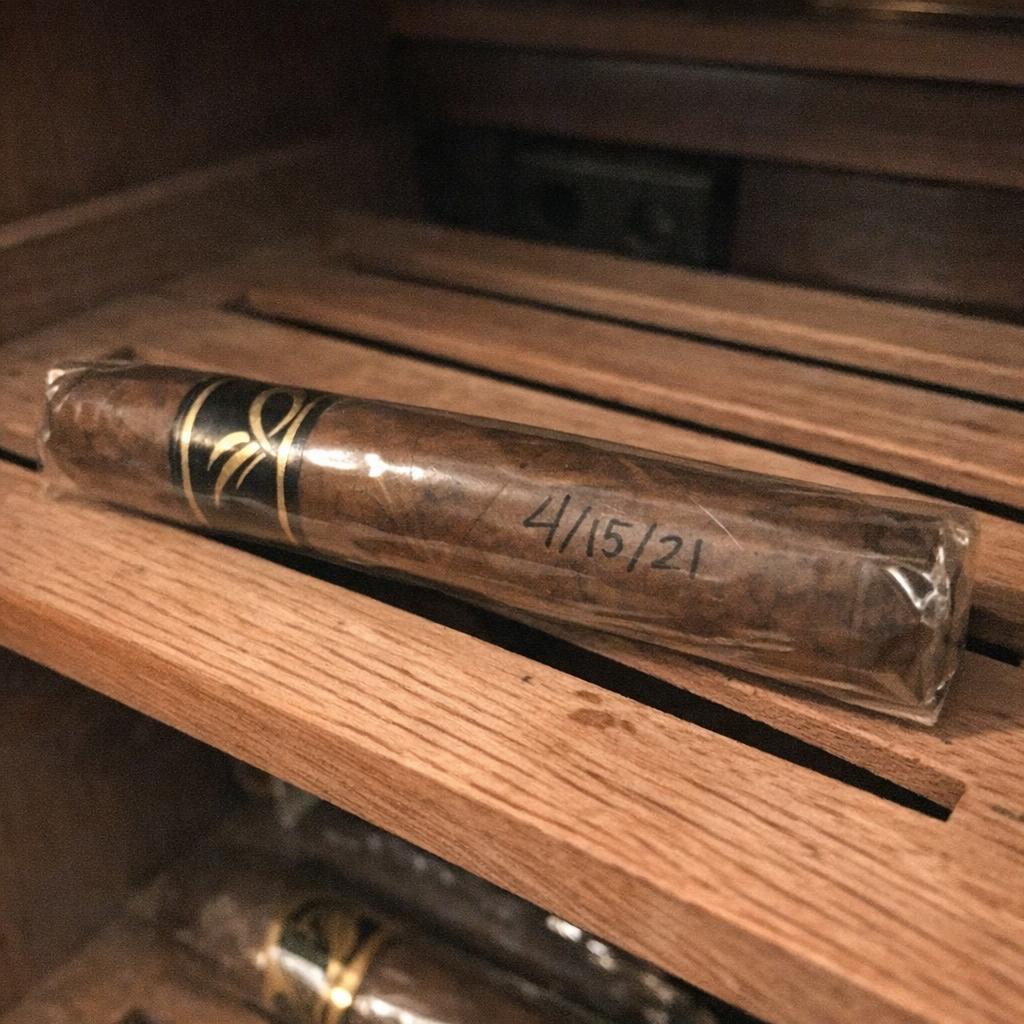
The number that matters most is not the floor but the discipline. A reader who builds the habit of resting new cigars in the humidor with a date written on the cellophane, and who does not reach for them until that date has come and gone, will smoke a noticeably better cigar than the reader who reaches for whatever arrived most recently. The cigars are the same. The treatment is what changes.
And the treatment is fundamentally about respect for the leaf. A premium cigar represents three to five years of agricultural and curing work, a slow fermentation in pilones, careful sorting, skilled rolling, and a retailer’s quiet hours of storage at the right humidity. Smoking it on the day it arrives, without giving it the chance to come to rest in your hand, is the smoking equivalent of opening a great bottle of red the moment it comes through the front door. It will pour. It will not, however, sing.
If you want the full version, including humidity, aging, sick periods, and long-term storage, read our complete guide to resting cigars.
Track the Rest, Smoke the Better Cigar
Patience here is unromantic and inexpensive. It costs you a date written on the cellophane and the agreement, with yourself, not to reach for that particular cigar until the date has passed. Rest is the only part of this craft that improves while you do absolutely nothing about it. Most readers find that within a few months of building the habit, they have a small queue of well-rested cigars sitting in the humidor at any given time, and the question of whether to smoke tonight’s arrival immediately stops coming up at all. There is always something better, slightly older, sitting just behind it.
Tracking the rest is the part most smokers under-practise, which is the gap the Cigarro app was built to close. Log a cigar the day it arrives, set the rest date, and the next time you open the humidor the right cigar to smoke tonight is already chosen for you.
Frequently Asked Questions
How long should cigars rest after shipping?
Thirty days is the conservative rule for an online order. A few days to two weeks may be enough for a quick, mild-weather shipment from a trusted retailer. Add more time for long transit, customs holds, or unusual weather. The cleanest version of the rule is: thirty days for a typical online order, plus at least twice the transit time on top if the journey was long or complicated.
Can I smoke a cigar the day it arrives?
You can, and the cigar will still light. It probably will not smoke at its best. Cigars carry uneven moisture after shipping, and the wrapper, binder, and filler need time to come back into agreement. Even an overnight rest in the humidor will help. Three days is a useful minimum for almost any cigar.
How long should cigars rest after winter shipping?
Forty-five to sixty days. Cold-transit cigars have been through temperature shock and possible condensation under the cellophane. If the package arrives freezing cold, leave the cigars sealed in their shipping wrap until they return to room temperature, then move them into the humidor. Do not open a cold shipment into warm indoor air and invite condensation onto the wrapper.
How long should a fresh box of cigars rest?
Sixty to ninety days at controlled humidity is a fair conservative range. A fresh box has typically had some post-roll aging at the factory, but the length varies by brand and is not standardised. The components inside a freshly assembled box also need time to settle into each other.
Do cigars from a local shop need to rest?
Usually much less. A cigar that has been sitting in a well-maintained walk-in humidor at a good local retailer has already had its long acclimatisation. Overnight to three days at home is often enough, mostly to let the cigar adjust to your specific humidor conditions.
What does it mean when a cigar smells like ammonia?
It usually means the cigar is too young. Ammonia is a natural by-product of tobacco fermentation, and curing and fermentation are designed to remove most of it before the cigar is sold. A noticeable ammonia note means the cigar is still off-gassing and needs more time in the humidor. Three to six months often resolves it. If it does not, the cigar may have been improperly fermented.
Should I leave cigars in cellophane while resting?
Yes for most cases. Cellophane is breathable enough for moisture equalisation and protects the wrapper during handling. Some enthusiasts prefer to age long-term out of cellophane to let cigars marry with the rest of the humidor, but for routine resting, cellophane on is fine.
What humidity should I rest cigars at?
Somewhere between 65 and 69 percent relative humidity works for most modern blends. The exact number matters less than keeping it stable. Avoid swings, avoid heat near the humidor, and trust a calibrated hygrometer rather than the cheap one packaged with the box.
Does resting a cigar make it taste better?
In most cases, yes. Resting smooths uneven moisture between the wrapper, binder, and filler, lets residual ammonia off-gas, and gives the components time to behave as one cigar rather than three layers reacting against each other. The improvement is most noticeable on cigars that have just travelled, just left the factory, or just been released.
What is the difference between resting and aging?
Resting is the short-term acclimatisation a cigar needs after travel or release, measured in days to a few months. Aging is the long-term maturation that happens over years, where the blend develops deeper character, mellower strength, and more integrated flavour. Resting is a hygiene step; aging is a project.
Let the app track the rest.
Log a cigar the day it arrives, set the rest date, and the next time you open the humidor the right cigar to smoke is already chosen for you.