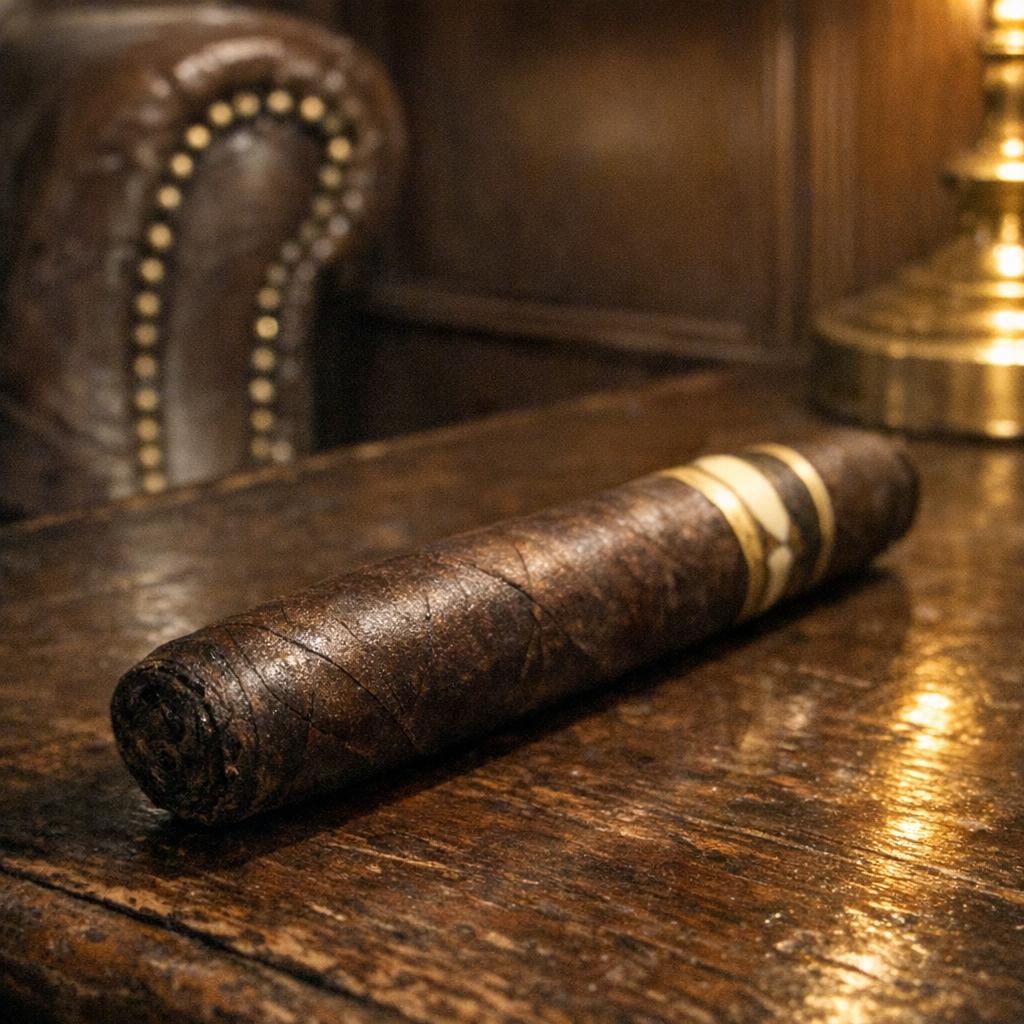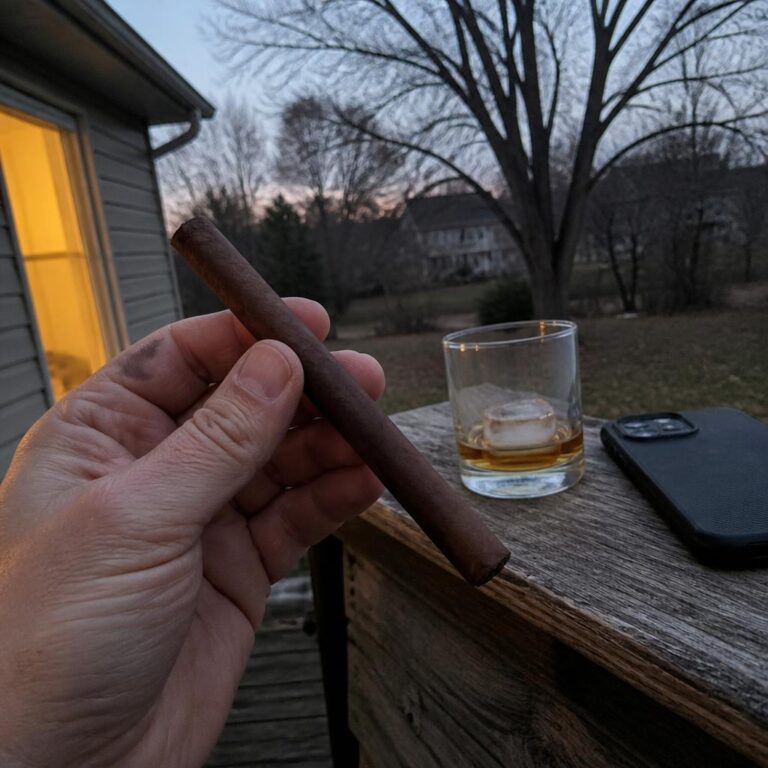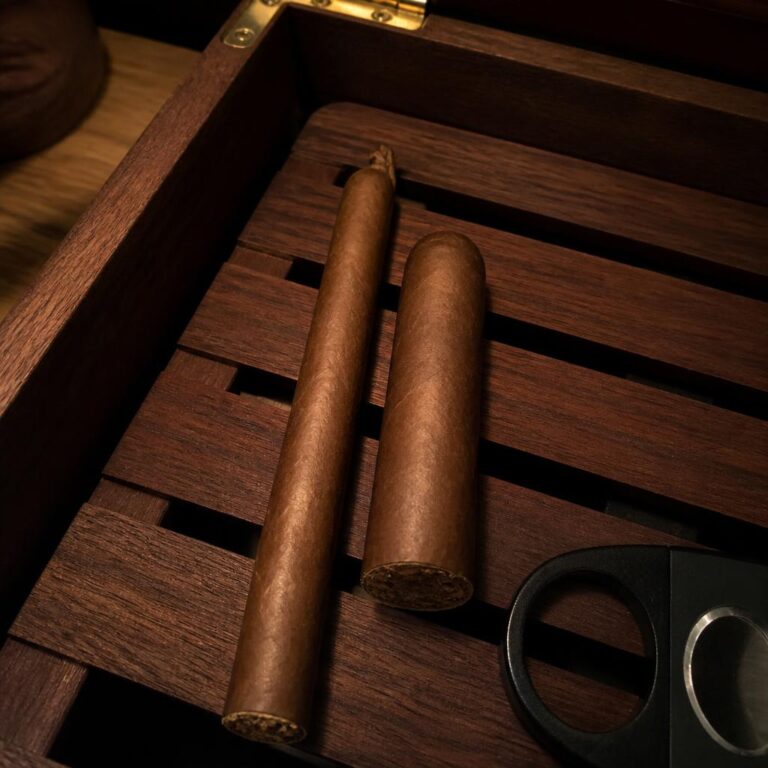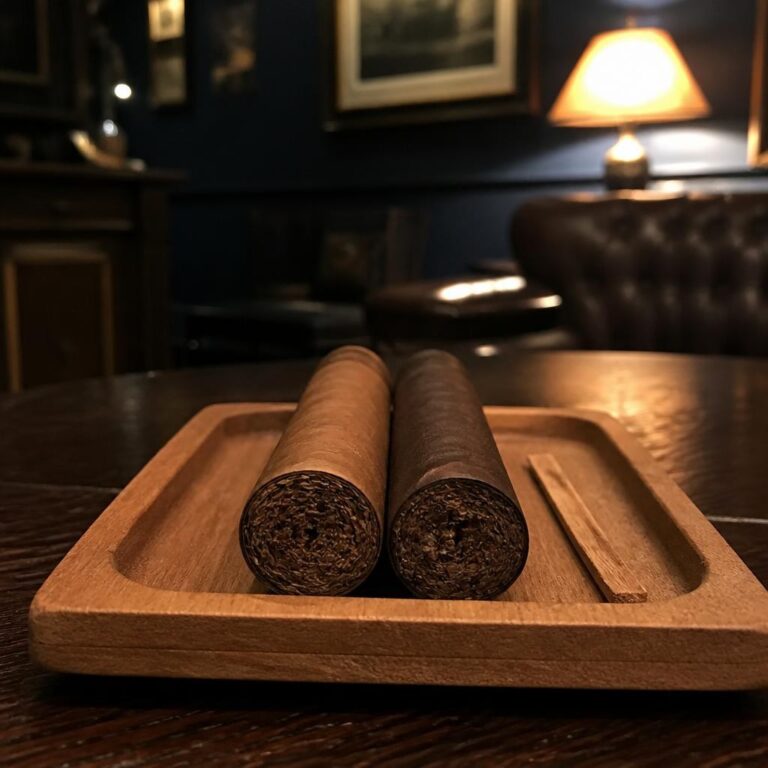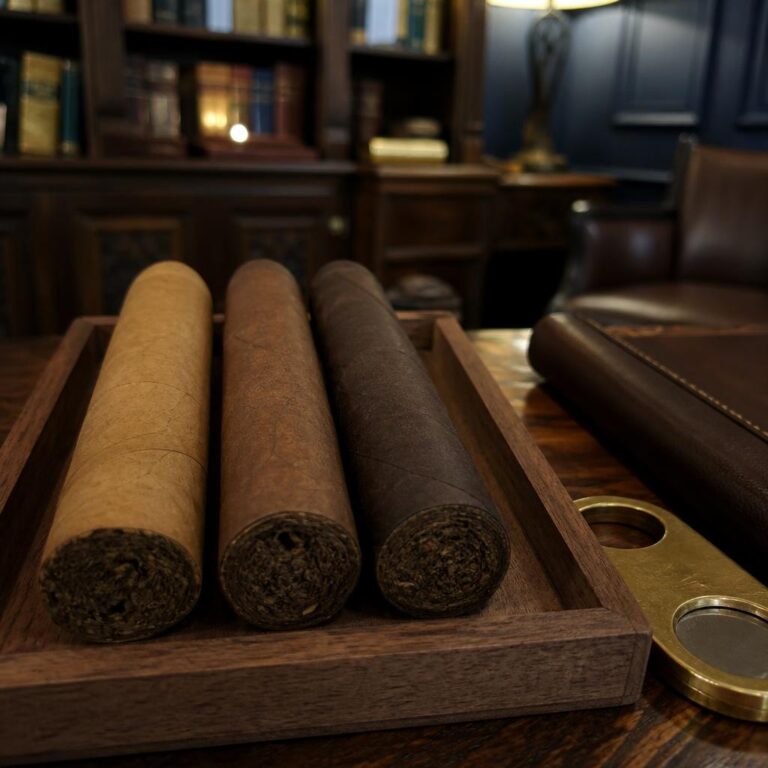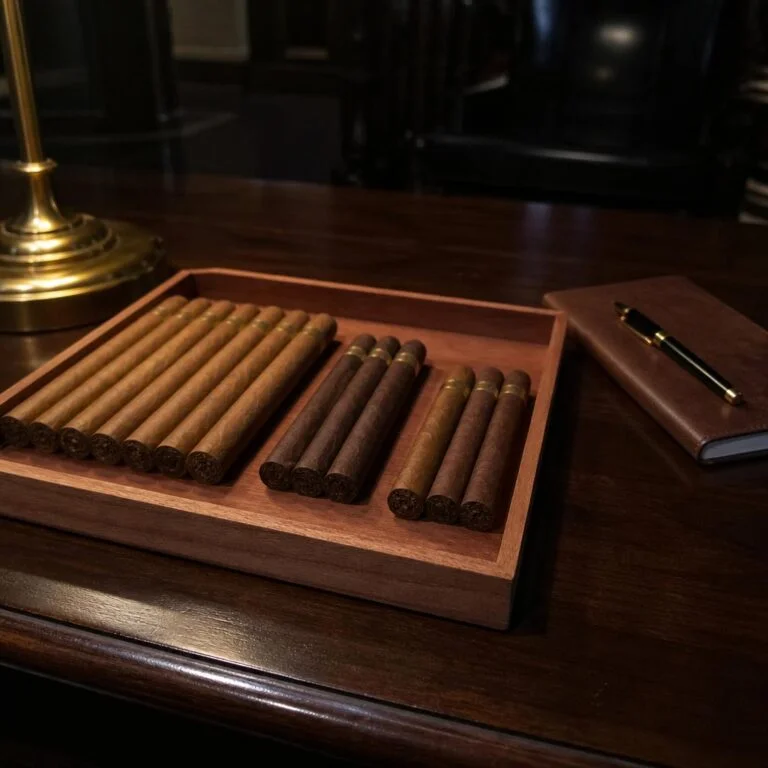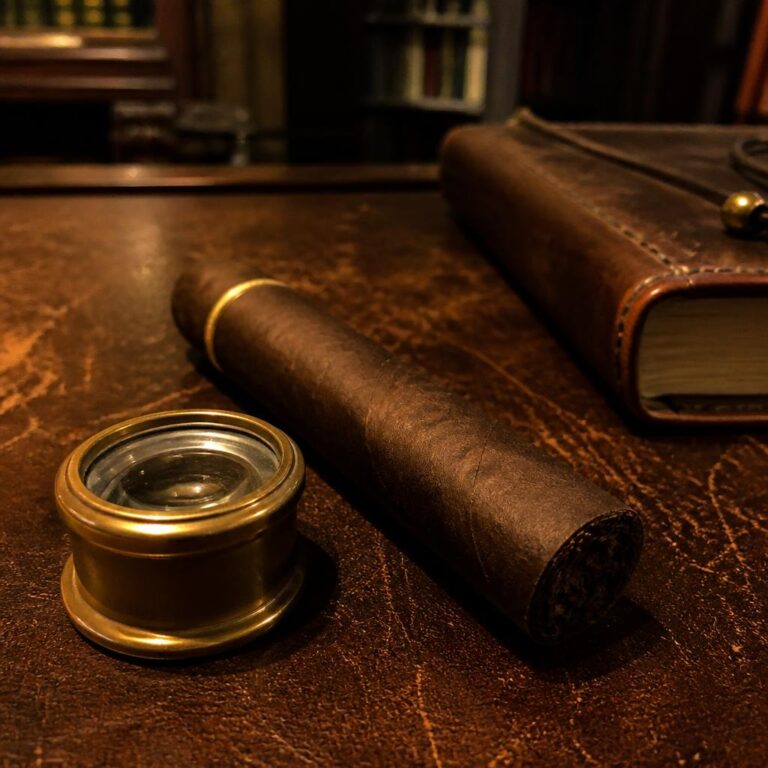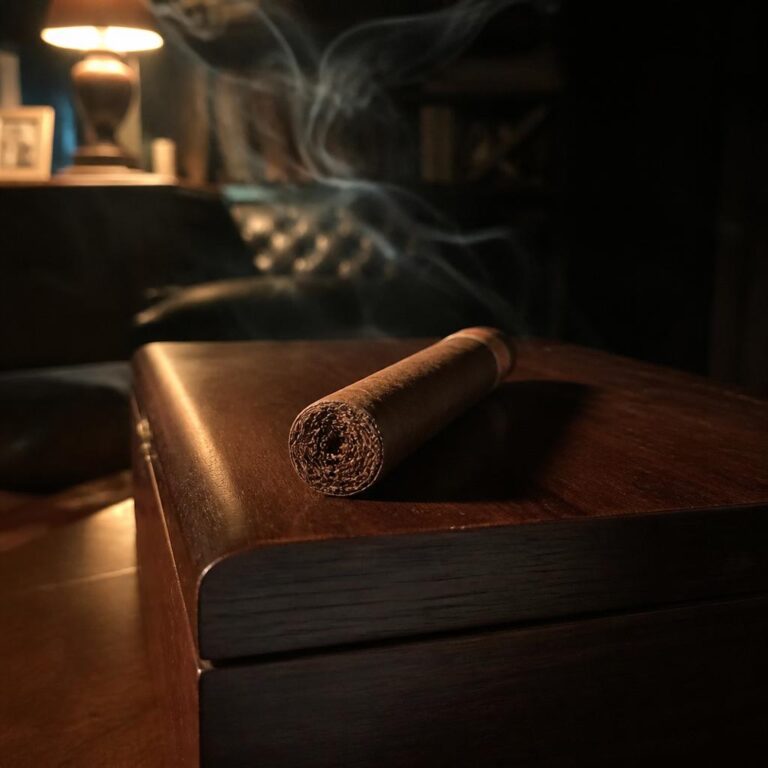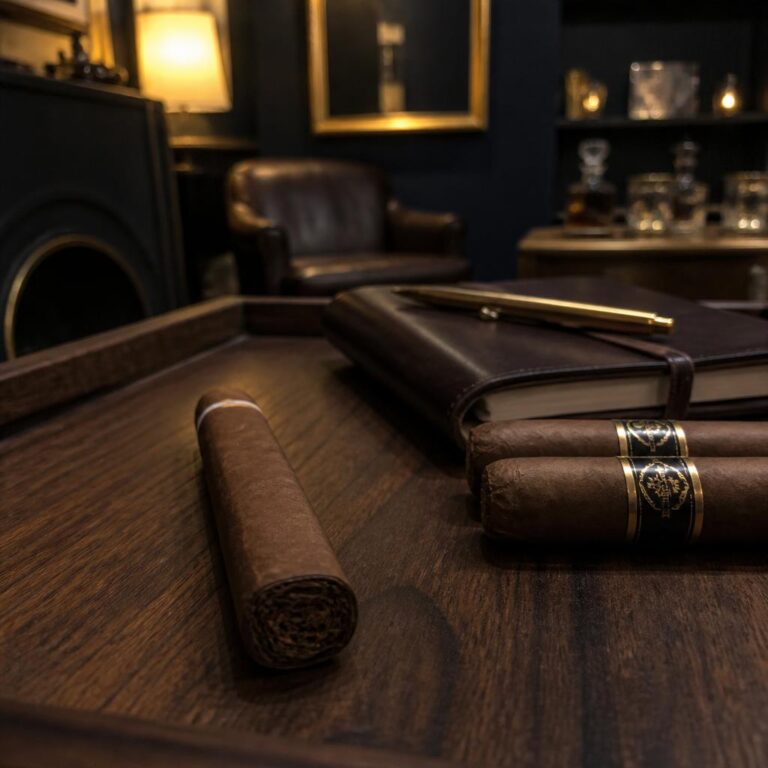
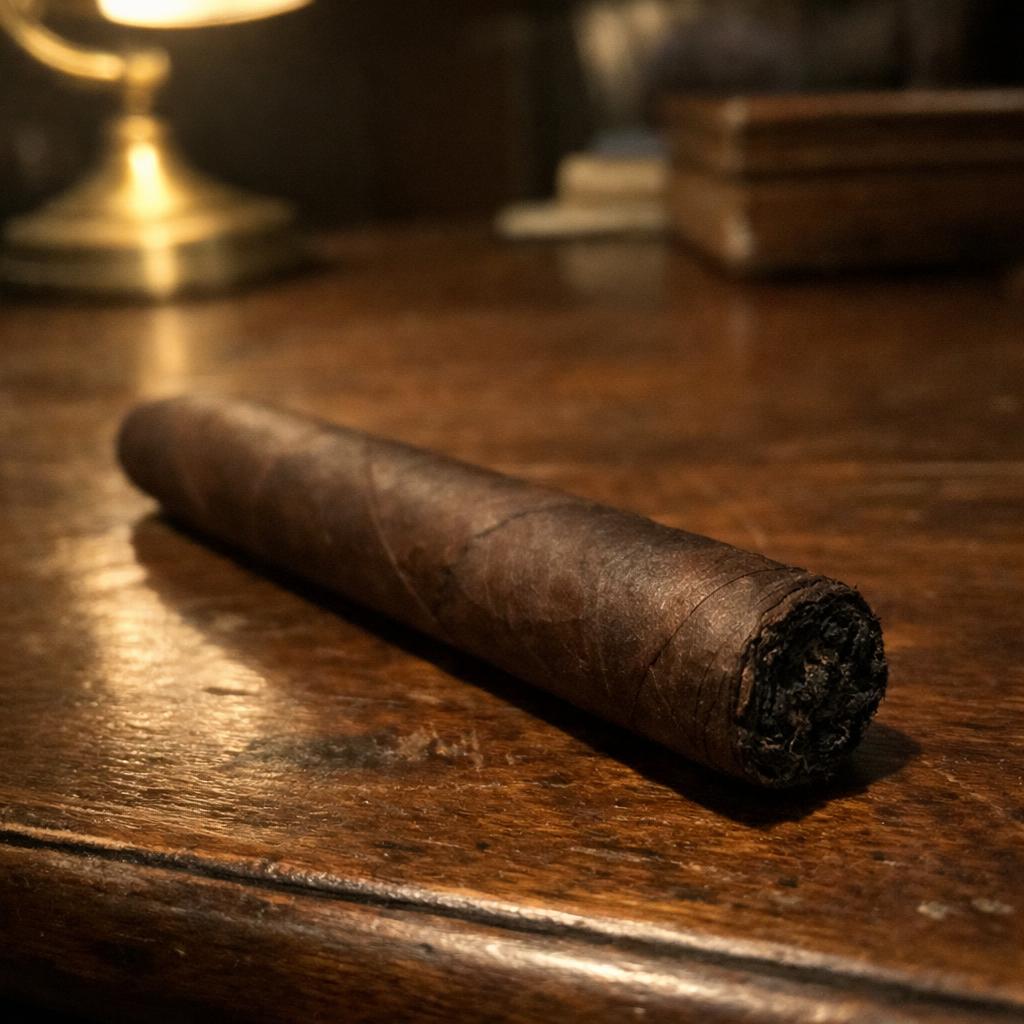
Maduro means ripe or mature in Spanish. On a cigar, it refers to a dark wrapper shade, usually deep reddish-brown to almost black. It does not mean the cigar is stronger. It does not mean the cigar is Cuban. It does not even guarantee sweetness. It tells you that the wrapper has been darkened through extended fermentation, heat, pressure, sun exposure, or some combination of those methods.
The word turns up everywhere in a cigar shop. It is on bands, on box stamps, in the small handwritten cards retailers tape under their humidor shelves. New enthusiasts tend to assume it is a flavour profile, an intensity rating, or a hint about the country the cigar came from. None of those are quite right, and the confusion is worth clearing up because Maduro is one of the few cigar terms that genuinely changes which sticks you reach for once you understand it.
This is the short version, then the longer one. The leaf gets the name because of how long it has fermented and how dark it has become as a result. It is not a strength claim. It is not a country. It is, more than anything else, a description of how patient the people who made the wrapper were willing to be with their tobacco.
The Word and What It Means
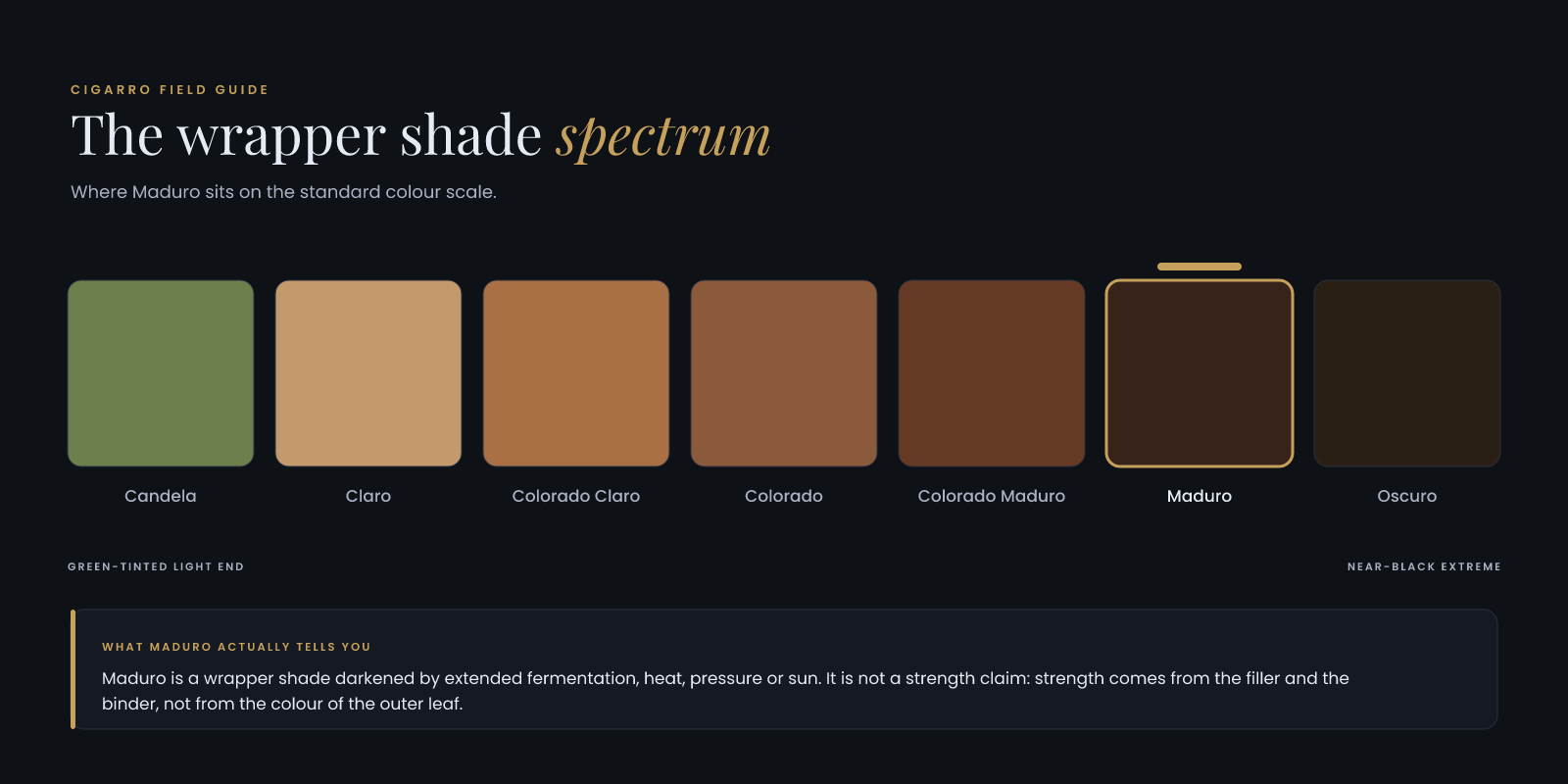
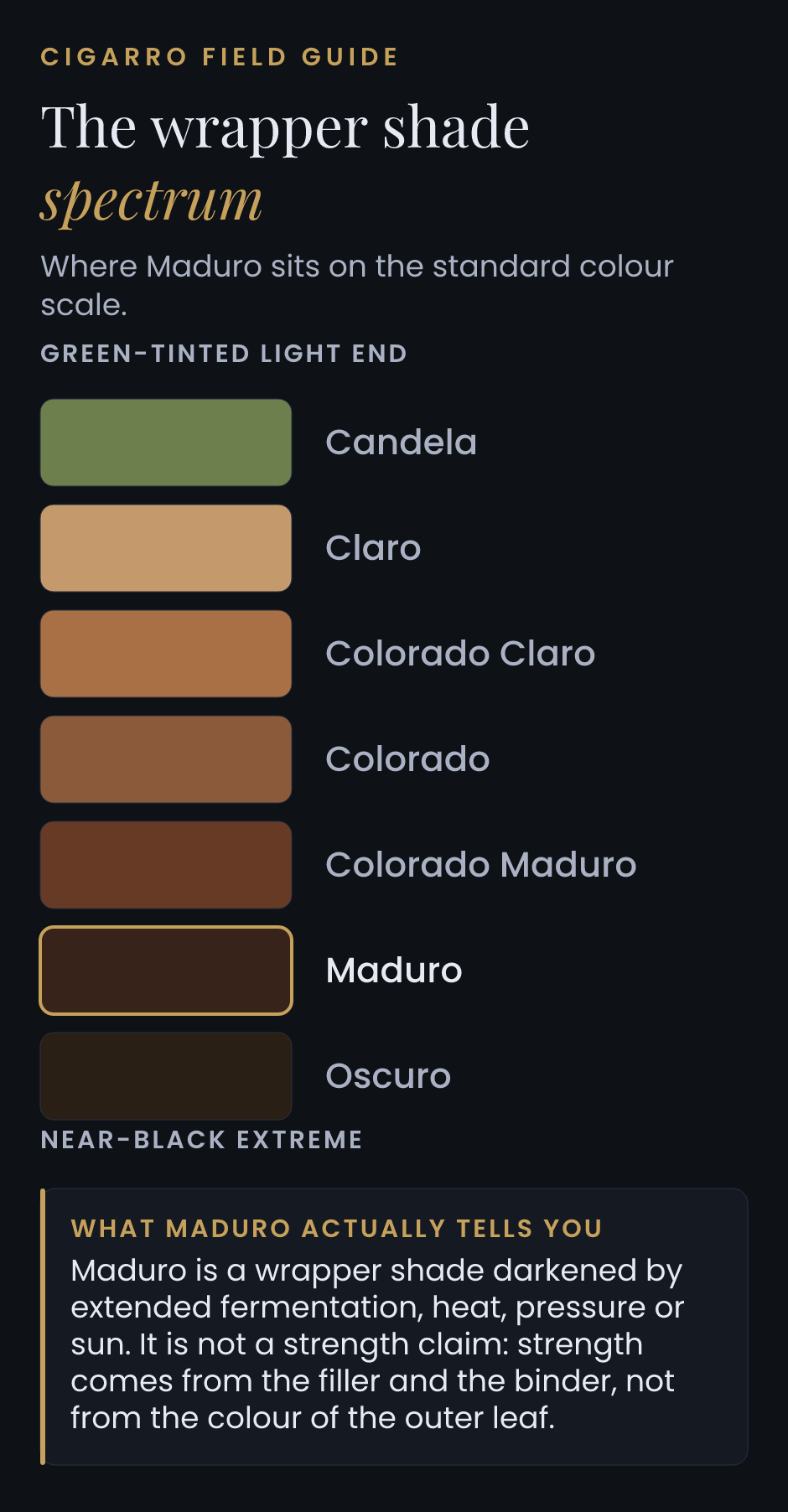
The Spanish word maduro translates as “ripe” or “mature,” and Cigar Aficionado defines a Maduro wrapper as a shade ranging from very dark reddish-brown to almost black. It sits near the dark end of the standard wrapper colour scale, which runs roughly from Candela at the green-tinted light end through Claro, Colorado Claro, Colorado, Colorado Maduro, Maduro, and finally Oscuro at the near-black extreme.
The position on that scale tells you something useful. A Maduro is darker than a Colorado but lighter than an Oscuro. A Colorado Maduro is a shade lighter than a true Maduro. The cigar industry has not fully standardised these distinctions across brands, so a Maduro from one maker may read as a Colorado Maduro on another’s chart. The general placement, though, holds. When a band reads Maduro, you are looking at a wrapper that has spent serious time getting dark.
The Process Behind the Colour
The colour is the result of post-harvest processing, not the variety of the plant. Tobacco bound for a Maduro wrapper is fermented for longer, at higher temperatures, and often through more cycles than tobacco destined for a lighter shade. Cigar Aficionado describes the path as either prolonged fermentation, a controlled cooking process, or extended sun exposure, with leaves sometimes toasted in a pressure chamber or held in above-average heat for a much longer stretch than usual.
What that extra time does is chemical. The leaf’s composition changes. Starches and carbohydrates break down, harsh compounds mellow, ammonia dissipates, and the remaining sugars help create the darker, sweeter profile associated with Maduro. The wrapper darkens as oils rise to the surface and the leaf surrenders moisture in a slow, controlled way. Some Maduro wrappers may spend years in curing, fermentation, and aging, but the timeline varies widely by maker, leaf, and desired colour. The reliable point is not a fixed number of years. It is that Maduro requires more time, heat, pressure, or fermentation intensity than lighter wrapper shades.
The reason most wrappers are not Maduro is the same reason most wines are not aged twenty years. It costs the maker time, money, and warehouse space, and it asks for a leaf strong enough to survive the process without falling apart.
Maduro is not a varietal by itself. It is a shade and a process. But the leaf still matters. Thick, durable tobaccos such as Connecticut Broadleaf, Mexican San Andrés, Brazilian Mata Fina, and Brazilian Arapiraca are far better suited to Maduro processing than thinner, more delicate wrapper leaves. A Connecticut Shade leaf will not survive what a Broadleaf shrugs off.
What Maduro Actually Tastes Like
The flavour expectations a Maduro sets up are sweetness, depth, and a particular set of dark notes. Cocoa and dark chocolate come up in nearly every retailer description. Espresso and roasted coffee follow closely behind. Dried dark fruit, leather, a touch of black pepper at the edges, and a quietly sweet finish round out the typical profile.
The sweetness is the part that surprises new smokers most. A wrapper this dark looks as though it should taste bitter, the way an over-roasted coffee bean does. It does not, because the long fermentation has converted starches and harsh proteins into sugars. The Famous Smoke Cigar Advisor team describes a well-made Maduro as having robust, almost sweet flavour, with the aroma actually milder than the wrapper’s appearance would suggest.
What a Maduro does not deliver, as a rule, is brightness. The lighter, vegetal, hay-and-cream notes of a Connecticut Shade or a pale Habano wrapper are not on the menu. If you want those, the leaf you want is at the other end of the colour scale.
Maduro vs Natural
The clearest comparison most enthusiasts will run, on or off the retail floor, is Maduro against Natural. A Natural cigar usually wears a lighter brown wrapper that has not gone through the same darkening process. A Maduro wears a wrapper that has.
Natural
- Lighter brown wrapper, shorter or gentler fermentation.
- Brighter, woodier, nuttier, creamier, more herbal notes depending on the leaf.
- Wrapper character feels closer to the leaf’s original profile.
- Common shades: Claro, Colorado Claro, Colorado.
Maduro
- Dark wrapper, longer or hotter fermentation.
- Darker, sweeter, richer, more roasted notes: cocoa, espresso, dark fruit, leather.
- Wrapper character is the product of the process as much as the leaf.
- Common shades: Maduro, Oscuro.
Strength is not the difference. The filler decides how hard the cigar will hit; the wrapper colour decides where the flavour goes. The cleanest way to feel the comparison is to smoke the Natural and Maduro versions of the same blend back to back, where some brands offer both. Same vitola, same drink, notes by thirds.
Maduro vs Oscuro
Maduro and Oscuro both sit at the dark end of the wrapper scale, and the line between them is real but not perfectly standardised. Maduro is dark brown to almost black. Oscuro is darker still, usually the blackest recognised wrapper shade. Cigar Aficionado defines Oscuro as darker than Maduro, sometimes also called Double Maduro or Negro.
Some brands also use Double Maduro, Triple Maduro, or Negro on bands to describe their darkest releases. These labels are not perfectly consistent across the industry. Treat them as clues, not law. Two cigars labelled Oscuro by different makers may not look identical side by side.
The practical takeaway: if you like Maduro and want something deeper, Oscuro is the next step. Expect more roasted character, sometimes more bitterness or pepper at the edges, and a wrapper that has been pushed further through fermentation, heat, or pressure than a standard Maduro. Some Oscuro wrappers are excellent. Some are over-processed. The leaf, the maker, and the blend still decide.
The Three Most Common Maduro Wrappers
Three Maduro families appear again and again in modern humidors.
Connecticut Broadleaf, grown in the Connecticut River Valley in the United States, is the leaf most often described as the archetypal Maduro. Cigar Aficionado has called Broadleaf and San Andrés Negro the two most-used Maduro varietals, distinct from most cigar wrappers because both are stalk-cut rather than primed. Broadleaf is thick, rugged, and built to take the long fermentation without tearing. Holt’s describes the resulting wrapper as carrying rich sweetness, earthy notes, and clear hints of dark chocolate.
Mexican San Andrés, grown in the volcanic San Andrés valley of Mexico, is the second great Maduro source and arguably the one Cigar Aficionado writes about most often. Its flavour signature is darker and earthier than Broadleaf, with espresso, black pepper, and a quieter sweetness that sits behind the depth rather than leading it.
Brazilian wrappers, principally Mata Fina and Arapiraca, supply the third family. Cigar Aficionado has covered La Aurora’s 1985 Maduro using a Brazilian wrapper, which gives the line a distinct character of its own. Brazilian Maduros tend to read sweeter and slightly fruitier than the Mexican alternative, with a softer, less peppery finish.
A growing number of cigars use Habano Maduro, Nicaraguan Maduro, Sumatra Maduro, or Pennsylvania Broadleaf wrappers as well. These produce different flavour signatures and have become more common in the last decade. The three families above are still what you will meet most often when a Maduro band lands in your hand.
The Strength Misconception
The single most common misconception about Maduros is that the dark wrapper makes the cigar stronger. It does not. Holt’s puts the point plainly: the dark colour comes from the extended fermentation process, which actually mellows the tobacco leaf and converts harsh compounds into sugars. The strength of a cigar comes from the filler and the binder, not from the colour of the outer leaf.
Two cigars with the same filler blend can carry a Connecticut Shade wrapper and a Connecticut Broadleaf Maduro wrapper and deliver almost the same nicotine intensity. The Maduro version will read sweeter and richer. The Shade version will read brighter and creamier. Strength sits roughly the same. This is why an experienced smoker reaching for a Maduro is rarely reaching for a stronger smoke. He is reaching for a darker flavour profile.
Unwinding the misconception matters because it changes how you choose. A new smoker who avoids Maduros for fear they will be too punishing is missing some of the gentlest, sweetest cigars on the shelf. A smoker who reaches for them assuming they will provide the kick of a full-bodied cigar will sometimes be quietly disappointed. The wrapper colour tells you where the flavour is going. The strength tag on the box, or the maker’s own description, tells you how hard the cigar will hit.
How to Choose a Maduro
Choose by wrapper family if you can, because the three Maduro families taste meaningfully different. Pick what you actually want from the evening, then let the wrapper narrow the shelf.
Connecticut Broadleaf Maduro
Choose this if you want sweetness, cocoa, earth, chewiness, rustic texture, and classic American Maduro character. The most forgiving of the three for newer Maduro enthusiasts.
Mexican San Andrés Maduro
Choose this if you want espresso, dark earth, mineral depth, pepper, black chocolate, and heavier structure. The serious-evening Maduro.
Brazilian Mata Fina or Arapiraca Maduro
Choose this if you want aromatic sweetness, dark fruit, softer spice, and a slightly more exotic sweetness. The least common of the three on most shelves; worth seeking out.
Beyond the wrapper, ask about the filler. A Maduro built around full-bodied Nicaraguan ligero will hit harder than the same wrapper around Dominican mid-priming leaf. The wrapper points at the flavour; the filler points at the strength.
Classic Maduros Worth Knowing
The theory is no use without anchors. These are seven widely available Maduros that map cleanly to the three families, useful for putting the words above into your mouth.
Ashton Aged Maduro. Dominican-made, mellow, approachable, sweet. The gentlest of the seven and a fair first Maduro for an enthusiast who has only smoked Naturals.
Arturo Fuente Hemingway Maduro. Dominican-made, often a Connecticut Broadleaf Maduro wrapper. A gentler introduction to the Broadleaf style.
Padrón 1964 Anniversary Maduro. Nicaraguan puro. Rich, cocoa-heavy, earthy. The benchmark for what a Maduro puro can be.
Oliva Serie V Melanio Maduro. Nicaraguan-made, Mexican San Andrés wrapper. A classic of the San Andrés school.
Foundation Olmec Maduro. Nicaraguan-made, Mexican San Andrés wrapper. Newer than the others; a strong showcase for what San Andrés does in a contemporary blend.
Liga Privada No. 9. Connecticut Broadleaf wrapper, Brazilian Mata Fina binder, Nicaraguan and Honduran filler. A study in how the three families can sit in one cigar.
La Flor Dominicana Double Ligero Maduro. Useful precisely because the Maduro version can feel rounder and more mellow than the strength on the label would suggest. A cleaner illustration of the wrapper-versus-filler distinction.
Smoke any one of these slowly. Then smoke the same cigar in its Natural counterpart, where the brand offers one, and the difference between shade and strength becomes obvious in the third puff.
Common Maduro Myths
Four claims that get repeated in cigar lounges and online threads, and what is actually true.
Myth. Maduro means strong.
Reality. Maduro means a dark wrapper. Strength comes mostly from the filler blend, especially the ligero content, not from the colour of the outer leaf.
Myth. Maduro means sweet.
Reality. Maduro often tastes sweeter, but some Maduros are earthy, bitter-chocolate, peppery, or leathery rather than sugary. Sweetness is a tendency, not a guarantee.
Myth. Maduro means Cuban.
Reality. Maduro is a wrapper shade and a process, not a country. Most Maduros on the modern American market are Dominican, Nicaraguan, Honduran, or Mexican.
Myth. A black wrapper is always better.
Reality. Sometimes a very dark wrapper is the product of patient fermentation. Sometimes it is the product of aggressive processing. Sometimes it is the product of marketing getting hold of the tobacco before good taste did.
When a Wrapper Looks Too Dark
There is a long-standing conversation in cigars about artificially darkened or over-processed Maduro wrappers. Cigar Aficionado’s piece That Old Black Magic notes that very dark cigars can be produced through different methods, some of which push a wrapper past Maduro into Oscuro or Double Maduro territory, and some of which simply darken the leaf with less care than the term implies.
The historical point is worth holding alongside this. Maduro used to mean ripe leaf taken from higher primings on the plant, then fermented patiently into something darker and sweeter. The market shifted. Today Maduro often simply means dark, with the original sense of patience and ripeness implied rather than guaranteed. The good makers still earn it. The lesser ones rent the word.
A good Maduro should look dark, oily, and natural, not painted. Be quietly suspicious of a wrapper that looks uniformly jet-black, stains your fingers heavily before you have even lit it, or seems visually perfect in a way that tobacco rarely is. Real leaf has variation: small differences in colour across the wrapper, faint veins, the subtle texture of something grown rather than printed. A wrapper that looks like polished plastic is usually not a virtue.
None of this means you should avoid dark Maduros. Plenty of black-as-night cigars are honest, patiently made, and excellent. It means that when something looks too good to be true at the price, treat it like any other claim of restraint without proof.
Frequently Asked Questions
What does Maduro mean on a cigar?
Maduro is Spanish for “ripe” or “mature”. On a cigar it refers to a dark wrapper shade, usually deep reddish-brown to almost black, produced through extended fermentation, heat, pressure, or sun exposure. It is a description of the wrapper, not of the cigar’s strength or origin.
Does Maduro mean stronger?
No. The dark colour comes from extended post-harvest processing, which generally mellows the leaf and converts harsh compounds into sugars. The strength of a cigar comes from the filler and the binder, not from the colour of the wrapper. A Maduro can be mild; a Natural can be full-bodied. Read the blend, not the band.
What does a Maduro cigar taste like?
The classic Maduro profile leans toward cocoa, dark chocolate, espresso, roasted coffee, dried dark fruit, leather, and a touch of black pepper at the edges, with a quietly sweet finish. The exact balance depends on the wrapper family (Connecticut Broadleaf, San Andrés, or Brazilian), the filler, and the maker.
Is Maduro a wrapper or filler?
Maduro refers to the wrapper. The wrapper is the outermost leaf of the cigar and is the surface you see when the cellophane comes off. “Maduro filler” is not a standard term, although a few makers use Maduro-style leaves elsewhere in the blend for added depth.
What is the difference between Maduro and Natural?
Natural usually refers to a lighter brown wrapper that has not gone through the same darkening process as Maduro. A Natural cigar usually tastes brighter, woodier, nuttier, or more herbal. A Maduro usually tastes darker, sweeter, richer, and more roasted. Strength still depends on the full blend, not the wrapper colour.
What is the difference between Maduro and Oscuro?
Both sit at the dark end of the wrapper scale. Maduro is dark brown to almost black. Oscuro is darker still, usually the blackest recognised wrapper shade, and is sometimes also called Double Maduro or Negro. The line between them is not perfectly standardised across the industry; treat brand labels as clues, not law.
Are Maduro cigars good for beginners?
Yes, in many cases. A common mistake is avoiding Maduros for fear they will be too strong. Many Maduros are mild to medium in body, and the sweet, cocoa-forward profile is approachable. An Arturo Fuente Hemingway Maduro or a Padrón 1964 Anniversary Maduro Exclusivo are both reasonable first Maduros.
Are all Maduro cigars sweet?
No. Maduros lean sweeter on average because extended fermentation converts starches into sugars, but plenty of Maduros taste primarily earthy, leathery, peppery, or chocolate-bitter rather than sugary. The wrapper family and the filler decide where the cigar lands.
What are the most common Maduro wrapper types?
Three families dominate modern humidors: Connecticut Broadleaf (rich sweetness, cocoa, earth), Mexican San Andrés (espresso, pepper, darker structure), and Brazilian wrappers such as Mata Fina and Arapiraca (sweeter and slightly fruitier, softer spice). Ecuador Habano Maduro, Nicaraguan Maduro, and Pennsylvania Broadleaf appear too but less commonly.
Is Connecticut Broadleaf the same as Maduro?
Not exactly. Connecticut Broadleaf is a tobacco varietal grown in the Connecticut River Valley. It is one of the most common varietals used to produce a Maduro wrapper because it is thick and durable enough to handle long fermentation. But Connecticut Broadleaf can also be used at lighter shades, and Maduro can be produced from other varietals such as San Andrés, Mata Fina, and Arapiraca. Broadleaf is a leaf; Maduro is a shade and a process.
Choose by Flavour, Not by Shade
Maduro is, in the end, a colour and a process and an invitation to a particular kind of cigar evening. It does not announce itself loudly. It carries cocoa and dark fruit and a hint of leather, and it asks for a slow pace and something quiet to drink alongside. A reader who knows what the word actually means will choose more confidently from the wall of bands at any cigar shop, and will spend less time wondering whether the dark wrapper in his hand is going to overwhelm him.
Logging the wrapper alongside your tasting notes is the part most smokers overlook, and it is one of the small disciplines the Cigarro app was built to make easy. Once you can see your Maduros next to your Naturals across thirty entries, the patterns in your own palate stop being guesswork.