
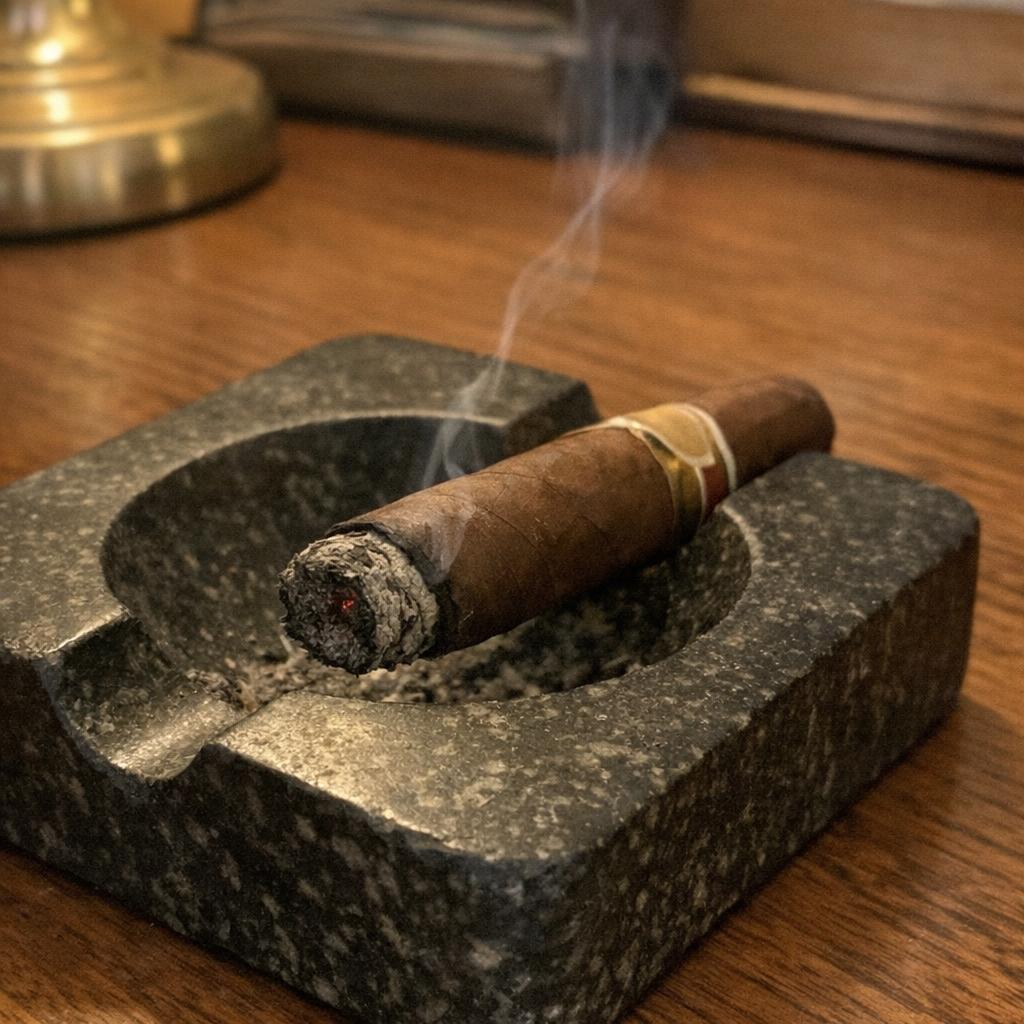
Cigar smoke is not inhaled into the lungs. It is drawn into the mouth, held briefly so the palate can read it, and then exhaled. This is the most important technical difference between cigar smoking and cigarette smoking, and it is also the difference that produces the entire pleasure of the practice.
The reason is in how the two are made. Cigarette tobacco is engineered to be inhaled deeply, because its nicotine is delivered to the bloodstream through the lungs. Cigar tobacco is fermented, aged, and rolled to deliver flavour through the mucous membranes of the mouth and the retronasal passage. The nicotine that reaches your bloodstream does so more slowly, through the lining of the mouth and throat. Inhaling cigar smoke does not produce the experience the cigar was built for; it produces a harsh, often nauseating one, and it is the single most common mistake a first-time cigar smoker makes.
Once the smoke is in your mouth, two motions are worth learning. The first is simply tasting: rolling the smoke slowly around the mouth to read the flavours on the tongue, the soft palate, and the gums before you let it go. The second is retrohaling, gently exhaling a small amount of smoke through the nose rather than the mouth, which exposes it to the olfactory receptors where most flavour perception happens.
Pace yourself. Roughly one slow puff a minute keeps the smoke cool and the flavours clean; rushing overheats the cigar and turns it bitter, which beginners often misread as a sign they should be inhaling harder. They should be slowing down instead. A cigar rewards patience and punishes hurry.
If you feel light-headed, that is the nicotine, not a cue to inhale differently. Eat something beforehand, keep water to hand, and set the cigar down when you have had enough. For the structured way to record what you taste across a cigar, see the Cigarro Method, and for how the cigar is built, see The Anatomy of a Cigar.