The question arrives at the shop counter in much the same shape every time. Someone has decided they would like to take up cigars, properly, and they want to know which one to buy first, or, just as often, which cigar to buy as a gift for somebody who has. What they are really asking, underneath, is which cigar will not embarrass them and will not make them unwell. Both are fair worries, and both have good answers.
A beginner cigar is not a lesser cigar. It is a cigar chosen for a palate that has not yet been taught what to look for, and for a body that has not yet met much nicotine. The craft is to start somewhere mild and well made, smoke it slowly, and pay attention. Do that a dozen times and you will no longer be a beginner. You will be someone who smokes cigars, with a few opinions of your own.
What follows is a shortlist, arranged the way a real shelf tends to fill up: the everyday classics first, then the value picks, then a handful of cigars for the week you decide to step up. Every one of them is mild in strength and forgiving in the hand. None will ask more of you than you are ready to give.
What a beginner cigar actually is
Two words get muddled in cigar shops constantly, and sorting them out will save you a green-faced afternoon. Body describes how much flavour a cigar lays on the palate, the richness and weight of the smoke as your mouth and nose read it. Strength describes nicotine, and nicotine is what the body feels: the light head, the slight sway, the sudden wish to sit down. The two often travel together, yet not always. A cigar can be full of flavour and gentle in strength, and the better mild cigars tend to be precisely that.
The unpleasant turn every beginner has been warned about, going green or getting nic-sick, comes from strength rather than body. It is the nicotine, met too quickly on an empty stomach, that turns a pleasant half-hour into a lie-down. So the first rule of a beginner cigar is simply that it be mild in strength. Flavour you can chase later, and it does no harm while you learn.
A few habits matter as much as the cigar. Eat something beforehand. Keep water or a plain drink to hand. Draw gently, about once every thirty seconds to a minute, so the cigar smoulders cool instead of running hot. And do not inhale; a cigar is tasted in the mouth and let go, never pulled into the lungs. Keep to those and the worst a mild cigar can do is bore you, which the ones below will not.
Why Connecticut shade earns its place
Run down any beginner shortlist and one word keeps returning: Connecticut. There is a reason the leaf appears so often, and the story is worth a minute, because it explains what ends up in the smoke.
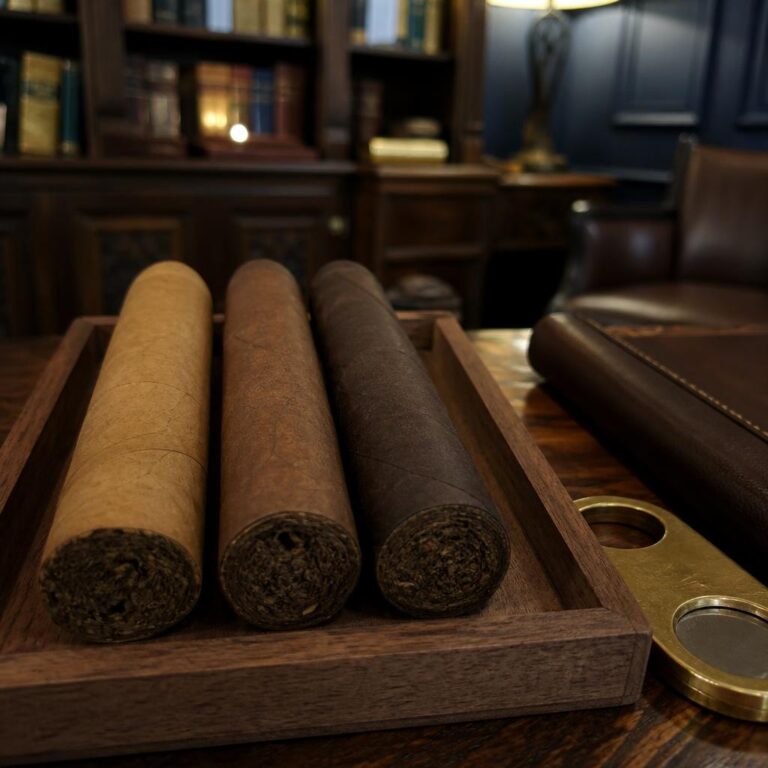
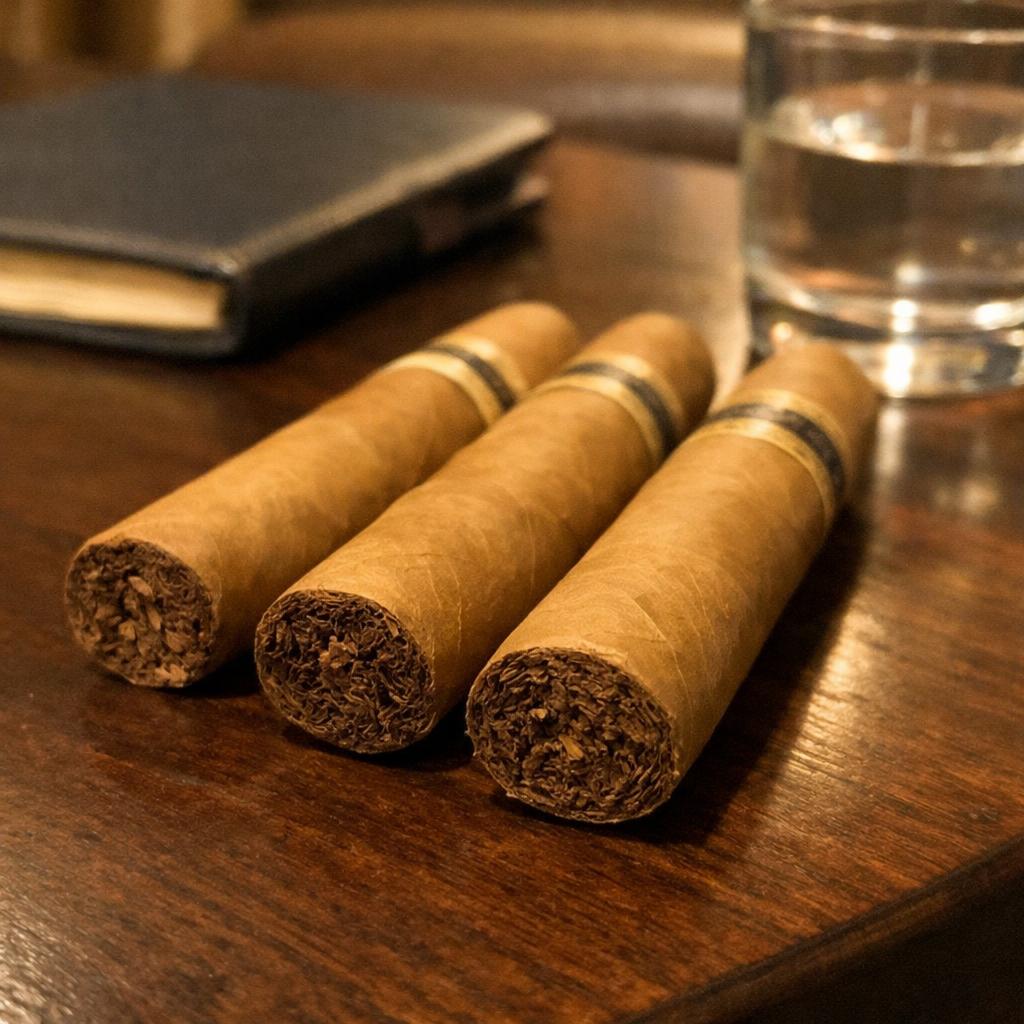
Connecticut Shade wrapper is grown under tents. The first was raised on River Street in Windsor, Connecticut, in 1900, a stretch of cheesecloth thrown over the field to soften the sun. A leaf grown in filtered light comes up thinner and paler than one grown in full glare, and silkier to the touch, with little of the pepper that hard sun develops. The result is the wrapper most people picture when they imagine a smooth cigar: pale gold and easy on the tongue.
Most cigars sold today as Connecticut are in fact Ecuadorian Connecticut, grown from the same seed but under the permanent cloud cover that sits over parts of Ecuador rather than under any man-made tent. The cloud does the tent’s work for nothing, and the volcanic soil lends a shade more sweetness. The two are close cousins. Macanudo Café, Ashton Classic and AVO Classic still wear genuine Connecticut-grown leaf; most of the rest, the Olivas and Perdomos and Rocky Patels, take the Ecuadorian version. Either way, a pale wrapper is a fair signal of a gentle smoke. It is only one branch of the family, mind; the full range of wrapper shades runs from this pale gold down to a near-black Oscuro. For a deeper shortlist beyond this trio, our Connecticut cigar picks cover the category properly.
One honest caveat, since you will hear it claimed otherwise. The wrapper does not supply most of a cigar’s flavour. It contributes the finer, higher notes, the cream and cedar and nuttiness, while the binder and filler bunched inside set the body and the strength. Cigar Aficionado, asked to settle which part matters most, declined to name a figure and called it a debate unlikely to be solved soon. Treat anyone who tells you the wrapper is ninety percent of the cigar with the patience you would give a fishing story.
The everyday classics
If you buy a single cigar to begin with, buy a Macanudo Café. It is the best-selling premium handmade cigar in America, and not for reasons of fashion: it is mild, creamy, faultlessly rolled, and the same in this year’s box as it was in the last. A beginner wants consistency above novelty, and nothing on the shelf offers more of it. Give it three-quarters of an hour in a robusto and notice how little it asks of you.
The Ashton Classic is the next rung, and the one I would press into most new smokers’ hands. Built by the Fuente family in the Dominican Republic under a genuine Connecticut Shade wrapper, it runs mild to mild-medium, with cream and toasted almond and a whisper of pepper at the finish. It costs a little more than the Macanudo and returns the difference in polish.
From the Fuente family directly, the Arturo Fuente 8-5-8 in its natural Connecticut dress is a beginner’s cigar that a veteran will smoke without complaint. Smooth and lightly sweet, mild enough for a first outing, and put together with the construction Fuente is known for. Beside it, the AVO Classic offers Davidoff-grade rolling at a kinder price than the Davidoff name itself: creamy and even, and very hard to smoke badly.
The Oliva Connecticut Reserve finishes the everyday shelf. Oliva made its name on stronger Nicaraguan blends, so this is the house proving it can murmur as well as it can talk. An Ecuadorian Connecticut wrapper over Nicaraguan insides gives a mild, creamy morning cigar that some seasoned smokers find too quiet, which is exactly what you want while you are finding your feet.
The shortlist, compared
Reading about mildness only goes so far. Here is how the five sit side by side, so you can walk into a shop and ask for one by name.
| Cigar | Wrapper | Strength | Roughly | Why it suits a newcomer |
|---|---|---|---|---|
| Macanudo Café | Connecticut Shade, Dominican Republic | Mild | $5 to $10 a stick | Consistent box after box. A beginner wants that more than novelty. |
| Ashton Classic | Connecticut Shade, Dominican Republic | Mild to mild-medium | $5 to $10 a stick | Cream, toasted almond, a whisper of pepper. A little more polish for a little more money. |
| Arturo Fuente 8-5-8 (Natural) | Connecticut, Dominican Republic | Mild | Around $8 a stick | Fuente construction in its gentlest dress. Smooth and lightly sweet. |
| AVO Classic | Connecticut Shade, Dominican Republic | Mild to medium | Roughly $8 to $13 a stick | Davidoff-trained rolling at a kinder price. Creamy, even, hard to smoke badly. |
| Oliva Connecticut Reserve | Connecticut seed, grown in Ecuador, Nicaragua | Mild | Roughly $7 to $10 a stick | A stronger house on its quietest setting. Some veterans find it too gentle, which is the point here. |
The value shelf
Learning costs a little money, because you will smoke some duds and some that are simply not for you. There is no shame in keeping the early experiments cheap, and several genuinely good cigars cost very little, as our shortlist of the best cigars under $20 and under $10 sets out at length.
Gispert is the one I recommend most often to a thrifty beginner. An Ecuadorian Connecticut wrapper over Honduran and Nicaraguan tobacco, mild, with cedar and a nutty sweetness, cleanly rolled, and priced so that a bundle of them costs less than a single premium stick. For the money there is little to better it.
The Baccarat, made in Honduras under the Camacho roof, wants a word of explanation, because it carries a sweetened cap. The maker treats the end you draw from with a touch of food-grade sweetener, so the first inch arrives with a faint sugar note before the tobacco takes the wheel. Purists sniff at the idea, and you are welcome to join them once you have earned the right, but a sweet tip is an honest and forgiving way in, and the Baccarat is the classic of the type: mild, cheap and friendly.
The Rocky Patel Edge Connecticut is worth naming with care, because the plain Edge is a full-bodied cigar that will flatten a beginner. The Connecticut version is its mirror image, the strength drawn out and an aged Ecuadorian Connecticut wrapper left to be creamy and smooth, the sort of thing people keep in the bag for a round of golf. And the Perdomo Champagne Connecticut, the house’s best seller, is aged in bourbon barrels and shows it, with a butterscotch note and a generous volume of smoke that beginners take to at once and rarely outgrow.
When you decide to step up
There comes an evening, usually around the second box, when mild starts to feel like training wheels. These are the cigars to reach for then. They stay gentle on the nicotine, which keeps the afternoon pleasant, but they carry more flavour and more to think about. If you would rather stay in the gentle register a while longer, our pick of the best mild cigars is the list to keep.
The San Cristobal Elegancia is the cigar I use to teach the body-versus-strength lesson in the hand rather than on paper. Rolled by the My Father factory under an Ecuadorian Connecticut wrapper, it is mild in strength and yet surprisingly full in body, creamy to the point that people reach for the word butter. It proves that mild need not mean thin, which is the single most useful thing a new smoker can learn.
The Montecristo White, in the non-Cuban line made by Altadis, opens smooth and lightly sweet and builds toward a true medium by the final third, which makes it a fine cigar for watching the smoke develop as it burns. The Romeo y Julieta 1875 quietly breaks this article’s pattern: its wrapper is Indonesian rather than Connecticut, and it sits at the soft end of medium, a classic tobacco taste at a fair price.
A useful cigar to meet early, if only to correct an assumption, is the E.P. Carrillo New Wave Connecticut. It wears the pale wrapper of a mild cigar and smokes nearer to medium, which is just the lesson that wrapper colour is no promise of strength. Take it as your second or third cigar rather than your first.
Two more worth knowing. If you fancy a mild that is not a Connecticut, the Hoyo de Monterrey Excalibur, dressed in Ecuadorian Sumatra, is sweet and creamy and easy, though be warned that the plain Hoyo de Monterrey line beneath the Excalibur name is full-bodied and no place for a beginner. And on the evening you mean to spend properly, the Davidoff Signature is a mild cigar of real refinement, beginner-friendly in its blend if not in its price. When you are ready to pick without a list, choosing a cigar at the counter walks through the questions to ask.
How to rate your first cigar without faking it
The temptation, the first time somebody hands you a cigar and asks what you taste, is to invent something. Resist it. You will not find leather and espresso and dark cherry in your first robusto, and pretending you do is how people end up bluffing for years. The better habit is to describe what you actually notice, in plain words, and to do it the same way each time, so that your notes begin to mean something.
The method we teach at Cigarro is review-by-thirds: you take the cigar in three acts, the first third, the second and the last, and set down a line or two on each. Not because thirds are sacred, but because a cigar genuinely changes as it burns, and a single verdict at the end throws away most of what happened along the way. In the first third you might note only that the draw is easy and the smoke tastes faintly of cream and wood. That is a real review. It beats a paragraph of borrowed adjectives.
Write it somewhere you will keep. A pocket notebook does the job; so does the Cigarro app, which exists precisely to hold these notes in order and let you search your own palate later, when you want to recall what that mild Tuesday cigar actually was. The free tier holds thirty cigars, which is more than enough to carry you through the shortlist above and well into having opinions of your own. If you want the longer form of the discipline, our guide to reviewing a cigar walks through each third in detail, and the companion piece on tasting a cigar once you are ready to look covers how to find the flavours when the time comes.
Start mild, and smoke slowly
None of this is a ladder you are obliged to climb. Plenty of contented smokers spend their lives on Connecticut shade and want for nothing. Still, the day usually comes when a mild cigar feels like a held breath, and you find yourself curious about the darker end of the shelf. That is the moment to meet a Habano wrapper, with its pepper and its warmth, or a Maduro, the near-black leaf fermented long and slow toward sweetness and depth, which you can read about in this short guide. Broadleaf, darker again, waits past that.
Go gently even then. The cigars above will have taught you to smoke slowly and to notice what you are smoking, and those two habits matter far more than the strength of any single stick. Keep the early notes, hesitant and unsure as they are. In a year you will read them back and find, in your own hand, the evening you stopped being a beginner.
Before you buy
What actually makes a cigar mild?
Mostly the wrapper leaf. Connecticut Shade, grown under cheesecloth in Ecuador or the Connecticut River Valley, is the lightest and creamiest you will find. Move through Habano and Sumatra-seed wrappers and the profile deepens, and by the time you reach a Maduro, a wrapper darkened through extra fermentation, you are in different territory altogether. Every cigar on the shortlist above wears a Connecticut wrapper for exactly this reason.
Should my first cigar be a robusto?
It is the sensible size to start with. A robusto runs about five inches with a wide fifty ring gauge, which gives you forty-five minutes to an hour, long enough to notice how a cigar changes as it burns down, short enough that a dud does not ruin your afternoon. Save the longer coronas and the fatter toros for once you know what you are looking for.
What should I avoid the first time out?
A full-bodied Nicaraguan puro or a heavy Maduro wrapper as your very first cigar. Both are excellent cigars, just not excellent introductions. Smoke on a full stomach rather than an empty one, keep a glass of water within reach, and do not inhale. A cigar is drawn into the mouth and released, never pulled into the lungs.
Do I need to let a new cigar rest before I smoke it?
Not if it has already spent time in a shop humidor at the right humidity, which most of the cigars above have. If you have bought a box to keep at home, give the newcomers a few days in your own humidor to settle before lighting one. Our guide to resting a cigar covers the full case for patience, for when you are ready for it.