Twenty-five is an unfashionable number for a cigar list. It is too many for the magazine cover and too few for the encyclopaedia. It is also exactly the right number to do the robusto justice, because the robusto is the vitola that reviewers turn to when they want to test a blend honestly: long enough to develop through thirds, short enough to finish in one sitting before smoke fatigue dulls the palate.
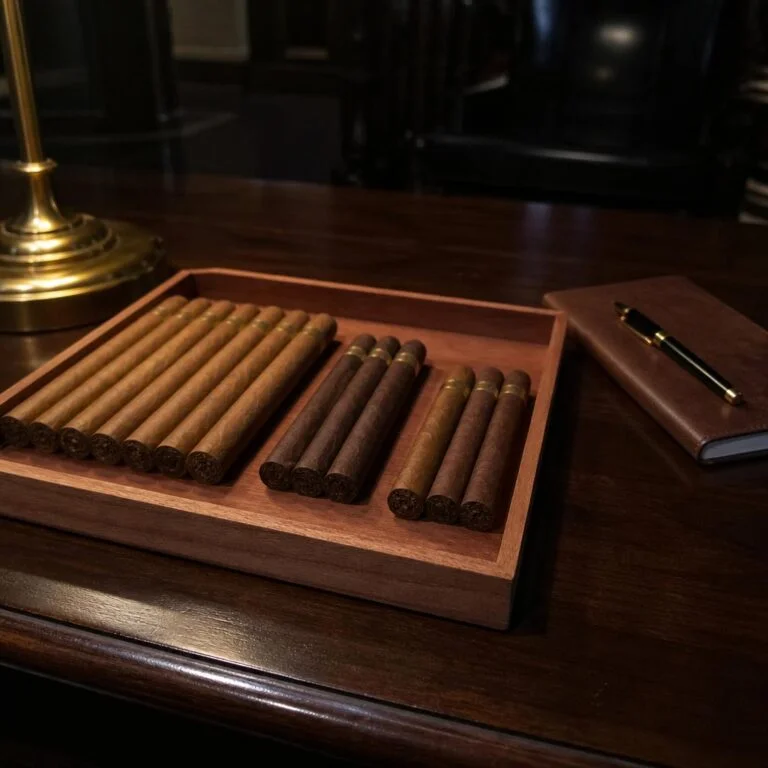
This is the Cigarro Concierge’s shortlist for 2026. It is not a leaderboard, and there is no number-one stick at the top of it. The cigar I want at ten in the morning is not the cigar I want at ten at night, and no honest list pretends otherwise. What follows are twenty-five robustos grouped by wrapper character so a reader can find the cigar that suits the mood rather than the cigar that suits a ranking.
A note on selection. Every entry below has been covered in the editorial trade press (Halfwheel, Cigar Aficionado, Cigar Journal, or Cigar Coop), and its construction details are taken from the maker’s published specifications. The quality opinions are mine, and the framework that produced them is the Cigarro Method, our review-by-thirds discipline applied to a long list rather than a single cigar.
Why the Robusto Is the Critic's Default Vitola
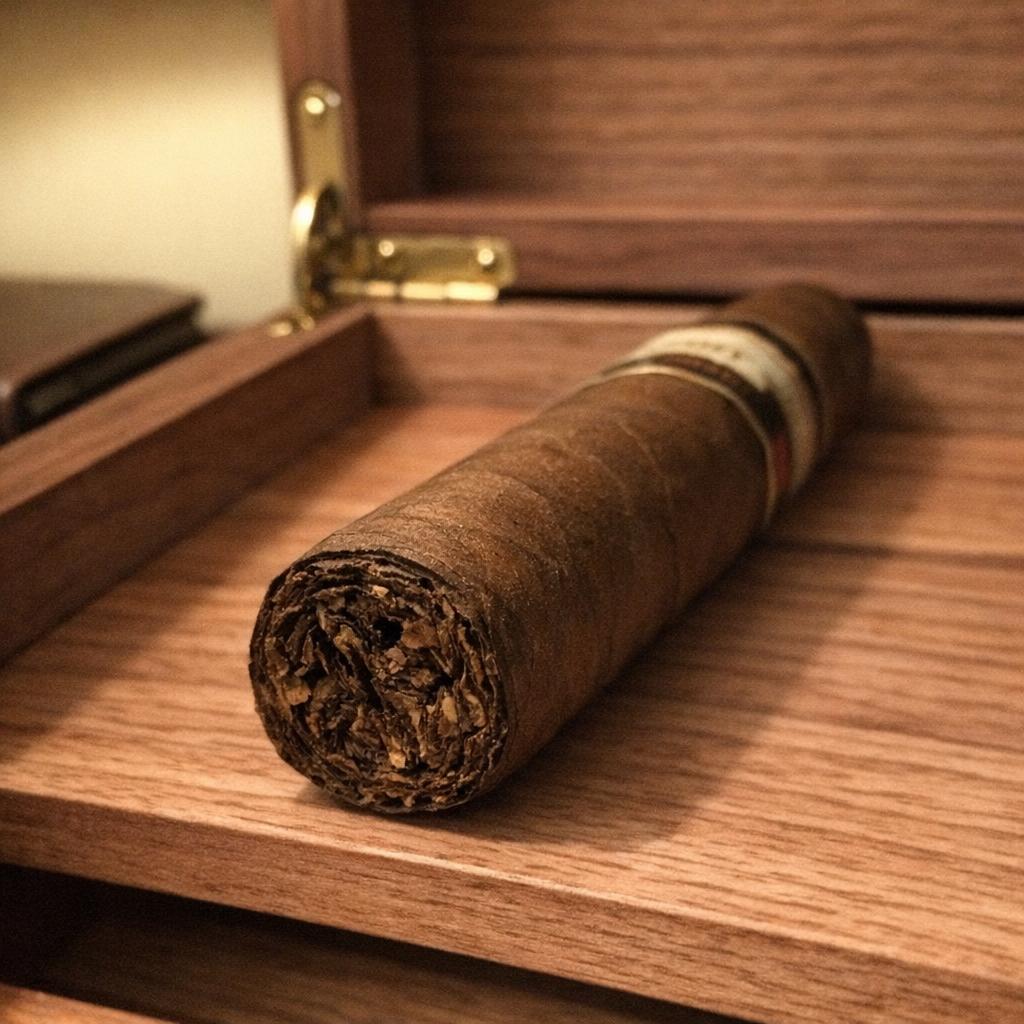
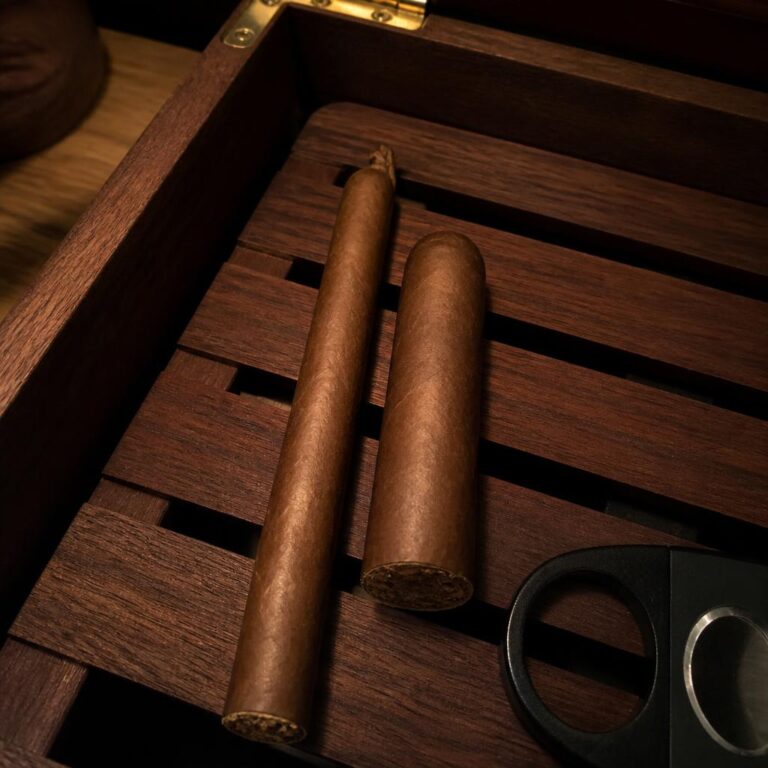
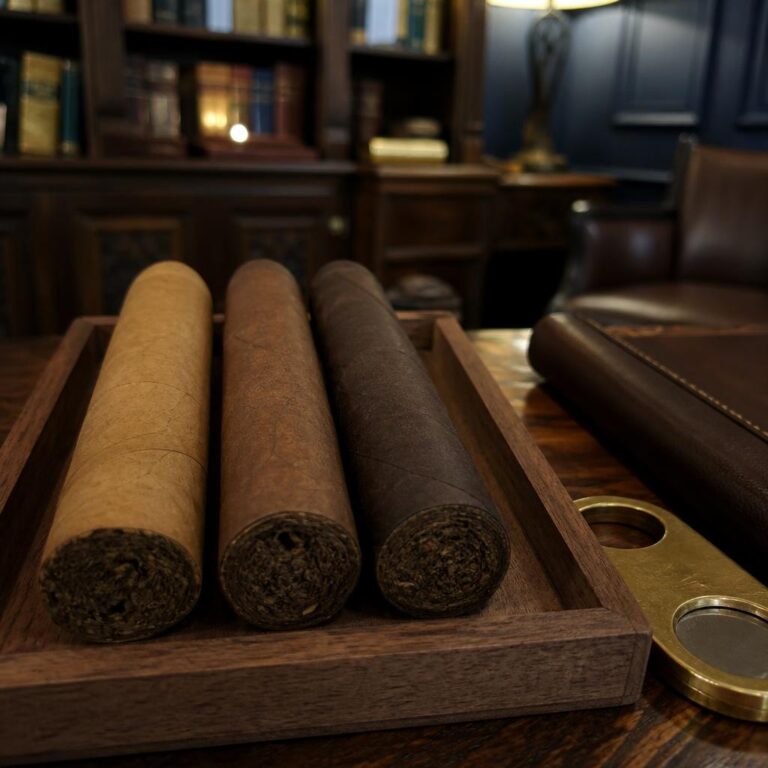
The robusto sits at roughly five inches by fifty ring gauge, and that geometry is not an accident. Cigar Aficionado’s editorial team has long treated the format as the one that gives a blender enough length to express the second third’s character without overcommitting the smoker. A churchill demands ninety patient minutes. A petite corona delivers a single act in twenty. The robusto runs forty-five to sixty minutes and gives a blend room to introduce itself, develop, and resolve.
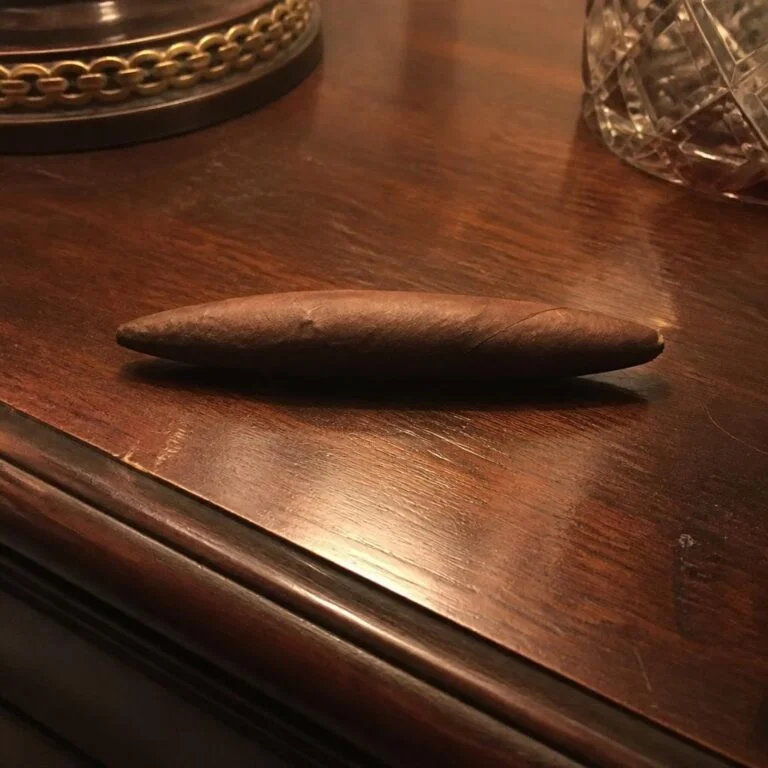
This is the format most professional reviewers prefer for scoring. When Halfwheel’s reviewers set out to evaluate a new line, the robusto is the default vitola because it isolates the blend rather than the format. A box-pressed toro can mask construction issues that a parejo robusto reveals immediately. A perfecto can flatter a blend by concentrating its early flavour. A robusto, in plain terms, is honest.
For these reasons the robusto is also the vitola Cigarro recommends when a new subscriber wants to learn the review-by-thirds framework. The first third has time to settle, the second has time to develop, the final third has time to either reward or punish patience. A reader who learns to taste a cigar in this format can taste any cigar in any format thereafter. Readers who want a wider treatment of the format question will find one in our vitola dictionary, a useful side-by-side in our piece on churchill, toro, and robusto, and the full story on that number in cigar ring gauge explained.
The Cigarro Method Applied to a Long List
The Cigarro Method asks four questions of every cigar. How is it built. What does the first third tell me. What does the second third add. And what does the finish either confirm or contradict. Twenty-five cigars is a long list, and the temptation is to write a paragraph that says nothing in particular about each. Every entry below carries three things instead: the blend, sourced from the maker; the vitola, robusto unless otherwise noted; and the single sentence I would say if a friend asked me why this cigar keeps its place on the shelf.
Where a particular release within a brand’s line is the one I prefer, I name it explicitly. Robustos vary by line, and a Padrón 1964 Anniversary Exclusivo is not the same cigar as a Padrón 1926 Series, even though both wear the same maker’s name on the band.
A final framing note. Cuban cigars are included where they are legally available to the reader. In the United States they remain restricted. In Canada, the UK, the EU, and most of the Commonwealth, they are stocked by any serious tobacconist.
Five Connecticut-Shade Robustos for the Morning Shelf
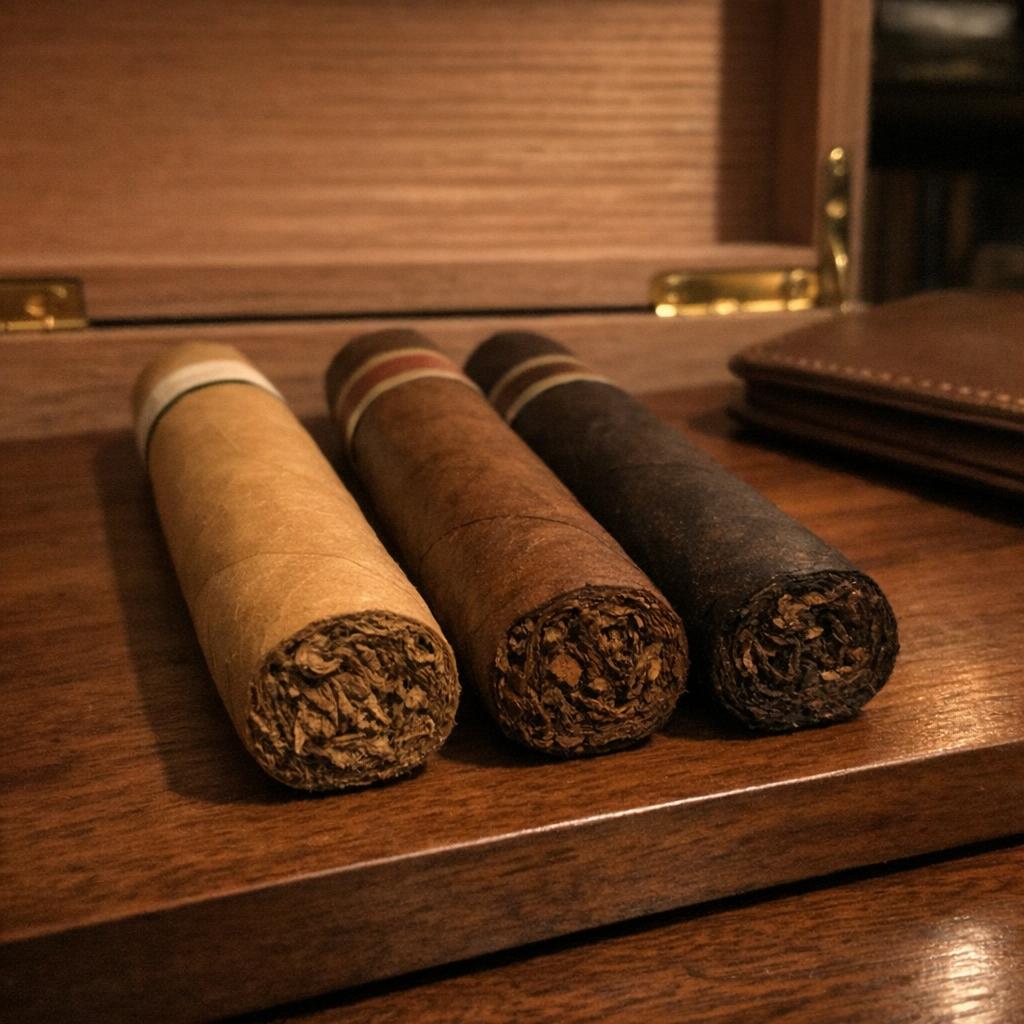
The Connecticut Shade wrapper, grown either in the Connecticut River Valley or in Ecuador under perpetual cloud cover, gives a cigar its quietest formal expression. Pale, even-toned, restrained. These are the sticks for the first cigar of the day, with coffee, before the palate has committed to anything heavier.
1. Ashton Classic Robusto: Dominican filler and binder under an Ecuadorian Connecticut Shade wrapper, 5 by 50. Sweet cedar, white pepper through the retrohale, a finish that tilts faintly creamy when smoked patiently. A blend that has not drifted in twenty years.
2. Macanudo Café Hyde Park: General Cigar’s Connecticut Shade flagship at 5.5 by 49, fractionally longer than a textbook robusto but still in the format band. Honey, toasted bread, a soft cedar finish. The cigar that taught a generation what mild tastes like.
3. Montecristo White Series Robusto: Ecuador Connecticut Shade wrapper, Nicaraguan binder, Dominican and Peruvian fillers, 5 by 52. A more developed Connecticut than the entry-level expressions, with toasted bread, light caramel, and a longer second third than its category usually permits.
4. Romeo y Julieta Reserva Real Robusto: Ecuadorian Connecticut wrapper around a Dominican blend, 5 by 50. Honeyed almond, faint dried herb, a clean cedar finish. The cigar to give a friend who has only smoked the green-band Romeo and thinks the marca is finished.
5. Davidoff Aniversario Special “R”: Ecuadorian Connecticut wrapper, Dominican filler and binder, 4 7/8 by 50. Davidoff’s interpretation of the Connecticut style: restrained almond, dry cedar, a long quiet finish. The cigar to learn the wrapper from.
Five Habano-Wrapped Robustos for the Middle of the Day
The Habano wrapper, grown from Cuban-seed tobacco in Nicaragua, Ecuador, or Honduras, occupies the centre of the strength range. These are the cigars for the early afternoon, when coffee has given way to water and the smoker is no longer interested in being polite.
6. Padrón 1964 Anniversary Exclusivo (Natural): Nicaraguan puro, four-year-aged tobaccos, sun-grown habano wrapper, 5.5 by 50. The benchmark medium-bodied Nicaraguan robusto for thirty years. Cocoa, leather, almond, an oak finish that holds.
7. Oliva Serie V Melanio Robusto: Ecuador Sumatra wrapper, Nicaraguan binder and filler, 5 by 52. The Churchill in this line was Cigar Aficionado’s 2014 Cigar of the Year, and the robusto carries the same blend. Espresso, cedar, a perfumed sweetness that emerges through the second third.
8. My Father Le Bijou 1922 Petit Robusto: Nicaraguan puro under a Nicaraguan Habano Oscuro wrapper, 4.5 by 50. The shortest cigar on this list and the most concentrated. Cedar, black pepper, dark cocoa, a finish that lingers past the cigar itself.
9. Arturo Fuente Don Carlos Robusto: Cameroon wrapper grown in West Africa, Dominican filler and binder, 5.25 by 50. Sweet cedar, almond skin, faint hay, the unmistakable Cameroon nut-skin character. The cigar to learn what Cameroon tastes like.
10. Joya de Nicaragua Antaño Dark Corojo Robusto Grande: Nicaraguan puro under a dark Corojo wrapper, 5 by 52. Earth, leather, black pepper through the nose, a long bitter-sweet finish. Not subtle. Not trying to be.
Five Maduro Robustos for After Dinner
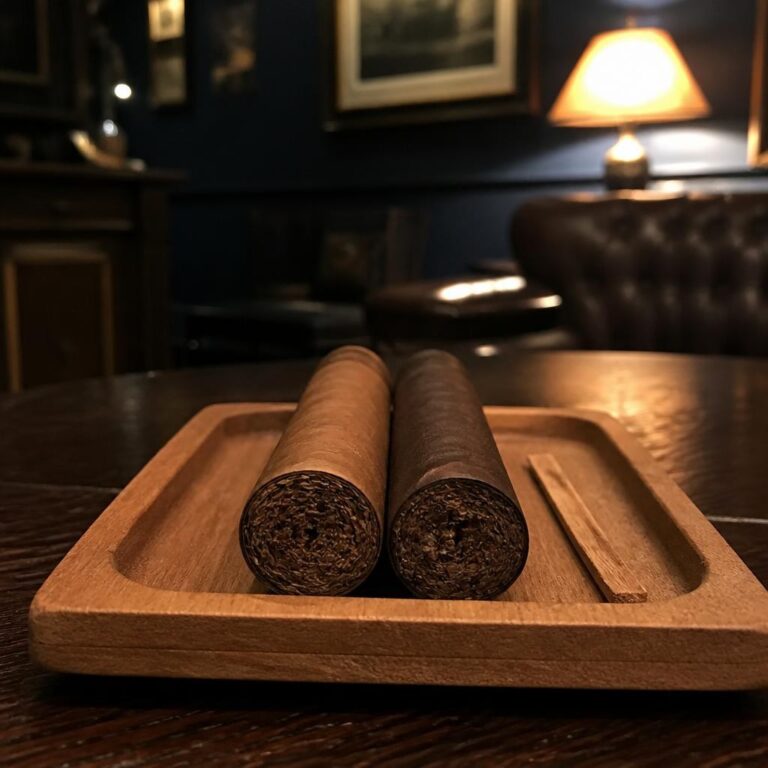
A maduro wrapper is a leaf fermented long and dark, often for the same duration twice. The wrapper carries sweetness rather than spice, and the smoker’s question shifts from “what does this remind me of” to “how patient am I willing to be.” These are the cigars for the last smoke of the day, with coffee, possibly with a small whisky. The deeper background is in what maduro actually means.
11. Padrón 1964 Anniversary Exclusivo Maduro: the natural’s darker twin. Nicaraguan puro, sun-grown maduro wrapper, 5.5 by 50. Espresso, dark chocolate, raisin, a long syrupy finish. The starting point for any conversation about Nicaraguan maduros.
12. Drew Estate Liga Privada No. 9 Robusto: Connecticut River Valley stalk-cut Broadleaf maduro wrapper, Brazilian Mata Fina binder, Honduran and Nicaraguan filler, 5 by 54. Cocoa, coffee, espresso bean, a finish that lasts as long as the third did. The cigar that taught a decade of American smokers what broadleaf was for.
13. Tatuaje Black Label Robusto: Nicaraguan puro under a dark Nicaraguan wrapper, 5.5 by 52. Pete Johnson’s tribute to Cuban-style boutiques; spicier than the wrapper colour suggests. Black pepper, dark cocoa, cedar, an iron finish.
14. La Aroma de Cuba Mi Amor Magnifico: San Andrés Mexican wrapper, Nicaraguan filler and binder, 5.5 by 52. Pepin Garcia blended for Ashton, with the wrapper doing the heavy lifting. Dark chocolate, espresso, raisin, a long sweet finish.
15. Foundation Charter Oak Broadleaf Rothschild: Connecticut Broadleaf wrapper, Honduran filler and binder, 4.5 by 50. Affordable, broadleaf-forward, and built better than its price suggests. Dark coffee, cocoa, leather, a finish that is not trying to impress anyone.
Five Nicaraguan Boutique Robustos for the Curious Reader
The boutique Nicaraguan scene has dominated American cigar enthusiasm for the better part of fifteen years. These are makers whose names recur in best-of lists more often than their distribution volumes deserve. The cigars below represent five different blenders, and any of them rewards a careful reader. For the wider context on origin, our pillar on Dominican versus Nicaraguan cigars is the place to start, and our complete guide to Honduran cigars covers the third of the big three.
16. Aging Room Quattro Nicaragua Maestro: Rafael Nodal’s all-Nicaraguan blend under a Habano wrapper, 5.5 by 50. A fractional robusto by ring gauge. The Quattro line has carried multiple top-tier critical placements in recent years. Cedar, sweet baking spice, dark fruit, a finish with measurable length.
17. Crowned Heads La Imperiosa Magicos: Ecuadorian Habano wrapper, Nicaraguan filler and binder, 4.5 by 52. A short-and-wide robusto that concentrates the entire line. Cocoa, cedar, faint cardamom.
18. Caldwell Eastern Standard Robusto: Connecticut Habano wrapper, Dominican Criollo ’98 and Pelo de Oro fillers, 5.5 by 52. Robert Caldwell’s house style is what one might call old-Hollywood smoke. Vanilla, white pepper, an unhurried finish.
19. Drew Estate Undercrown Sun Grown Robusto: Ecuadorian Sun Grown wrapper, Sumatran binder, Nicaraguan and Honduran fillers, 5 by 54. The most accessible Liga-adjacent smoke in the catalogue and a workhorse on most boutique shelves. Sweet cedar, light pepper, cocoa.
20. Davidoff Nicaragua Robusto: Davidoff’s first all-Nicaraguan blend under an Ecuadorian Habano Rosado wrapper, 5 by 50. The Davidoff signature restraint applied to Nicaraguan strength. Spice, cedar, sweetness without sugar.
Five Cuban Marca Robustos Where the Reader Can Obtain Them
The Cuban Robusto, the formal Habanos vitola of 4 7/8 by 50, has carried five different brands into the global enthusiast canon. These are the five most reliable releases by name. Enthusiasts in Canada, the UK, the EU, and most of the Commonwealth can find any of them at any serious tobacconist. Enthusiasts in the United States will need to wait for travel, or longer, for politics. All five are Cuban puros from the Vuelta Abajo region of Pinar del Río, per Habanos S.A.’s published origin documentation.
21. Cohiba Robustos: 4 7/8 by 50. Cohiba’s signature grassy-sweet profile, finely tuned through years of remarkable consistency. Cedar, hay, light cream, a finish shorter than the price suggests but cleaner than any other.
22. Partagás Serie D No. 4: 4 7/8 by 50. The cigar most often described as the Cuban Robusto by readers who have only tried one. Cedar, leather, earth, sweet tobacco, and a power that builds across the second third.
23. Hoyo de Monterrey Epicure No. 2: 4 7/8 by 50. The mid-bodied Cuban robusto for a smoker who finds the Partagás too brusque. Cedar, cocoa, a quiet middle, an honest finish.
24. Bolívar Royal Coronas: 4 7/8 by 50. The Bolívar reputation for power is partly age-driven. In fresh stock this robusto is closer to medium than the legend allows. Cocoa, espresso, salt.
25. Romeo y Julieta Short Churchill: 4 7/8 by 50, despite the name. The Habanos S.A. naming convention is its own joke; this is a robusto in everything but title. Cedar, honey, light spice, a finish that flatters cognac.
Six Honourable Mentions for Completeness
A list of twenty-five becomes a list of thirty-one if I am being honest. Six cigars deserve naming without earning their own paragraph. The Arturo Fuente Magnum R, for readers who want a Don Carlos at a lower price. The EP Carrillo Encore Majestic, Cigar Aficionado’s 2018 Cigar of the Year and a slightly larger robusto. The Ashton VSG Robusto, which is a different proposition from the Classic and deserves its own evening. The AJ Fernandez New World Cameroon Robusto, an affordable Cameroon-wrapped surprise. The HVC Selección Premier Robusto, the boutique I most often hand to first-time Nicaraguan smokers. And the Plasencia Alma Fuerte Sixto III Robusto, a Plasencia-family puro for the reader who wants to taste a single family’s tobacco from seed to wrapper.
Smoke One This Week and Log It
Twenty-five cigars is the right number to learn from and the wrong number to commit to. The robusto is the vitola the modern enthusiast learns the cigar on, and the shortlist above is one reader’s account of where the format is honest in 2026. Treat it as a sequence to work through rather than a hierarchy to argue about. The Cigarro app, where the review-by-thirds framework lives, is built for exactly this kind of working-through; the free tier is enough to start. If you are earlier in that sequence, start with the best cigars for beginners before working up to this list.
If the list seems weighted toward Nicaraguan tobacco, that is the year, not the bias. Nicaragua has spent fifteen years gathering critical attention and the inventories show. If it seems light on Dominican entries, the reason is more interesting: my Dominican picks tend to live in larger vitolas where their blends breathe better. That is a list for another year.
Final practical note. Every cigar above is widely distributed in the markets where it is legal. None of the picks rests on a limited release that you will fail to find at a serious tobacconist. The Cigarro shelf is meant to be smoked, not collected.