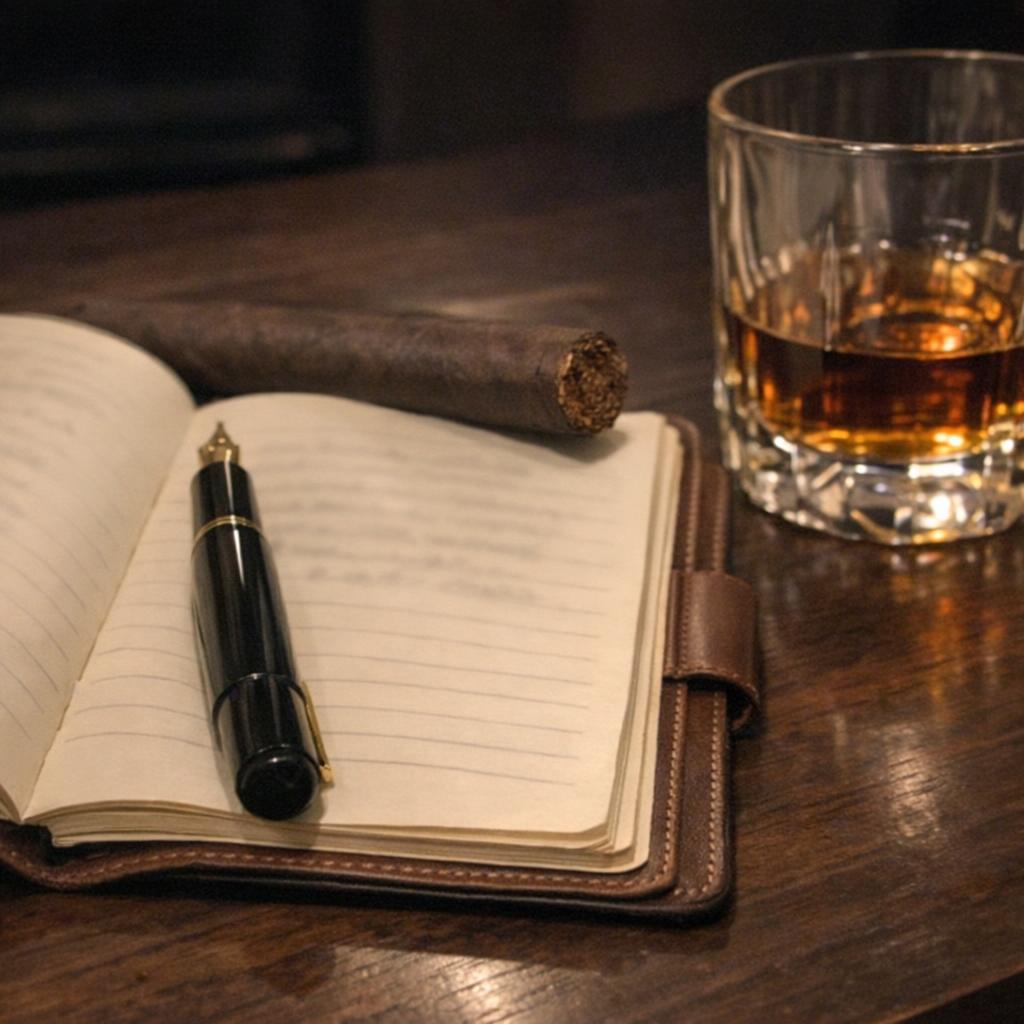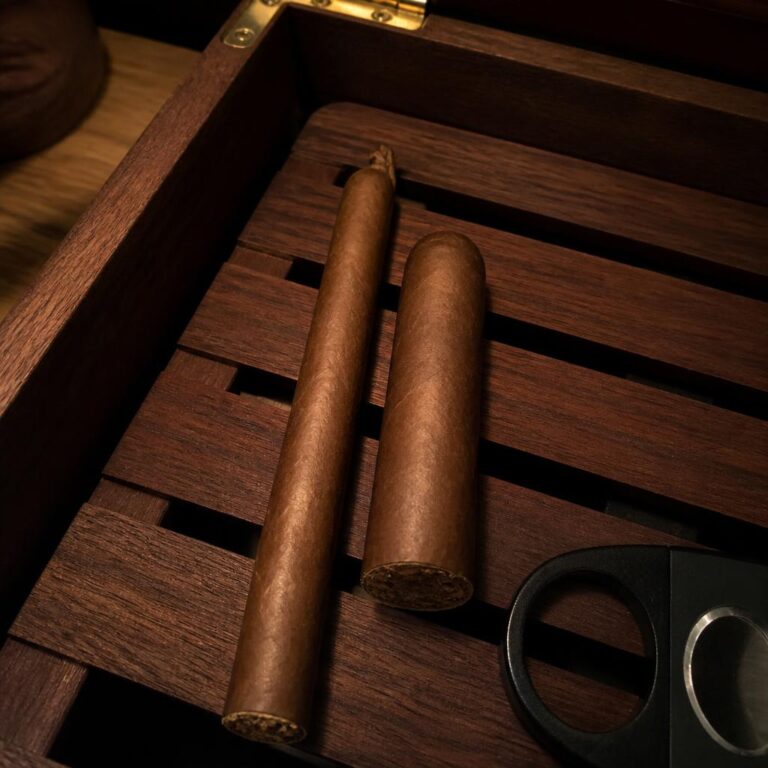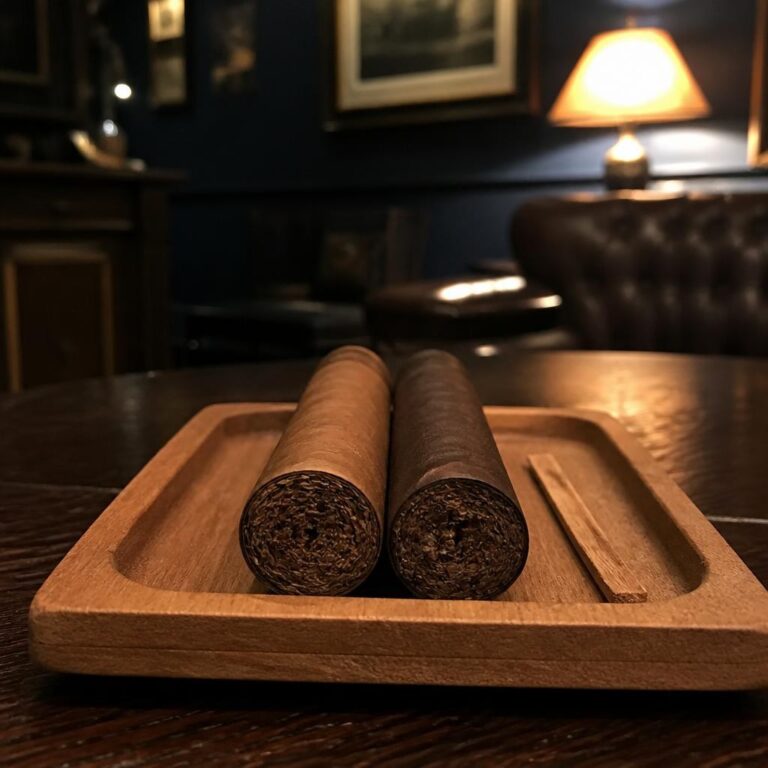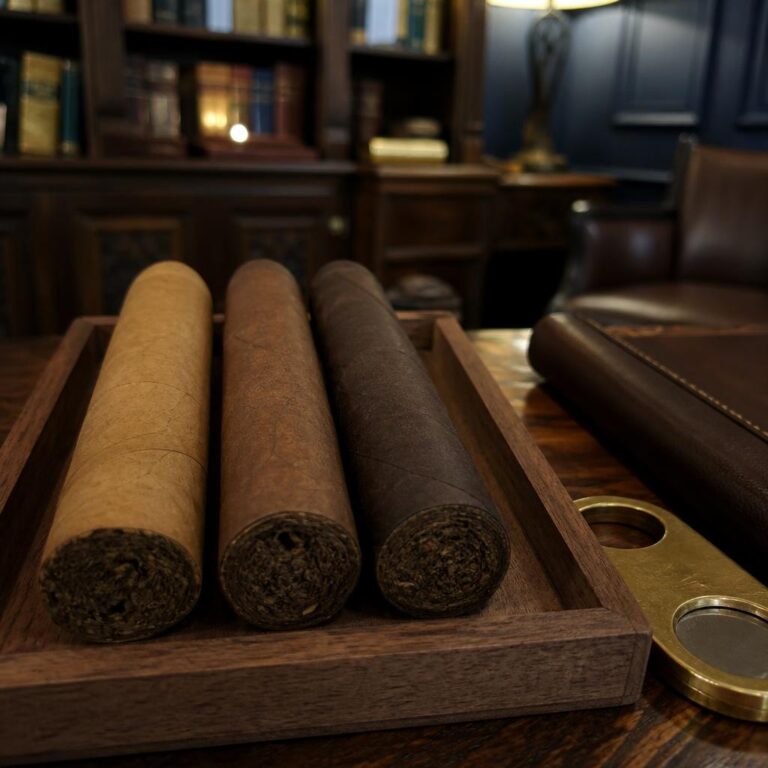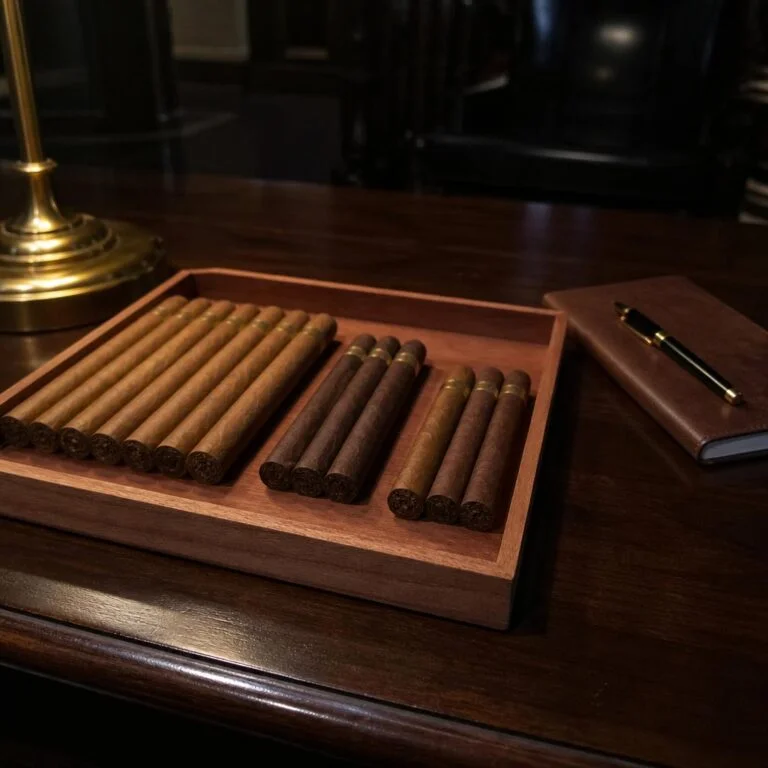
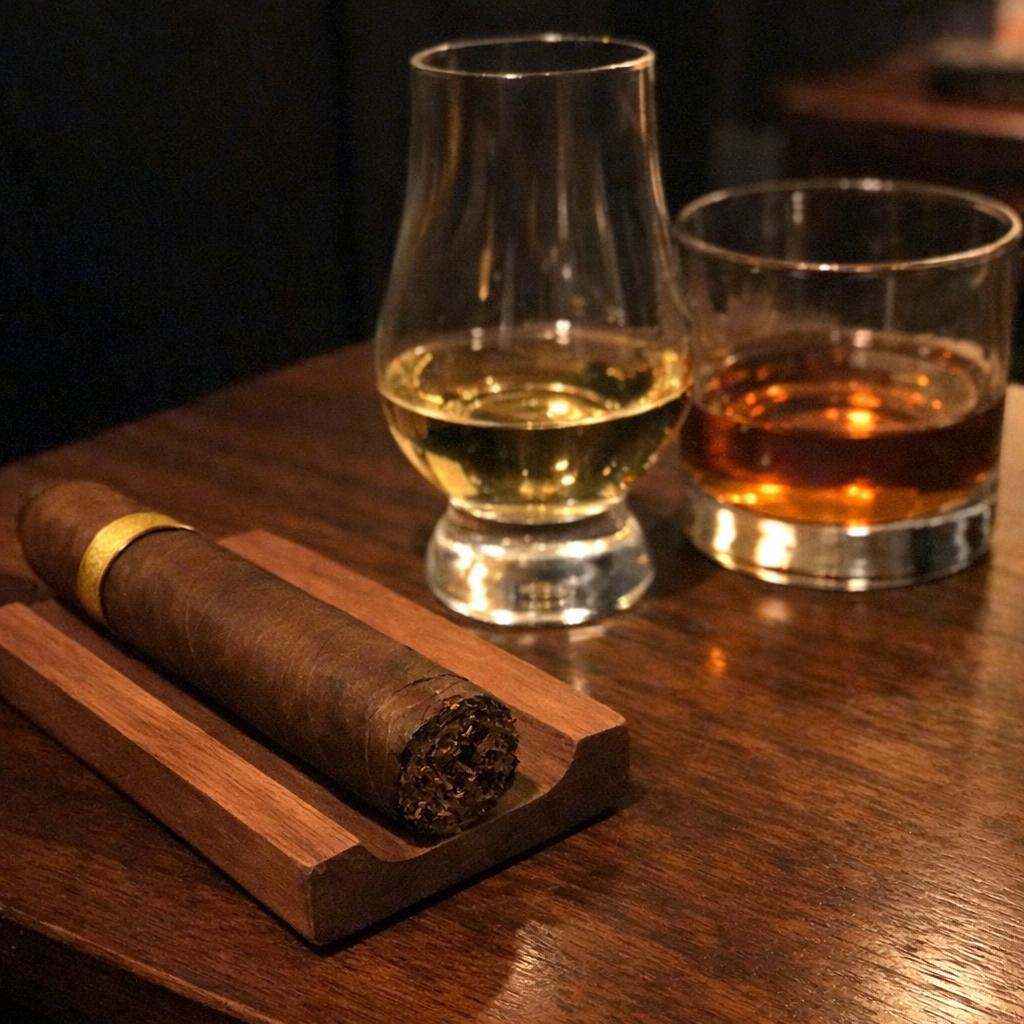
Somewhere along the way, pairing cigars with whisky picked up a reputation for difficulty. It deserves none of it. Pairing cigars with whisky is the simple craft of matching intensity and contrasting character. A mild cigar wants a lighter pour, and a full-bodied cigar wants a whisky with shoulders. Scotch is whisky without an e, bourbon is whiskey with one, and both sit happily beside a cigar when the weights agree.
That is the whole doctrine. Everything below is detail: how to read a Scotch shelf without a map, why bourbon is the easiest friend a cigar ever made, and three pairings you can pour this weekend without a moment’s anxiety. If the hour itself is the question, we have written on when in the day a cigar sits best, and if it is the rest of the drinks cabinet you are wondering about, our hub on cigar and drink pairing covers rum, port, wine, beer, tea and the cocktails worth the trouble.
Match the weight, contrast the character
The rule has two halves. The first half is weight. A cigar and a whisky should sit in the same weight class, so that neither bullies the other off the table. A delicate Connecticut beside a cask-strength peat monster will taste of nothing at all, and a full Nicaraguan will flatten a gentle dram just as rudely. Match mild to light, medium to medium, full to full, and you are most of the way home.
The second half is character, and here you have a choice. You can echo the flavours, cocoa against sherry sweetness, or set them against each other, dark smoke against orchard fruit. The trade press has long observed that a strong match coaxes out notes neither half shows alone: a quiet cigar finds cocoa it never mentioned, a bourbon turns up orange peel. That sideways surprise is the entire reason to bother.
Pace matters more than people admit. Draw, let the smoke go, wait a breath, then sip. If you take water in your whisky at all, a teaspoon opens the nose and spares your palate for the cigar. It also helps to know how to taste a cigar before asking it to perform a duet; the pairing is only as good as your attention.
Reading the Scotch shelf in three styles
Forget memorising regions. For pairing purposes, the Scotch shelf collapses into three working styles.
First, the fruit and honey school. Speyside is its heartland and The Glenlivet 12 is its postcard: orchard fruit, honey, a floral lift, barely any peat. These malts keep company best with mild cigars. A Connecticut-shade Dominican will not be shouted down, and the cream in the smoke folds neatly into the fruit.
Second, the sherry-cask school. Malts matured in ex-sherry casks trade orchard fruit for dried fig, walnut and dark toffee. They carry more weight without carrying smoke, which makes them the natural partner for medium-bodied cigars, a Cameroon or Habano wrapper especially.
Third, Islay and its peat. On Islay the malted barley is dried over peat smoke, and the phenols that smoke leaves behind are measured in parts per million. The island’s famous names run heavy with them, and Laphroaig 10 is the standard-bearer: smoke, iodine and sea air. Peat asks for a cigar that can hold its ground, full-bodied and dark-wrappered, preferably with cocoa to spare.
One spelling note, since the shelf will raise it. Scotland, Canada and Japan write whisky. Ireland and most of America write whiskey. It is geography, not quality.
Bourbon is the friendly one
If Scotch rewards study, bourbon rewards arrival. American law requires bourbon to be made from a mash of at least 51 percent corn and stored in new charred oak barrels, and those two facts do most of the explaining. Corn brings sweetness. Fresh char brings vanilla, caramel and toasted wood. Those are the notes a premium cigar already speaks, which is why it is hard to pour a bourbon that fights one.
The variable worth knowing is the flavouring grain. Most bourbons round out the corn with rye, which adds pepper and snap. A wheated bourbon swaps that rye for soft red winter wheat, Maker’s Mark being the famous example, and the result is gentler, all pastry and brown sugar. Rye-forward bourbons suit cigars with spice in the blend. Wheated bourbons flatter softer, rounder smokes and forgive almost everything.
If your taste runs dark, bourbon and maduro is the most reliable pairing in the catalogue. The wrapper’s espresso and dark chocolate find the barrel’s caramel and meet in the middle. We keep a running shortlist in the best maduro cigars of 2026 if you want a place to start.
Pairing No. 1
The gentle start
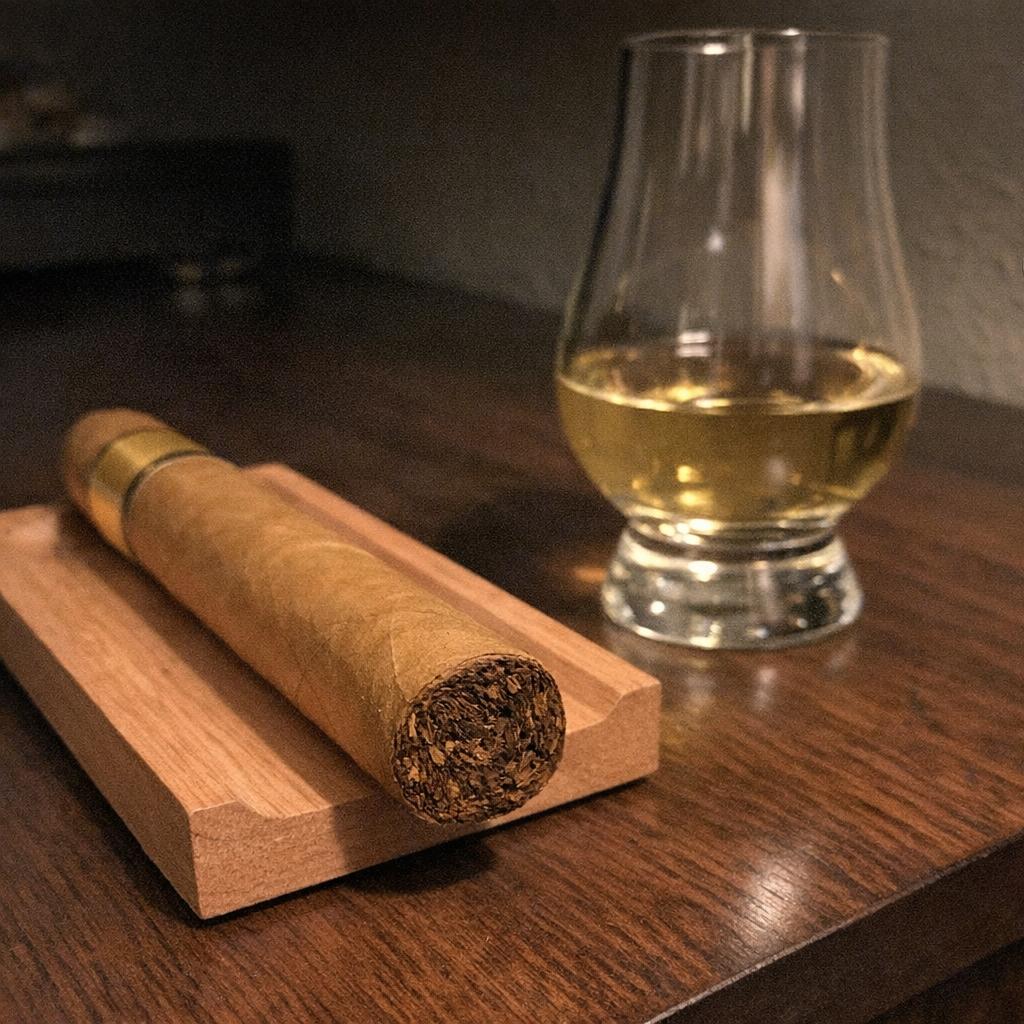
Ashton Classic is the cigar I hand to anyone who claims mild means boring: Dominican filler and binder aged three to four years under a golden Connecticut-shade wrapper, all cream and cedar with cashew underneath. Beside it, The Glenlivet 12, the Speyside postcard, apples and honey with a clean finish. Neither raises its voice, so you can hear both perfectly. The malt’s orchard fruit picks up a sweetness at the cigar’s edges that smoke alone never shows. Pour it early in the evening, while your palate is still fresh. This is a pairing for the first hour, not the last.
Pairing No. 2
The midweek standard
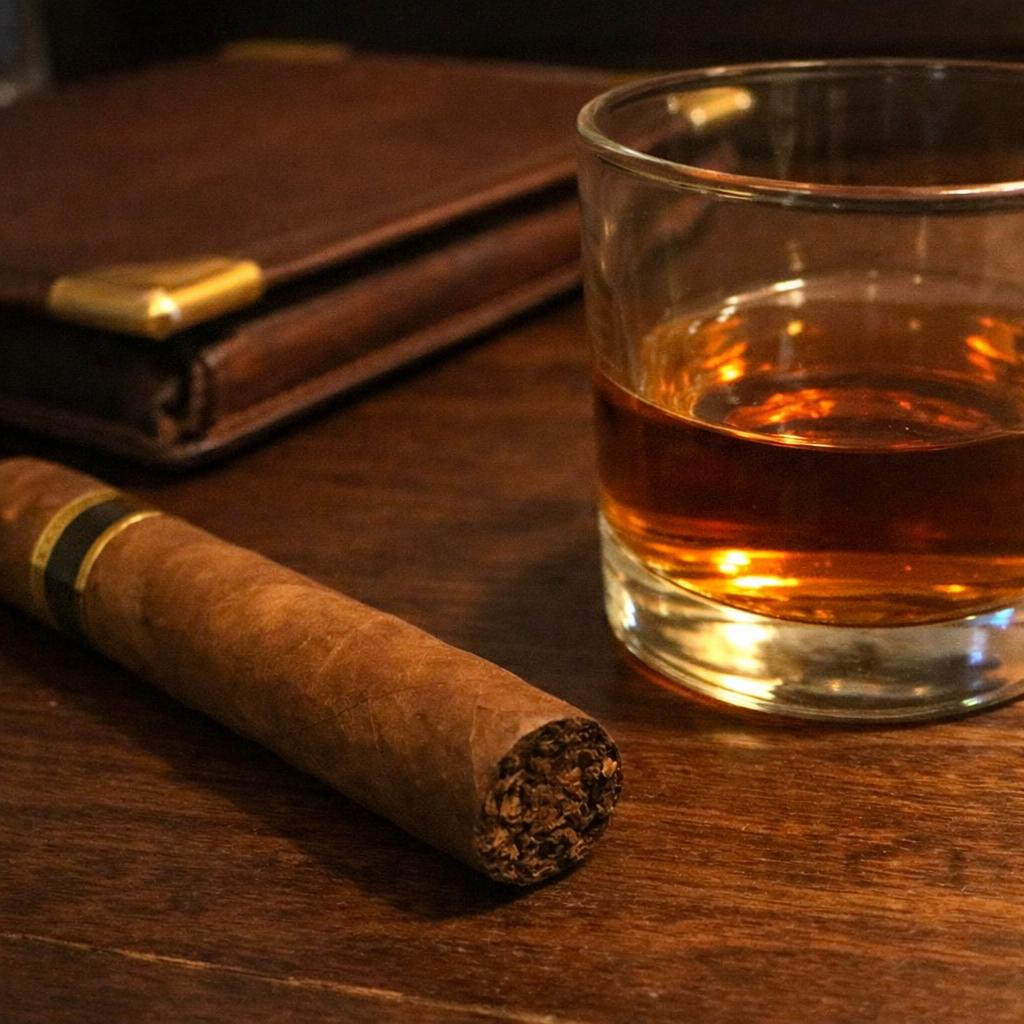
Arturo Fuente‘s Don Carlos wears one of the most celebrated Cameroon wrappers in the business over vintage Dominican tobaccos: medium-bodied and sweet-spiced, cedar and cocoa with an almond finish. Maker’s Mark answers it from the wheated side of the bourbon shelf, soft red winter wheat where the rye would be, so the glass gives caramel and baked bread rather than pepper. The Cameroon’s gentle spice has somewhere soft to land, and the bourbon’s sweetness returns the favour. It is an unflashy, repeatable match, the weeknight sort, which is the highest compliment a pairing can earn in this house.
Pairing No. 3
The weekend anchor
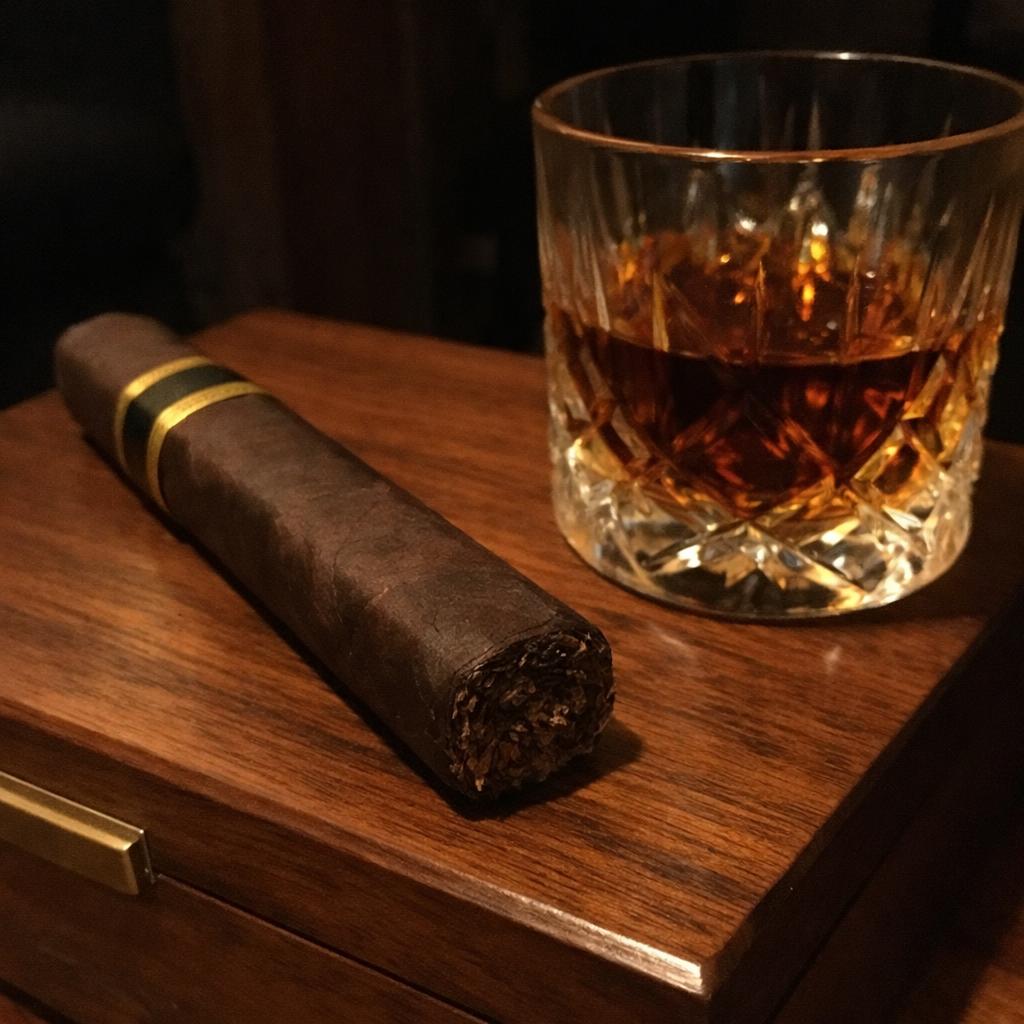
Padrón’s 1964 Anniversary Series Maduro is a box-pressed Nicaraguan puro aged four years, full-bodied and unhurried, espresso and dark cocoa with hazelnut underneath. It is one of the few cigars with the frame to stand beside Laphroaig 10, Islay’s least apologetic dram. This is a contrast pairing. The peat’s smoke and iodine cut across the wrapper’s dark sweetness, and somewhere in the middle the two agree on charred oak. Give it a quiet evening and a full hour. And if peat is simply not your friend, a sherry-matured malt does the same job more politely. I will not tell anyone.
Keep the pairings worth repeating
A last word from the notebook. Every pairing above changes as the cigar moves through its thirds. The Glenlivet that matched the first third of a Connecticut may feel thin by the final third, and the Laphroaig that crowded a maduro’s opening can settle in an hour later. That is half the entertainment. Review the cigar with the review-by-thirds framework, note what was in the glass beside each third, and log the matches worth repeating in Cigarro. Coffee earns the same treatment in this guide, for mornings when the bar is closed.