Most people who smoke premium cigars do not taste them. They smoke them, which is a fine and reasonable thing to do, but it is not the same activity as tasting.
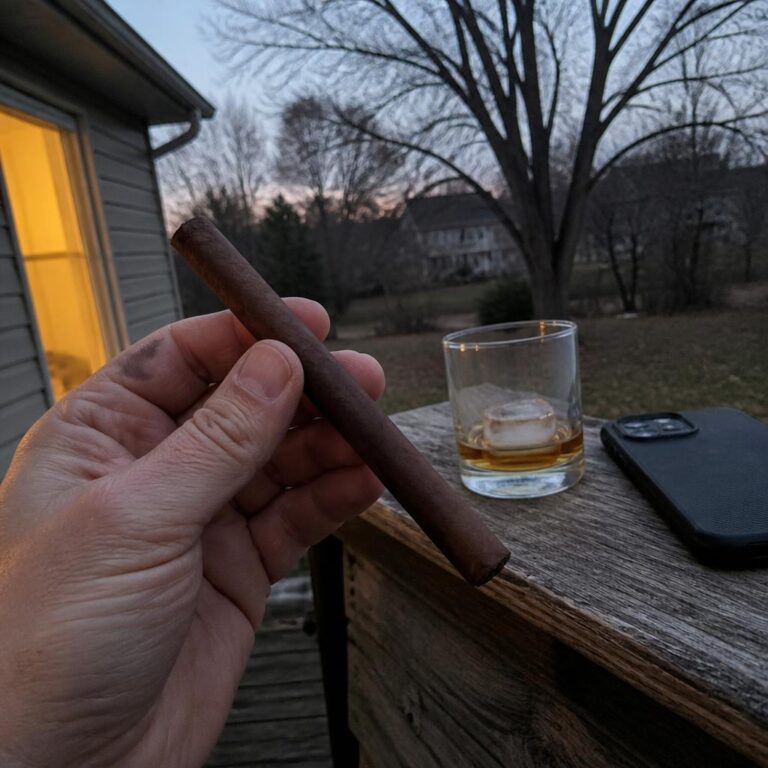
Smoking is what happens on the porch on a Saturday afternoon, somewhere in the back of an enjoyable conversation. Tasting is what happens when the conversation stops, the lights are low, and the cigar in front of you is the only thing you are looking at.
Tasting a cigar is a discipline. It is a small set of habits that, applied consistently, turn a cigar from a single warm sensation into a sequence of distinct flavours, weights, and changes.
The discipline is not difficult. It is mostly a matter of slowing down, retrohaling on purpose, building a working vocabulary, and writing things down in a way that will be honest a year from now.
None of it requires expensive equipment. It does require some quiet, and a willingness to be wrong about what you thought you tasted last time.
What follows is the system used in our own evenings. It draws on the practice of reviewers at Halfwheel and Cigar Aficionado, on a great many cigars smoked alone in a chair, and on the small humility that comes from comparing this week’s notes to last quarter’s and finding them to disagree.
Cigarro is at the end, as the place to keep the notes once you have them.
Tasting versus Smoking
The difference between tasting a cigar and smoking one is the difference between reading a book and having a book in the room. Both are valuable. Only one is on purpose.
A smoker holds the cigar between sentences. A taster holds the cigar between thoughts.
A smoker may finish a fine churchill and remember that it was very good. A taster will know that the first inch carried a dry cedar that opened into white pepper around the band line, that the middle third softened into something darker and sweeter, and that the final third returned to pepper with a length of cocoa underneath.
The taster is not better company. They are simply doing a different job.
Knowing which mode you are in
It is worth being honest about which mode you are in. Most evenings, smoking is the right mode. A good cigar with a friend in a comfortable chair does not need to be analysed.
But if a cigar is new, or if you are forming an opinion you intend to keep, or if you have spent fifty pounds on something rare and want to know what fifty pounds bought you, the smoking mode is not enough. The cigar deserves the taster’s attention, and so does the money.
What the tasting evening wants
The practical consequence is that tasting wants conditions. Quiet, or as much of it as the household allows. A room without competing smells, because cooking aromas and scented candles will steer the palate before the smoke ever reaches it.
A cigar that has rested properly means at least thirty days in your humidor at sixty-five to sixty-nine percent relative humidity. A cigar smoked too fresh tells you about ammonia rather than tobacco.
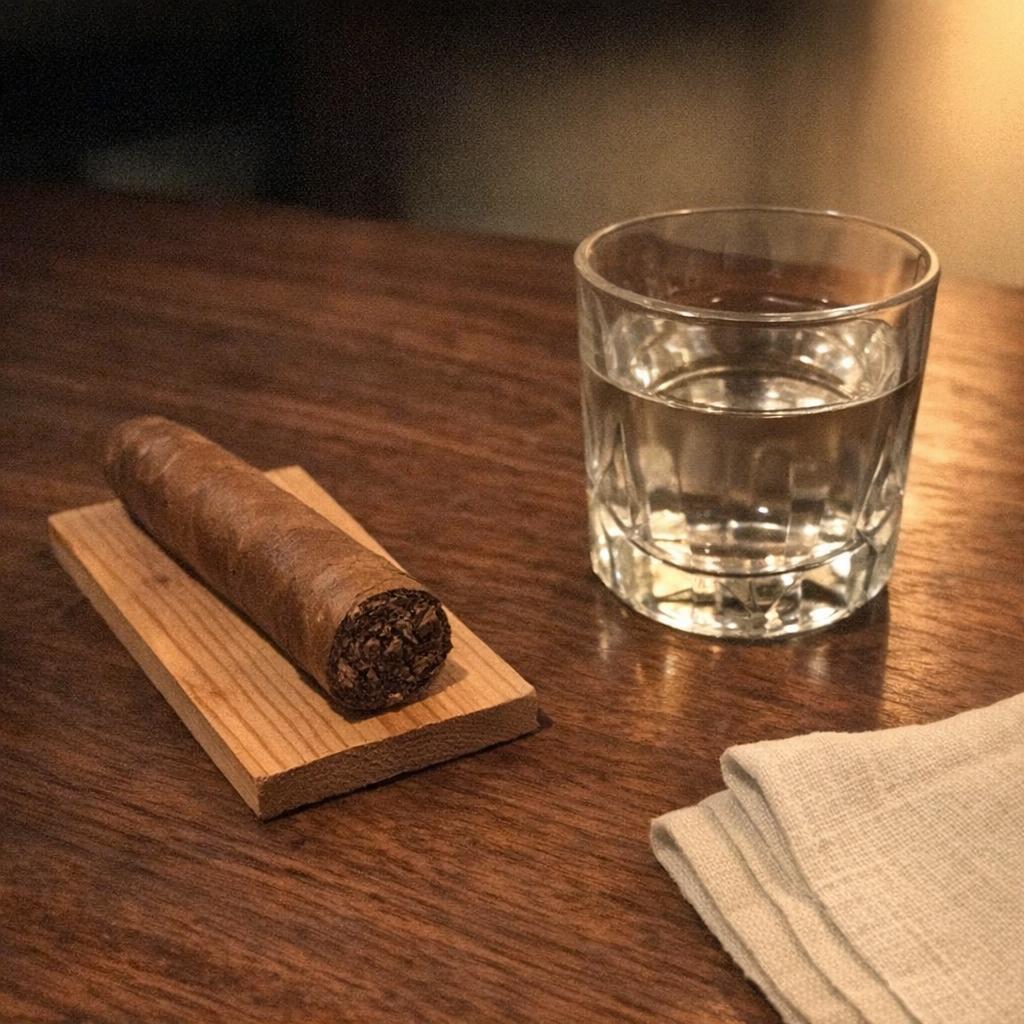
And a tasting cigar should be the first cigar of the day, ideally after a small meal but not a heavy one, with a glass of water within reach and very little else.
The rest of this guide assumes you are in the taster’s mode. Apply it on the cigars that warrant it, and leave the rest to be enjoyed without ceremony.
- Quiet, or as close to it as the household allows.
- A room without competing aromas. No cooking smells, no scented candles.
- A cigar rested at least thirty days in your humidor at sixty-five to sixty-nine percent relative humidity.
- The first cigar of the day, ideally after a small meal but not a heavy one.
- A glass of water within reach, and very little else.
The Cold Read, Before the Light
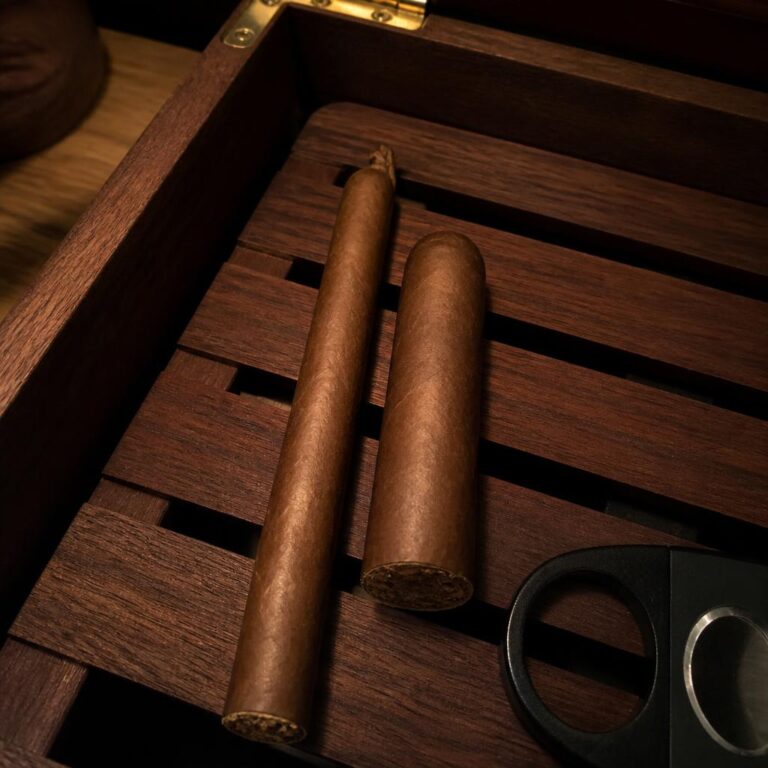
A cigar tells you a great deal before the lighter ever comes out. Reading it cold is the part of the practice most often skipped, and the part that, when honoured, catches a problem early enough to do something about it.
What the wrapper tells you
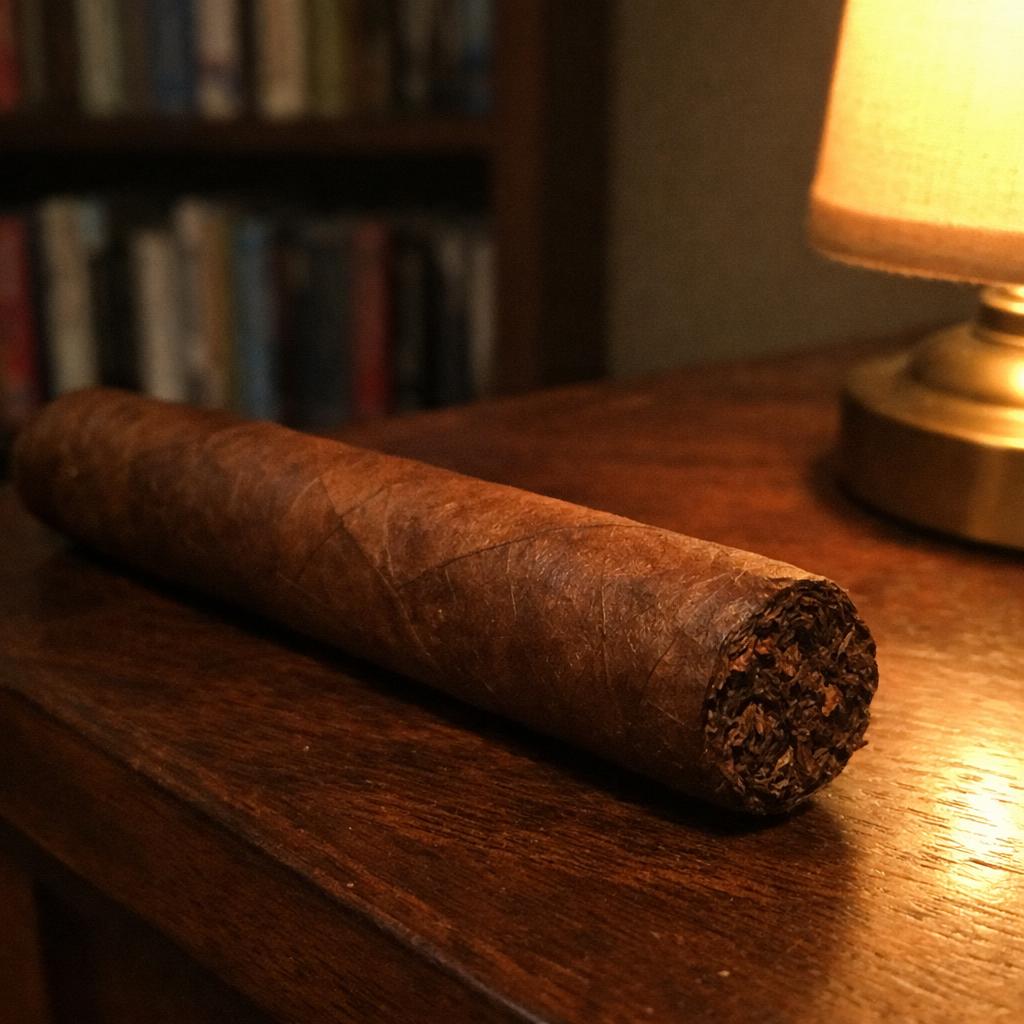
Start with the wrapper. Hold the cigar at eye level under a warm lamp. Look for the leaf veins, the seams, and the colour.
A wrapper that is uniformly applied without bald patches, with veins that are present but not raised, and a colour consistent from foot to cap, is the work of a careful roller.
A wrapper with green undertones suggests the leaf was not fully fermented, the stage that breaks down ammonia and develops colour after curing. Expect a grassy or sharp note in the first inch.
A wrapper that is so dry it shows a matte surface and faint cracking has lost moisture and will smoke hot. A wrapper with small soft spots in the body suggests an under-filled section, which usually smokes loose and burns hotter at the foot.
None of this is a death sentence. It is information about the cigar you are about to smoke, and it sets your expectations honestly.
The cold aroma
Then bring it to your nose. The wrapper carries its own aroma at the body of the cigar, and the foot carries another.
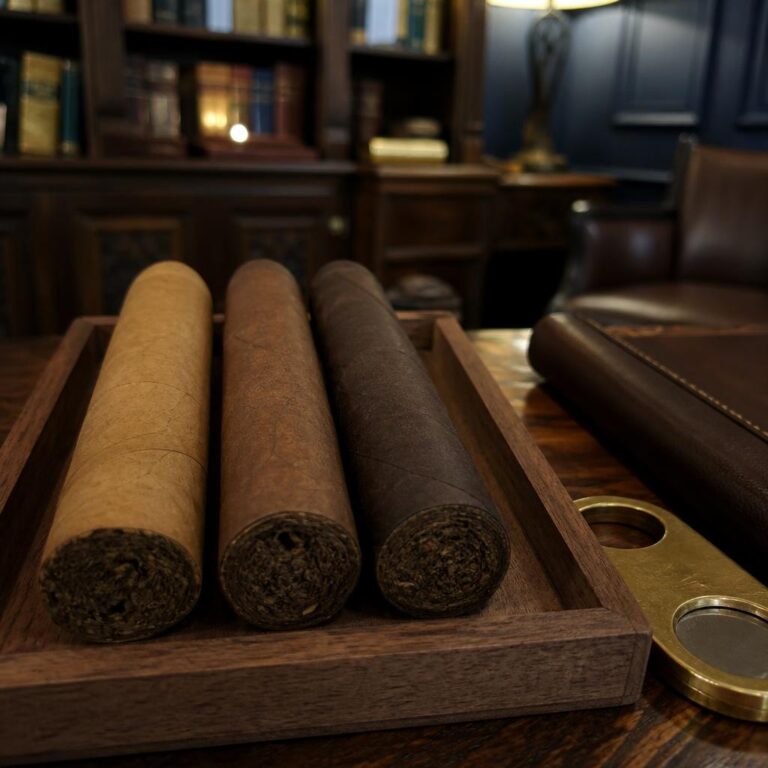
A maduro wrapper at the body often gives chocolate, dried fruit, and sweet wood. The foot of the same cigar may carry hay, cocoa, or a faint barnyard note that experienced smokers learn to welcome. A Connecticut shade wrapper at the body tends toward cream, grass, and almond at the foot.
These cold aromas almost always foreshadow the lit aromas. A cigar that smells of nothing cold is rarely interesting lit.
The cold draw
Cut the cap, then take what reviewers call the cold taste: a dry draw with the cigar unlit. Cigar Aficionado defines the cold taste as the act of clipping a cigar and sucking air through it before lighting, both to test that the draw is open and to take a first impression of the flavour.
The cold taste of a maduro is often surprisingly sweet, like cocoa dust or molasses. A Habano wrapper may give pepper and cedar before any heat at all.
If the cold draw is so tight that you have to pull hard, plug-clearing techniques exist, but the cigar may also be telling you it was rolled too densely, and the smoking experience is unlikely to improve.
Several careful smokers also blow the first puff outward through the cigar after lighting, to clear the sulphur of a match or the residual gas of a butane lighter. Cigar Aficionado lists this as a small habit worth keeping. The first true draw should be of tobacco, not of fuel.
None of these steps takes more than two minutes. They are the difference between starting a cigar with information and starting it with hope.
- Wrapper colour uniform from foot to cap, no bald patches.
- Veins present but not raised, seams clean.
- No matte dryness or fine cracking. A sign the leaf has lost moisture and will smoke hot.
- No soft spots in the body. A sign of an under-filled section, which usually smokes loose.
- A cold aroma at the body and at the foot. A cigar that smells of nothing cold is rarely interesting lit.
The Retrohale, Properly Done
If you aren't retrohaling, you aren't tasting most of a cigar.
Halfwheel Tweet
The single most important technique in cigar tasting is the retrohale, and the single most common reason newer smokers report flat or one-dimensional cigars is that they are not doing it.
Halfwheel has been blunt about this for years: if you aren’t retrohaling, you aren’t tasting most of a cigar. The reason is anatomical, not philosophical.
Why the retrohale works
The tongue distinguishes only five basic tastes: sweet, sour, salt, bitter, and umami. Everything beyond those five, the cocoa and cedar and orange peel and white pepper and leather that a serious reviewer notes, is aroma, not taste.
Aroma reaches the brain through olfactory receptors at the top of the nasal cavity. Mouth smoke alone barely touches those receptors. Smoke that has been routed up through the nose touches all of them.
The retrohale is the difference between hearing a cigar in mono and hearing it in stereo.
The technique
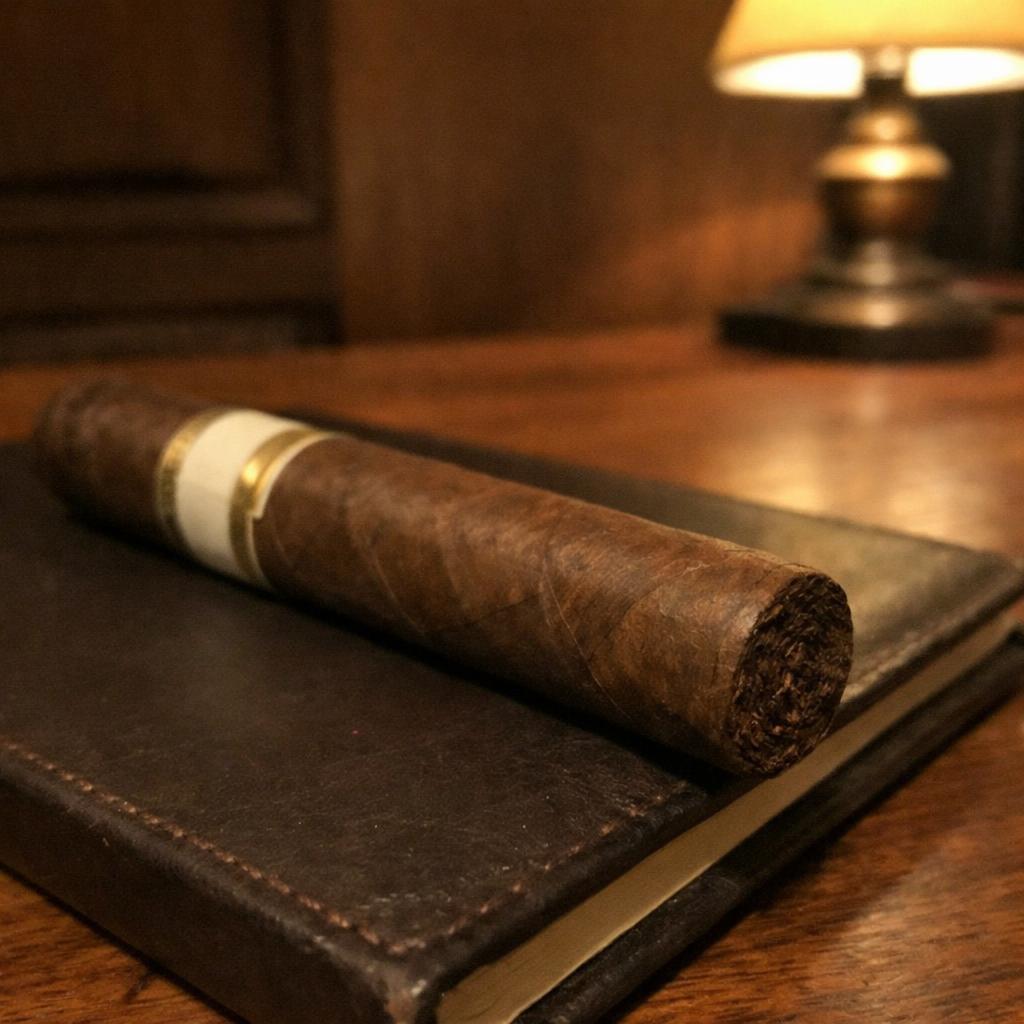
The technique is straightforward, and Halfwheel suggests practising it without a cigar first. Take a normal breath in through your mouth, hold it for two or three seconds with the mouth closed, then exhale gently through the nostrils.
Do that several times until the muscle memory of pushing air upward and out the nose is in place.
With a cigar, the sequence is the same: draw the smoke into the mouth, do not inhale into the lungs, close the lips, and exhale through the nose with the same gentle pressure.
What it reveals
The first time you do it properly, the cigar will reveal itself. Where the mouth gave you a general sense of dark sweetness, the retrohale will give you specifics: roasted coffee, baking spice, white pepper, leather, cedar, and the particular kind of black pepper that lives in the back of the nose for a few seconds and then fades.
The first retrohale on a strong cigar can be a small bracing event. New smokers often cough. That is normal, and it diminishes with practice within a week or two of regular cigars.
Two practical notes
First, do not retrohale every draw. Once every three or four draws is plenty for tasting. Doing it on every puff exhausts the nose’s ability to discriminate and dulls the perception within a third.
Second, the retrohale evolves through the cigar. A milder first third may give a clean cedar and bread. The second third, as the binder and filler enter the burn, may give black pepper and earth. The third may collapse into espresso, dark cocoa, and a final length of sweet wood.
Tracking those changes is most of what reviewers mean when they talk about a cigar’s progression.
What the retrohale is not
One thing the retrohale is not is inhaling a cigar. The Cigar Aficionado primer is unambiguous: do not draw smoke into the lungs.
Tastebuds are in the tongue and olfactory receptors are in the nose, and lungs contribute nothing useful to either. Pulling smoke into the lungs increases nicotine absorption sharply and is responsible for a great deal of the cigar-related discomfort newer smokers describe as the cigar being too strong.
The cigar is rarely too strong. The technique is wrong.
- Step 1. Practise without a cigar. Breathe in normally through the mouth, hold for two or three seconds, exhale gently through the nostrils. Repeat until the muscle memory is in place.
- Step 2. With a cigar, draw smoke into the mouth as usual. Do not inhale into the lungs.
- Step 3. Close the lips, then exhale gently through the nose. The smoke routes up through the nasal cavity on the way out.
- Step 4. Pause before the next draw. The first retrohales can feel sharp; the sharpness diminishes within a week or two of regular practice.
- Step 5. Retrohale once every three or four draws, not every draw. Over-retrohaling exhausts the nose's ability to discriminate and dulls the perception within a third.
Building a Vocabulary
A working vocabulary is small. The trick is to use a small one consistently rather than a large one inconsistently.
Hugh Ashby Tweet
Once the retrohale is working, the question becomes what to call what you are tasting. This is the part of cigar tasting that intimidates newer smokers most, and it should not.
A working vocabulary is small. The trick is to use a small one consistently rather than a large one inconsistently.
Keep the list short
Cigar Aficionado, in its various tasting primers, organises its tasting language around a handful of recurring notes: cream, cedar, coffee, cocoa, leather, earth, hay, nut, pepper, spice, citrus, dried fruit, wood, and sweetness.
That is fewer than twenty terms, and every premium cigar in the world can be broadly described with combinations of them.
A useful exercise for your first year of serious tasting is to keep that list short. Add a term only when you can demonstrate the difference between it and a term you already use. The note “espresso,” for instance, is a useful specification of “coffee” once you can taste them apart. Until then, “coffee” is fine.
Group by family
What separates a working vocabulary from a list is structure. The most useful framing the trade has produced groups flavours by family.
Earth, leather, and barnyard belong together. Cocoa, cream, and nut belong together. Cedar, hay, and wood belong together. Pepper, spice, and citrus belong together.
Coffee and espresso belong with cocoa for some smokers and with earth for others. Preference is allowed.
The point of the family is that the families themselves are stable. The specific note within a family is where your palate will gain resolution over time. If you want the families set out in full with the descriptors that sit under each, our guide to the cigar flavour wheel lays them out and explains how to read one a third at a time.
Two cigars, two families
Cigars often distinguish themselves not by which family they live in but by which family is dominant and how the families shift through the smoke.
A Padrón 1964 Anniversary is a cocoa-and-cream cigar with cedar underneath. A My Father Le Bijou 1922, by Cigar Aficionado’s own panels and broad reviewer consensus, leans pepper and earth with espresso threaded through the second third.
Both are excellent cigars. They are excellent in different families.
Plain language matters
The vocabulary the cigar trade has built is its own, and it works because it is built on what cigars actually carry.
If a cigar genuinely reminds you of something outside the tobacco family, write it down honestly. Do not reach for borrowed sommelier vocabulary because it sounds serious. It tends to read as imported authority rather than honest tasting, and it pulls the note away from the cigar in front of you.
The vocabulary grows by smoking. Cigar Aficionado writes that developing a keen palate takes time and patience, and there is no shortcut. Twenty cigars carefully tasted will teach you more than fifty smoked while distracted.
- Earth, leather, and barnyard. Heavy, ground-tone notes; the backbone of many Habanos and stronger Nicaraguan blends.
- Cocoa, cream, and nut. Soft, mid-weight notes; the signature of well-aged Dominican blends and many maduros.
- Cedar, hay, and wood. Dry, structural notes; common in Connecticut shade wrappers and many milder cigars.
- Pepper, spice, and citrus. Bright, lifting notes; often present in the retrohale even when the mouth gives a milder reading.
Palate Cleansers and What to Drink
The pairing question is the one beginners ask first and reviewers ask least.
Most professional reviewers, when tasting for review, drink very little, and what they do drink is usually water. Halfwheel reviewers, asked how they rest their palates, have described a routine of cold water in small amounts, occasional bites of plain food to reset, and a long pause between cigars rather than a different drink.
Why pairings confuse evaluative tasting
The reason is simple. Anything aromatic in the glass will steer the cigar.
A peated Islay whisky will impose smoke notes on a Connecticut shade cigar that the cigar did not earn. A red wine will sweeten a maduro and dull a Habano. A strong coffee will lend espresso to a cigar that, on its own, only had a faint cocoa.
Pairings are wonderful for evening smoking. They are confusing for evaluative tasting. If you want to know what the cigar carries, the cigar should be on its own.
The taster’s working set
For the taster’s evening, the working set is this. A glass of water, room temperature, sipped between draws and used as a palate rinse every few minutes. That is the default.
Some reviewers add a small flat seltzer for the carbonation, which lifts residual oils from the tongue and resets sweetness more quickly than still water. Either is fine.
Banana, traditionally, has been used by panel tasters as a mild starch that resets the tongue between sips without imposing a flavour. Plain bread does the same job and is easier to keep nearby.
The pairing evening
The pairing evening is a different exercise, and a pleasant one. A peated whisky next to a maduro is a small theatre of contrast. A bourbon next to a Connecticut shade is a study in agreement.
We treat pairings in a separate piece on whisky pairing and another on pairing a cigar with coffee. Both are worth reading once tasting on its own is comfortable.
The order of operations matters. Learn the cigar first, then learn what to drink with it. A cigar you do not know cannot be paired with conviction.
A note on water
Cigar Aficionado’s primer on avoiding cigar-induced dizziness is plain: eat something before a strong cigar, sip water throughout, and pace yourself.
Nicotine sensitivity does not announce itself. A cigar that gives a careful smoker an hour of pleasure can give a fasting smoker fifteen minutes of regret.
Water is not a flourish. It is a small piece of equipment.
- Citrus drinks. They suppress sweetness perception for several minutes after a sip.
- Strong mint, including toothpaste residue. It suppresses everything. Allow forty-five minutes after brushing.
- Heavily salted or fatty food. Both leave a film that masks the first third and exaggerates the second.
- Peated whisky, red wine, strong coffee. Each imposes its own notes on the cigar before you can hear the cigar.
- Scented candles and fresh cooking aromas. They steer the palate before the smoke ever reaches it.
Pacing the Cigar
Pacing is the part of tasting most often gotten wrong, and the part that, once corrected, transforms cigars that read as average into cigars that read as complex.
A cigar smoked too quickly is a cigar smoked hot. A hot cigar produces bitterness, harshness, and a uniform tar note that flattens whatever else is there.
One draw per minute
The working rule, taken from the consensus among careful reviewers, is roughly one draw per minute. Some cigars want a touch more; some allow a touch less.
A premium robusto smoked across an hour to an hour and a quarter will run cool, hold the burn line evenly, and reveal three distinct thirds.
The same cigar smoked across forty minutes will be hot by the halfway point, lose its construction, and produce one long blurred flavour rather than a developing one.
The cigarette tempo trap
The mistake newer smokers make is treating the cigar as a cigarette. A cigarette is engineered to be smoked in short, close-spaced puffs. A cigar is engineered for long, well-spaced draws that let the foot settle between them.
If you find yourself reaching for the cigar more than once a minute, set it down on the ashtray’s rest and pause. The cigar will not go out.
A well-constructed premium cigar will stay lit for two or three minutes between draws without losing its line, and the rest does it more good than harm. Reviewers sometimes set a soft timer on the first cigar of a session to retrain pacing, and the habit persists once the rhythm is in place.
Purging, done carefully
The corollary to pacing is purging. Every quarter inch or so, particularly on longer vitolas, the cigar accumulates tar and condensed oils inside the head.
A short, gentle reverse breath out through the cigar, which pushes a small puff of smoke back through the foot, clears the worst of it without harming the burn.
Purging is treated cautiously in some review traditions because a heavy or repeated purge can scorch the wrapper at the foot. The reviewers we trust use it sparingly on longer smokes, never on shorter ones, and never as a routine. Only when a draw has gone sharp or sour and the wrapper still looks fine.
Done that way, a single careful purge will usually return the cigar to its starting line.
On vitola length
Length matters more than people admit. A petit corona smoked attentively across forty minutes will give the same three-act structure as a churchill across two hours.
The petit corona is often the better teacher for new tasters because the acts arrive quickly enough to be remembered.
Reviewers learning a new blend will often taste it in two vitolas, a smaller and a larger, to separate the blend’s character from the format’s tempo. That is a useful exercise once you are confident in the basics.
- Roughly one draw per minute. Some cigars want a touch more, some allow a touch less, but not far either way.
- Set the cigar down between draws. A well-constructed premium will hold its line for two or three minutes without losing it.
- Resist the cigarette tempo. Closely-spaced puffs overheat the foot and flatten the cigar's structure into one long note.
- Purge sparingly. A single gentle reverse breath when a draw turns sharp or sour, never as routine.
- Learning a new blend? Taste it in two vitolas. A petit corona and a churchill teach the same three acts at different tempos.
Notes Worth Keeping
- Cigar name and vitola.
- Date and rest, in days since boxing.
- Conditions of the smoke. Room, drink, time of day.
- First-third notes.
- Second-third notes.
- Third-third notes.
- Final score or verdict.
- One sentence on whether you would smoke this again, and in what context.
The hardest part of tasting cigars is being honest about the tasting later.
Memory, particularly the memory of a pleasant evening, smooths the cigar into a more flattering shape than it deserved. A note written at the time and a recollection written a week later will disagree, and the note is the one to trust.
Short and specific
A good cigar note is short and specific. Length is a sign of trying too hard.
The format above is eight lines of text. Forty minutes after the cigar is out, the note should be done.
Three habits that protect the note
The first is to write the first-third notes before the second third has begun. Trying to recall the first third halfway through the second is unreliable, and the recollection will be coloured by the second.
The second is to write what you actually taste, not what the band tells you to taste. If a Davidoff is supposed to be creamy and you are getting pepper, write pepper. Cigar Aficionado runs its tasting panels blind, with bands removed, for precisely this reason. The brand on the band is not the same as the smoke in the cigar.
The third is to be willing to disagree with yourself. A second smoke of the same blend, on a different evening, may give a different note. Both notes are real. Tobacco is an agricultural product, and consistency within a brand is excellent but not absolute.
The plain vocabulary
The vocabulary of a good note is plain. “Cedar, white pepper, faint coffee on the back end.” “Sweet at the start, sharper from the band line, finishes cocoa.” “Strong but not punishing; smoked well in an hour.”
Avoid the temptation toward florid description. A note that calls a cigar “a brooding meditation on the Caribbean” reads well once and embarrasses the writer at year’s end.
A note that records what was actually tasted, in plain language, will still be useful in five years.
Where the notes live
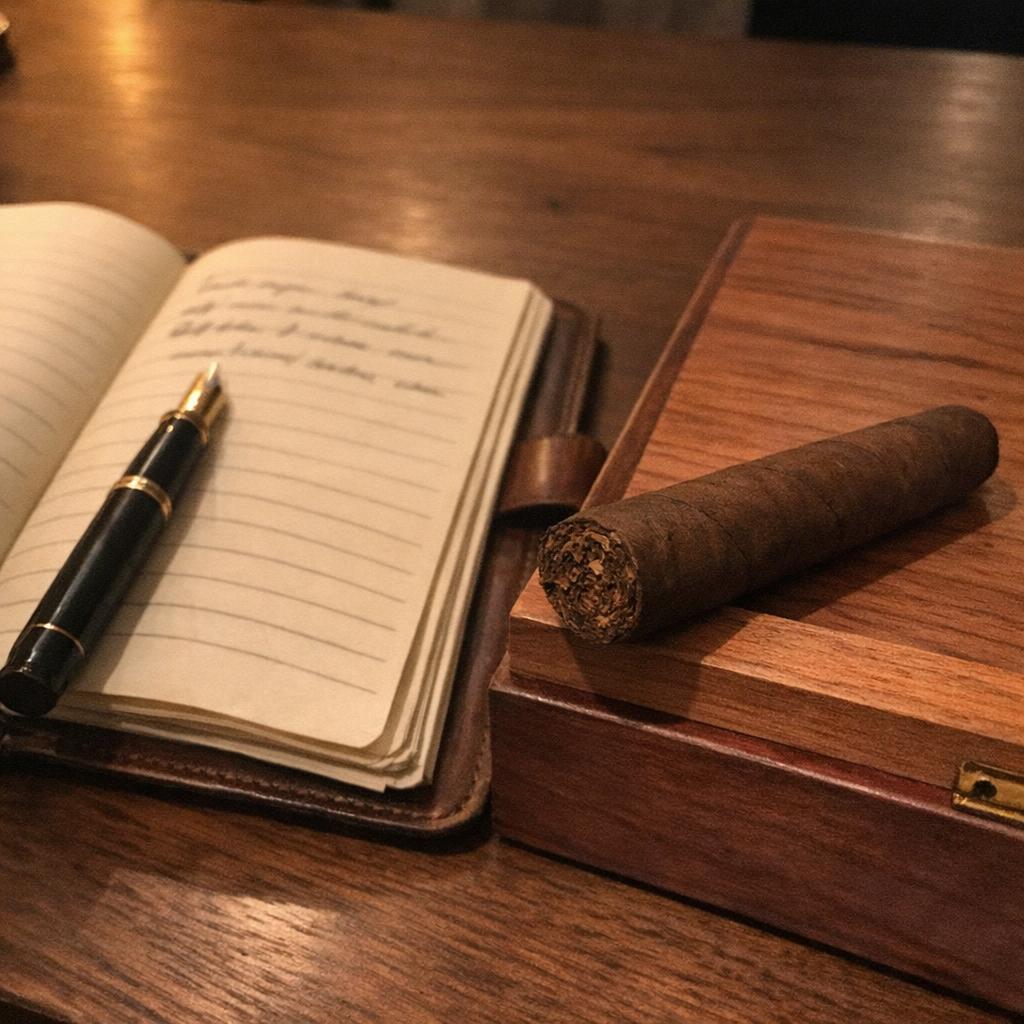
The Cigarro app, briefly, is the place we keep these notes. The structure on the cigar page mirrors the format above: a thirds-by-thirds field for the three acts of the smoke, a small space for conditions, a score, and a one-line verdict.
The app does not impose vocabulary. The words are yours.
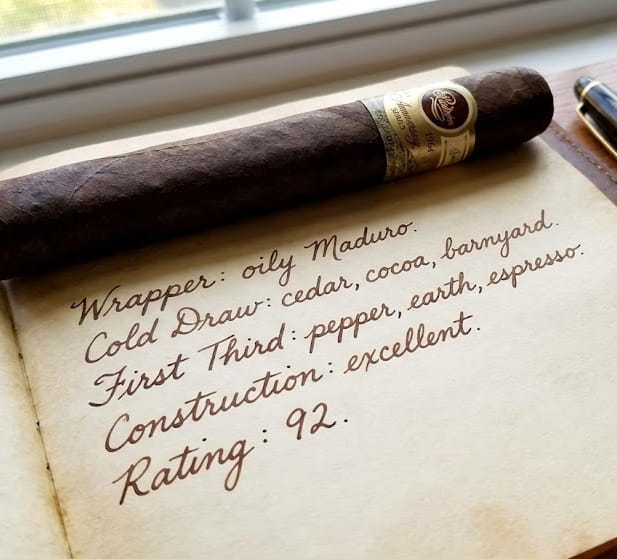
What it does is keep the notes in one place, attached to the cigar and the date, so that a year from now you can compare your June note on a Padrón Family Reserve to your December note on the same blend, and learn what your palate has done in between.
That is the small slow exercise of becoming a better taster, and it is the part of the discipline that compounds.
The Small Slow Practice
Tasting a cigar like a pro is, in the end, a question of attention.
The retrohale is a small technique, easily learned. The vocabulary is a short list, easily memorised. The pacing is a single rule of thumb. The notes are eight lines of plain prose.
None of it is difficult. What is difficult is doing it consistently, on the cigars that warrant it, often enough that the discipline becomes a habit and the habit becomes a palate.
The reward is not the score at the bottom of the note. The reward is the cigar in front of you tonight, smoked slowly, read carefully, and remembered honestly.
A taster never finishes the work. The palate keeps moving and the cigars keep changing. But the smoker who has begun to taste will never go back to smoking blind.
The cigar will not let them. It is a different thing, smoked with attention, and it is the thing premium cigars were made to be.
A taster never finishes the work. The palate keeps moving and the cigars keep changing.
Hugh Ashby Tweet