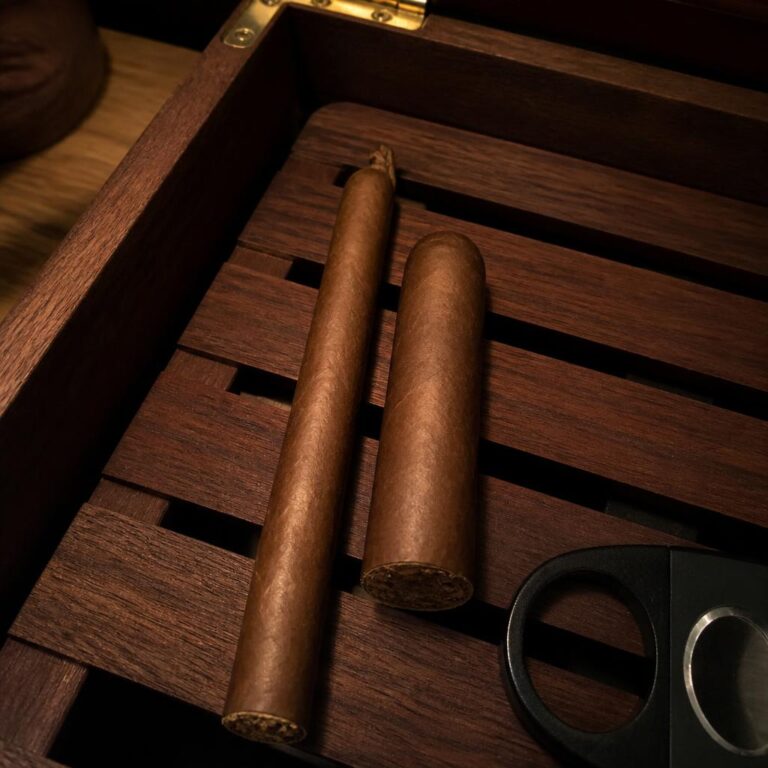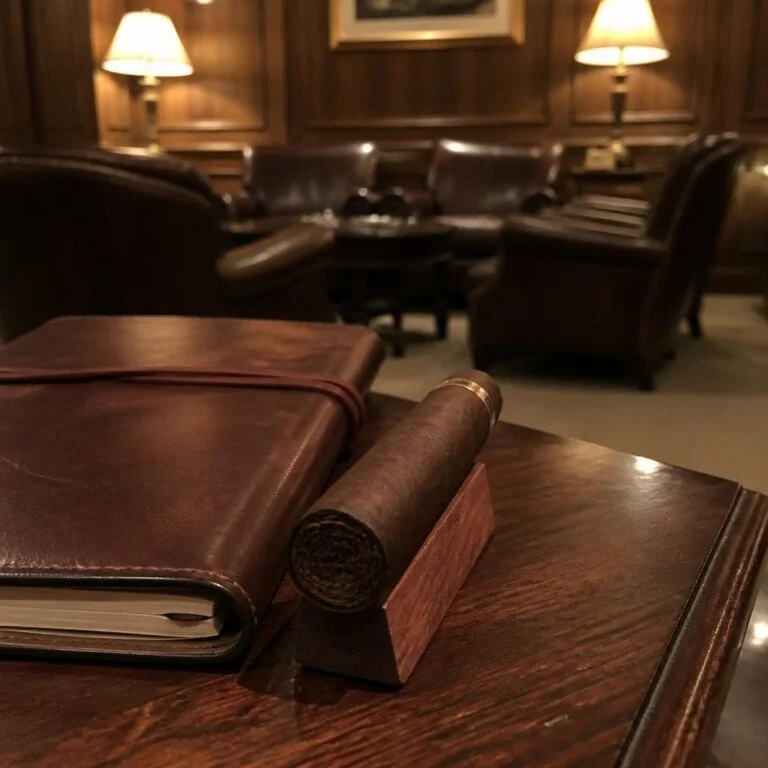
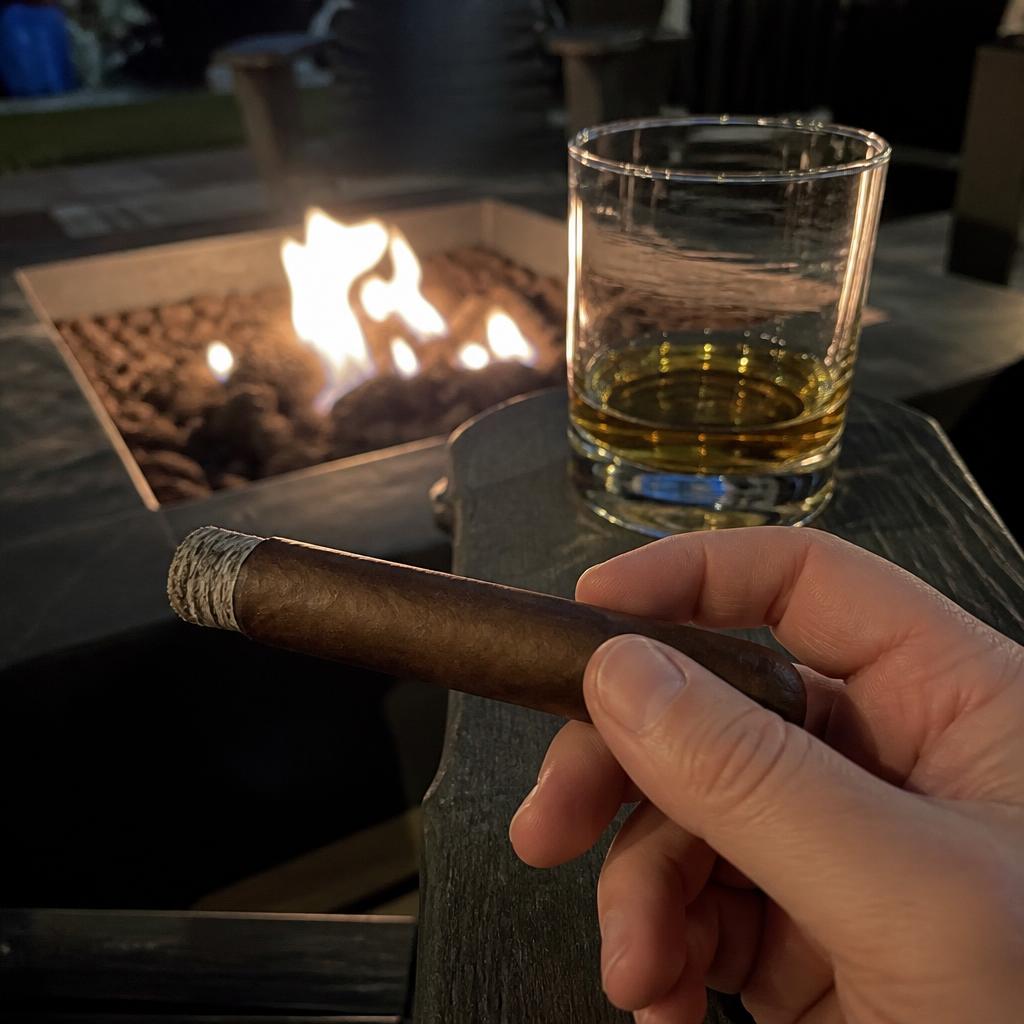
A cigar is held between the thumb and the first finger or two, at or just behind the band, with the lit end pointing away from you. The hold is light, because a wrapper is a single leaf wound under tension and a hard squeeze will crack it. The band is the place to hold because it is a layer of paper between your fingers and the leaf, and because it is where the fingers fall when the thumb goes underneath. Everything else in this guide is a refinement of those three sentences: which fingers for which size, where the cigar lives between draws, how much of it goes in your mouth, and what to do with it when the other hand is holding a drink.
Holt’s puts the whole subject in a line I agree with, that you should smoke your cigar however it feels most comfortable to you, and nothing below is a rule you can fail. What follows is the hold that most of us settle into once we stop thinking about it, the adjustments a fat cigar and a thin one each ask for, the handling that keeps a cigar intact from the cut to the last inch, and the handful of habits that make a first cigar harder work than it needs to be.
The Default Hold
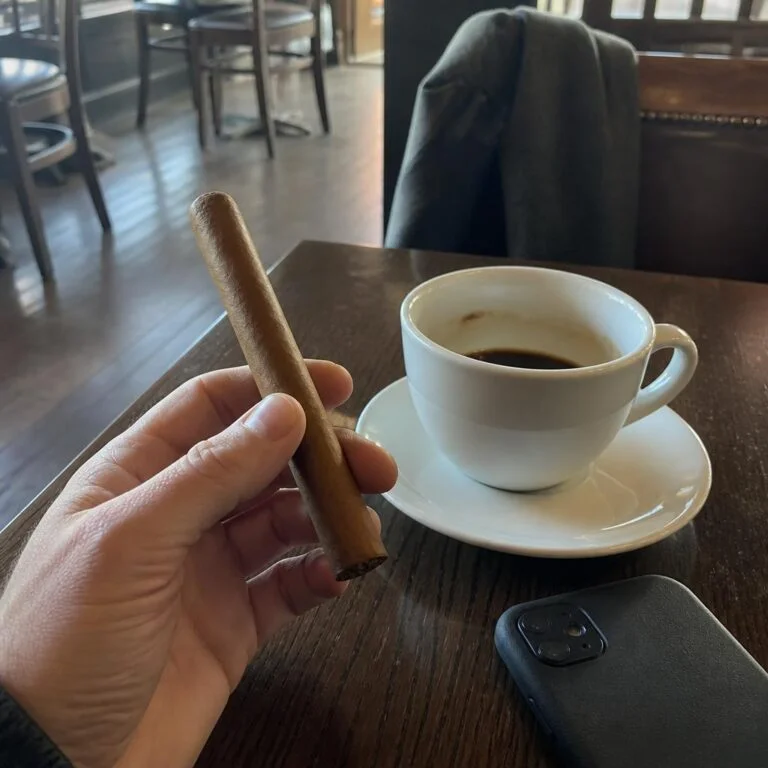
Rest the cigar on the pad of your thumb and lay your first finger along the top of it, with the middle finger beside it if the cigar is thick enough to want the help. Your fingers sit on the band or a touch behind it, towards the head, so the foot and the coal are out in front of your hand. The pressure is the pressure you would use to hold a pen you were not writing with. The cigar should feel balanced, and if the foot wants to tip down, move your fingers a little further forward until it sits steady.
That is the hold. Every variation below comes back to three things about it.
The first is pressure. On a well-made cigar the wrapper carries much of the flavour, and a squeezed wrapper cracks; a cigar that is squeezed also goes soft at the point where it is squeezed, and softens the draw with it.
The second is the band. Cigar Aficionado notes that some people keep the band on as protection from their fingers, and on a warm evening with a glass in the other hand I am one of them. Warm, damp fingertips on bare wrapper leave a mark and can lift a seam, so on a hot night wipe your fingers before you pick the cigar up and keep them on the paper. Whether you remove the band later is your own affair; the magazine’s answer to that question is that it does not matter, band on or off, and I come back to the timing below.
The third is direction. The lit end points away from you and slightly down. Away, because the coal is hot enough to burn and nobody wants it near a sleeve or a face. Slightly down, because a cigar held level or tipped up lets a fallen ash land on you instead of in the tray, and because it keeps the smoke rising past you and not into your eyes.
Hold it in whichever hand is not doing anything else. My own practice is to hold the cigar in my left hand, which leaves the right free for the cutter, the lighter, the glass and the handshake. If you are left-handed, reverse it. The cigar changes hands a dozen times in an hour and nobody notices; the only thing that looks awkward is holding it in the hand you then need for something else.
Band up or band down is convention and nothing more. Band up, facing the room, is the usual way when you first pick it up; the quarter turns below move it round anyway, which tells you how little it matters. Nobody will think less of you for the opposite.
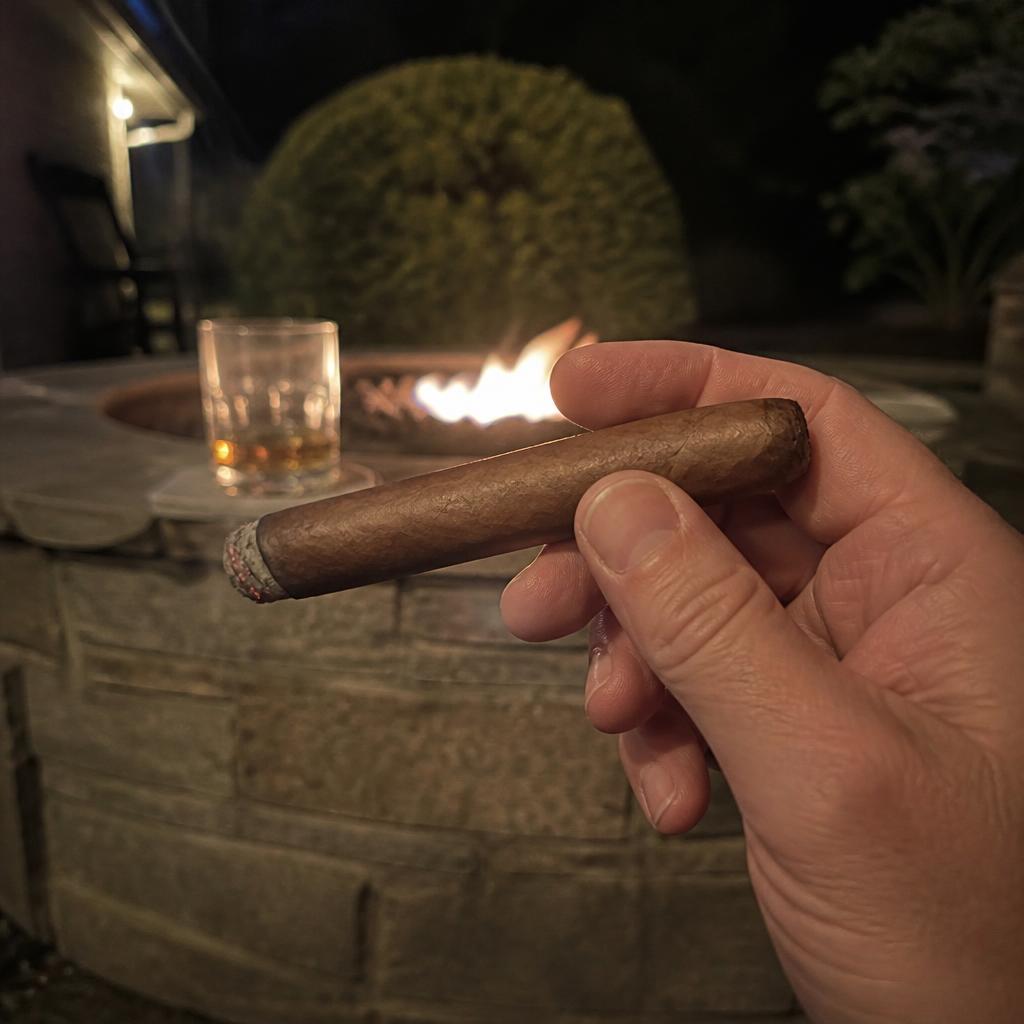
01 · The pinch
The Pinch
Thumb underneath, first finger on top, nothing else involved. The pinch is the hold for a corona, a petit corona, a lancero and anything else under about a 46 ring, where the cigar is light enough that one finger and a thumb carry it without effort. Swiss Cuban Cigars calls it the classic pinch and makes the two points that matter: grip near the balance point, because a thin cigar droops readily, and do not squeeze, because a cigar held too tightly can start burning unevenly.
It is also the hold many people arrive at on their own. The mistake inside it is pressure. A pinch rests the cigar, and the moment you can feel the leaf give under your thumb you are holding too hard. Loosen until the cigar could be slid out of your fingers by a friend without resistance, and that is the right amount.
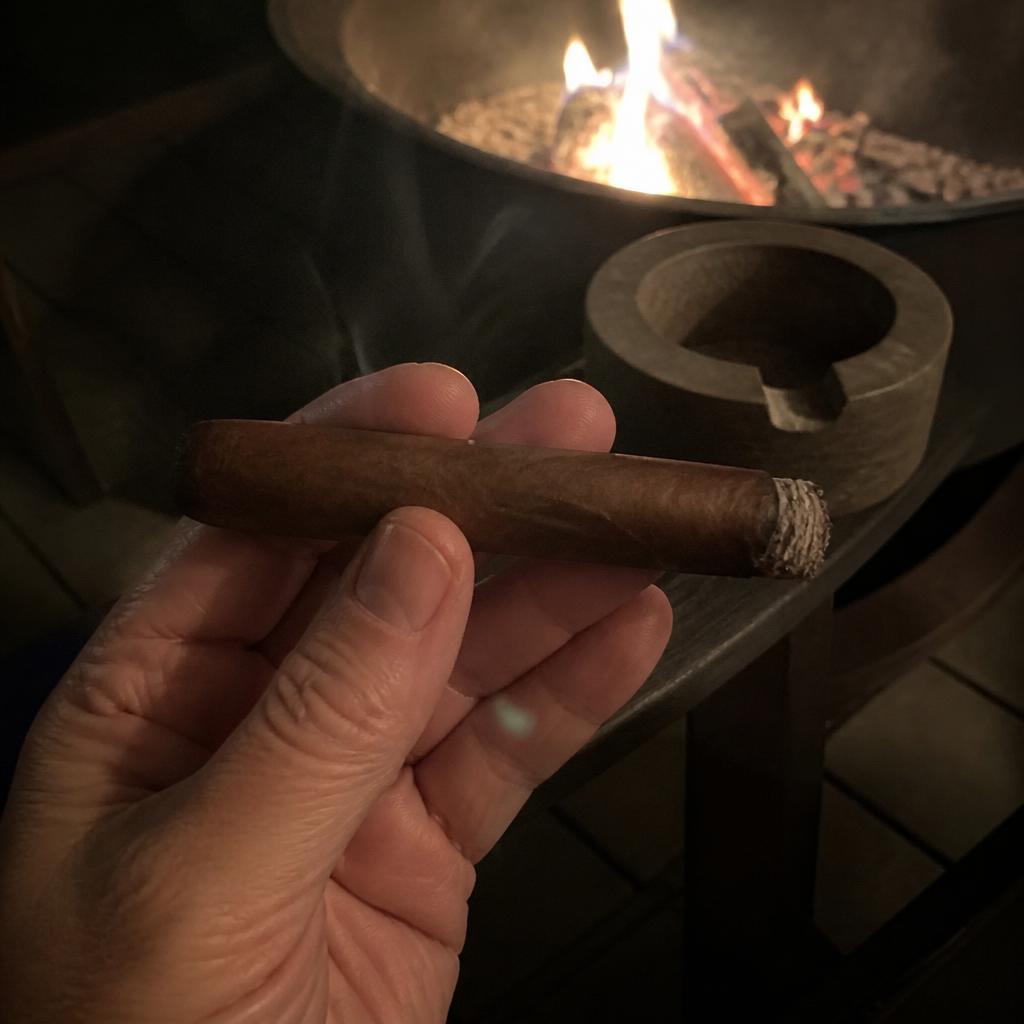
02 · Three fingers
The Three-Finger Hold
Thumb underneath, first and middle fingers along the top. This is the pinch with a second finger added, and it is the hold for the everyday sizes: the robusto, the toro, the Churchill, anything from about a 46 to a 54 ring. The extra finger does two things. It spreads the contact across more of the wrapper so that no single point takes the pressure, and it gives a heavier cigar a second point of balance so that the hand can relax.
Swiss Cuban Cigars describes starting with all three digits on the band and walking them back towards the head as the cigar burns down, which is sound, and it is how the hold stays comfortable over an hour. If you only ever learn one hold, learn this one; it works on a 42 and will see you to a 56, and it is the hold I use for nine cigars in ten.
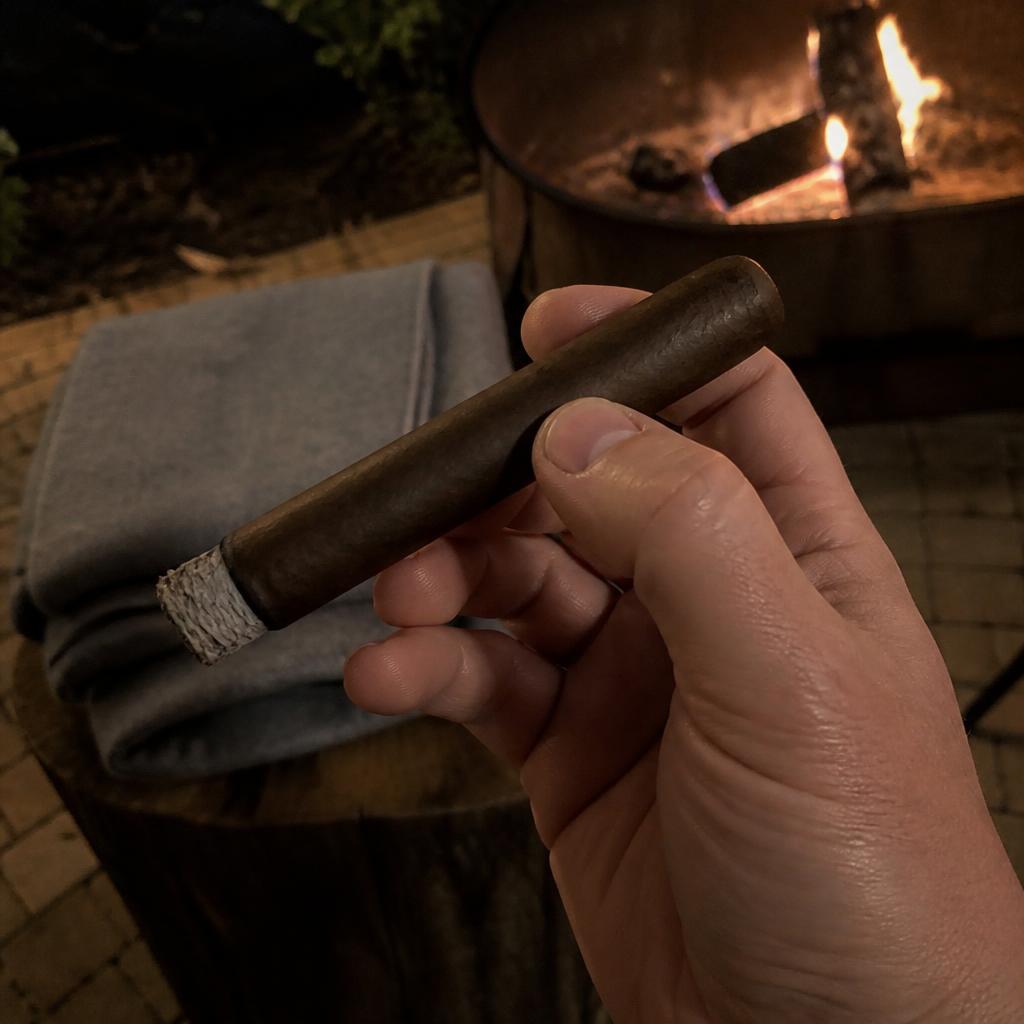
03 · The cradle
The Cradle
Curl the first finger over the top of the cigar and let the cigar rest along the thumb beneath it, so that the finger hooks it and does not press it. Swiss Cuban Cigars calls this the connoisseur’s hold, which is a grander name than it deserves; it is simply the hold where the finger does the holding and the thumb does the carrying, and it is the one to reach for when a cigar starts to feel heavy. The weight sits on the thumb, the finger stops it rolling, and nothing is squeezed.
It suits the thicker end of the common sizes. Swiss Cuban Cigars says a broad 56 to 60 ring gauge is too wide to pinch comfortably for long, and recommends this hold or the three-finger hold so that more of the hand carries the weight. It also suits the second half of any cigar, when your hand has been in the same position for forty minutes and wants a change, and the cigar that has gone a little soft from the humidor, because the cradle asks almost nothing of the wrapper.
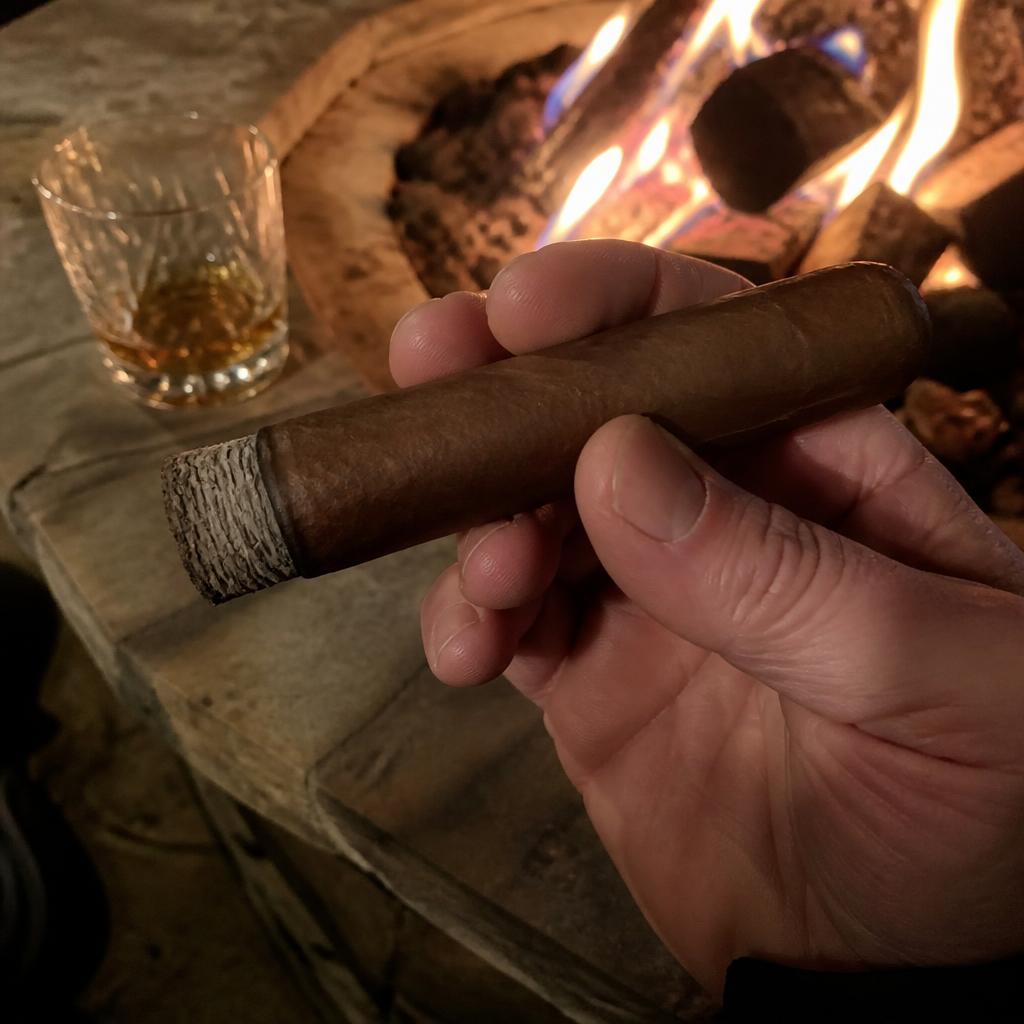
04 · The full hand
The Full Hand
All four fingers over the top, thumb underneath, as if the cigar were the handle of something. This is the hold for anything past a 60, and it is the only one that does not tire my hand on a cigar an inch across. Swiss Cuban Cigars calls it the respect; call it what you like.
The full hand looks wrong on a corona and feels wrong on a lancero, which is the clearest illustration of the whole subject. The diameter sets the hold, and a 42 in a fist and a 70 in a pinch are both a hand working against the cigar. Match the fingers to the diameter and the rest takes care of itself.
In one line: pinch, thumb and one finger, to a 46; three fingers, thumb and two, to a 54; cradle, 56 to 60; full hand, past a 60. Other guides use other names. The pen grip is the pinch, the triple support is the three-finger hold, the respectful grip and the pool cue are versions of the full hand, and the scissor grip is the cigarette hold covered below.
Which Hold for Which Size
Ring gauge is a cigar’s diameter in sixty-fourths of an inch, so a 64 is exactly an inch across and a 32 is half an inch; the ring gauge guide covers the measure in full. For holding, the number matters more than the length, because it is the diameter that decides how many fingers it takes to carry the cigar without squeezing it, and how much of the head fits comfortably between your lips. The table runs through the sizes most of us meet, with typical dimensions from the Cigar Aficionado and Holt’s shapes and sizes guides and the exact Habanos factory sizes where a Cuban example exists.
| Vitola | Typical size (inches x gauge) | Diameter in mm | Hold | In the mouth |
|---|---|---|---|---|
| Lancero | 7.5 x 38 (Habanos Laguito No. 1, 192 x 38) | 15.1 | Pinch, close to the balance point; it droops if held at the head | Light contact; the narrow head goes soft quickly if it sits in the lips |
| Petit corona | 4.5 to 5 x 40 to 42 (Habanos Marevas, 129 x 42) | 15.9 to 16.7 | Pinch | About an inch, lips only |
| Corona | 5.5 x 42 to 44 (Habanos Coronas, 142 x 42) | 16.7 to 17.5 | Pinch | About an inch |
| Corona gorda | 5.6 x 46 (Habanos Coronas Gordas, 143 x 46) | 18.3 | Pinch or three fingers | About an inch |
| Robusto | 5 x 50 (Habanos Robustos, 124 x 50) | 19.8 | Three fingers | An inch; the lips need to open a little wider |
| Toro | 6 x 50 to 52 (Habanos Cañonazo, 150 x 52) | 19.8 to 20.6 | Three fingers | An inch |
| Churchill | 7 x 47 to 50 (Habanos Julieta No. 2, 178 x 47) | 18.7 to 19.8 | Three fingers, walking back as it burns; the length is the issue, not the width | An inch |
| Torpedo | 6.1 x 52 (Habanos Pirámides, 156 x 52) | 20.6 at the widest | Three fingers behind the band, where the body is at full width | The point goes in a little further than a straight head, because the lips seal on the taper |
| Gordo | 6 x 60 | 23.8 | Cradle | A little under an inch; the lips open wide, so the cut does more of the work |
| 70 and above | 6 to 8 x 70 | 27.8 | Full hand | The cap only; the cut matters more than the hold |
The millimetre column is the useful one if you have never thought about this. A corona is a little narrower than a 5p piece and a robusto a little narrower than a 1p coin, while a 60 is about the width of a pound coin, and the whole range from a lancero to a 60 is the difference between 15 millimetres and 24. That is why one hold does not fit all. Three fingers on a 15 millimetre cigar is a crowd; one finger on a 24 millimetre cigar is a balancing act. The thresholds assume an average hand. If yours is small, move up a hold early, to the cradle at a 52; if it is large, a pinch will carry a corona gorda all evening.
Two shapes are exceptions. A box-pressed cigar has flat sides, so it sits in the fingers without wanting to roll and sits on a table without rolling off it, which is a small daily convenience that the box-pressed guide explains; hold it on its flats. And a figurado, a torpedo or a perfecto, changes diameter along its length, so the balance point moves and the band is not always where the fingers want to be. On a perfecto the foot tapers too, so the balance point sits further back and the fingers go a little behind the band.
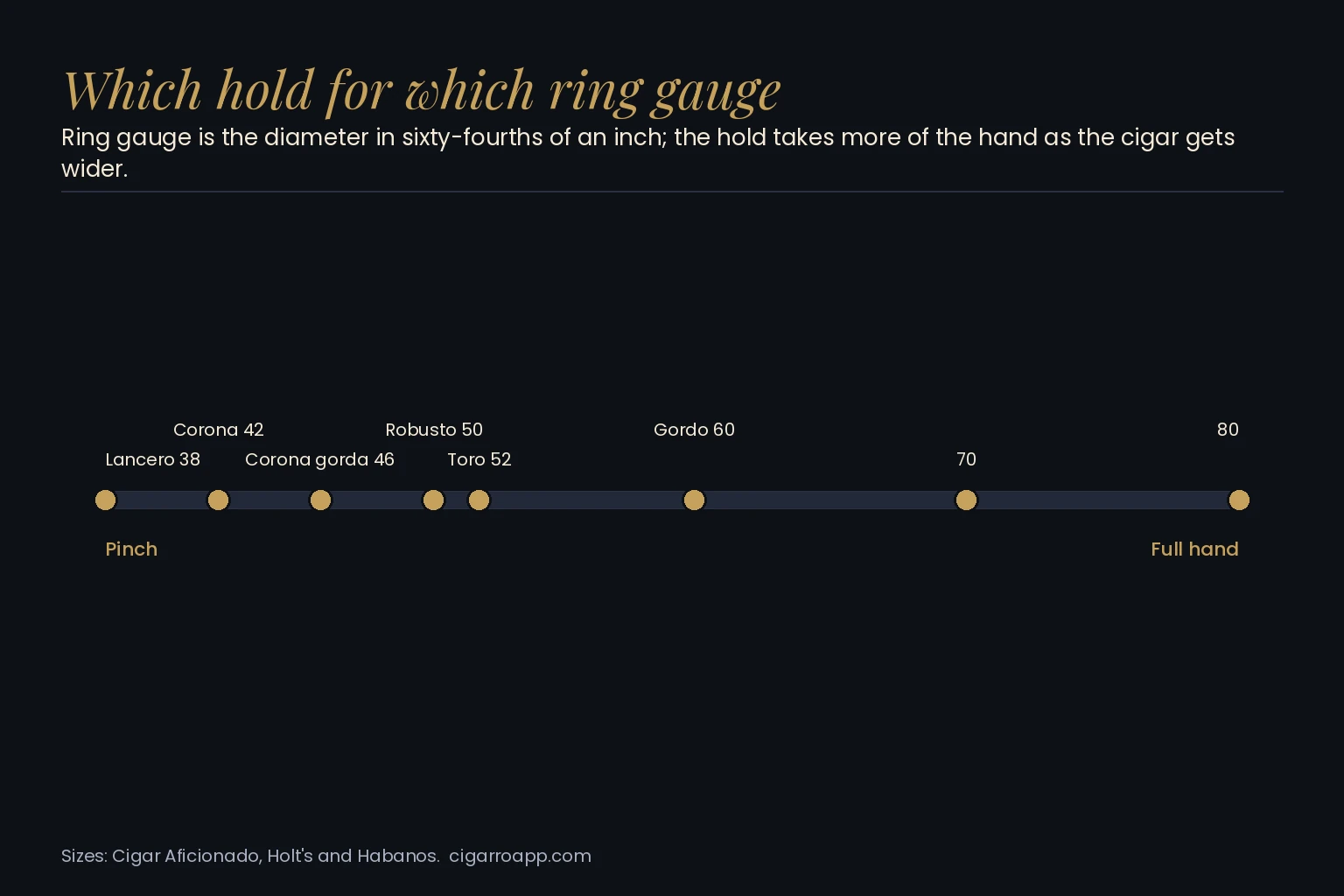
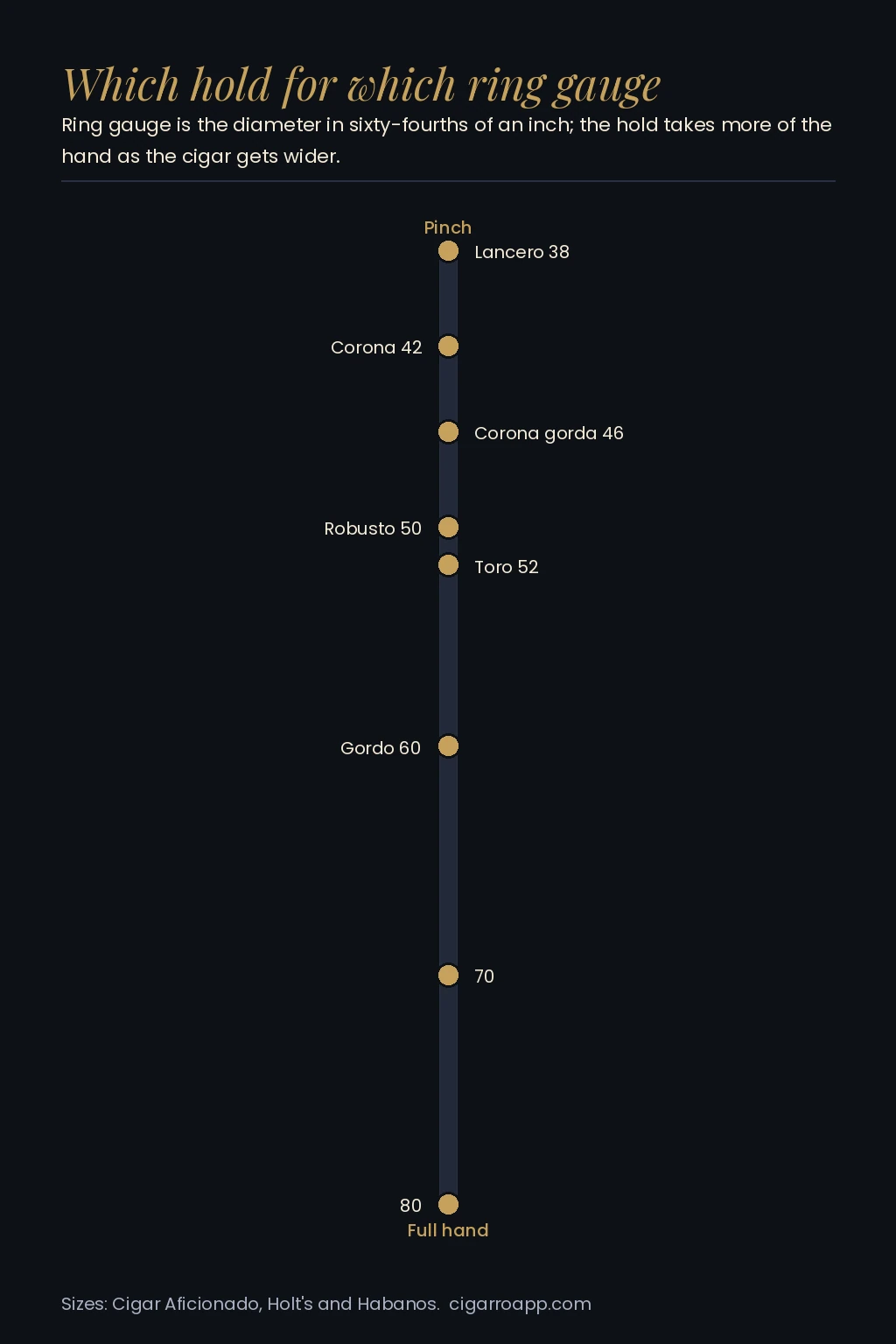
The hold is set by the diameter: one finger to about a 46, two to about a 54, the cradle to a 60, the whole hand beyond.
Between Draws
Most of a cigar’s hour is spent not being drawn on, and where the cigar lives in that time is the part of holding most guides pass over. The pace comes first, because it sets everything else: about a puff a minute, which Cigar Advisor calls the standard. The full walkthrough covers pacing; here the point is that between one draw and the next there is the best part of a minute in which the cigar has to be somewhere.
It has two homes. The first is your hand, held low, at about the level of the arm of a chair, with the lit end away from everyone and the band under your fingers. Holt’s advice on resting is to hold it in your hand without drawing on it for thirty to sixty seconds, or to set it in an ashtray rest, and the hand is the home it goes to most, because a cigar held is a cigar you will remember to draw on.
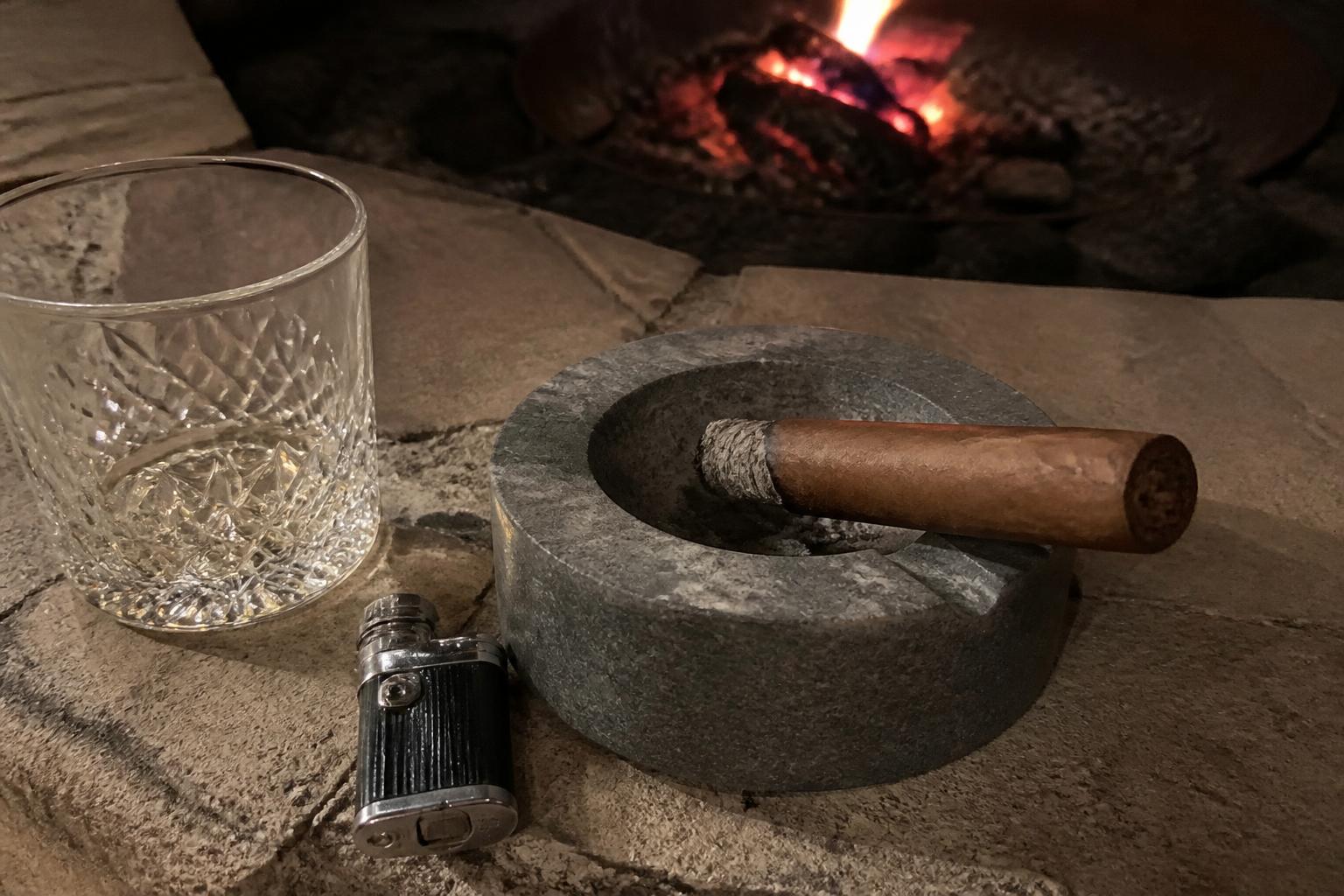
The second is the ashtray. A proper cigar ashtray has a notch or a saddle, and the cigar lies in it with the head on the rim and the foot over the bowl, so the ash has somewhere to fall and the coal is not touching anything. The saddle is where it goes when you need both hands. A well-built handmade cigar will not go out if it is set down for a moment, and a few minutes is about the limit before it needs picking up again. If the tray has no notch, lay the cigar across the rim with the coal hanging over the bowl, and never with the coal resting on the surface.
The mouth is not one of them, for reasons the next section explains.
Between draws is also when the ash wants attention, and the hold changes for it. When the ash is about an inch long, or a crack shows, lower the cigar into the tray and roll the ash gently against the inside of the bowl until it parts. Cigar Aficionado warns that too much force breaks the ember off with the ash. The hand barely changes: it is the same three-finger hold, tipped down, with the wrist doing the rolling. What the ash can tell you is another article; here the only instruction is to be gentle with it.
One small habit helps. Give the cigar a quarter turn in your fingers every few draws, so that the same side is not always uppermost. Turning it helps keep the burn even before a burn line has a chance to wander. It costs nothing and it is the single most useful thing the fingers do between draws.
In the Mouth
An inch, and not much more. Holt’s is specific: you only need to put an inch or two of your cigar in your mouth to smoke it, and taking in five or six inches looks excessive. The lips close around the head to make the seal that draws the smoke, and that seal needs about a thumb’s width of cigar and no more. A fat cigar wants a generous cut for the same reason; the guide to cutting explains how much.
The teeth stay out of it. The cigar is supported by the hand with the lips pressed around it, never clamped between the teeth, and the reasons are mechanical: biting or chewing cracks the wrapper and can block or unbalance the draw, and a head that has been chewed draws like a wet straw. Steadying the cigar lightly in the teeth for a moment while you strike a match is fine; parking it there for a conversation is not. Holt’s calls the man who does it the chomper.
Saliva is the quieter problem. Some moisture is unavoidable, but a head that has sat in the mouth too long takes on enough of it to plug the draw and to taste of itself, which is why the cigar comes out between draws. Take the draw, which is a few unhurried seconds, and take the cigar out again. Talking with it in your mouth is not illegal, as Holt’s puts it, but most people will not understand you, and the cigar comes off worse than the conversation.
Handling It Start to Finish
The hold changes as the evening goes on, because a cigar passes through the cutter, the flame, an hour of drawing, two or three ashes and perhaps a relight, and the hand does something different at each. Taken in order:
- Cutting. Hold the cigar by the body in one hand, just behind the band, and bring the cutter to the head with the other: the cigar hand keeps the cigar still and square, the cutter hand does the cutting. Holt’s wants only a thin slice of the cap removed, enough to leave an opening roughly the size of a 5p piece, because cutting too deep takes off the whole cap and lets the wrapper unravel in your fingers.
- Lighting. Hold the cigar in front of you at a slight downward angle, behind the band, towards the head, so the hand stays clear of the flame, and keep the foot above and near the flame without letting the two touch; Holt’s puts the foot about half an inch from the tip of a torch. Turn the cigar slowly in the fingers so the whole foot darkens evenly. The lighting guide has the full method.
- The first minutes. Settle into your hold at the band and leave the band where it is. If you intend to take it off, Cigar Aficionado’s advice is to wait until the cigar has been smoking for a few minutes, because the band’s gum softens with the warmth and comes away without taking wrapper with it; Holt’s waits until the coal is an inch or two from the band.
- Drawing. Lift to the lips, an inch in, draw for a few unhurried seconds, and lower the cigar again to the hand or the tray. The hand moves; the hold does not change.
- Ashing. At about an inch, tip the cigar down and roll the ash off, as above.
- Walking the fingers back. As the cigar shortens, the band moves closer to the coal. Move the fingers a little towards the head every twenty minutes or so, so your fingers stay as far from the heat as the cigar allows, and change to the cradle if the hand is tiring.
- Relighting. If the cigar goes out, it is held exactly as it was for the first light, by the body, foot to the flame, turning. A cigar that went out by itself keeps its structure; one crushed in the tray has split its binder, which is why Cigar Aficionado rules against stubbing one out. Relighting it properly is a two-minute job.
- Stopping. Holt’s draws the line at under an inch left, when there is no longer a safe way to hold it. Lay it in the saddle and leave it. If the band is still on, take it off before the coal reaches it, or stop before it does. If you like to go further, a cigar pick through the side lets you hold the last inch without your fingers; I rarely bother, because the last inch is seldom the best.
The Habits That Give You Away
None of these is a crime, and Cigar Aficionado’s tenth rule for anyone with a cigar, never to tell someone else how to smoke theirs, is the one I would keep if I could keep only one. But a few habits make the cigar harder work than it needs to be, and most of them are habits carried over from cigarettes, where the stick is light and soon thrown away and none of this matters.
| The habit | Why it costs you | What to do instead |
|---|---|---|
| The cigarette grip: the cigar between the first and middle fingers, hand open | The cigar is pinched at one point by the sides of two fingers, which is the hardest grip on the wrapper there is, and a cigar of any weight tips forward out of it | Thumb underneath, finger or fingers on top |
| The squeeze: thumb pressing hard, fingers clenched | Holt’s names it the pressure cooker and notes that the head ends up chewed; the wrapper cracks where it is pressed, and the draw goes soft | Loosen until the cigar could be slid out of your hand |
| The clench: the cigar parked in the teeth between draws | The head soaks, the draw plugs, the wrapper cracks, and you cannot be understood | Hand or tray between draws; lips, never teeth |
| Holding it by the foot end, with the fingers an inch from the coal | Burnt fingertips at the halfway point, and a hand that is always in the smoke | Fingers at the band, walked back as the cigar shortens |
| Tapping the ash every few draws | Knocking the ash off early can disturb the coal and the burn | Let the ash reach an inch and roll it off |
| Gesturing with it, or pointing the lit end at someone | A lit coal at arm’s length near other people’s faces and drinks | Hold it low and still when you talk, lit end away; Swiss Cuban Cigars’ phrase is to handle it as you would a pencil or a sharp object |
| Holding it tipped up, like a trophy | The ash falls down the cigar and onto your hand or lap, and the smoke rises into your eyes | Level or slightly down |
| Smoking it to the nub with the fingertips | Burnt fingertips and a bitter last inch | Stop at about an inch and let it go out in the tray |
When Your Hands Are Busy
The cases most guides never get to are the ordinary ones, where the cigar is not the only thing in your hands. The etiquette guide covers the company; this is about the hands.
A drink. Cigar in one hand, glass in the other. If you need the glass hand for something, the glass goes down first, never the cigar, because a table takes a glass more safely than it takes a coal. When both hands are needed, the glass goes to the table and the cigar to the saddle.
Standing. There is no arm of a chair to rest the hand on, so the cigar hand hangs at your side between draws, lit end down and a little out from your side, where it is out of everyone’s way including your own. Keep it there when you turn to talk to someone; the hand that comes up to make a point is the hand without the cigar.
A handshake. Offer the hand that is free. If the cigar is in your right hand and the moment calls for the right, switch hands first; it takes a second and looks better than a left-handed shake. The cigar never goes into the mouth to free a hand for a greeting, for the reasons in the mouth section and for one more, which is that nobody wants to be greeted through a cigar.
Passing a cigar. If you hand a lit cigar to someone, hold it by the foot half, coal turned down and away, and offer the head and band to their fingers. The same goes for an unlit one you are giving away: band towards them, so they can read it, and the head towards their hand.
A phone. A phone is a drink by another name: it goes in the free hand, and the cigar does not go in your mouth to make room for it. On a golf course, rest the cigar across the cart’s cup holder or in a cigar clip while you play, coal out over the edge, never on the grass.
Wind. Outdoors on a breezy evening the coal runs hot and the burn goes crooked on the windward side. Hold the cigar lower than usual, turn so your body shades it, and keep the quarter turns coming so the windward side changes. A cigar in wind wants drawing a little less often, because the breeze is already feeding the coal.
No ashtray. Lay the cigar with the coal over an edge, a saucer, the rim of a plant pot, anything that puts air under the foot and nothing flammable beneath it, and lay it on its band so the wrapper is not against the surface. A round cigar will roll, so wedge it. And if there is truly nowhere, hold it; the hand is always a home.
A camera. When I photograph a cigar for a review or for the Lounge, the hold that reads in a picture is the three-finger one with the band turned to the lens and the coal towards the edge of the frame. Everything else looks like what it is, which is a man concentrating on a photograph and not on a cigar.
How I Hold Mine
Mine is the three-finger hold at the band, with the cradle after the first third on anything from a 56 up because my hand tires, and the pinch near the middle on a lancero. What took me longest to learn was the second half: I used to hold the last third as I held the first, and the cigar told me so in heat. The only part of it I would call a rule is stopping with an inch or so left, in the saddle, and letting it go out by itself.
Common Questions on Holding a Cigar
How do you hold a cigar properly?
Rest it on the pad of your thumb with your first finger, or first two fingers, along the top, at the band, with light pressure and the lit end pointing away from you and slightly down. Use more of the hand as the cigar gets wider: one on a corona, two on a robusto or toro, the cradle from about a 56 and the whole hand past a 60. Holt’s point stands over all of it, that the right hold is the one that feels most comfortable to you.
Should the band face up or down?
Up, facing the room, is the usual way, though the quarter turns move it round soon enough; it is convention, and nobody will think less of you for the opposite. If you take it off, give the cigar a few minutes first.
Which hand do you hold a cigar in?
The hand you are not using for anything else. For a right-handed person that is usually the left, so the right is free for everything else. Switch hands whenever you need to; nobody notices.
How much of the cigar should be in your mouth?
About an inch, and never more than two; that is all it takes to make the seal that draws the smoke. The lips do the sealing; the teeth stay out of it, because clamping cracks the wrapper and spoils the draw.
How do you hold a big ring gauge cigar?
With more of the hand. A 56 to 60 ring is close to an inch across and too wide to pinch for long; cradle it with the first finger curled over the top and the thumb carrying the weight; past a 60, wrap all four fingers over it. In the mouth, the lips open wider and take a little less, so the cut needs to be generous.
Is it rude to hold a cigar between your index and middle fingers?
Rude is too strong a word. It is a cigarette hold, though, and it pinches the wrapper at one point between the sides of two fingers while letting any cigar with weight tip forward. Thumb underneath and a finger on top does the same job with none of the strain.
Where do you put a cigar between puffs?
In your hand, held low with the coal away from everyone, or in the saddle of a cigar ashtray with the head on the rim and the foot over the bowl. A few minutes in the tray is about the limit before it wants picking up.
What do I do if the wrapper cracks, the head goes soggy or the cigar keeps going out?
If the wrapper cracks near your fingers, ease the grip and move back to the band; a small crack will usually hold. If the head goes soggy, it is spending too long in your mouth, so draw and lower it. If it keeps going out, it is being left too long between draws; about a puff a minute is the pace, and the hand, not the tray, is where it should be waiting.
Held Lightly
A good hold is invisible, which is why nobody can quite describe it and why everyone can tell when it is missing. Hold the cigar as if it were a slightly fragile thing you were fond of, because that is what it is, and the hands will work out the rest on their own.