Cigar ash colour is set by the minerals in the leaf, and the minerals come from the soil the tobacco grew in. The colour is not a grade, and a white ash marks a cigar no better than a grey or a black one. Cigar Aficionado’s glossary puts it in one line: a bright white ash indicates tobacco grown in soil with ample magnesium, Cuban tobacco typically burns greyish, and a black ash suggests a poor soil. Nothing in that sentence is about the blender’s skill or the roller’s hands, which is why the shop-counter wisdom that whiter is better has never quite held up.
The ash does tell you things, though, and most of them are more useful than its colour. Its firmness tells you how the cigar was rolled, and its length how the coal is being kept; the line it leaves when it falls says the most of all, because it shows how the bunch was built. The colour question comes first, with the trade press and the agronomists side by side, and the three observations that say more follow it; the troubleshooting chart is at the end, for the evening something goes wrong.
01 · Colour
What the Colour Tells You
When the organic part of a tobacco leaf burns away, the minerals the plant drew from the ground stay behind as ash. Cigar Journal’s Marc André lists them as the oxides and bicarbonates of potassium, calcium, manganese and silicon, with phosphorus and a few trace metals alongside. The balance of those minerals, and how completely the leaf burned, decide the colour you see at the foot. That is the whole mechanism, and every claim about ash colour has to pass through it.
So a white ash is a mineral-rich ash that burned completely. Which minerals do the whitening is a matter on which the trade press disagrees, and I come back to it below. A grey ash is a leaf with a different mineral balance, and a very dark ash is a leaf that is either short of minerals or not burning as it should. Cigar Journal is careful on this last point: a blackened ash does not automatically mean a poor cigar, only that the tobacco is not burning the way it was meant to.
What colour does not tell you is how the cigar will taste. Cigar Journal says it outright, that a white or steel-grey ash is an indication of good combustion and not an indication of good flavour or fine aromas. Holt’s lists the white-ash belief among its top cigar myths and says the colour has nothing to do with the quality of the cigar. Cigar Advisor’s Paul Lukens says a white ash has no effect on flavour at all.
| What you see | Likely cause | What it tells you | What it does not tell you |
|---|---|---|---|
| Chalk white, firm | Leaf rich in the whitening minerals; full combustion | The soil was well mineralised; often non-Cuban tobacco | That the cigar is better, or will taste of more |
| White but flaky | Too much magnesium in the soil (Cigar Aficionado, Holt’s) | The farm pushed the whitening minerals hard | Anything about the blend |
| Light grey or off-white | A different mineral balance; typical of Honduran and Dominican leaf (Holt’s) | Origin, roughly | Anything about construction |
| Steel grey, salt-and-pepper | Typical of Cuban tobacco (Cigar Aficionado) | A clue to origin, and a reason to look harder at a supposed Cuban that burns chalk white | That the cigar is lesser |
| Dark grey or black | Leaf short of minerals, or a leaf that is not burning properly | Look at the burn line and the humidor before you judge the leaf | On its own, almost nothing |
Where the folklore came from is easy enough to trace. In a 1993 Cigar Aficionado primer the author reported that most cigar experts of the day held a white ash to be better than a grey one, and quoted Carlos Fuente on the better soil giving a whiter ash and more taste. Fuente added a warning in the same breath: too much magnesium, and the white ash flakes. That was the view of a serious maker at the start of the cigar boom, and Cigar Advisor records what followed: ash colour became a fashion through the 1990s, and brands adjusted their farming to produce it. Thirty years on, the same magazine’s glossary still explains the colour by soil, and no longer ranks it.
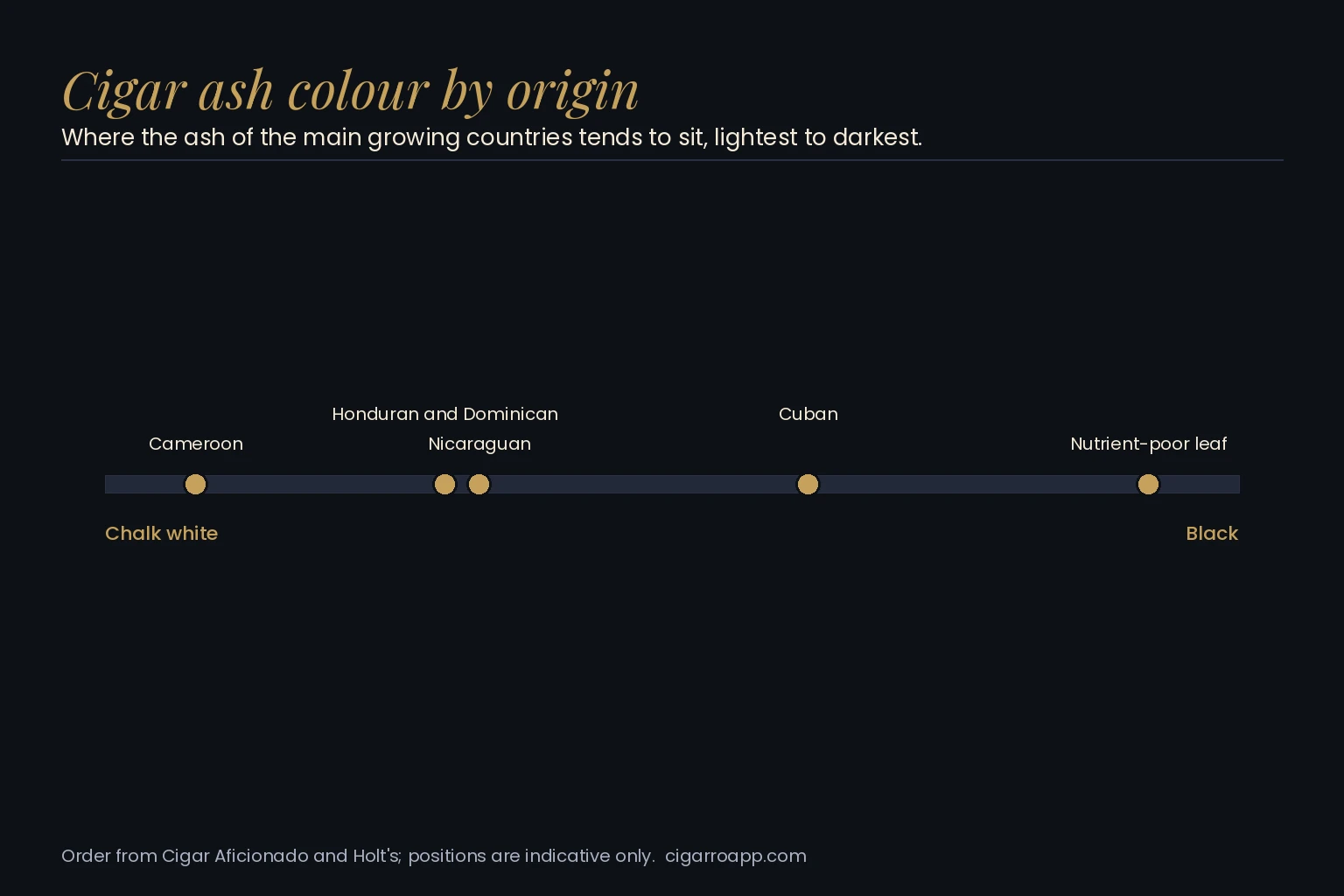
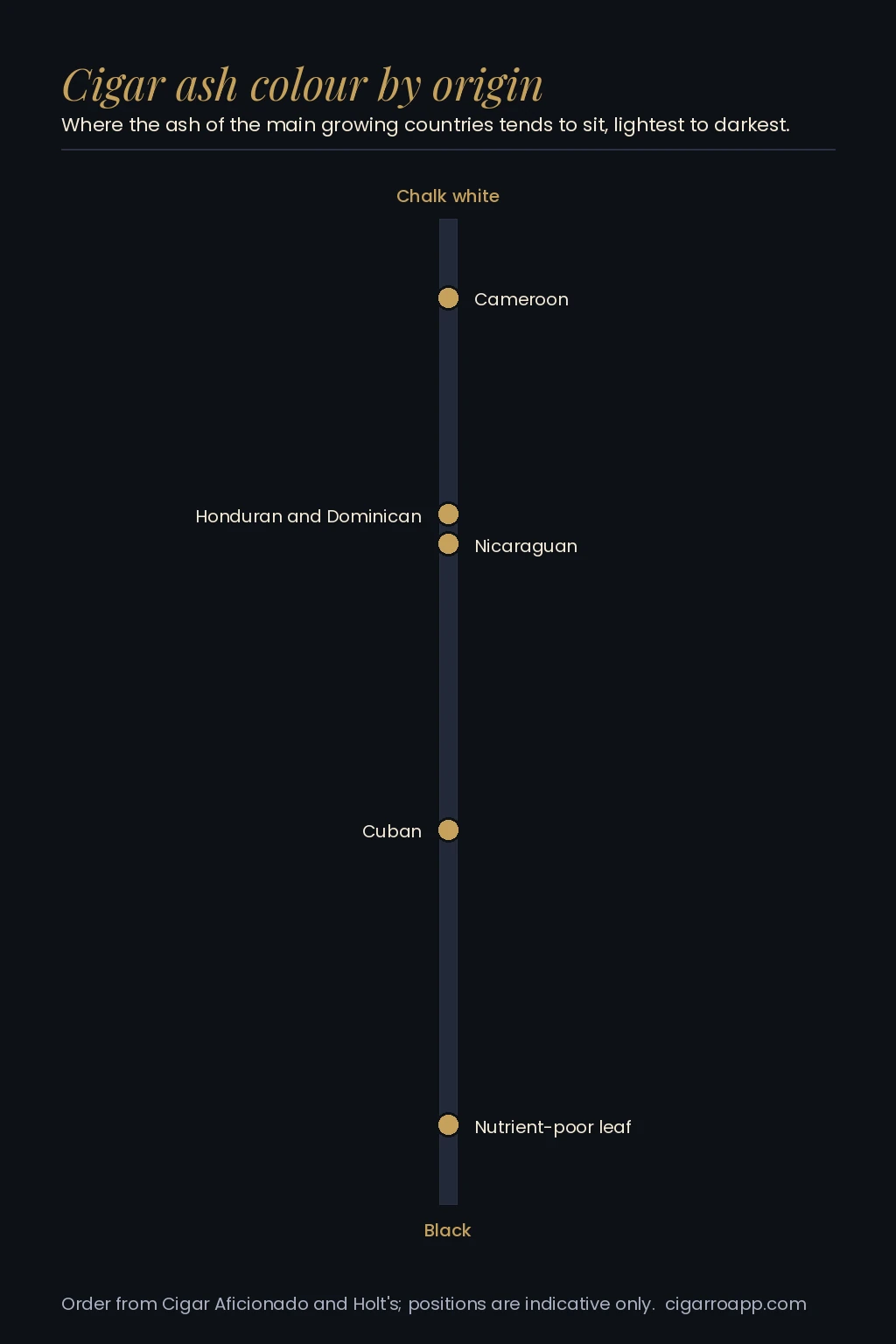
Ash colour follows the soil the leaf grew in, so it tells you where a cigar came from and very little about how good it is.
What Decides the Colour of the Ash
The sources disagree about which mineral does the whitening. Cigar Aficionado’s glossary names magnesium. Holt’s names calcium, phosphorus and magnesium as the whiteners and says potassium darkens the ash to a light grey. Cigar Journal says the opposite about potassium: a white or light grey ash is the sign of a potassium-rich soil. Each of these is a serious source, and they cannot all be describing the same chemistry.
The tobacco agronomists are the closest thing to an umpire. India’s Central Tobacco Research Institute, writing about flue-cured cigarette leaf and not about cigar tobacco, separates the two jobs. Potassium, in its account, is a mineral catalyst and oxygen carrier that promotes the burn of the leaf. Calcium and magnesium control the completion of the burning process and the production of white ash. On that reading, Cigar Journal is right that a potassium-rich leaf burns well and completely, and Holt’s and Cigar Aficionado are right that the whiteness itself comes from calcium and magnesium. A leaf can have plenty of one and little of the other, which is how you get a cigar that burns beautifully and leaves a grey ash, or burns sluggishly and still leaves a pale one.
The same institute names the element nobody on the cigar side mentions. Chlorine in the leaf acts as a negative combustion catalyst; it inhibits the burn, and for flue-cured leaf the institute wants it under 1.5 per cent and never above 2. A leaf that took up too much chlorine from its soil or its irrigation water will burn reluctantly however the other minerals stand, and a reluctant burn is a darker ash. So when a cigar burns black and keeps going out, the fault may be in the ground it grew in, and no amount of care will whiten it.
Ranked by how much they move the colour, then, the factors run like this:
- The soil, and what the plant drew from it. Calcium and magnesium set the whiteness, potassium sets how completely the leaf burns, chlorine can spoil both, and Cigar Journal adds that a leaf short of phosphorus grows brittle and lower in quality. Fertilisation changes all of this, which is why farms could chase a whiter ash in the 1990s.
- The leaf’s position on the plant. Leaf from low on the plant burns readily and leaf from the top burns slowly, and the burn-line section below shows what the roller does with that.
- The humidor. A cigar kept too wet burns darker and softer, in Cigar Advisor’s words, and most black-ash complaints I hear from friends resolve themselves after a fortnight at 65 to 69 per cent, which is where the humidity guide puts the modern standard.
- The roll. A loose bunch lets air through unevenly, and uneven combustion leaves uneven, darker patches in the ash.
- The pace of the draw. Drawing hard and often drives the coal hotter and the combustion less complete; a draw a minute, which Cigar Advisor and La Casa del Habano in Nyon both recommend and which I keep to, gives the leaf its best chance to burn clean.
Ash Colour by Origin
Because the colour follows the soil, it follows the country more than the brand, and the trade press has recorded the pattern for years. Cigar Aficionado’s glossary gives the two poles, Cameroon at the white end and Cuba at the grey, and Holt’s fills in the middle ground.
| Origin | Typical ash | Source |
|---|---|---|
| Cameroon | Bright white | Cigar Aficionado glossary |
| Dominican Republic | Off-white to light grey | Holt’s |
| Honduras | Off-white to light grey | Holt’s |
| Nicaragua | A shade lighter than Cuban | Holt’s |
| Cuba | Grey to steel grey, often salt-and-pepper | Cigar Aficionado glossary; Cigar Aficionado on spotting fakes |
This is why ash colour appears in Cigar Aficionado’s guide to spotting a fake Cuban: a real Habano tends to burn with a grey or salt-and-pepper ash, and a bright white ash is a good sign of a cigar made with non-Cuban tobacco. It is one tell among several, and a weak one on its own, since a non-Cuban cigar is not necessarily a counterfeit; the band, the box and the construction carry more weight, and the guide to spotting a fake Cuban sets them in order. But it is the one place where ash colour earns a verdict, and the verdict is about origin.
Notice what is missing from that table. The brand is not there, and nor is the price; the wrapper shade, Connecticut pale or Maduro dark, is not there either, because the wrapper is one leaf among many, and its colour comes from curing and fermentation, which the wrapper guide explains, while the ash colour comes from the minerals in the whole bunch. A dark wrapper can leave a pale ash and a pale wrapper a grey one, and both are perfectly ordinary.
02 · Firmness
Firmness and the Hand That Rolled It
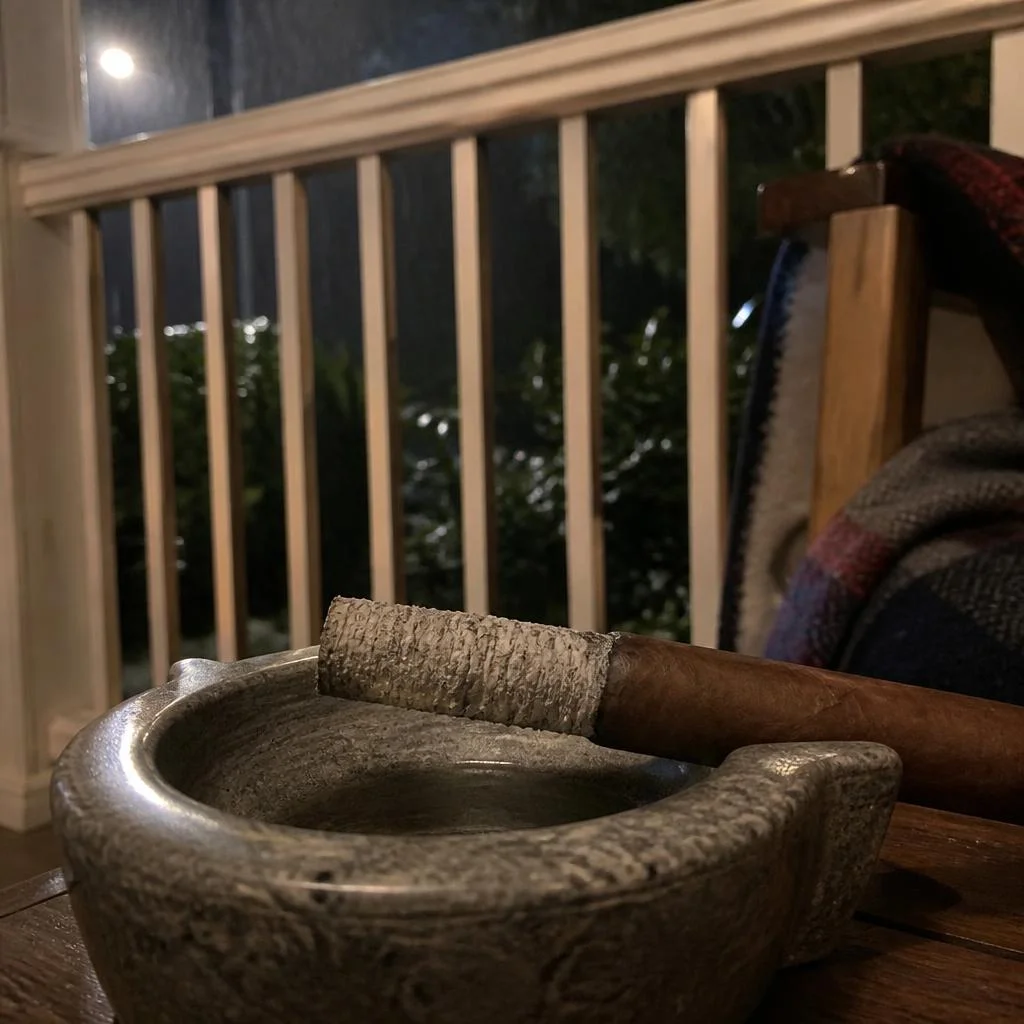
Firmness is the observation that speaks to craft. A handmade cigar is rolled from long-filler leaves that run the length of the cigar, and Cigar Aficionado’s glossary notes that long filler keeps its ash firm while short-filler cigars produce a flakier ash. Cigar Journal goes a step further into the bunch: dense rolling produces a firm ash, and loose rolling produces a crumbly one that falls off early. The ash is the bunch, minus everything that burned. If it holds together, so did the roll.
The best ash has a look to it. Cigar Advisor’s Gary Korb says an ideal cigar ash looks almost like a stack of coins, fine rings laid one on top of another, each ring a draw. Cigar Journal describes a cigar so well rolled that it could be stood upright on four centimetres of its own ash, which is more party trick than standard, but it shows what a dense, even bunch can hold. The angle of the leaves matters too: André notes that leaves laid at an angle to each other give a higher draw resistance and a slower burn than leaves laid straight, and the ash takes a different structure accordingly.
Two things that look like poor rolling are not. A cigar kept too damp throws a soft ash, which is the humidor’s doing, as the list above explains, and a thin cigar simply cannot hold what a thick one can. Lukens’s rule is that the thicker the cigar, the stronger the ash; in my own hands an inch on a lancero is a small achievement where on a 60 it is ordinary, and the ring gauge guide explains the geometry behind that.
03 · Length
Length and the Heat of the Smoke
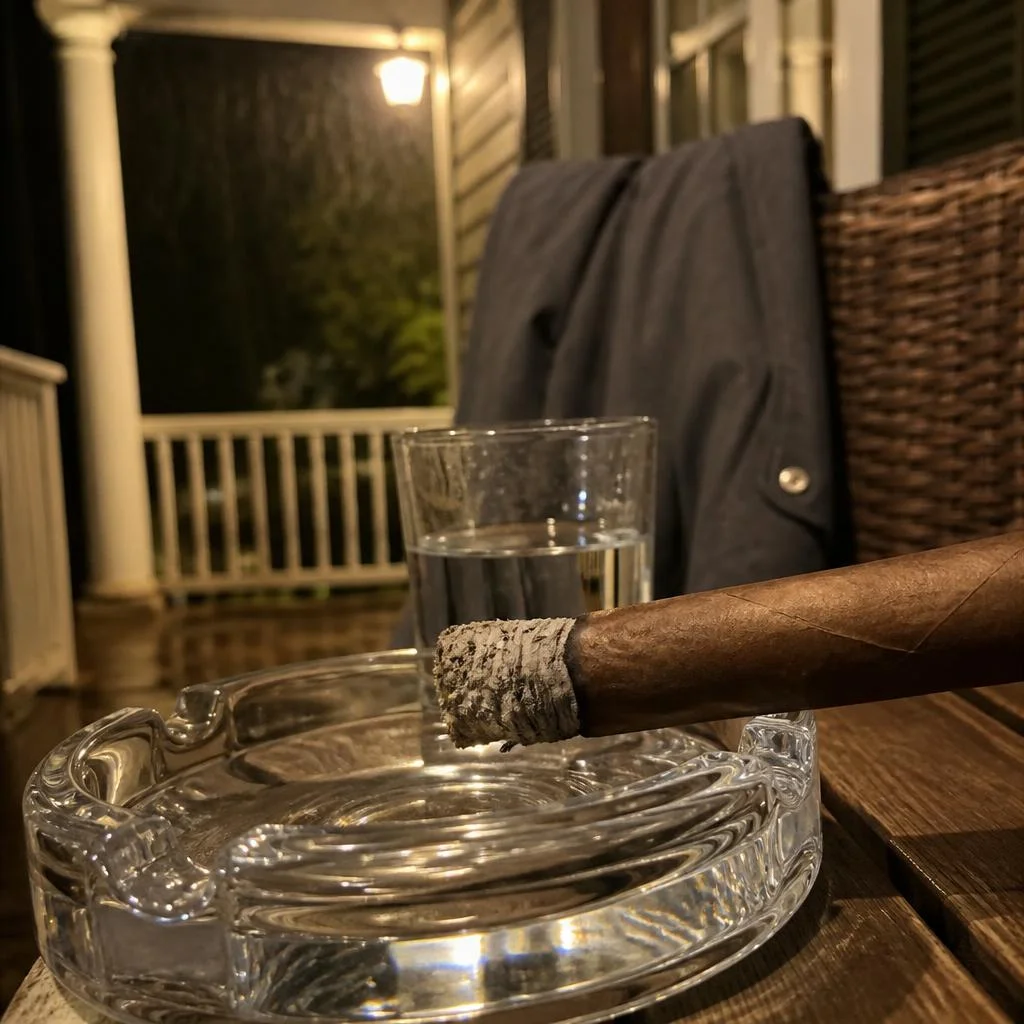
Length is about the coal, and the coal is about the smoke. A column of ash sits over the ember and slows the air reaching it, which is why Cigar Advisor says a long ash helps the cigar burn cooler, and why Holt’s says a very short ash can contribute to a hot smoke. Cigar Journal makes the same point from the other direction: a longer ash lowers the burning temperature, cools the smoke and gives the aromas room to develop, and it recommends letting the ash run longer as the cigar gets shorter, because the smoke gets hotter towards the end. Tapping every few seconds, as one would a cigarette, undoes all of that.
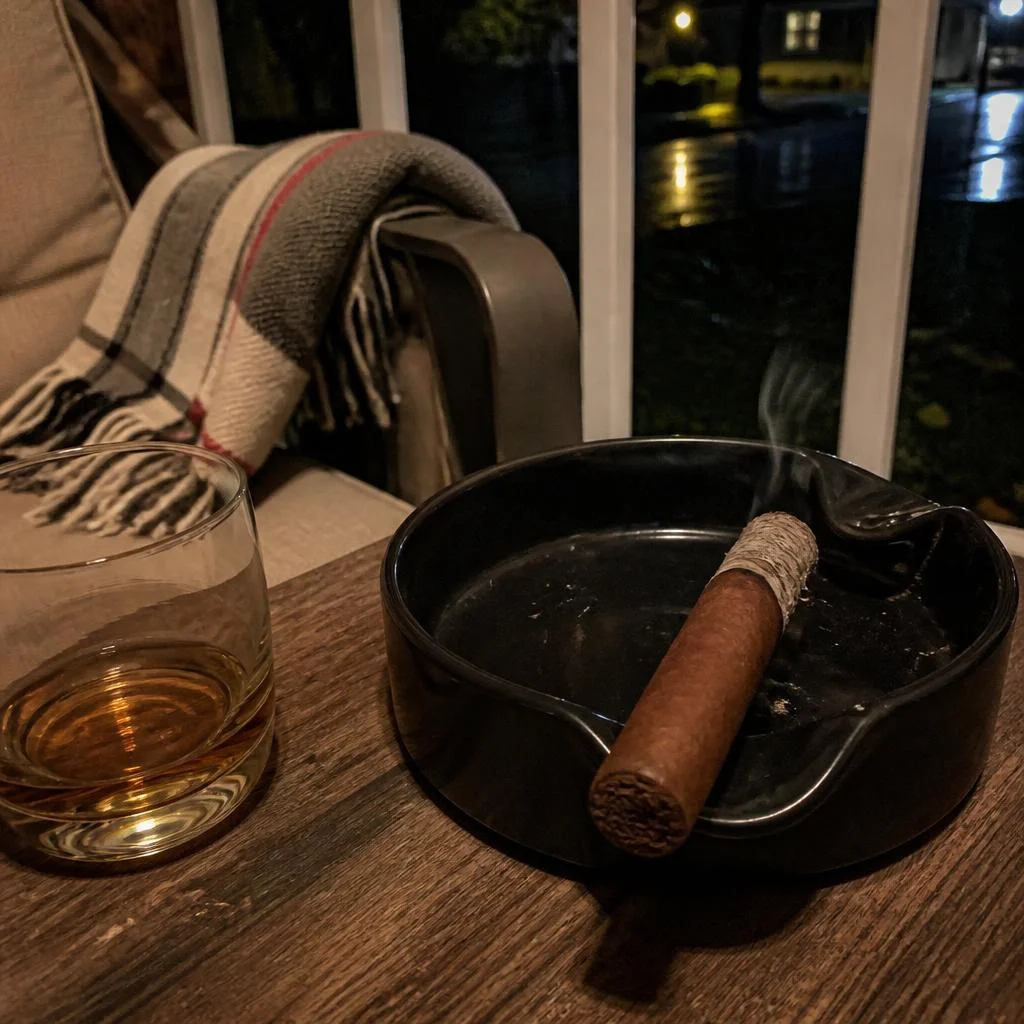
The useful numbers are modest. Cigar Aficionado’s advice is to wait until the ash is about an inch long, or until a crack develops, and then let it go in the tray. Korb calls three-quarters of an inch a safe bet and allows an inch to an inch and a half when the ash is firm. La Casa del Habano in Nyon, working in metric, puts a good ash at two to three centimetres, under two running hot and over three starting to choke the draw. Converted, they meet at about an inch, or 2.5 centimetres; Korb simply lets a firm ash run a little further than Nyon would. That inch is also my own habit: let the first one form, then stop thinking about it.
Longer is not always better. Lukens warns that the longer the ash, the more likely the cigar is to go out, and Korb’s phrase is that an over-long ash can smother the hot core and put the cigar out. When that happens, relighting it properly is a two-minute job, but it is a job the ash caused. Past an inch and a half on a thick, well-rolled cigar you are on your own. Four inches is a photograph, and the photograph usually ends in the lap.
| Ash length | What is happening at the coal | What to do |
|---|---|---|
| Under three-quarters of an inch, tapped constantly | The ember is exposed and runs hot | Stop tapping; let the column form |
| Three-quarters of an inch to an inch | The ember is insulated and the smoke cooler | Nothing; this is the band to live in |
| An inch to an inch and a half, firm | Still fine on a thick, well-rolled cigar | Rest it on the ashtray wall and let it drop when a seam shows |
| Past an inch and a half | Less air reaches the coal and the draw can tighten; La Casa del Habano draws the line sooner, at 3 centimetres | Roll it off before the cigar goes out on you |
04 · The Burn Line
The Burn Line and Whose Fault It Is
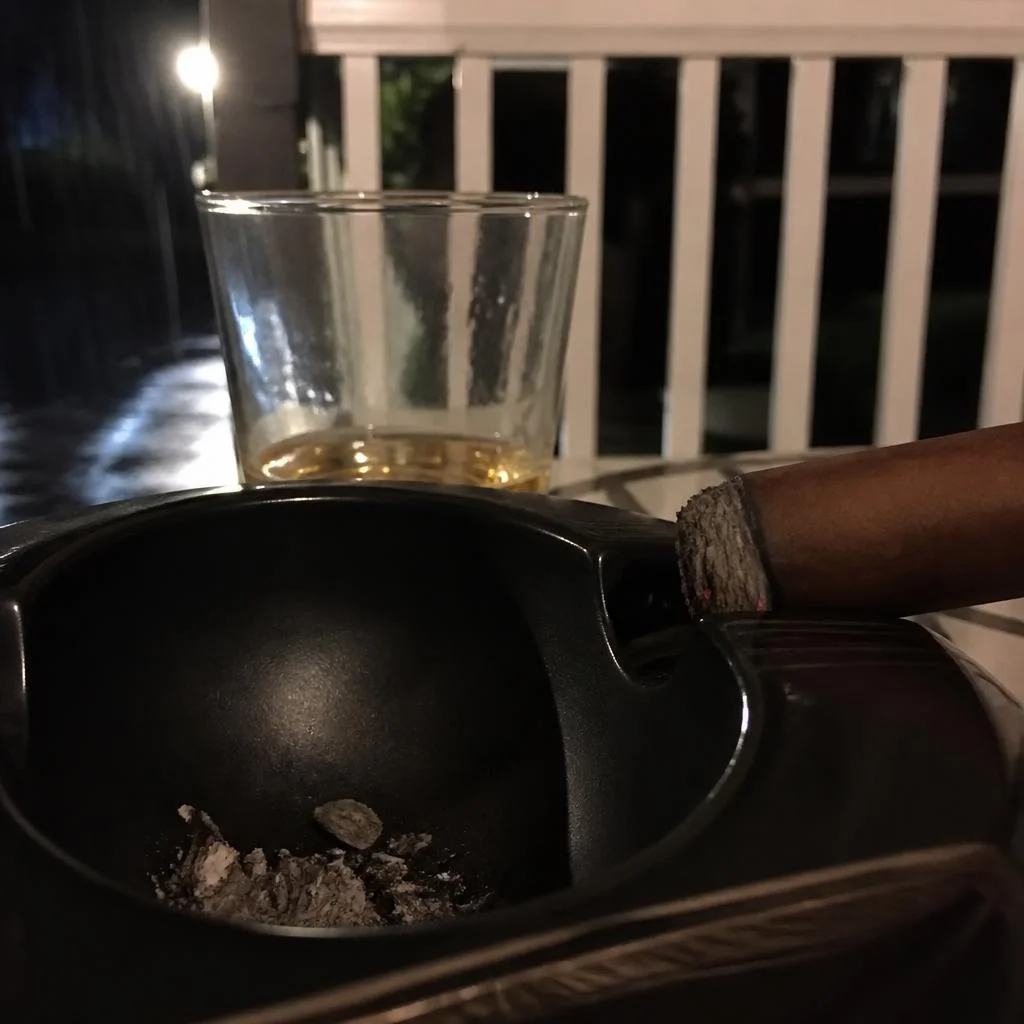
When the ash drops, look at what it leaves. The shape of the coal is the clearest record you will get of how the bunch was built, and Cigar Journal’s account of it is the best in print. A premium cigar is rolled from three grades of leaf: volado from the lowest part of the plant, which burns easily and brings little flavour; seco from the middle, less combustible and more aromatic; and ligero from the top, the thickest leaf, the one that carries the strength and burns most slowly. The roller sets the ligero at the centre, where the heat is highest, with the seco around it and the volado outermost. If you want the parts named properly first, the anatomy of a cigar lays them out.
Burn the cigar and that arrangement draws its own picture. A gentle cone, the centre standing slightly proud of the edge, is the ideal: the centre runs hottest, and the slow-burning ligero placed there keeps it from running away from the leaves around it. A dead flat burn is typical of a short-filler cigar, where chopped tobacco burns evenly with nothing to shape it. And three faults point back to the roll, two of them nearly always and the third more often than not; André’s own conclusion is that a bad burn is more often the product’s fault than the fault of the person holding it.
| Burn shape | What you see | Likely cause (Cigar Journal) | Whose fault | What you can do |
|---|---|---|---|---|
| Cone | Centre standing slightly proud, even all round | Ligero correctly centred, seco and volado in order | Nobody’s; this is right | Enjoy it |
| Flat | A straight, even line | Short filler, or a very evenly bunched long filler | Nobody’s | Nothing |
| Canoe | One side races ahead | Ligero set off-centre, so the slower leaf sits on one side | The roller | Turn the slow side up, touch the flame to it if it lags |
| Tunnel | A cavity opens down the centre under a wrapper that barely burns | Easy-burning volado at the centre, the slow ligero on the outside | The roller | Touch the flame to the rim until the wrapper catches up |
| Crater | The centre burns as a normal cone while the outer ash stands proud around it | Seco used where volado should be, in the binder or wrapper position | The roller, usually | Nothing you do will re-order the leaves; let the shell drop and carry on |
The practical point is forgiveness. A canoe on the first third of an otherwise good cigar is not something you did, and a rotation of the cigar and a brief touch of flame will usually bring it level. The full walkthrough of smoking a cigar properly covers the corrections in their place. What the burn line asks of you is only that you notice it before you reach for the lighter.
When the Ash Misbehaves
Most questions about ash arrive as a complaint: it fell in my lap, it went black, there are spots on it. The chart below is the one I would hand a friend. Each row names the likeliest cause first and the fix that costs least.
| What you see | Most likely cause | Less likely cause | Fix |
|---|---|---|---|
| Ash drops before three-quarters of an inch, every time | Short filler, or a loosely rolled bunch (Cigar Aficionado, Cigar Journal) | Thin ring gauge; a hard draw | Expect it on a short-filler stick; on a premium, note the brand and watch for a repeat |
| White ash that flakes and sheds | Excess magnesium in the growing soil (Cigar Aficionado, Holt’s) | Over-dry cigar | Nothing to fix; ash more often and keep the tray close |
| Soft, dark ash on a cigar that keeps going out | Kept too damp (Cigar Advisor) | Leaf high in chlorine or low in minerals | Rest the box for two weeks and try again |
| Black ash on one cigar in a box, the rest grey | Ordinary variation between leaves | A single poorly fermented leaf | Nothing; enjoy the rest of the box |
| Black ash on every cigar in a box | The tobacco itself, by soil or by burn | Storage, if the whole box was over-humidified | Judge the box by taste; Holt’s notes that leaf short of minerals can smoke a little acidic, so a black ash and a sharp taste together point to the leaf, and the retailer should hear about it |
| White dots or crystals on the ash | A toothy wrapper, whose small oil pockets burn as bright spots (La Casa del Habano, Cigars.com) | Mineral crystals in the leaf | Nothing; it is a feature of the leaf, and it is not beetle eggs |
| Ash in neat rings like a stack of coins | A dense, even roll and a steady draw | None | Keep doing whatever you are doing |
| Ash in uneven, striped bands | An uneven draw rhythm, some puffs harder than others | Patches of inconsistent leaf | Slow the pace and the rings even out |
| Canoe, tunnel or crater at the foot | A rolling fault (Cigar Journal) | Uneven lighting; a draught | See the burn-line table above |
How I Read an Ash Over an Evening
My own practice is to look at the ash three times and no more. Once while the first inch forms, to see whether it is holding its shape and its rings. Once when it drops, to read the coal underneath: cone, flat, or something that needs turning. And once in the final third, when the heat is highest and a slightly longer ash earns its keep. The colour I note in passing, the way I would note the weather. It tells me where the leaf grew, which I usually knew from the band, and on a supposed Cuban it tells me whether to be suspicious.
Before I ash I use Korb’s test, which is to rest the ash against the inside wall of the ashtray; if it resists, it can wait, and if it gives, it was ready. I let it fall into the tray instead of tapping it off, which is also Holt’s advice, and which keeps the ember intact. Cigar Aficionado notes that too much force on the ash can break off the ember itself, and a cigar that loses its coal at the first inch is a sulky thing for the next ten minutes.
And I keep the burn line, not the colour, in my notes. The third form in the Cigarro Method has a burn line field and a correction field beside the flavour notes, so a canoe in the first third of a cigar is written down against that third, and the brand’s ash across a dozen reviews starts to tell a story that one evening never could. Firm ash and a clean cone, time after time, is the record of a factory that knows its trade.
Common Questions on Cigar Ash
What does the colour of cigar ash mean?
It reflects the minerals in the leaf, which came from the soil. A white ash points to tobacco rich in calcium and magnesium that burned completely; a grey ash to a different balance, typical of Cuban leaf; a black ash to leaf short of minerals or not burning properly. It says where the leaf grew, and little about how good the cigar is.
Does a white ash mean a better cigar?
No. A white ash means a leaf rich in calcium and magnesium that burned completely, which is a fact about the field and not the flavour. Holt’s calls the better-cigar version a myth, and Cigar Journal and Cigar Advisor say the same in their own words.
Is grey cigar ash bad?
No. Grey is where Cuban leaf tends to sit, and a good deal of the world’s most sought-after tobacco sits there with it.
What does black cigar ash mean?
Either leaf that is poor in minerals, or a cigar that is not burning as it should, which can be the leaf’s chemistry, the roll, or a cigar kept too damp. Cigar Journal is explicit that a blackened ash does not automatically mean a poor cigar. Check the burn line and the humidor first, then judge the cigar by its taste.
How long should the ash on a cigar be?
About an inch, or until a crack appears, in Cigar Aficionado’s advice; Cigar Advisor calls three-quarters of an inch a safe bet and allows an inch to an inch and a half when the ash is firm. Let it fall into the tray, and ash sooner on a thin cigar.
Does a long ash mean a good cigar?
It means a well-rolled one, which is part of a good cigar. Long filler and a dense, even bunch hold a long ash; short filler and a loose roll do not. Past an inch and a half or so the ash stops being evidence and starts starving the coal, so admire it and then let it go.
Should I knock the ash off before relighting?
Yes. Holt’s advice is to tap the ash off gently once the cigar has gone out, toast the foot again, and once it is lit, blow gently through it to clear the stale smoke. Clearing the old ash first is what keeps a stale, charry taste out of the relight, and if the foot was burning crooked Holt’s suggests cutting the whole ash off behind the burn line; the relighting guide has the rest.
Why does my cigar ash fall off so early?
Usually because of the bunch: Cigar Aficionado’s glossary says short filler throws a flakier ash than long filler, and Cigar Journal says a loose roll produces a crumbly ash that drops early. On a premium long-filler, look at the ring gauge: a lancero lets go of its ash long before a 60 does.
What are the white dots on my cigar ash?
Bright spots usually come from a toothy wrapper, whose small bumps of oil burn as white points, and La Casa del Habano in Nyon adds that they can be mineral crystals. They are not beetle eggs, and they are harmless.
Does humidity change the colour of the ash?
Within limits. Cigar Advisor notes that a cigar kept too moist produces a darker ash, and a damp cigar holds its ash less well too. A fortnight at 65 to 69 per cent usually brings it back. Humidity cannot whiten a leaf that grew grey.
Why is cigar smoke blue at the foot and white from the mouth?
Particle size. Holt’s explains that smoke rising from the lit end carries particles about the size of a light wave, which scatter blue, while exhaled smoke carries larger particles that reflect the whole spectrum and look white. It is the same trick the sky plays, and it has nothing to do with the ash.
A Postcard from the Soil
The ash is the only part of a cigar that cannot be dressed up. Bands can be designed and boxes can be lacquered, but the column at the foot is the bunch itself, burned, and it will tell you about the roll and the field whether or not the brand would like it to. Read it for its firmness and for what it leaves behind, and let its colour be what it is: a postcard from the soil, worth a glance and never a verdict.