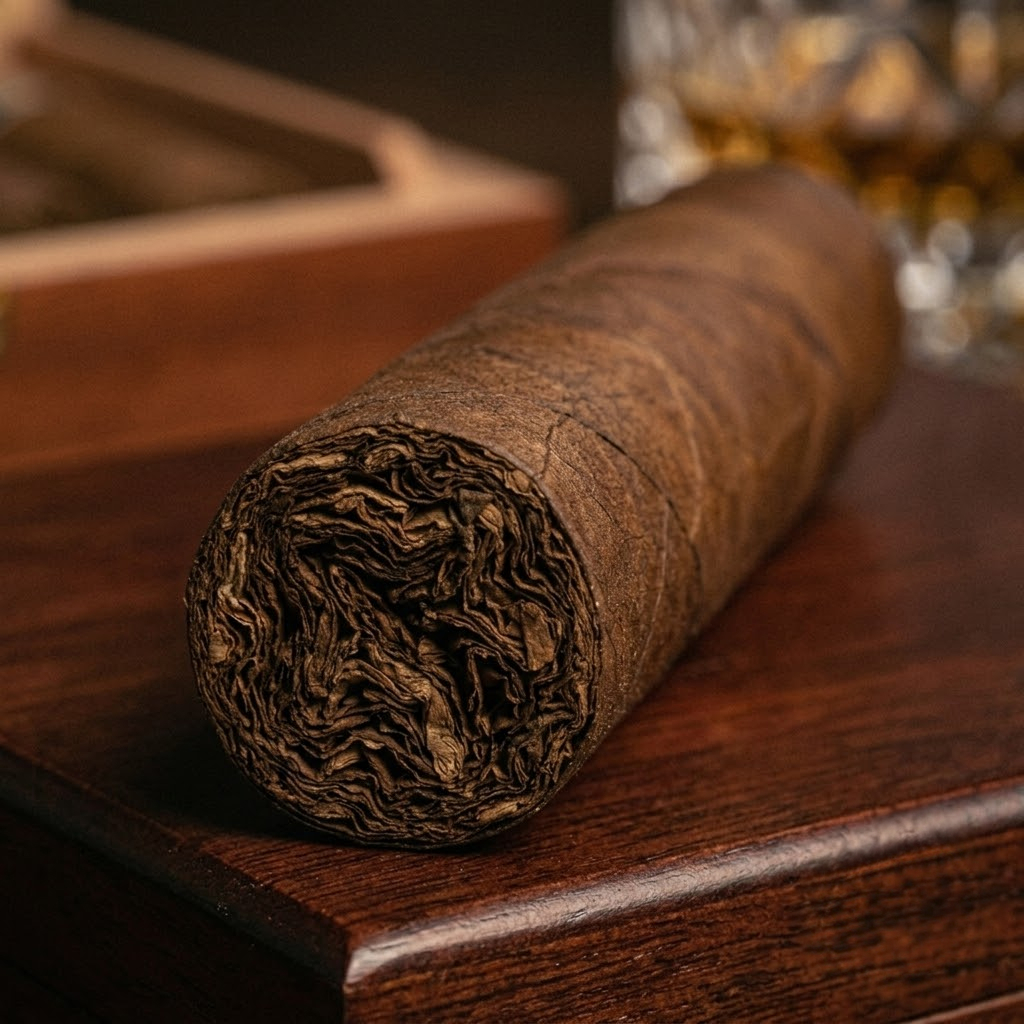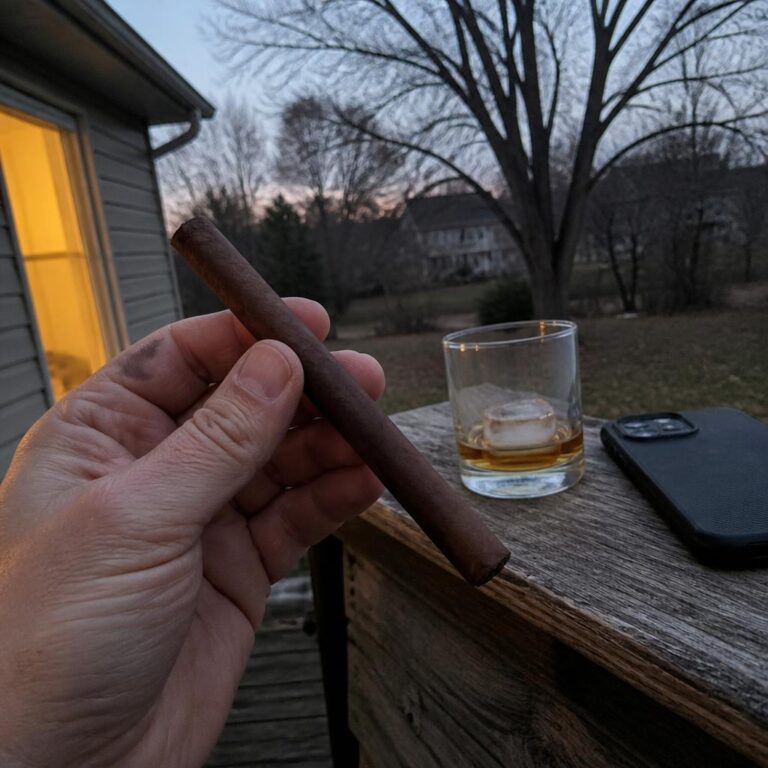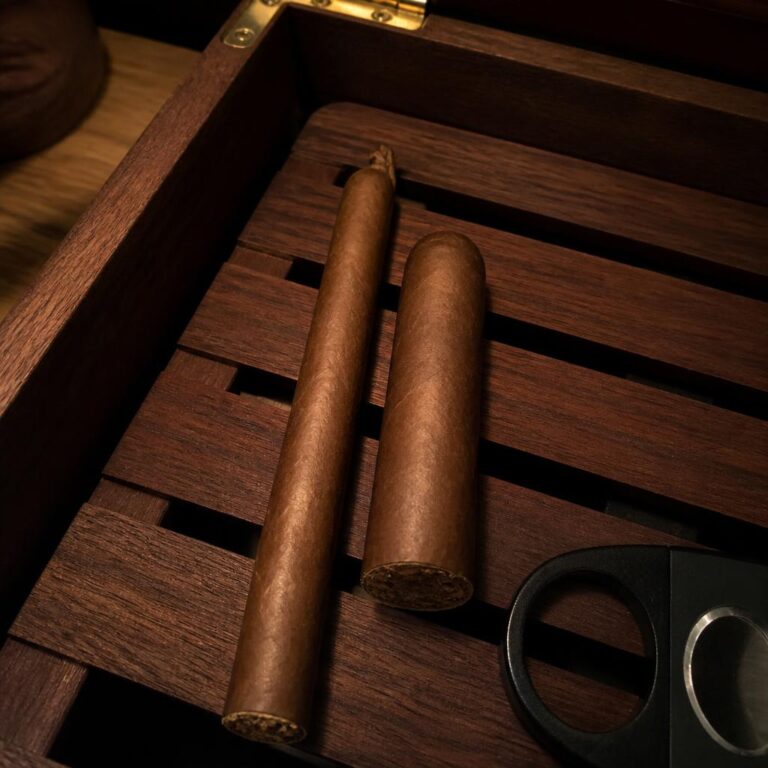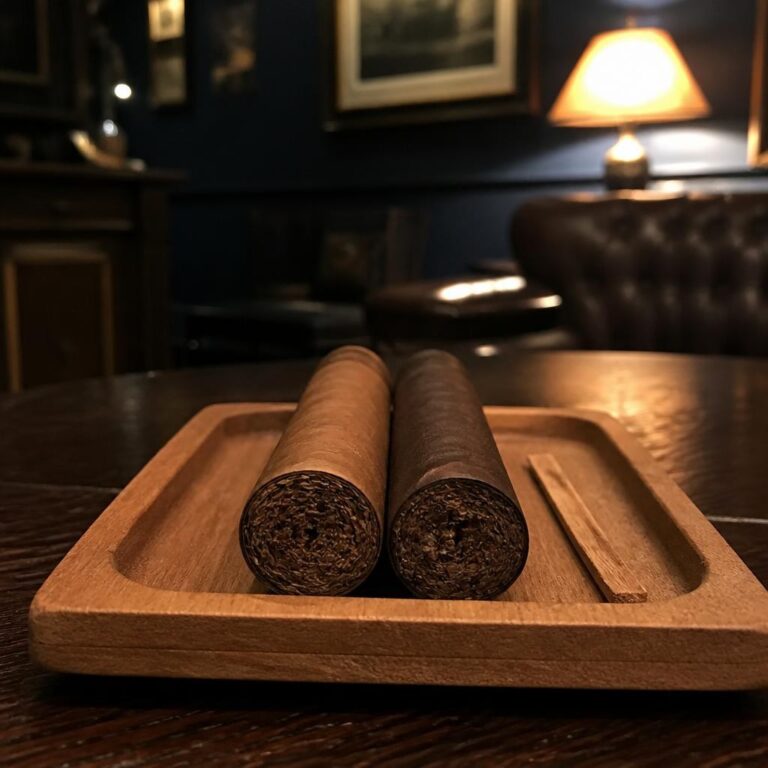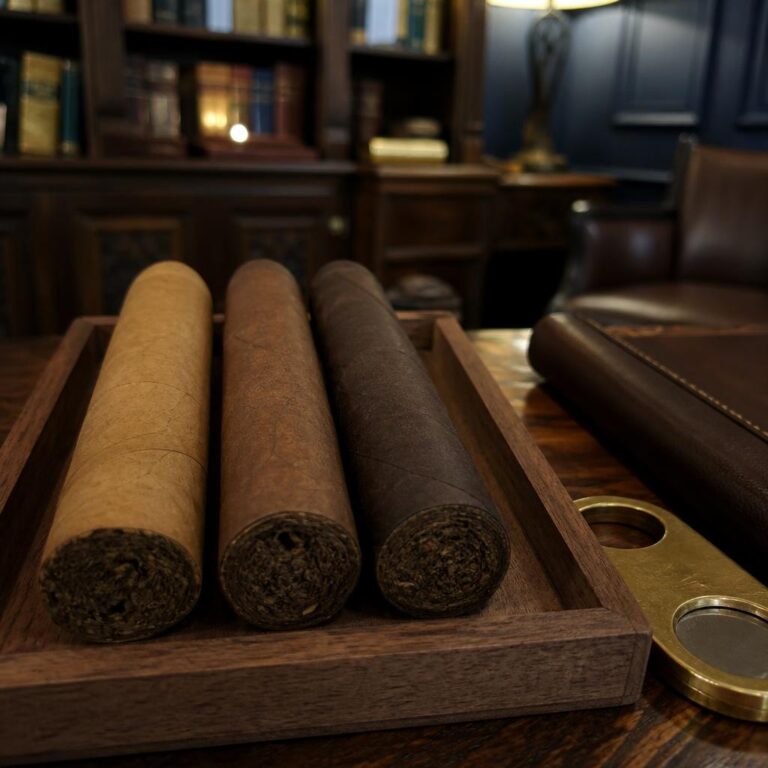
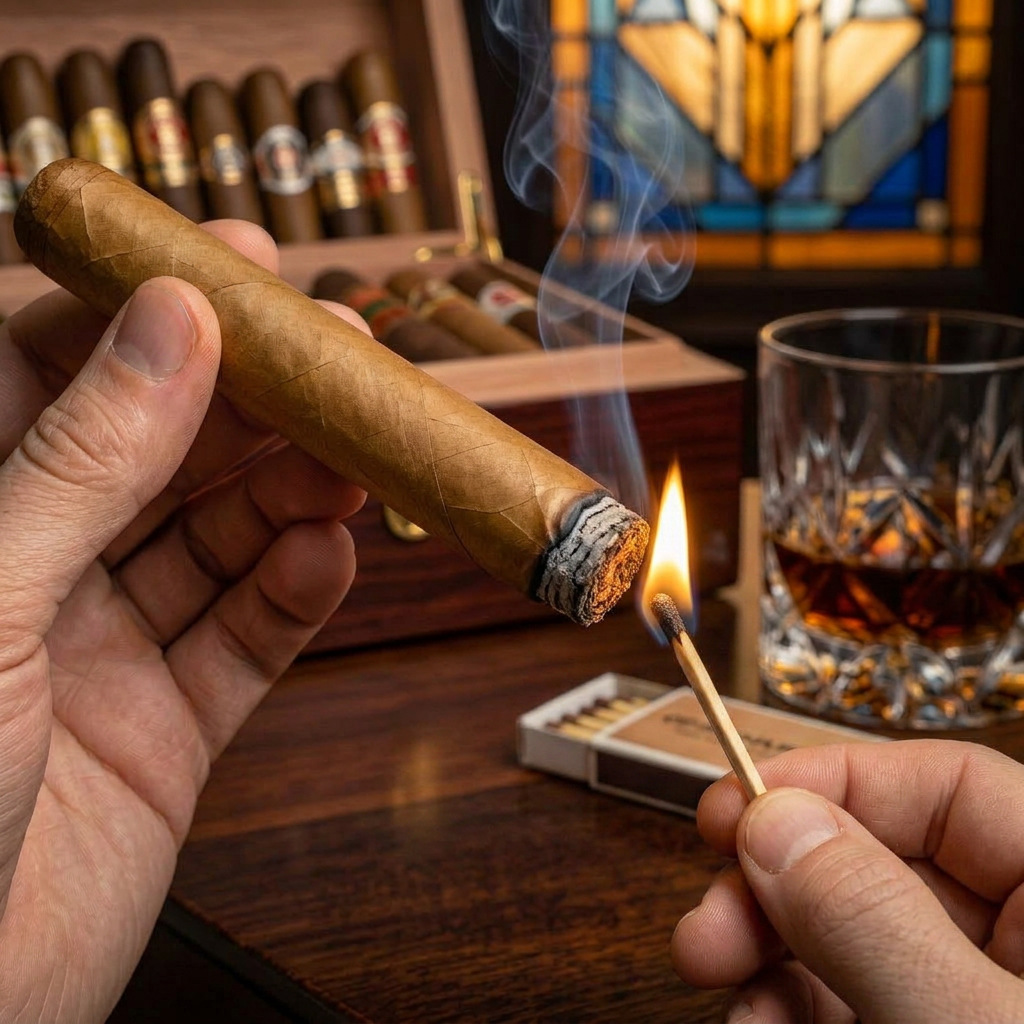
A cigar is lit at the foot, the open end you leave alone after cutting the head. Lighting it well means toasting that foot until the wrapper, the binder and the filler all catch and burn together as a single even ember. The light is the first thing you do to a cigar after the cut, and it is the first line of the cigar’s review. Get it right and the smoke draws cool and true from the opening puff. Get it wrong and you scorch the leaf, start a crooked burn, and spend the first third fighting the cigar instead of reading it.
People ruin the light in one of two directions. They hold the foot straight in the flame and char the wrapper, so the first minutes taste of burnt paper rather than tobacco. Or they hurry a lazy, partial light that catches only the filler in the middle, and the cigar bores a tunnel down its own centre while the wrapper trails behind. Both are avoidable, and avoiding them costs about a minute of patience that a cigarette never asked of you.
What follows is the whole of it. Why the light quietly decides the opening third. How to toast the foot properly, which is most of the craft. The first draws, and how to settle an even burn before you relax into the cigar. What to light with, from a butane torch to a strip of cedar, and the two flames that should never touch a cigar. How to read and correct a burn that has wandered. A word on lighting in company. And, at the end, why how a cigar took its light belongs in its record beside the flavour, because in Cigarro the burn is part of a cigar’s story as surely as the taste is.
Why the Light Decides the Opening
The light is the one part of smoking that happens before any flavour, and it quietly settles all of it. A cigar is three tobaccos rolled as one: an outer wrapper, a binder beneath it, and the filler at the core. A proper light sets all three alight at the same moment, so they burn together and give you the blend the maker built. A careless light catches the filler alone, and from the very first draw the cigar is burning unevenly, ahead of itself in the middle and behind at the edges.
That matters most at the start, because the opening third is where a cigar introduces itself. The bright top notes, the first cedar and pepper and cream, the character the blender put at the front of the smoke: all of it arrives in those early minutes, and all of it is written over if the light is wrong. Char tastes of char, and it does not fade quickly. An overheated foot, scorched rather than toasted, turns even a fine cigar hot and mean for as long as it takes the burn to settle, which is often most of the first third gone.
This is why the light is not throat-clearing but the true beginning of the review. The review-by-thirds framework at the heart of the Cigarro Method reads a cigar in three acts, and the first act starts at the flame. A cigar lit patiently gives you a clean first third to read. A cigar lit in a hurry gives you a muddle, and you cannot tell whether the harshness in front of you is the blend or the burn.
The reassuring part is that none of this is difficult. It asks for patience rather than skill, and it follows naturally from the step before it. You cut the head, the closed end you draw from, and you light the foot, the open end at the bottom. Get those two right, in that order, and the cigar does almost all of the rest itself.
Toasting the Foot
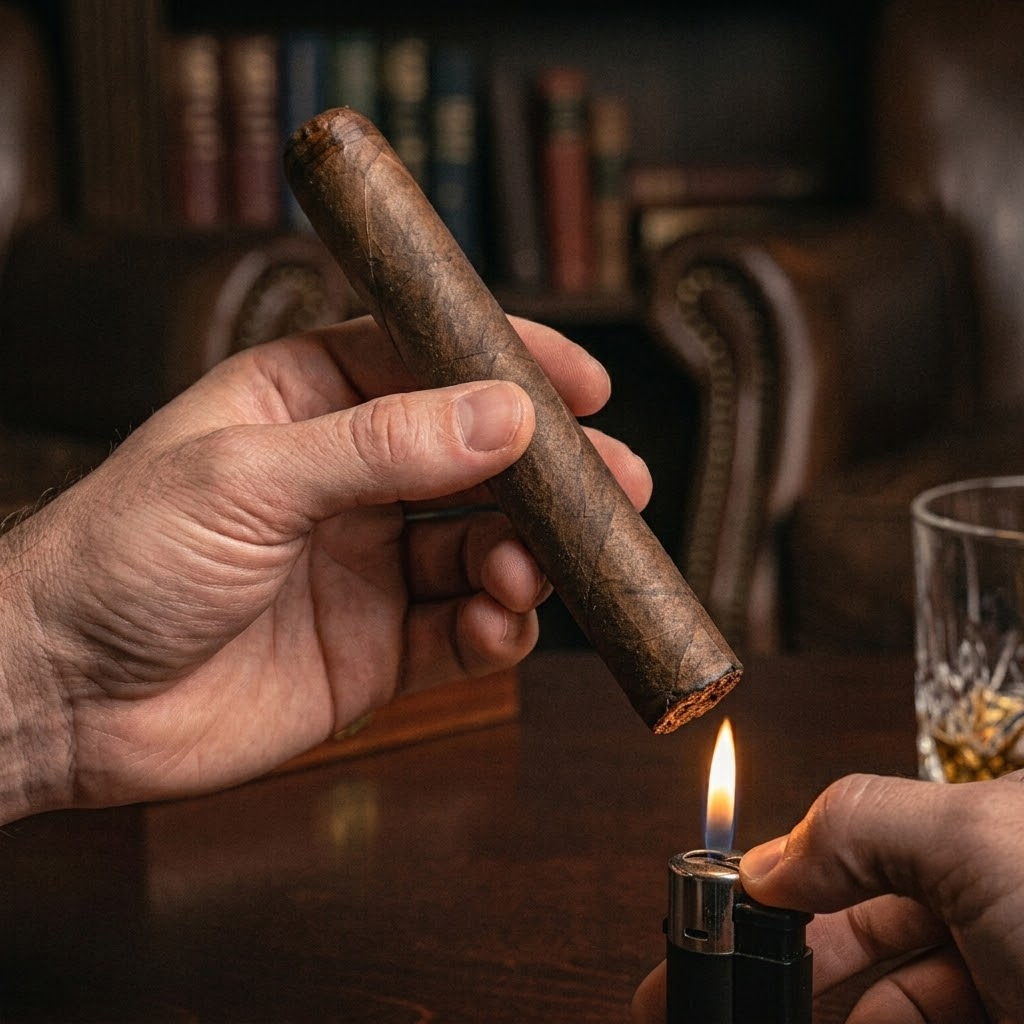
Toasting is the heart of it, and it is simpler than it sounds. To toast a cigar is to warm the foot near the flame, without letting them touch, until the whole rim catches and glows, before you ever put the cigar to your lips. The old and useful image, and the one Cigar Aficionado has used for years, is a marshmallow over a campfire. You hold it above the heat, close but not in it, and you are patient.
Hold the cigar at an angle, somewhere around forty-five degrees, with the foot an inch or two above the flame and never in it. Bringing the leaf into the flame makes it far too hot and scorches the wrapper, which is exactly the burnt note you are trying to avoid. Turn the cigar slowly as you go, so every part of the rim takes the same heat rather than one side catching while the other stays cold. Keep at it, without hurrying, until a glowing ring runs the whole way around the foot and the very edge has darkened to a thin black line.
The reason to bother with all this is worth stating plainly, because it is the difference between a cigar that behaves and one that does not. The point of toasting is to light the wrapper and the binder as well as the filler. Skip the toast and rush a light, and you tend to ignite only the soft filler in the centre, which is precisely how a tunnel begins: the core races down while the outer leaves lag behind.
A little judgement helps. A broad ring gauge has far more foot to heat than a slim cigar, so a fat sixty-ring wants more patience and a wider flame than a lithe corona. A pale, delicate wrapper shows a scorch more plainly than a dark one, so it rewards an especially gentle hand. And if you do slip and touch the foot to the flame, there is no need for alarm. Move the cigar calmly back out of the flame and carry on. You have not ruined anything; you have simply been reminded why the flame stays below the foot.
The one rule
Toast, Don't Burn
Close, not touching. The foot rides an inch or two above the flame. The flame never sits on the leaf.
Turn it. Rotate the foot so the whole rim heats evenly, never one scorched patch.
Read the rim. You are finished when a ring of ember glows all the way around and the edge is thinly blackened, and not before.
If you nick it. Catch the wrapper with the flame by accident and no harm is done. Move it back out and carry on.
The First Draws and the Even Burn
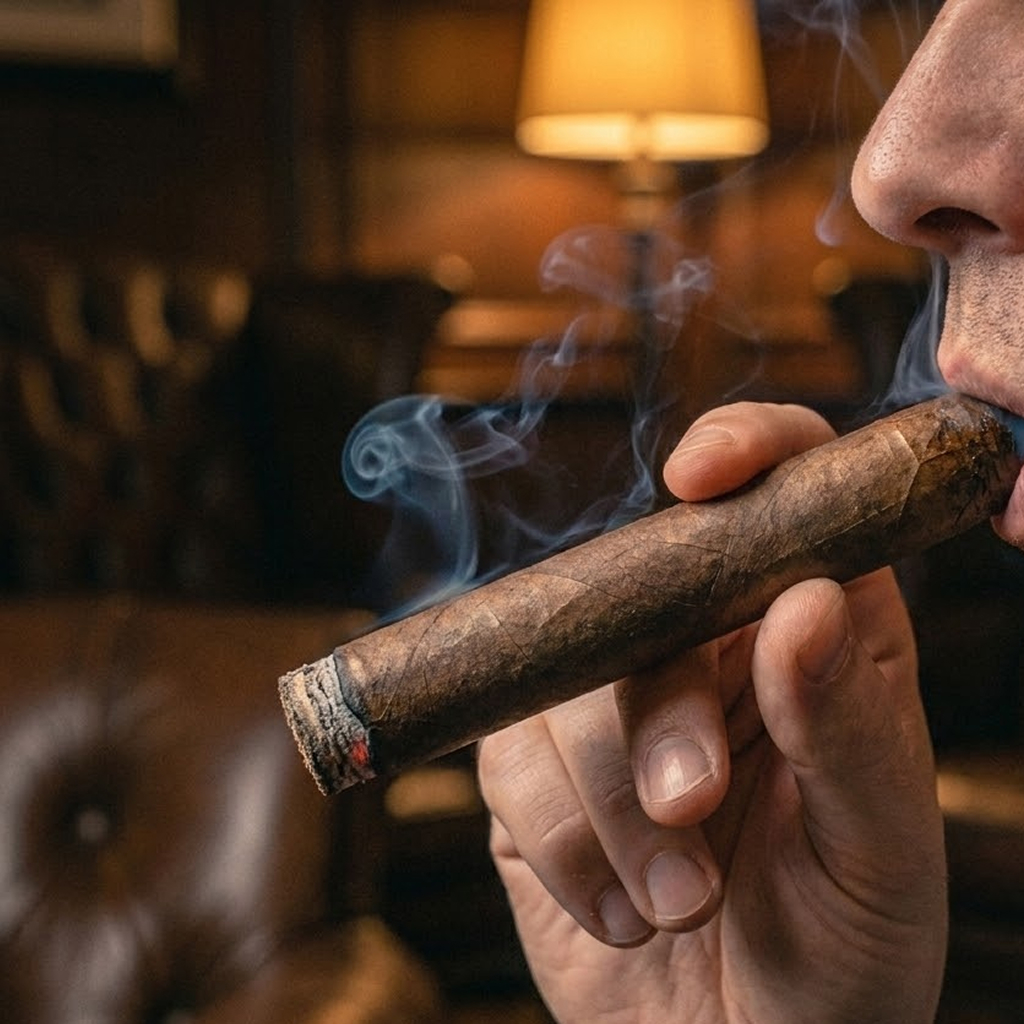
Once a ring of ember glows all the way around the foot, and only then, raise the head to your lips and draw gently. Here is a small point the old hands observe: many smokers blow that very first mouthful back out through the cigar rather than in. The idea is to clear any trace of the flame, a whisper of sulphur from a match or gas from a lighter, before it reaches the palate. This is called purging, and the one firm rule about it is that no one should ever make more than a single outward puff. One is a courtesy to the blend. More is fussing.
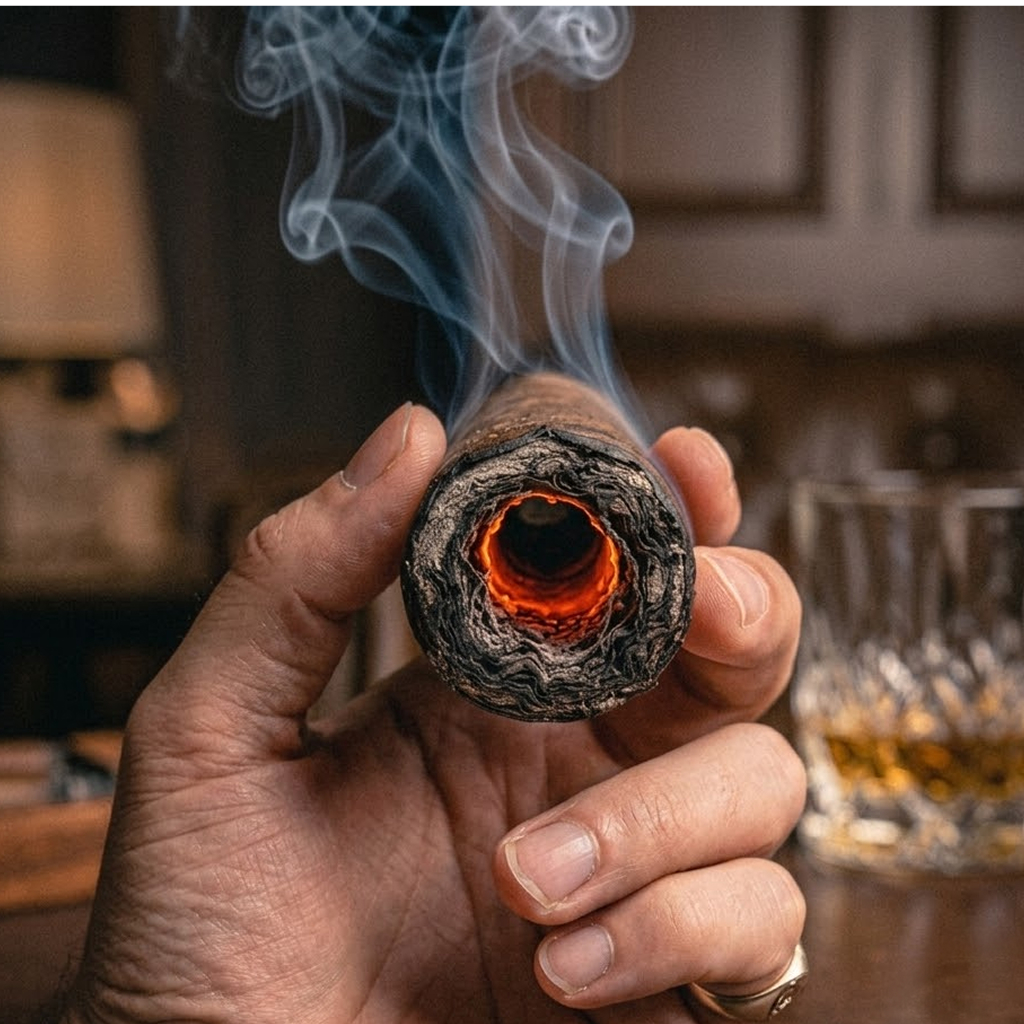
Now look at the foot, because it lies. A cigar often appears fully lit when a good part of the rim is not yet burning. Blow gently across the foot, softly, until the whole face glows a steady red, and you will see the pale patches catch up and a thin, even collar of ash begin to form. This is the moment to be unhurried. Let the lit cigar sit for a minute so it stabilises, so wrapper, binder and filler are all truly alight and the burn line has evened out, before you settle into the smoke.
That patience at the start is the cheapest insurance a cigar offers. A foot that begins its life burning evenly, all the way around, is far less likely to canoe or tunnel later on. Almost every burn fault you will meet an hour from now was set, or avoided, in the first two minutes at the flame. Spend them well and the cigar tends to look after itself. Spend them badly and you will be correcting the burn for the rest of the smoke.
Choosing Your Flame
There is, as Cigar Aficionado likes to say, only one way to effectively light a cigar, but there are several things to light it with, and they are not equal. What they have in common is the thing that matters most: a clean flame that adds nothing of its own to the tobacco.
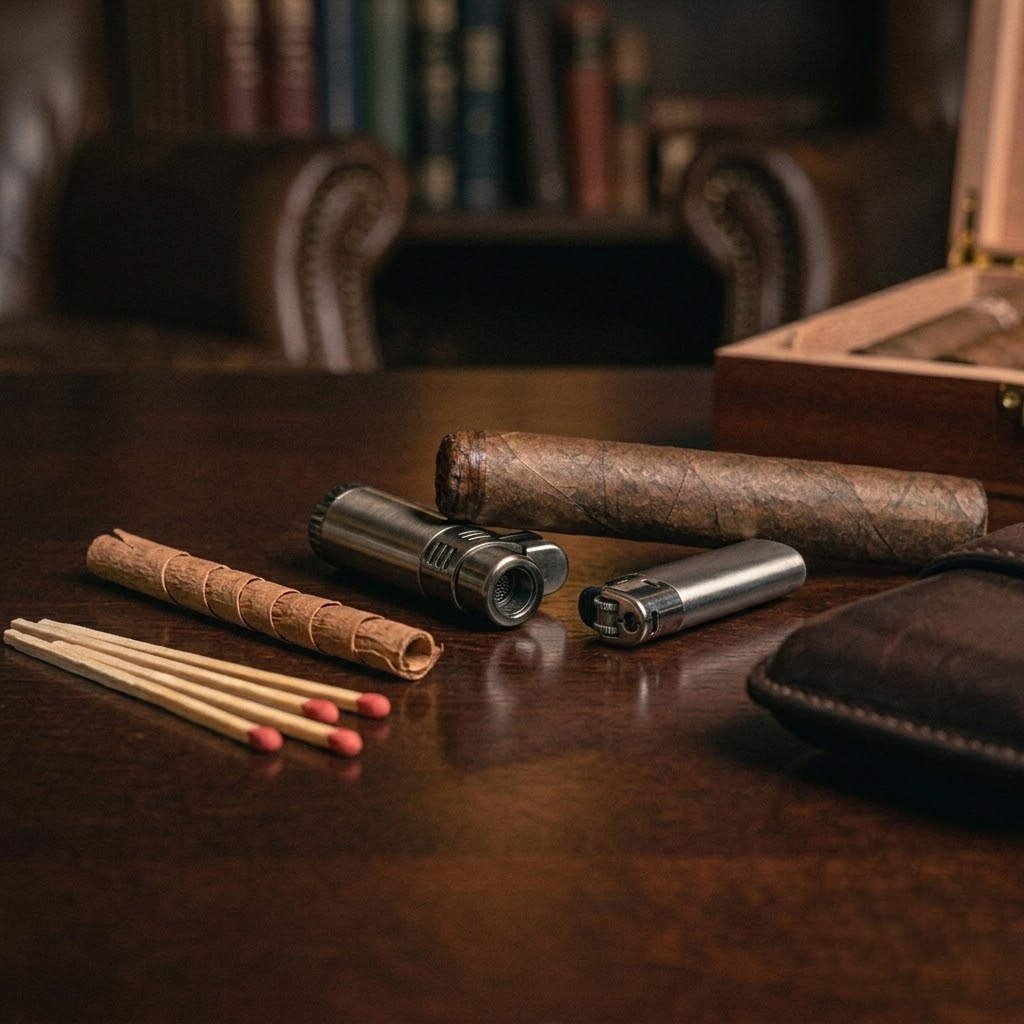
Butane is the sensible default, and the reason is simple. It burns clean and odourless and leaves no flavour behind. A proper cigar lighter runs on that odourless gas, usually with a fatter flame, or two or three adjacent jets, and an adjustable height. A torch, or jet, flame is quick and holds up in a breeze, which makes it the friend of a fat cigar or an evening on a patio, but it is fierce; keep the foot well clear of the jet and toast with the tip of the flame rather than blasting the leaf. In company, angle a torch away from the table, one of several small courtesies collected in our guide to cigar etiquette. A soft-flame butane lighter is gentler, closer in character to a match, and the easier tool for a careful indoor light. If you are still deciding what to buy, our guide to choosing a cigar cutter and lighter compares single, double and triple jets against soft flame and cedar, and explains how to refill a torch without ruining it.
Wooden matches are the purist’s choice, and a good one gives a flame as clean as cedar. The details are worth getting right: you want matches made of wood rather than paper, at least three and a half inches long, with sulphur-free heads. After you strike one, wait. Let the little flare of striking chemicals burn off and the wood itself feed the flame before you bring it near the foot, or you will taste the match. Wood burns cooler than butane, so a single match rarely finishes the job; it can take three to light one cigar, and you may need to tap the spent end into the ashtray to keep a clean flame going. It is slower, which on an unhurried evening is rather the point.
A cedar spill is the oldest and quietest way of all. A spill is a thin strip of Spanish cedar, the very same wood that lines a good cigar box and sheets between the layers inside it, so your next spill is often already sitting in the box your cigars came in. You light the spill from any flame, then light the cigar from the spill: a low, slow flame that, if anything, lends a faint sweet cedar note rather than taking anything away. Hold the spill in one hand and the cigar in the other, and toast as you would with any flame.
Two things should never touch a cigar. The first is a candle, whose burning wax carries its own scent straight into the smoke. The second is a Zippo or any fluid lighter, because the fuel is a refined naphtha and it smells of it; light a cigar off one directly and you taste the fuel. If a candle or a fluid lighter is genuinely all that is to hand, do not despair, and do not light the cigar with it. Light a cedar spill with it instead, and light the cigar from the spill. Ordinary short sulphur matches sit in the same awkward company: usable at a pinch, but only once you have let the sulphur burn off, and better lit two at once for a broader flame.
At a glance
Four Flames, and What They Do
| Flame | Character | Best for | Watch out for |
|---|---|---|---|
| Soft-flame butane | Clean, odourless, gentle | Everyday lighting indoors | Struggles in any breeze |
| Torch (jet) butane | Clean, hot, wind-resistant | Fat ring gauges and outdoors | Fierce, so keep the foot well clear of the jet |
| Wooden match, sulphur-free | Clean as cedar, cooler flame | An unhurried, traditional light | Let the head burn off first, and it may take three |
| Cedar spill | Low, slow, faintly sweet | A ceremonial, even light | Needs a first flame to light the spill |
Never a candle, and never a Zippo or fluid lighter. The wax and the naphtha both taint the smoke. If one is all you have, light a cedar spill with it and light the cigar from the spill.
Reading and Correcting the Burn
Even a good light drifts, and a cigar will occasionally misbehave through no fault of yours. The trick is to name the fault, because every one of these has a plain cause and a plain remedy once you can see it.
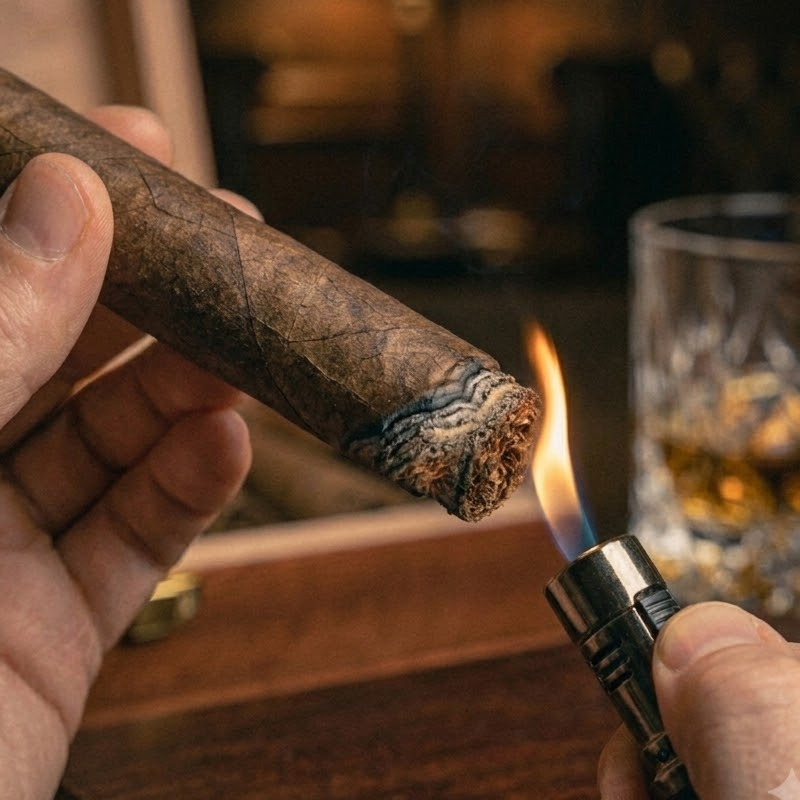
An uneven burn is the common one: the burn line goes wavy or jagged rather than running straight across. There are three usual suspects, and they are worth knowing in order. The first is an imperfect light, which an even toast prevents. The second is humidity, a matter settled long before the cigar is lit, in how it was rested and stored. The third is wind, which burns the side it strikes faster than the other; turn the cigar so the breeze crosses the whole foot evenly, or put the lagging side into it, and the burn tends to right itself.
Canoeing is the same trouble grown severe, where the cigar burns down one side and leaves the other standing, so the unburnt part looks like the hull of a canoe. It comes most often from a rushed light or from a cigar that was stored unevenly and never turned in its humidor. Rotate it in your hand to even the airflow, and give the lagging edge a moment’s flame to bring it level. Tunnelling is the opposite picture: the filler burns away down the middle while the wrapper and binder hang back, boring a little tube, and the telltale sign is a sudden thinning of the smoke. It comes from a foot that was never fully lit, from smoking too slowly, or from a cigar drier inside than out. Make sure the whole foot is properly alight, and draw a touch more often to keep it fed.
The small repair for most of these is the touch-up: bringing the flame back to just the part that has fallen behind, and coaxing it level with a gentle puff. And if a cigar has simply been smoked too fast and turned harsh, purge it, that single outward breath through the cigar to clear the built-up heat before the next draw. Nearly all of it, you will notice, traces back to the light, which is the quiet argument for the patient minute at the start.
Relighting deserves a calm word, because beginners treat it as a failure and it is not one. Even the finest cigars go out when the conversation is good and the ash sits too long, and relighting a still-warm cigar is no more shameful than lifting a fleck of cork from a glass of wine. Knock off the dead ash, toast the exposed foot again as you did at first, and carry on. The one thing to avoid is letting a cigar die on purpose and relighting it the next day, which tastes stale and harsh and is not worth the saving. A cigar that simply will not stay lit, no matter what you do, is usually just too wet, and is better rested than wrestled with. The full method is set out in how to relight a cigar properly.
Named, and mended
Five Faults and Their Fixes
- 1. Uneven burn. The line goes wavy. Turn the cigar so any breeze crosses the whole foot, and touch up the slow side with a moment's flame.
- 2. Canoeing. One side races ahead and leaves the other long, like a canoe. Rotate it in the hand and relight the lagging edge; it usually traces back to a rushed light or uneven storage.
- 3. Tunnelling. The core burns while the wrapper trails and the smoke thins. Light the whole foot next time, and draw a little more often.
- 4. Running hot. Smoked too fast, it turns harsh. Slow down, and blow gently out through the cigar once to clear the bitterness.
- 5. Will not stay lit. Most often simply too wet. Rest it a while, or reach for a better-behaved cigar from the humidor.
Lighting in Company
Lighting a cigar is also a small social act, and it carries a quiet etiquette worth knowing. The general rule is to bring your own tools. A cutter and a lighter are personal things, and lighting is a personal ritual, though most smokers will happily lend a light and rather expect it back promptly. If a companion is struggling with a fresh cigar, offer them a flame, and offer it kindly: a soft flame or a spill held out steadily is a courtesy, where a roaring torch thrust at the face is not.
A flame you cannot hurry is the cigar teaching you its pace before it has given you a single note.
More than anything, do not rush a person through their light. The whole point of the toast is that it cannot be hurried, and a lounge in which several people are patiently turning their feet over their flames is a room at its ease. The theatrical old ways of opening and lighting a cigar, the pocket-knife notch and the bitten end spat across the floor, have thankfully quietened into something more elegant, which is a small loss to the cinema and a considerable gain to the cigar.
There is one superstition you may still hear invoked at the flame, and it is worth the retelling. Three on a match, the old soldiers held, brought misfortune to the third man to light from it, a belief carried from the trenches where a flame held long enough to light three cigarettes gave a distant marksman time enough to spot, to aim, and to fire. A cigar takes long enough to light that the question seldom comes up, but it makes a fine excuse to strike a fresh match for the third guest, and a finer piece of table talk while the toast takes its time.
The light sets more than the burn. It sets the tempo. A cigar lit slowly tends to be smoked slowly, and a cigar smoked slowly is a cigar smoked well: cool, considered, and given the room to say what it has to say. The patient flame at the start is the first note of the whole evening’s pace.
The Light Is Part of the Record
It is easy to treat the light as something that happens before the cigar, a bit of throat-clearing that ends the moment the smoke begins. It is truer to call it the first line of the review, in the same way the cut is. How a cigar took its light is real information about that cigar and that box: the flame you used, whether the foot toasted evenly, whether it drew true from the first puff or canoed and had to be coaxed. A stick that tunnelled on a torch and a sister stick from the same box that drew beautifully on a cedar match a month later are telling you something, about your storage and about your own hand, and it is worth remembering.
The light also decides where the first third begins. Over-toast the foot and the opening races and overheats before the cigar has found its feet; under-toast it and you spend those same early minutes fighting for smoke instead of reading the cedar and the pepper. Either way the flame has shaped the first of the three readings before you have written a word, which is exactly why the Cigarro Method treats the burn as part of the cigar and not a preamble to it.
That is the quiet argument for writing it down. Memory keeps the broad verdict and loses the detail, and the detail, the flame and the toast and how the burn behaved, is exactly what would tell you next time whether to reach for the torch or the match. In Cigarro, that is where it lives: when you log a cigar you can note how you lit it and how it burned, so the entry holds not only what the cigar tasted of but the road you took to get there. Set this month’s note beside last season’s on the same blend and the pattern shows itself. The first attention a cigar deserves is a patient flame. The second is tasting it honestly, and the third is remembering what the burn taught you, so the next one is better still.
The order
How to Light a Cigar, in Order
Step 1. Cut first. Open the head, the end you draw from, before any flame comes near the foot.
Step 2. Choose a clean flame. Butane, a sulphur-free wooden match, or a cedar spill, and never a candle or a fluid lighter.
Step 3. Toast the foot. Hold the cigar at an angle with the foot an inch above the flame, not touching, and turn it until the whole rim glows and the edge is thinly blackened.
Step 4. Take the first draws. Raise the head, draw gently, and blow the first mouthful back out to clear the flame. Blow softly across the foot until the rim glows evenly.
Step 5. Let it settle, then read it. Give it a minute to stabilise, check the burn is even, and touch up any lagging edge before you settle in.
Questions worth answering
A Patient Flame
For the smallest of the things a cigar asks of you, the light carries a surprising weight. It decides, in a patient minute, whether the next hour draws cool and even or hot and crooked, whether you taste the blend the maker intended or a scorched ghost of it. A cigarette is lit in a second and forgotten. A cigar is toasted slowly and, in the toasting, sets the pace of everything that follows.
And then, done well, the light disappears. The mark of a good one is that you never think of it again: the cigar simply draws as it should and leaves you free to enjoy the evening. That is the whole aim, and it is not a difficult one. Keep the flame off the leaf, turn the foot until the ring glows all the way around, take your time over the first draws, and then let the cigar take it from there.