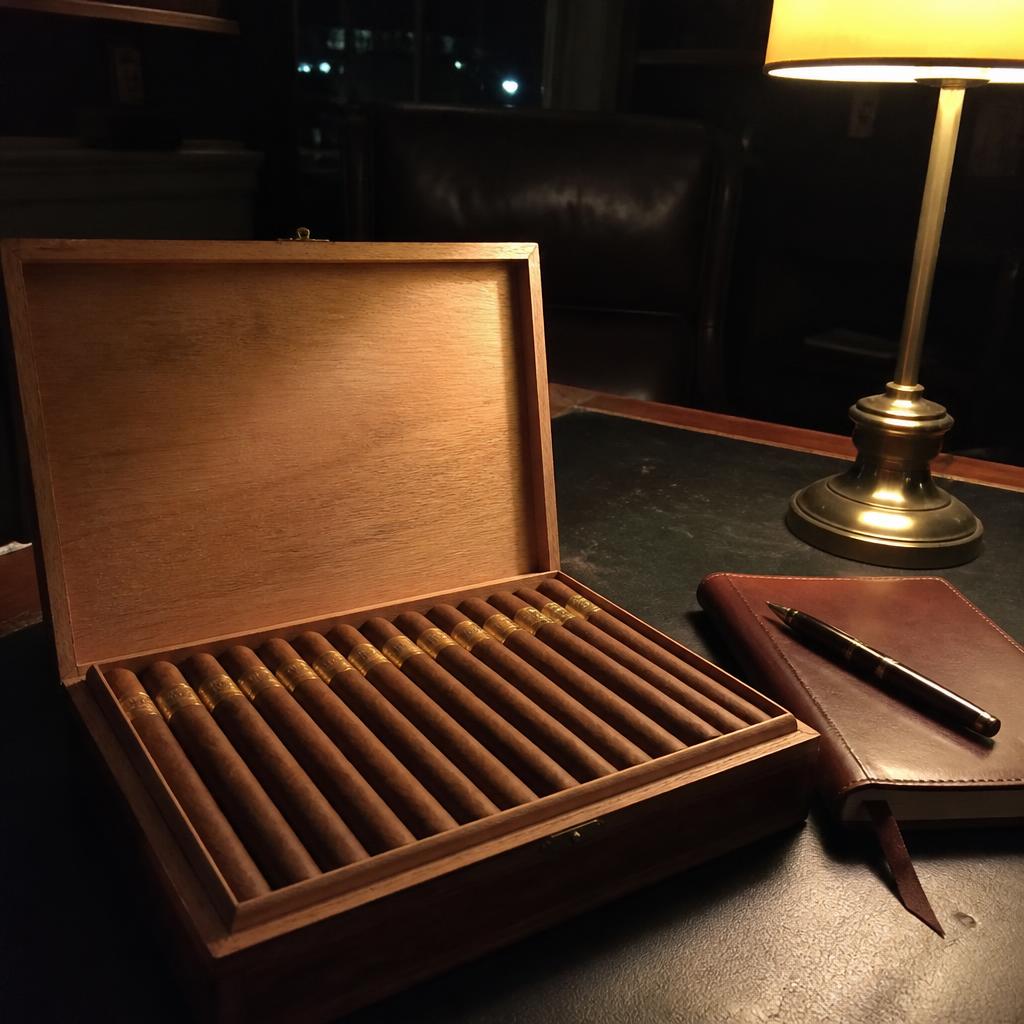
A fake cigar is a cheap cigar wearing an expensive band. That is the whole trick, and once you have seen it plainly it is hard to be fooled by it again. Counterfeit cigars cluster around the Cuban marques, Cohiba above all, because that is where the gap between the cost of the tobacco and the price on the label is widest. A bundle of unbranded Dominican or Nicaraguan cigars bought for around twenty dollars, dressed in copied bands and slipped into a copied box, has been sold to tourists as a three-hundred-dollar box of Habanos for as long as I have been in the trade. Cigar Aficionado has been reporting that same arithmetic since at least 2011, and nothing about it has changed.
This guide is written for the enthusiast who owns a real collection and wants to keep it honest. It is not a treasure map for bargain Cohibas, because there are no bargain Cohibas. What follows is the counter’s method for how to identify a fake cigar in the order that actually catches them: price first, then box, then band, then the cigar itself, and finally the verification tools the brands have built for exactly this purpose. Most fakes fall at the first fence. The clever ones need all five.
I will walk a box of Cuban Cohibas through the checks as the worked example, because Cohiba is the most counterfeited name in the world and the one with the most security built into its packaging. The Cuban packaging system has its own full reference on this site, and I will point you to it rather than repeat it; here the Cohiba is the example, not the subject. The same method holds for a box of Padrón 1964s or Fuente OpusX, and I will point out where the non-Cuban brands have their own tells. If you only remember one line from this piece, make it the one every honest tobacconist has said to a customer at least once: if the deal is that good, it is not the cigar you think it is.
On this page
Where the Fakes Come From
The five checks, in order
1. Price, and where you are standing.
2. The box: seals, underside stamps, no clear lid.
3. The band: texture, colour, detail.
4. The cigar: cap, uniformity, feel, cellophane.
5. The brand’s own verification. Most fakes fail at check one.
Understanding the supply chain of a fake explains most of the tells before you look for a single one. A counterfeiter is not trying to make a cigar; a counterfeiter is trying to make a band and a box. The tobacco inside is whatever was cheapest. In the best case it is a bundle of honest, unbranded long-filler from the Dominican Republic, Nicaragua or Honduras that would have sold for a dollar or two a stick under its own name. In the worse cases, and Cigar Aficionado has documented these for years, it is scrap tobacco or floor sweepings rolled quickly and packed to look the part.
The Fuente family put the economics more sharply than anyone. On a visit to Tabacalera A. Fuente, Halfwheel reported the company’s view that if someone stole twenty-five OpusX cigars from an ageing room the damage would be far smaller than if someone stole twenty-five OpusX bands from the packaging area. The band is the asset. Carlos Fuente Jr. tears the band of every cigar he smokes in half so that nobody can fish it from an ashtray and put it on something else, and he does so because it has happened before. When one of the most respected cigar makers in the Dominican Republic treats a strip of printed paper as the thing worth protecting, you should read your own bands with the same seriousness.
Where the fakes are sold is equally predictable. Cigar Aficionado’s David Savona wrote in 2011 that a stroll through the shops of any tourist area in the Caribbean will turn up fake cigars of every kind, and named the streets of Havana, the cruise-ship row in Nassau and the beach shops of Playa del Carmen as reliable places to be cheated. Halfwheel adds the Dominican resorts, where counterfeit Fuentes and Davidoffs sit on the same shelf as counterfeit Cubans. The line has not changed in all the years I have stood behind a counter: a man on the pavement whose cousin works at the factory and slipped a box out the back door. Holt’s advice is the same as mine, and it is one word. Walk.
None of this means an honest shop cannot be fooled. Fakes have been found in retail stores, not only on beaches. In November 2011, General Cigar worked with federal and Florida state agents to seize more than 3,000 counterfeit Cohibas from seven shops in Key West, cigars that had been selling at around twenty dollars apiece. More recently, Miami police arrested a man with 4,499 empty counterfeit boxes for Cohiba, Montecristo, Partagás, Romeo y Julieta and the rest of the Habanos portfolio, valued by police at more than 1.1 million dollars, alongside thousands of labels, ribbons and certificates. The boxes were empty because the packaging was the product. The tobacco was somebody else’s problem.
01 · The price
When the Deal Is the Tell
Price is the first filter because it is the one a counterfeiter cannot fake. A genuine Cuban Cohiba costs what it costs everywhere in the world, and the Cuban state has no interest in discounting it on a beach. Cigar Aficionado’s 2018 guide put a real Cohiba Esplendido at roughly 23 CUC in Havana and a Behike at 30 to 40 CUC per cigar, then made the point that needs no arithmetic: a vendor offering an Esplendido for 10 CUC was not selling an Esplendido. Cuba’s currency has changed since then and the numbers with it, but the shape of the rule is permanent. The magazine’s 2019 piece put it plainly. There are no cheap Cohibas.
The same logic protects you from fake Padrón 1926s, fake OpusX and fake Davidoffs. OpusX and the Padrón Family Reserve are allocated lines that authorised shops rarely need to discount, so a box at half the going price is either not authorised stock or not the cigar. The legitimate exceptions exist, a discontinued vitola or a shop closing its doors, and they share one feature: the retailer can show you where the box came from. A private seller with a half-price box and no paperwork cannot. Arturo Fuente states plainly on its own site that it sells only to licensed tobacconists and points buyers to its retail locator for that reason. If the seller is not on it, the cigars did not come through the front door.
Watch for the story that arrives with the price. Fakes are almost always sold with a provenance tale: the cousin at the factory, the friend who brought them back from Havana, the estate sale, the closing shop. A real tobacconist does not need a story because the invoice from the distributor is the story. When a seller spends more time on the narrative than on the cigars, the narrative is doing the work the cigars cannot.
With the Cohiba box in front of us, then, the first question is not “what do I see” but “what did they ask for it, and where are we standing.” If the answer is a third of retail and a hotel car park, the checks that follow are for curiosity only. You already know.
A real tobacconist does not need a story, because the invoice from the distributor is the story.
02 · The box
Read the Box Before the Cigar
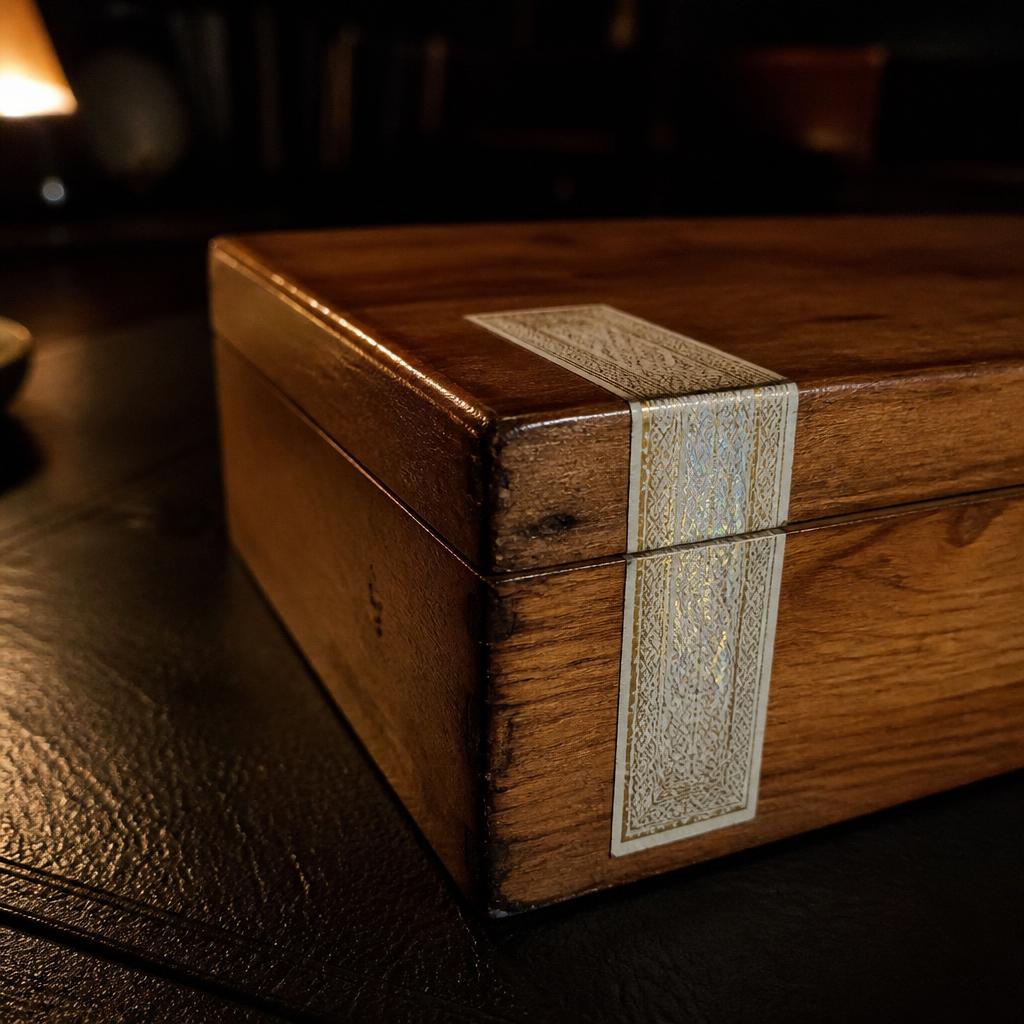
A Cuban box carries more security than the cigars inside it, which is why the box is the second check and not the last. Start at the top. Every genuine box of handmade Habanos wears the Habanos chevron seal in the upper right corner and the Republic of Cuba warranty seal, the green and white one, across the left. Since 2009 that warranty seal has carried a holographic label on its right end and a barcode on its left, and it is designed to tear apart if anyone tries to lift it. Holt’s puts it well: holograms are hard and expensive to copy, so a seal without one is a box you do not buy. A missing hologram is not a subtle tell. It is the counterfeiter telling you he could not be bothered.
Turn the box over. The underside of a genuine handmade box is branded with “Habanos S.A.” over “Hecho en Cuba” and the script “Totalmente a Mano,” and beside it a factory code and a date stamp. The code is three letters, changed periodically and never intended for the consumer, so do not expect to decode it. The date is the useful part: Spanish month abbreviations and a two-digit year, so AGO 19 is August 2019 and OCT 20 is October 2020. Factory codes have been stamped on Cuban boxes since 1985. A box with no code and no date on the bottom is, as Holt’s says, one more reason to leave it where it is. Look at the fonts and the spelling while you are there; a counterfeiter’s typesetting slips in the same way a fake watch’s does. If you want the full Cuban box reference, with a worked decoding of a real box’s codes, our guide to spotting fake Cuban cigars goes further than this flagship needs to.
Now the packaging tells that need no expertise at all. Habanos S.A. has never produced a box with a glass, plastic or any other clear lid, so a glass-top box wearing a Cuban Cohiba band is counterfeit without exception, whatever name is printed on the lid. Cigar Aficionado has stated it flatly in more than one article, and it is the single most reliable rule in this entire guide. One clarification, since the name causes confusion: the non-Cuban Cohiba sold by General Cigar in the United States is a separate, legitimate product with its own packaging, not a fake of the Cuban one. This rule is about anything claiming to be Habanos. Likewise, labels belong on the box, not loose inside it; the magazine describes seals shipped inside the lid as the signature of a lazy counterfeit. And a barber-pole Cohiba, two wrapper shades twisted together, does not exist in Cuba’s portfolio, so any cigar wearing that wrapper and that band is a fake on sight.
Two subtler box tells for the marques that draw the most attention. Cohiba Behike is packed in boxes of ten, never twenty-five, and its seals sit on the outer black cardboard shell rather than on the lacquered box itself. And Edición Limitada bands are a favourite of counterfeiters because they promise scarcity; Cigar Aficionado notes fakes bearing limited-edition bands for marques and years that never had a limited release. If a box claims to be a limited edition, the year and the marque must match a release that actually happened.
Non-Cuban boxes have their own signals. Padrón added factory-applied barcodes to its boxes in April 2007 and warned, in a letter Cigar Aficionado reprinted, that a box without the barcode could not be guaranteed authentic. That barcode is the first thing I look for on any Padrón box that did not come straight from a distributor, with the obvious caveat that a box packed before 2007 legitimately has none, so on older stock the retailer and the paperwork carry the weight instead. On our Cohiba box, then: chevron top right, warranty seal with hologram and barcode on the left, burned stamps and a readable date underneath, no glass, no loose labels. If it passes, we open it.
The Cuban box, at a glance
- Habanos chevron seal in the upper right corner of the lid.
- Republic of Cuba warranty seal across the left: hologram at the right end, barcode at the left end, on every box since 2009.
- Underside branded Habanos S.A. over Hecho en Cuba and Totalmente a Mano.
- Three-letter factory code and a Spanish-month date stamp beside it, for example AGO 19.
- No glass or plastic lid, ever, and no labels loose inside the box.
03 · The band
The Band Under a Lamp
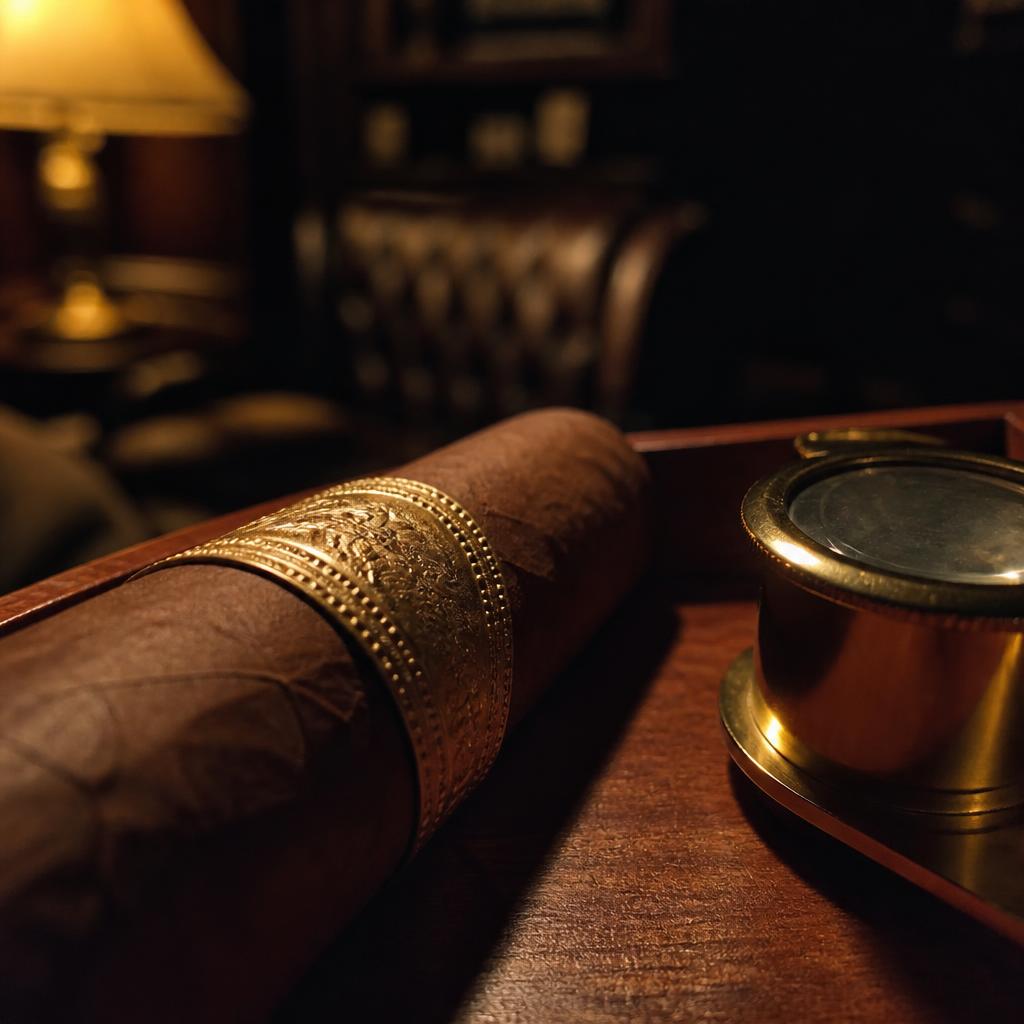
The band is where a counterfeiter spends his money, and it is still where most of them are caught, because good printing is expensive and the margin on a fake depends on not spending it. Three things to check, in order: texture, colour, and detail. The full guide to reading a cigar band covers what every mark on a band means; here we are only asking whether the band is real.
Touch it first. Genuine bands from the major houses are embossed: the lettering and devices stand proud of the paper, and you can feel the relief with a fingertip. Cigar Aficionado’s advice since 2011 has been to actually touch the bands, because counterfeits seldom duplicate the embossing, and Holt’s says the same thing in almost the same words. A flat band on a cigar that should have a raised one is a fake, full stop. Then hold it to a lamp. Colour registration on a real band is exact; the reds of a Partagás and the gold of a Cohiba are specific shades printed in specific layers, and a counterfeit’s colours drift, blur at the edges of each element, or simply come out the wrong tone. Finally, read every word. Misspellings and missing information are commoner than you would believe on fake bands, and a single wrong letter ends the conversation.
The current Cohiba band rewards a careful look because it was designed to. In 2017 Cigar Aficionado walked through the band that Habanos had recently introduced, and every feature on it is a security feature. The Taino head at the centre is holographic and shifts as you tilt it. Along the gilded top and bottom edges run repeating holographic Cuba and Taino motifs. Between them sit nine full rows of white squares in a checkerboard, with no row cut off at the top or bottom edge, a detail counterfeit printers get wrong constantly because they copy from photographs rather than from the file. And the word Cohiba itself is embossed metallic gold, not holographic. A band that has a holographic Cohiba wordmark, or eight rows of squares, or a Taino head that does not move, is a fake band, however handsome it is.
Behike goes further. Its band has carried an embossed holographic Taino head and a security hologram since the line launched in 2010, and in 2014 Habanos replaced the side hologram with one carrying additional security features, announcing the change on its own site. Cigar Aficionado counts two holograms on a genuine Behike band. Padrón took a different route and put a serial number on the band itself: the Family Reserve, 1964 Anniversary, 1926 Serie and Dámaso lines each wear a one-piece integrated guarantee band that is individually numbered, and Padrón says on its own site that the numbering exists to safeguard against counterfeiting. The check is bounded by date, though: the 1964 Anniversary has been in production since 1994, long before the numbered band, so an unnumbered example is either older stock or a fake, and the box barcode, the retailer and a call to Padrón decide which. A current-production 1964 with no number, bought new, is not a Padrón 1964.
A last word on bands, and it is the reason Carlos Fuente Jr. tears his in half. A real band on a fake cigar is the hardest counterfeit to catch, because every test above passes. It is why the band is the third check and not the only one. On our Cohiba box, the bands feel embossed, the Taino head shifts under the lamp, the squares count to nine rows, the wordmark is flat gold. Good. Now the cigars.
The current Cohiba band, feature by feature
| Band feature | Genuine | Counterfeit tell |
|---|---|---|
| Taino head | Holographic; shifts as you tilt the band | Flat print with no movement |
| Gilded top and bottom edges | Repeating holographic Cuba and Taino motifs | Plain gold band, or a blurred motif |
| Checkerboard | Nine full rows of white squares, none cut off at the edge | Eight rows, or a row clipped at the top or bottom |
| Cohiba wordmark | Embossed metallic gold, not holographic | Holographic wordmark, or flat unembossed print |
04 · The cigar
What the Cigar Confesses
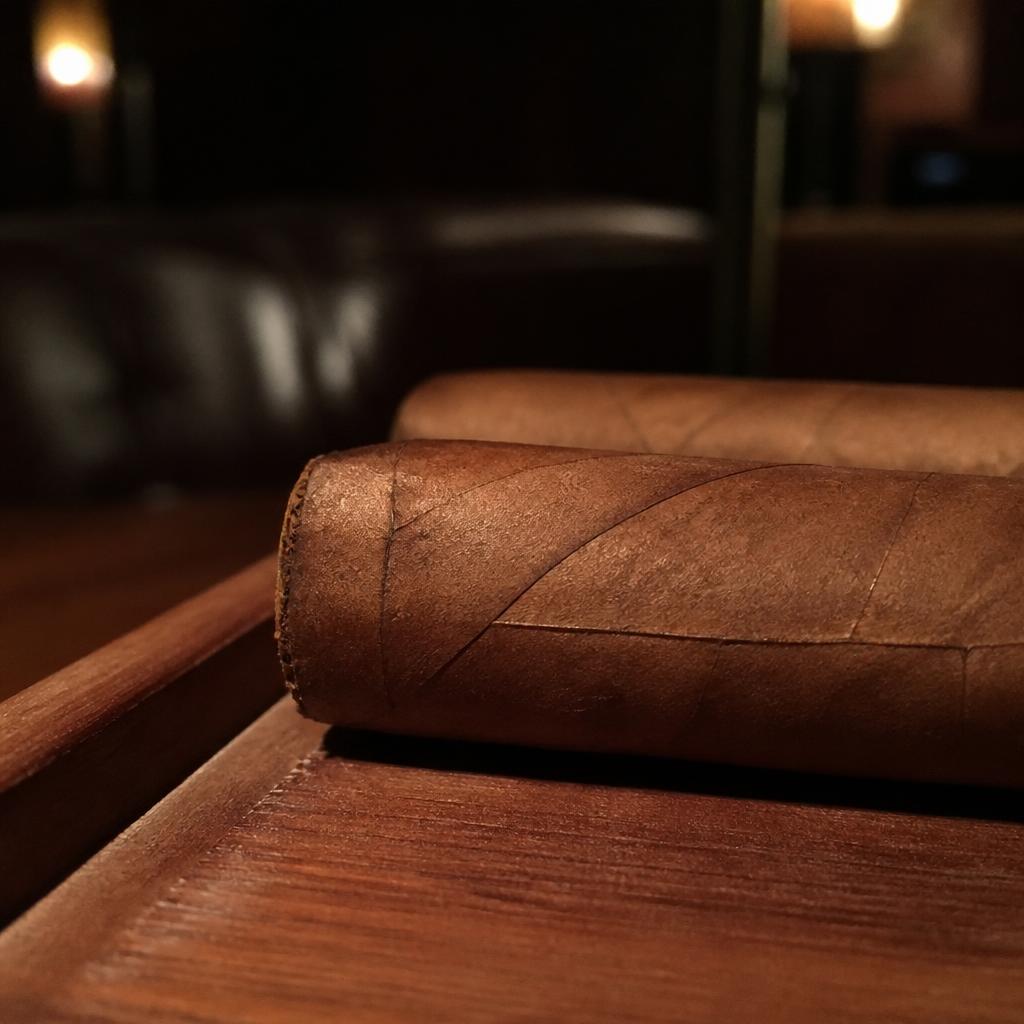
The cigar cannot lie about how it was made, and this is where a real band on a fake stick finally gives itself away. Begin at the head. Straight-sided Cuban cigars, the parejos, are finished with a mounted head, also called a triple cap or three-seam cap: a flat cap with three faint seams where the roller laid down the pieces of wrapper. Cigar Aficionado’s rule is exact and worth memorising. The presence of a triple cap does not prove a cigar is Cuban, because the technique has spread to factories in the United States, Nicaragua and Honduras. But its absence on a supposed Cuban parejo guarantees a fake. A rounded, sloppy, single-piece cap on a “Cohiba” is not a Cohiba.
Then look at the box as a set. Colour sorting is one of the last steps in a real factory: specialist sorters spread the finished cigars on a stark black or bright white table under bright light and group them by wrapper shade, distinguishing as many as twenty slight variations and rejecting anything cracked or blemished, so that each box is filled with cigars of very nearly the same colour. That is why a genuine box presents as a family: the same wrapper shade to within a whisper, the same length, the same ring gauge, the bands sitting at the same height. Cigar Aficionado lists lack of symmetry as one of the clearest tells, because a counterfeiter buying bundles has no colour-sorting room and no reason to care. Mismatched shades, one stick a few millimetres short, a band that sits crooked or higher than its neighbours: each is a small confession, and together they are a signed one. Our guide to wrapper types will help you name what you are seeing, and the vitola dictionary will tell you whether the size in the box is one the marque actually makes. A Cohiba in a vitola Cohiba has never produced is not a rare find. It is a mistake the counterfeiter made.
Pick one up. A real long-filler cigar has a certain density and evenness along its length, with no soft spots and no hard knots, because whole leaves run from head to foot. A fake rolled from short filler or scrap feels lighter and lumpier, and if you roll it gently between finger and thumb you may hear it, a faint dry rustle that a long-filler cigar does not make. Squeeze near the foot and look at the tobacco there: a clean bunch of long leaf ends looks quite different from a plug of chopped pieces. Cellophane is its own tell on a Cuban, within limits. Holt’s notes that handmade Cubans have not been sold in cellophane since 1992, when only machine-made Cubans received a sleeve. The rule is for the boxed, handmade premium marques; Cuba’s machine-made lines are sleeved, and that is the exception Holt’s names. A boxed “Cohiba” in cello is telling you something.
If you have already bought and are testing one stick, the ash adds a modest clue. Cigar Aficionado observes that Cuban tobacco tends to burn to a grey or salt-and-pepper ash, and that a bright white ash is a good sign of non-Cuban leaf. I would not hang a verdict on ash alone, since soil chemistry varies and I have smoked honest Cubans with paler ash than the rule suggests, but a blinding white ash on a bargain Cohiba is one more voice in a chorus that is already singing. On our box: triple caps all round, colours matched, sizes even, no cello, nothing rustling. It is looking like a real box. One check remains, and it is the one that does not depend on your eyes.
Inspecting the cigar, in five moves
- 1. Check the head. Any parejo claiming to be Cuban must carry a mounted three-seam cap; a rounded single-piece cap ends the inspection.
- 2. Read the open box as a set: wrapper shade, length, ring gauge and band height should all match across the row.
- 3. Pick one up and roll it gently between finger and thumb, feeling for soft spots, hard knots or a dry rustle.
- 4. Look into the foot for the clean ends of long leaf rather than a plug of chopped pieces.
- 5. Note the cellophane. A sleeved, boxed, handmade Cuban marque is a tell; Cuba's machine-made lines are the exception.
Verify It, Then Trust It
The brands most often faked have built ways to check, and in all my years behind a counter I was asked to run one perhaps a dozen times. Habanos S.A. puts a barcode on every box beside the guarantee seal, and that code can be checked against the company’s own records through the Authenticity Check tool linked from Habanos.com. Cigar Aficionado’s guidance is simple: enter or scan the code, and if the description that comes back does not match the box in your hands, the box is fake. It takes a minute and it costs nothing. Understand what it settles, though, because the result is not symmetrical. A failed check is conclusive: the box is fake. A passed check proves only that the code was copied from something real, since a counterfeiter can photograph one genuine seal and print it onto a hundred boxes. A match never overrides the box, band and cigar checks; it simply confirms the code. And if the tool happens to be unavailable when you look, that is not a reason to buy on trust. If a seller will not let you check the barcode before money changes hands, that refusal is your answer.
Non-Cuban brands verify differently, through the retailer rather than the box. Arturo Fuente sells only to licensed tobacconists and maintains a retail locator so you can confirm that the shop you are standing in is one of them; its own guidance for any question about a cigar is to go back to the tobacconist who sold it. Padrón’s barcode on the box and serial number on the band were both introduced as guarantees, and when Padrón announced the barcodes in 2007 it told buyers with doubts to contact the company directly. I have not found a public online lookup for Padrón serial numbers, and I would not trust a third-party site claiming to offer one. Ring the maker. They want to know about fakes far more than you might expect.
The most reliable verification of all is the least glamorous, and it is the one every source in this article ends with: buy from a reputable shop. In Cuba that means La Casa del Habano or an official Habanos retailer; elsewhere it means a tobacconist with a licence, a distributor invoice and a reputation to lose. The guide to choosing a cigar has more on what a good shop looks like from the inside. A shop with a walk-in humidor, a staff who know the boxes, and prices in line with everyone else’s is not a place where fakes survive long, because the customers would catch them. The car park outside the hotel has none of those protections. That, and not any single band detail, is why the beach box is always the wrong box.
If You Suspect a Fake
Three things not to do
Do not argue. Decline, leave, and check the details at your leisure; a counterfeiter in his own doorway is not a debate you win. Do not accuse an honest shop on a half-remembered band; take the box back and let them raise it with their distributor. Do not pass it on. A fake given as a gift becomes a fake in someone else’s humidor, wearing a band they trust because you gave it to them.
Do not play detective in the shop. If a box in front of you fails a check, you are not obliged to explain why; you say “not today, thank you” and leave, exactly as you would with a menu you did not fancy. Arguing with a counterfeiter in his own doorway wins nothing, and accusing an honest shop of selling fakes on the strength of a band you half remember is worse manners than buying the box. Decline, walk, and check the details at your leisure.
If the box is already yours, work backwards. A reputable retailer will want to hear from you, because a fake on their shelf is a threat to them before it is a threat to you; take the box back, show them what you found, and let them take it up with their distributor. If you bought from a private seller, the brand is the next call. Fuente directs questions to the tobacconist who sold the cigar; Padrón has asked buyers to contact them directly since 2007; Habanos gives you the barcode check. General Cigar, which sells the non-Cuban Cohiba in the United States, worked with federal and Florida agents on the Key West seizure in 2011, and brands pursue these cases because a counterfeit is a direct attack on the name.
Should you smoke it? This is my own view rather than a rule from the trade press, so weigh it accordingly. I would not. Cigar Aficionado’s reporting on what goes into counterfeits, scrap tobacco at best and floor sweepings at worst, is enough for me, and a cigar of unknown origin rolled by someone whose entire business is deceit is not something I want in my mouth for an hour. Holt’s takes a more permissive line, advising that if you are going to take a chance on an unreliable source, buy one cigar and test it rather than a box. If you must, do it knowing that the verdict was already in when you paid a beach price for a Cohiba.
And do not pass it on. A fake given as a gift becomes a fake in someone else’s humidor, wearing a band they will trust because you gave it to them. Tear the band, as Carlito does, and let the thing go.
Provenance on Your Own Shelf
The enthusiast’s real protection is not a checklist. It is a record. If you know where every box on your shelf came from, what you paid, and what the bottom of the box said when it arrived, then a fake cannot get in without leaving a hole in the ledger, and a friend’s gift with a doubtful band can be checked against the boxes you know are right. The entry you made three years ago is what tells you whether the gift box in front of you now matches one you bought yourself.
Cigarro keeps that ledger for you. Cigarro is a web app for tracking and reviewing premium cigars, and every entry in your humidor takes a note, which is where the provenance lives: where you bought the box, when, the box date and factory code, and anything you noticed about the seal or the seller. Mirror the physical shelf in the app and you have a paper trail for every stick, which is what lets you sell, trade, insure or gift a box without qualification, and answer a friend’s question about where you got these with a date and a shop rather than a shrug. Our guide to organising a humidor covers the physical side of that mirror, and the storage guide the conditions the real cigars deserve once you have confirmed they are real.
When you eventually smoke one, The Cigarro Method gives you a review-by-thirds framework to write down what it did, and a review against a known-genuine box is the best reference you will ever have for spotting the next fake by taste alone. The palate is the last check and the slowest to train. The record is the first, and it takes a minute a box.
What a provenance entry holds
- Where the box was bought, and from whom.
- The date of purchase and what was paid.
- The box date stamp and factory code.
- Any note on the seal, the band or the seller.
Buy from People Who Would Be Embarrassed
Every fake cigar is caught by the same five questions, asked in the same order: what did it cost, what does the box say, what does the band feel like, what does the cigar confess, and what does the brand’s own record show. A counterfeiter can pass one or two of them with effort. He cannot pass all five, because the one thing he will never do is spend real money on real tobacco. Keep your buying to shops that would be embarrassed to be wrong, keep your ledger honest, and the only Cohibas you ever own will be the ones Cuba actually made.
Questions From the Counter