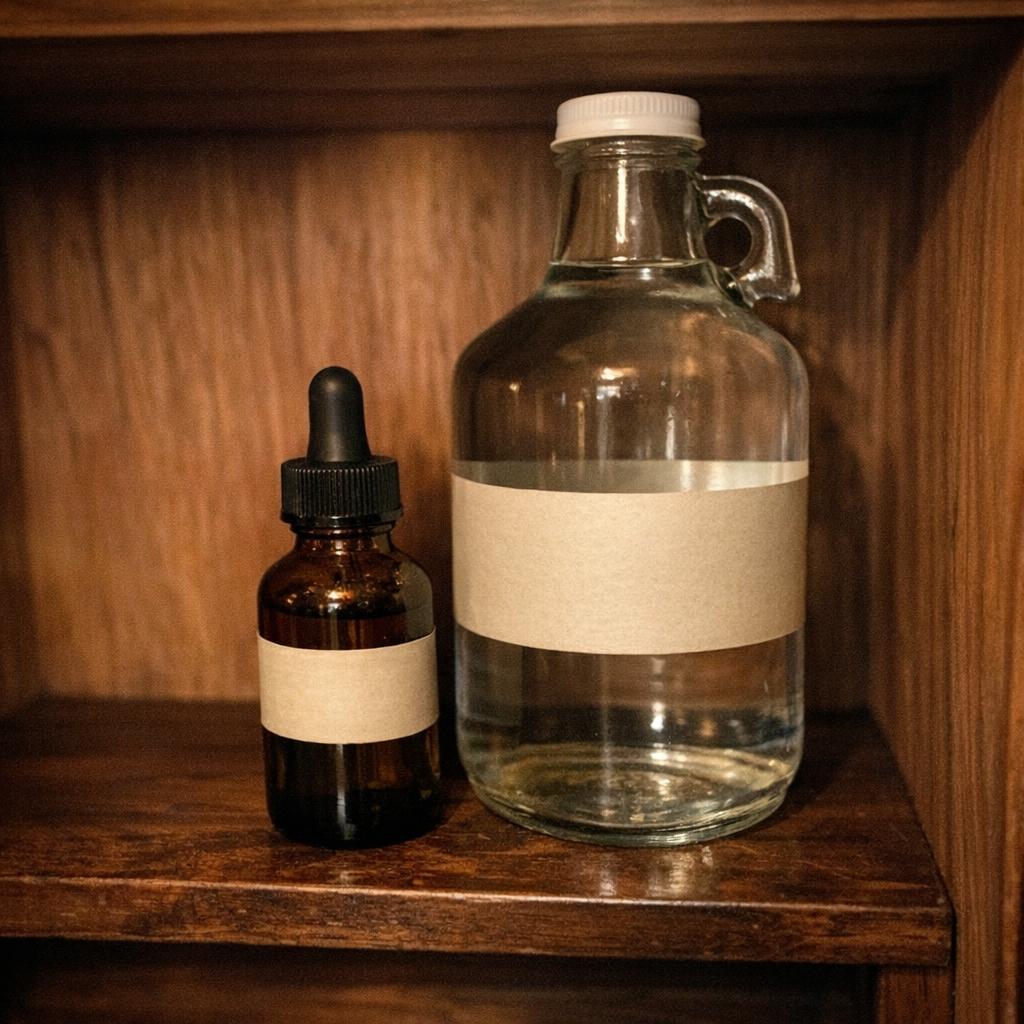
Two bottles sit on the shelf at the cigar shop next to the cutters and the lighters. One is labelled distilled water, plain and cheap. The other is a fifty-fifty mix of propylene glycol and distilled water, usually in a small dropper bottle with a brand name on the label and a higher price tag. New humidor owners ask, sensibly, which one they actually need, whether the more expensive option is doing real work, and whether either is required if a packet from Boveda already lives in the lid.
The answer is straightforward once you understand what each liquid is designed to do. Distilled water is a humidifier. Propylene glycol is a regulator. The two are not interchangeable, and the right choice depends entirely on the kind of humidification device sitting inside your humidor.
The Short Answer
If you are using a traditional foam-bar or oasis-style humidifier, propylene glycol solution is the safer choice. It tops out at around seventy percent relative humidity and stops releasing moisture once that point is reached, which protects the cigars from over-humidification.
If you are using crystal-gel beads, electronic humidifiers, or any device the manufacturer specifies for distilled water only, plain distilled water is the right fill.
If you are using Boveda or any other two-way humidity pack, you use neither. The pack handles humidity on its own, and adding water or solution to the humidor box would defeat the design.
The choice is not really propylene glycol versus distilled water in the abstract. It is matching the liquid to the device, and the device to the way you want to manage your humidor.
What Each Liquid Actually Does
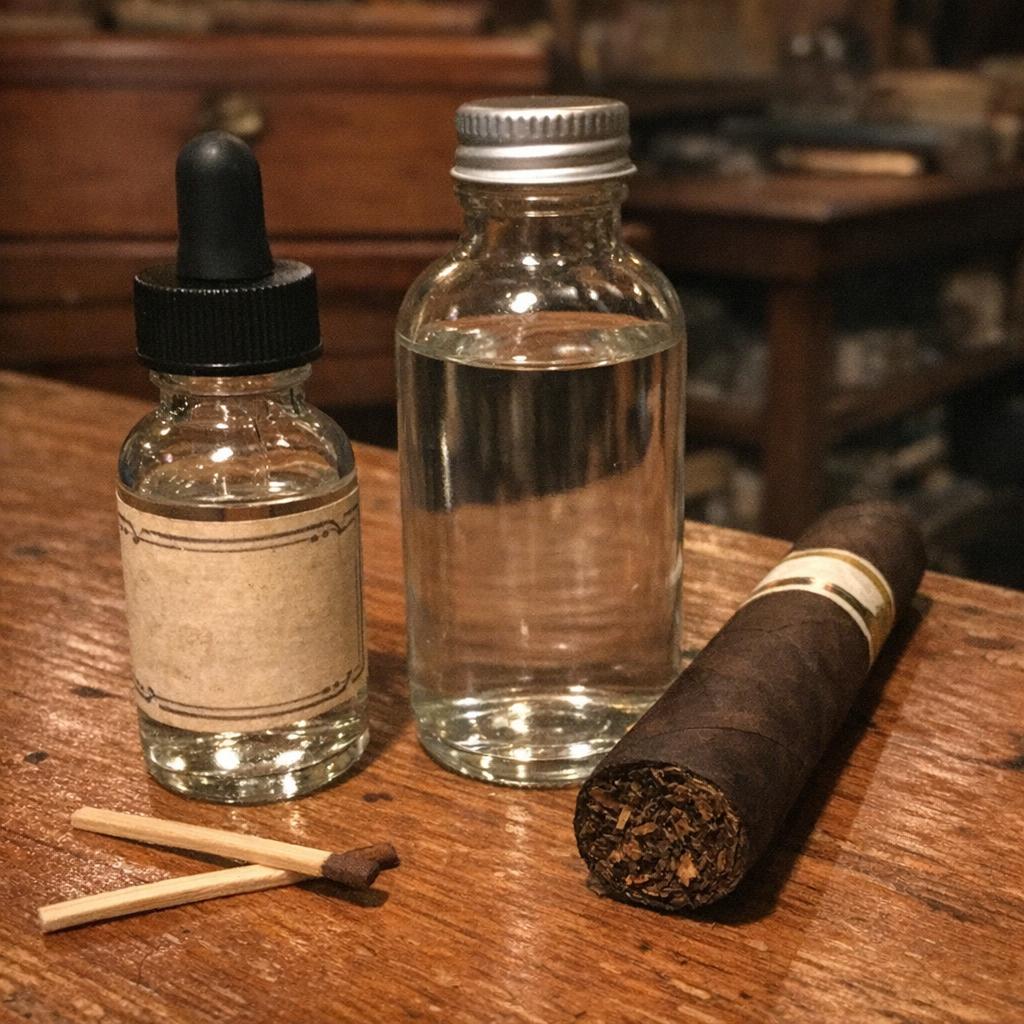
Propylene glycol is a clear, mildly sweet, food-grade humectant. It holds water and releases it slowly, and it has a useful self-regulating property. When the relative humidity in a sealed environment drops below roughly seventy percent, a fifty-fifty solution of propylene glycol and distilled water releases moisture into the air. When humidity rises above that point, the solution absorbs moisture back. The result is a passive ceiling that prevents the humidor from running wet. The widely cited stabilising figure is seventy percent. Some smokers prefer to sit a bit lower than that today, which is why propylene glycol has lost ground to systems that can target sixty-five.
Distilled water is just water with the minerals removed. It humidifies a humidor by evaporating into the air at whatever rate the device allows. It carries no self-limiting behaviour. If the device is generous, the humidor goes up. If the device runs dry, the humidor comes down. The only thing distilled water reliably does is avoid leaving mineral deposits on the device or growing the kind of bacteria and mould that mineral-rich water can support. Cigar Aficionado has, for years, been clear in its educational coverage that distilled water is the only water that belongs in any humidification system. Tap water and bottled spring water are out.
When Propylene Glycol Helps
The case for propylene glycol solution is strongest in three situations.
The first is the classic foam-bar or oasis-style humidifier that came with most desktop humidors sold over the past thirty years. Those devices were designed around propylene glycol, and the foam holds the solution well. A fifty-fifty mix charges the device, lasts for weeks, and self-regulates near seventy percent.
The second is any humidor that is opened often. A cabinet that gets visited every evening loses humidity each time the lid lifts. A propylene glycol solution buffers those swings more gently than plain water in the same device, because the regulator keeps releasing moisture toward the seventy-percent ceiling and stops the humidor from running wet in between openings.
The third is the smoker who wants seventy percent and is content with the older, slightly more humid storage standard. If your humidor has lived at seventy for a decade, your cigars are accustomed to it, and your draw and burn are clean, there is no urgent reason to chase a lower setting. Keep doing what works.
The thing propylene glycol solution will not do is take a humidor that is already too wet and dry it back down. The ceiling protects against further moisture gain, but a humidor sitting at seventy-five will not drop simply because you switch the foam from water to solution. For that, you ventilate the box or move to a two-way system.
When Distilled Water Is Enough
The case for plain distilled water is also clear.
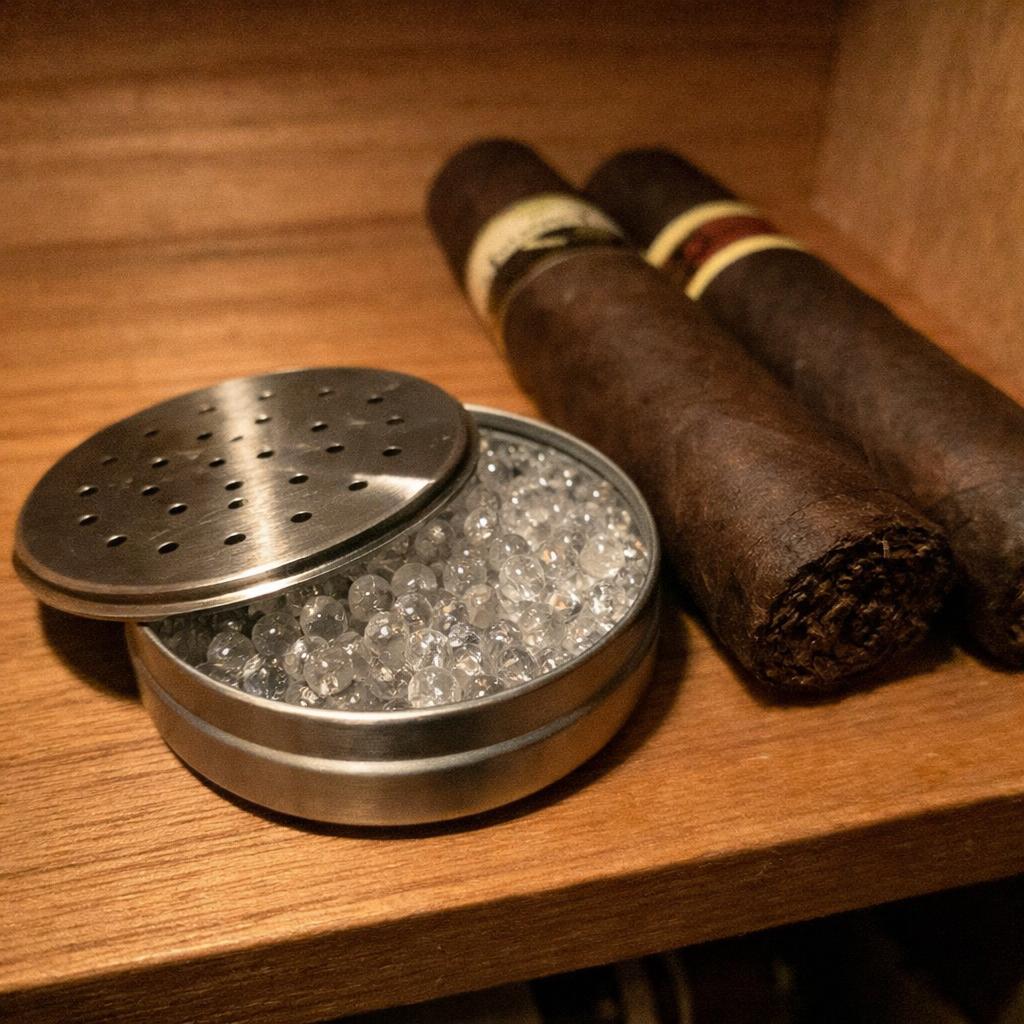
Modern crystal-gel beads, often sold as polymer humidifiers or simply as “humidor beads”, are charged with distilled water by design. The bead itself does the regulating; the water is only the fuel. Adding propylene glycol to a bead reservoir does nothing useful and may damage the bead matrix on certain products. Read the device manufacturer’s instructions, but most bead systems are explicitly water-only.
Electronic humidifiers in cabinet humidors operate the same way. They store distilled water in a reservoir and release it on demand based on a hygrometer reading. The electronics handle the regulation. Propylene glycol in those reservoirs is unnecessary at best and clog-inducing at worst.
A useful rule of thumb. If the device is doing the regulating, it wants distilled water. If the device is just a passive holder of liquid (a foam bar, an oasis green sponge), it benefits from a regulator in the liquid itself, which is what propylene glycol provides.
The Boveda Path (Neither)
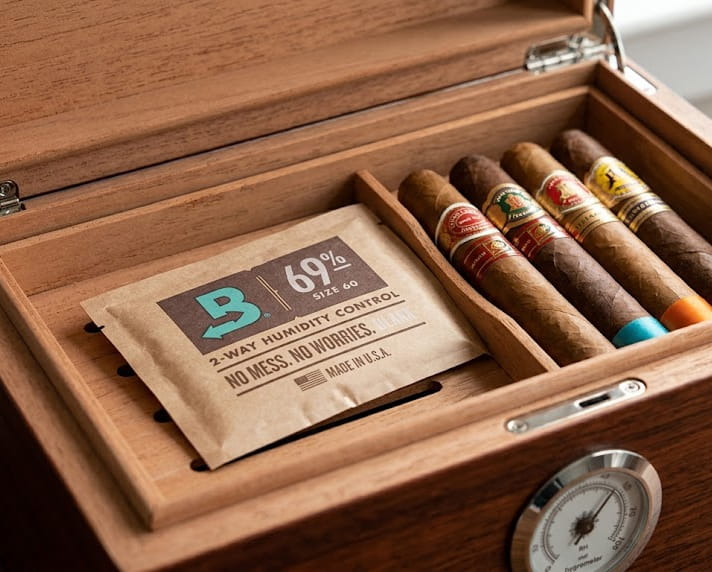
Boveda packs and the small handful of competing two-way humidity packets are the third path, and they have become the default recommendation in much of the trade press for new humidor owners over the past decade.
A two-way pack contains a saturated salt solution inside a permeable membrane. The salt holds the humidity inside the pack at a fixed point printed on the wrapper, commonly sixty-five, sixty-nine, or seventy-two percent. When the air around the pack is drier than that, the pack releases moisture. When the air is wetter, the pack absorbs it. The pack regulates in both directions, which neither propylene glycol solution nor distilled water can do on its own.
The trade-off is that the packs are consumables. They harden as they exhaust themselves and need replacing every two to three months in a normal-sized desktop humidor, longer in a tight, well-seasoned cabinet. The cost is modest and the convenience is real, especially for smokers who do not enjoy fiddling with foam bars and refill schedules.
The relevant note for this article is that if you are running Boveda or an equivalent, you should add no liquid to the humidor at all. No solution. No distilled water. The packs are designed to be the only humidification source in the box, and a tray of water or a charged foam bar working alongside them will pull the system out of equilibrium.
Why Tap Water Is Out
One short note, because the question comes up. Tap water has no place in a humidor, regardless of the device.
Municipal water carries chlorine, chloramine, and dissolved minerals at varying concentrations. In a humidor, those minerals deposit on the device and harden over time. The chlorine compounds taint nearby tobacco. Worse, tap water can introduce the bacteria and mould spores that thrive in a warm, humid, organic-rich environment, and a humidor is exactly that environment. A foam bar charged with tap water can grow visible mould within weeks.
Spring water and filtered water are not safe substitutes either. Both still carry mineral content and biological hitchhikers. Distilled water, available at any grocery for a few dollars a gallon, is the only water that belongs in any humidor accessory. The same rule applies to propylene glycol solutions; the half of the bottle that is not propylene glycol is distilled water for the same reasons.
A Working Recommendation
For a new humidor owner buying a first box and trying to settle on a system, the modern default recommendation is the Boveda path at sixty-nine percent for general use, or sixty-five for a slightly drier draw. Set the pack inside a properly seasoned humidor, leave it, and replace it when it hardens. The system is forgiving and asks almost nothing of you in return.
For an owner with an older humidor that already runs a foam bar at seventy percent, and who has no quarrel with that setting, propylene glycol solution remains a perfectly fine answer. Charge the foam every few weeks with the fifty-fifty mix, do not overfill, and let the regulator do its job. If you switch to plain distilled water in the same foam, you will lose the ceiling and the humidor will tend to drift warmer and wetter, particularly in summer.
For an owner running modern beads or an electronic system, distilled water only, and only at the schedule the device manufacturer specifies. No propylene glycol. No tap water.
The mistake to avoid in all three cases is mixing systems. A foam bar with propylene glycol and a Boveda pack in the same humidor will fight each other. A bead reservoir and a tray of water will over-humidify. Pick one method, season the humidor for it, and let it run. For a fuller walk-through of setting up a new humidor properly, see how to season a new humidor and the broader organising-a-humidor guide.
Build the Humidor, Then Forget About It
The choice between propylene glycol and distilled water is less a question of which is better and more a question of which belongs in your humidor. Match the liquid to the device, do not mix systems, and use distilled water as the base in every case where water is the answer at all. From there, the humidor will keep its own counsel for months at a stretch, and you can return to the more interesting question, which is what to put inside it.