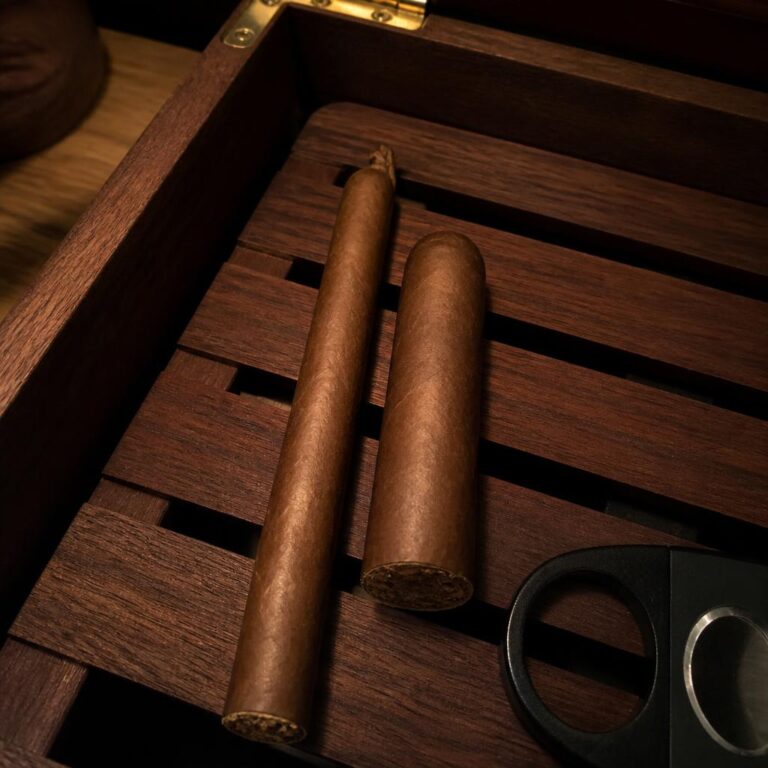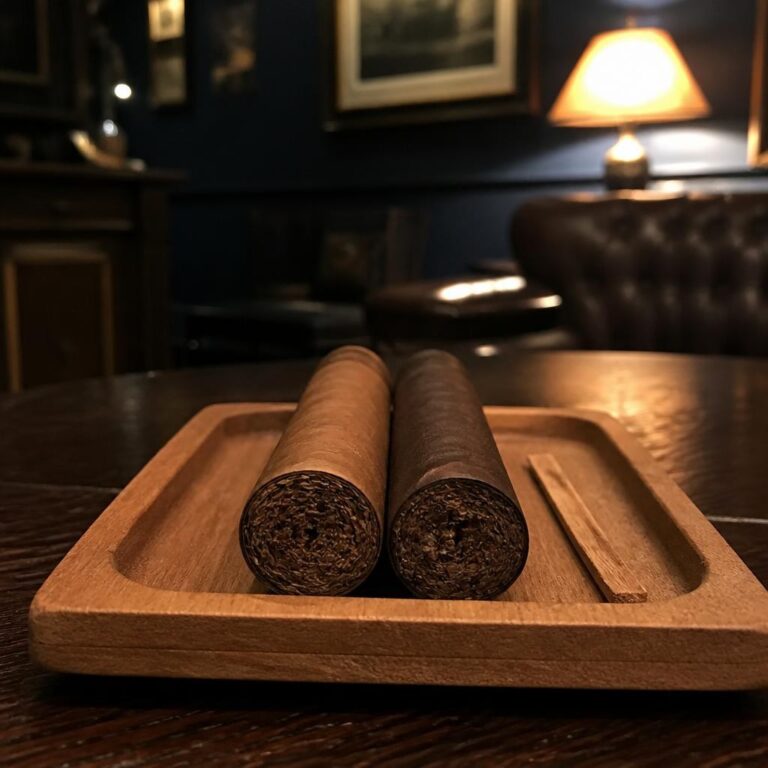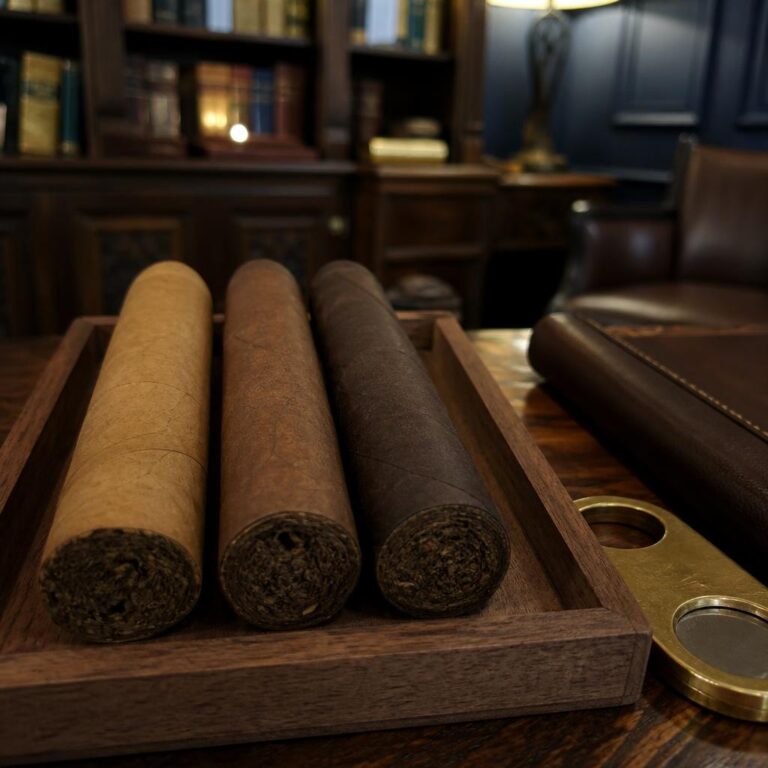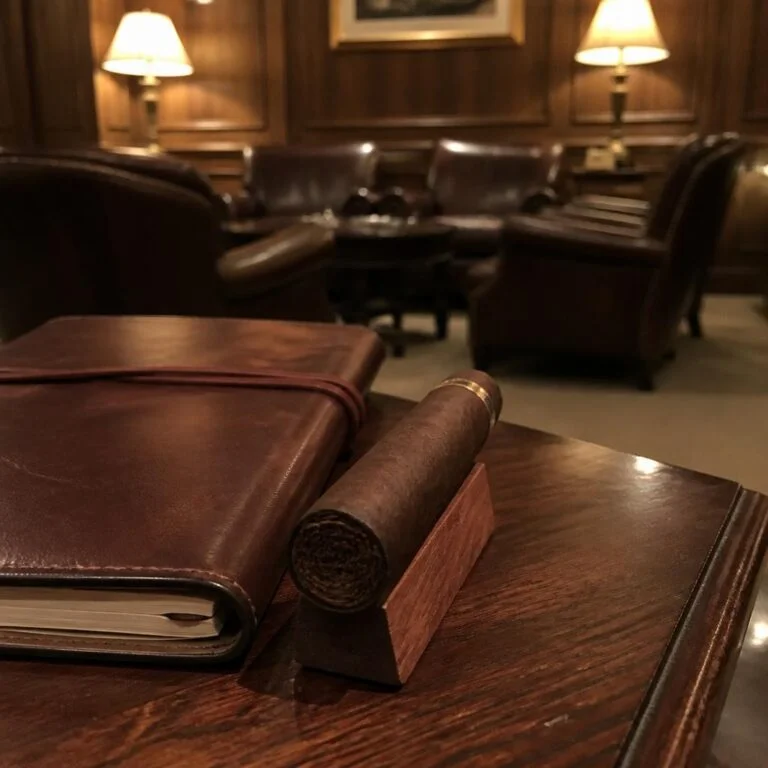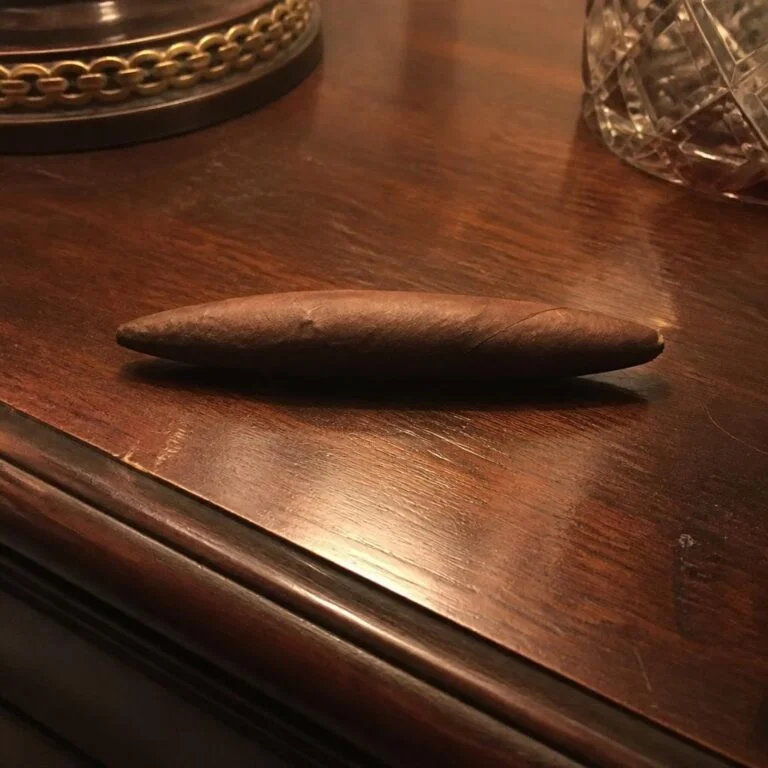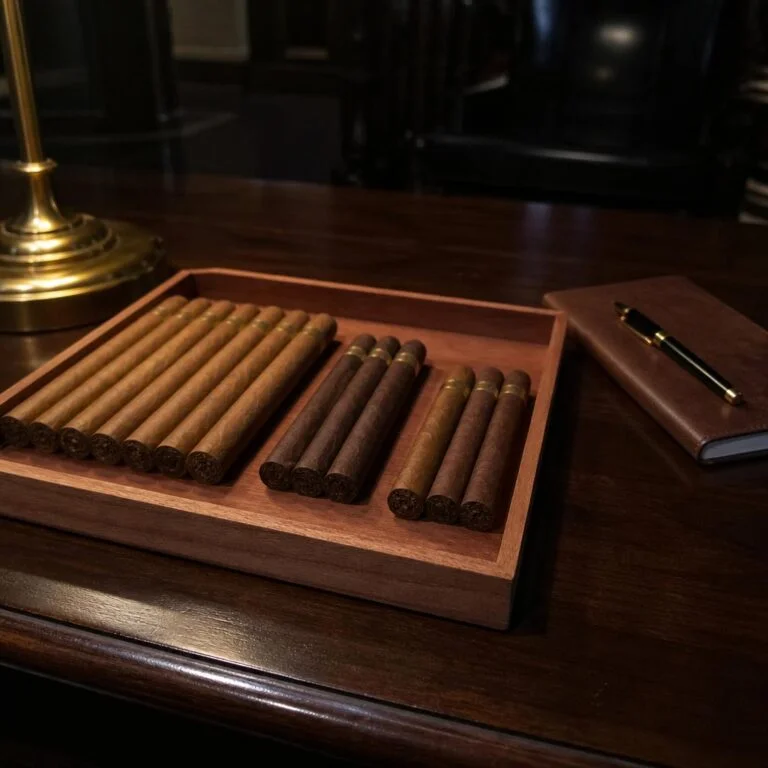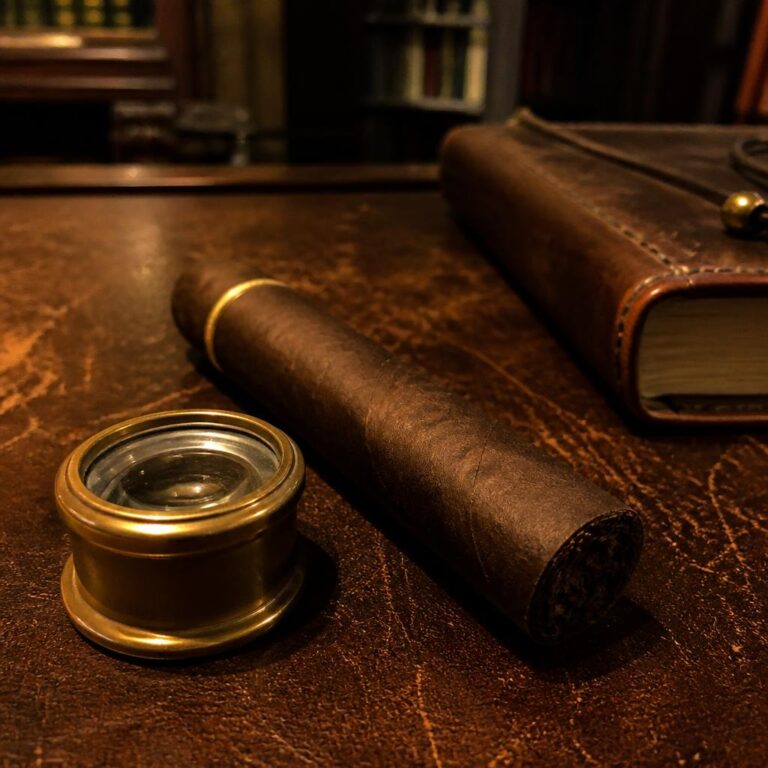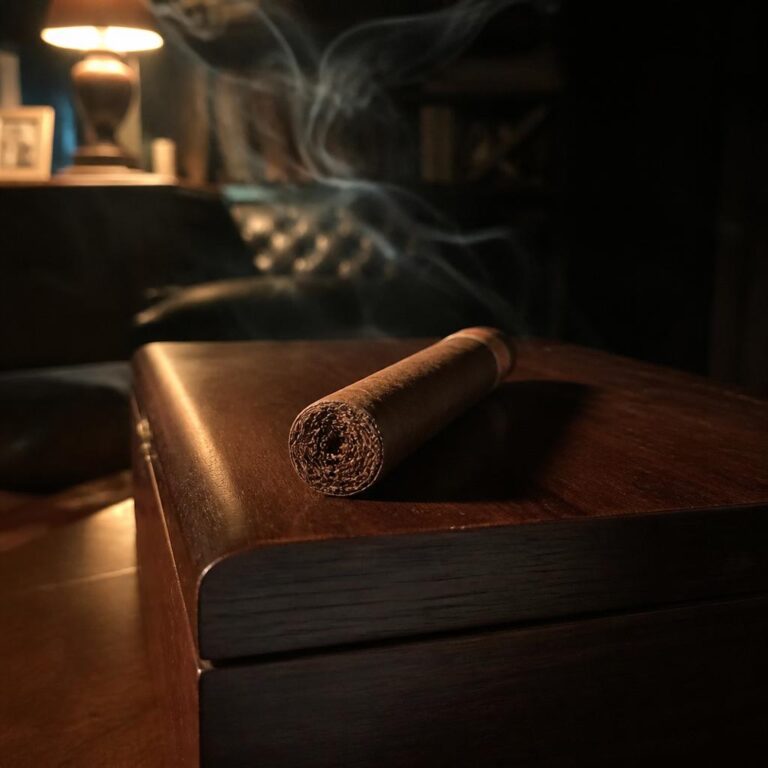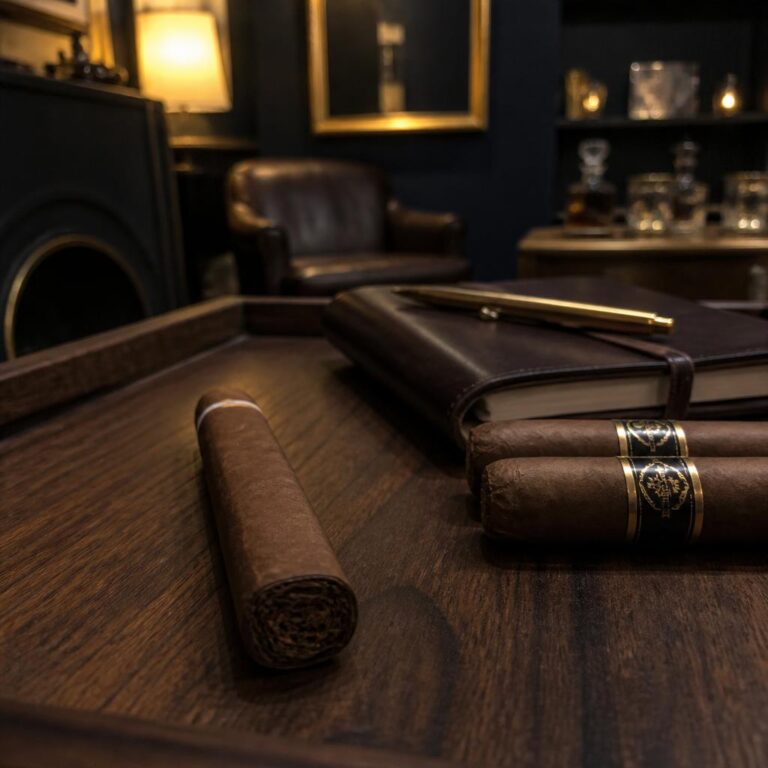
A corona is a straight-sided premium cigar, traditionally five and a half to six inches long with a ring gauge of 42 to 44. Cigar Aficionado calls it the benchmark size against which all other sizes are measured, which is why its dimensions are worth knowing before you learn any others.
The corona belongs to the parejo family, meaning a cigar with parallel sides, an open foot and a closed, rounded head. It is the slimmer counterpart of the robusto that now dominates shop counters, and it suits the smoker who wants the cigar to be about the leaf rather than the volume of smoke. What follows covers the exact dimensions, the family of sizes that borrow its name, how it stands against a robusto, and when it is the right cigar to reach for.
The Benchmark, and Its Numbers
Cigar Aficionado gives the traditional corona as five and a half to six inches by a 42 to 44 ring gauge, and Holt’s, the American specialist retailer, quotes the same range. Ring gauge is the diameter in sixty-fourths of an inch, so a 42 ring is a little under two thirds of an inch across, slim enough to sit comfortably between the fingers and still carry a full blend.
Cigar Aficionado’s glossary records a slightly different figure for Cuba: the Cuban standard is five and five-eighths inches by a 42 ring. That is why you will see corona-sized cigars quoted at 5 1/2, 5 5/8 and 6 inches on different boxes. The word describes a neighbourhood of sizes rather than one fixed measurement, so read the box, not the name.
The shape is as plain as the numbers. A corona has parallel sides, an open foot where you light it, and a closed, rounded head. There is no taper to manage, which makes it an easy cigar to cut and light, and a sensible place to begin if you are still learning how vitolas relate to one another in the vitola dictionary.
The Family That Shares the Name
Several sizes borrow the corona’s name, and they are easier to hold in your head as variations on one idea. The petit corona is, in Cigar Aficionado’s words, basically a miniature corona, generally about four and a half inches with a ring gauge of 40 to 42. The figures wander: the same glossary puts the Cuban standard, which Havana factories call a mareva, at five and an eighth inches by 42, with the Montecristo No. 4 as its best-known example, while Holt’s describes a petit corona as four inches by 42, good for about twenty minutes.
The corona gorda, traditionally five and five-eighths inches by a 46 ring, adds girth without adding much length. Cigar Aficionado notes the size is also sold as a toro and that six-inch, 50 ring versions have become popular, which is why the line between a corona gorda and a toro blurs on a shop shelf.
At the long end sits the double corona, which Cigar Aficionado puts at seven and a half to eight and a half inches by a 49 to 52 ring. Holt’s calls the Cuban Hoyo de Monterrey Double Corona the icon of the size. It is a different proposition from the original corona, and it asks for an evening rather than an interval.
Corona Versus Robusto, the Traditionalist's Case
The robusto is traditionally about five inches by a 50 ring, and Cigar Aficionado reports that it has become the most popular size in the world. Set it beside a corona and the difference is mostly girth: the corona is longer by half an inch or so and eight ring-gauge points slimmer.
The arithmetic is worth doing once. A 50 ring has about 40 percent more tobacco across its cross-section than a 42 ring, but only about 19 percent more wrapper around the outside. In other words, the thinner the cigar, the larger the share of the smoke that comes from the wrapper leaf. Holt’s adds the practical side: thicker cigars burn cooler and slower than thinner ones, so a corona runs a little warmer and asks for a touch more patience between draws. Our own ring gauge guide walks through the effect in more detail.
Here is the view of a man who has smoked rather more of both than he will admit. To my palate, the corona is the better test of a blend, because the wrapper has less filler to hide behind and the flavour arrives with fewer distractions. The robusto is the better cigar when I want body, a cooler burn and a longer sit. Neither is wrong, and the three-vitola comparison explains how the larger sizes fit around them.
When to Reach for a Corona
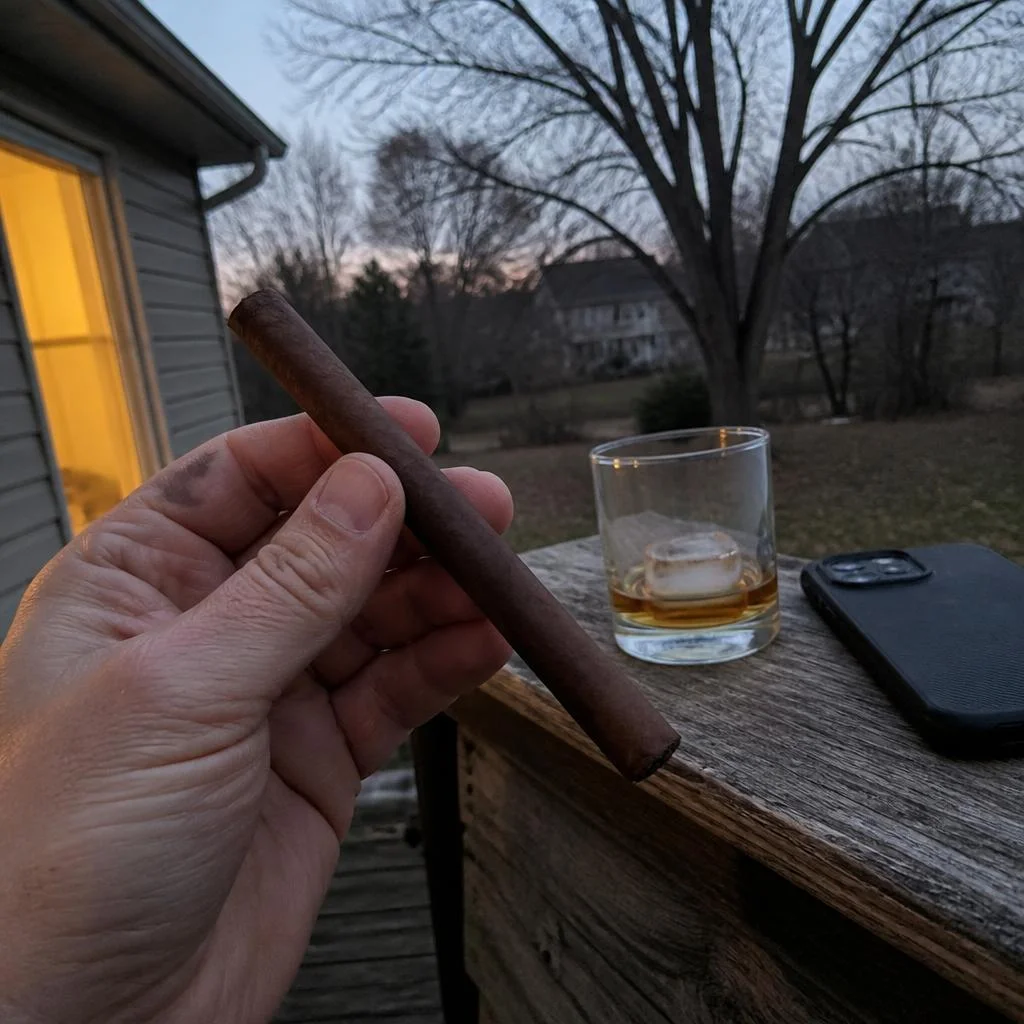
Holt’s puts a corona at around forty minutes, which makes it the natural cigar for a window that is generous but not open-ended: the stretch after supper before the light goes, a quiet half hour on the terrace, the interval between one engagement and the next. A petit corona fits a shorter gap, and a full guide to smoking times sets out how pace moves those figures.
It is also a good size for judging an unfamiliar brand. If a maker offers its line in a corona, that is the vitola I would smoke first, since the wrapper and the blender’s intentions are on plain view. Forty minutes is roughly the length of a considered review by thirds, with enough time in each third to notice how the cigar changes without the evening running away from you. If you want a corona’s opposite number, the very thin lancero pushes the same logic further.
A Classic Size, Still the Measure
The corona remains the benchmark because it gives a cigar very little to hide behind and a fair amount of time to show what it can do. Smoke one before you judge the brand, then decide whether the thicker sizes are doing you any favours.