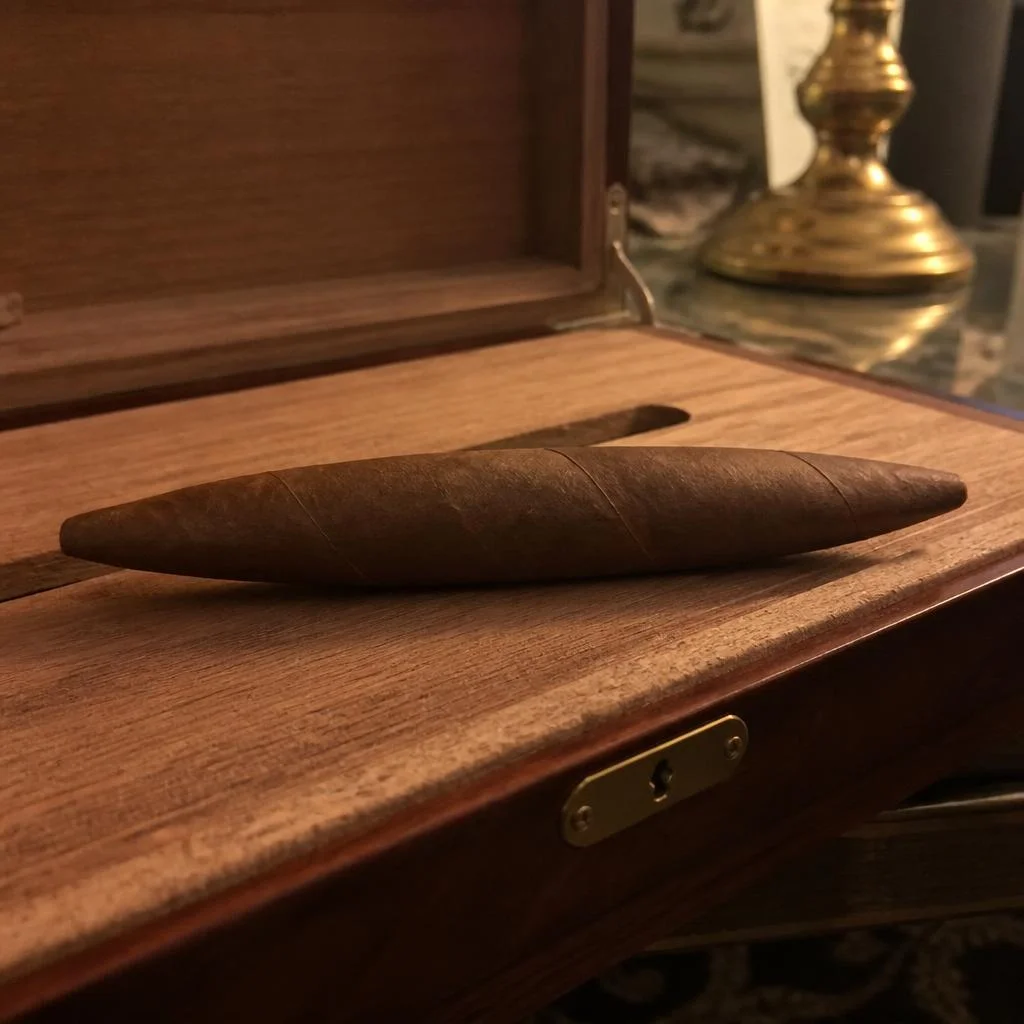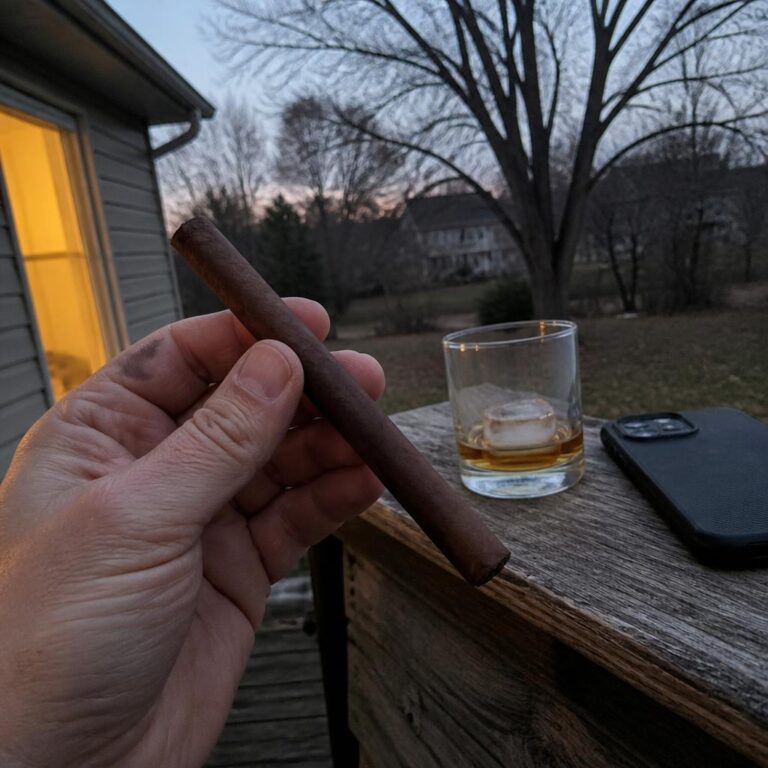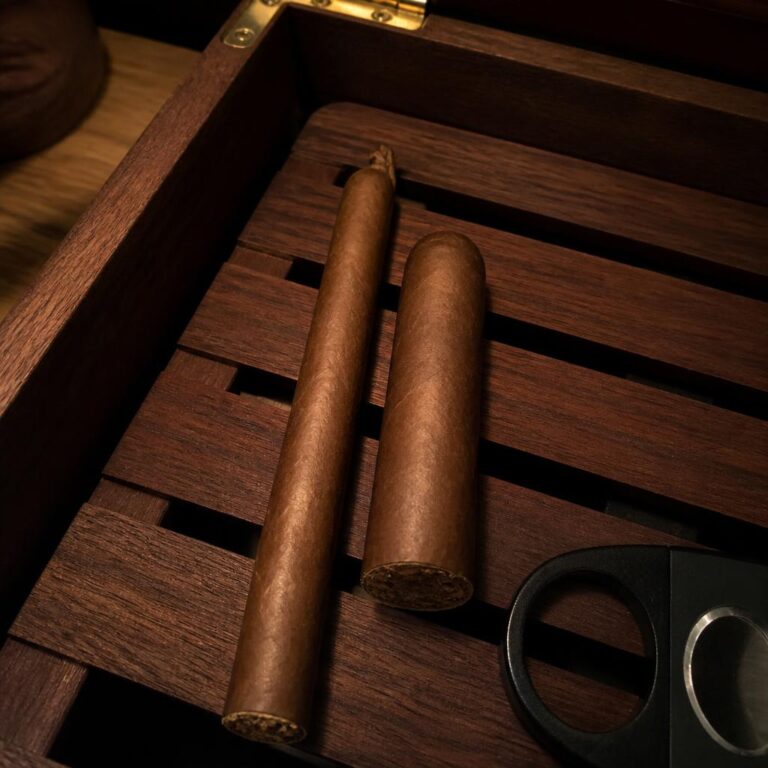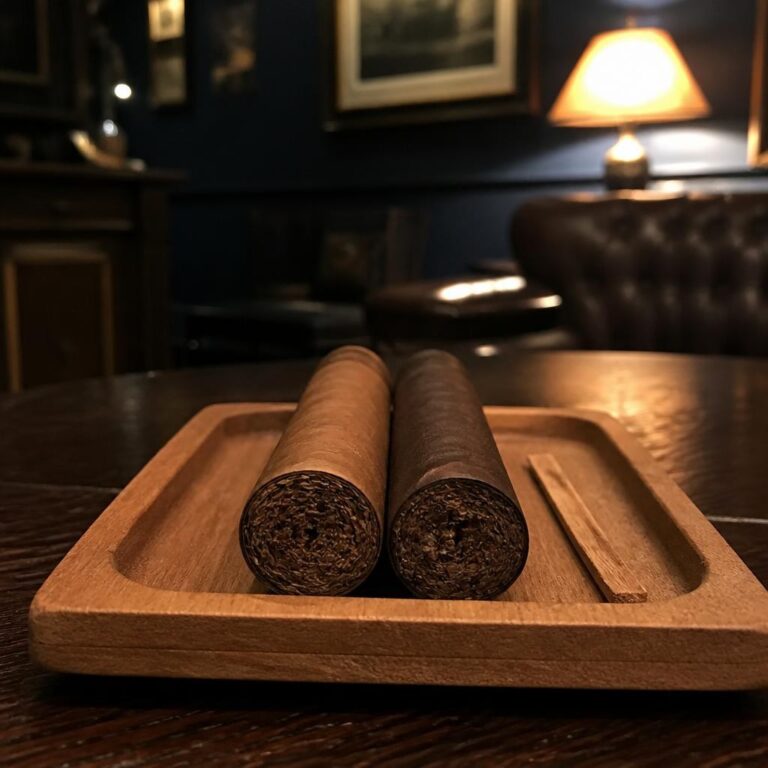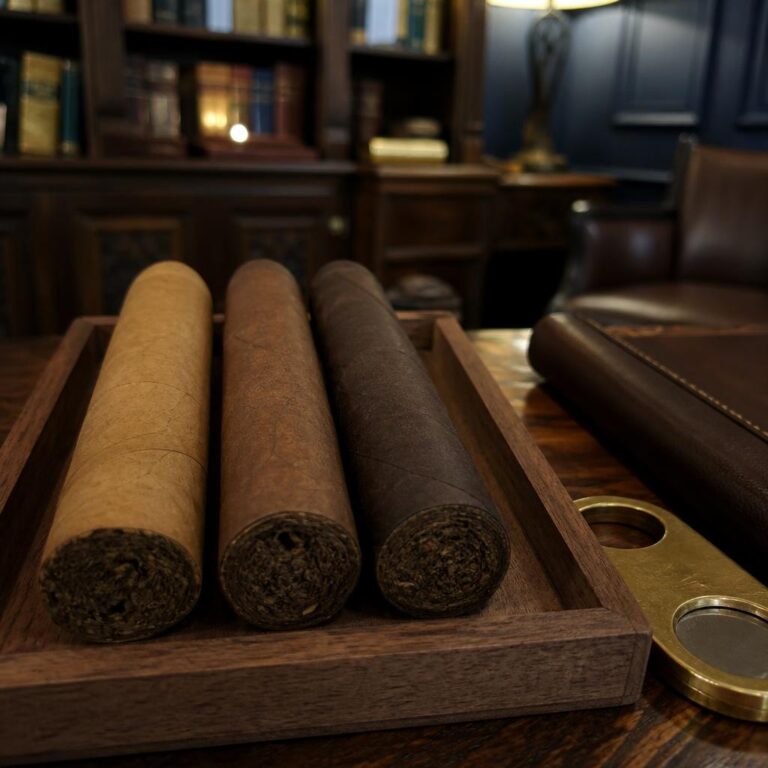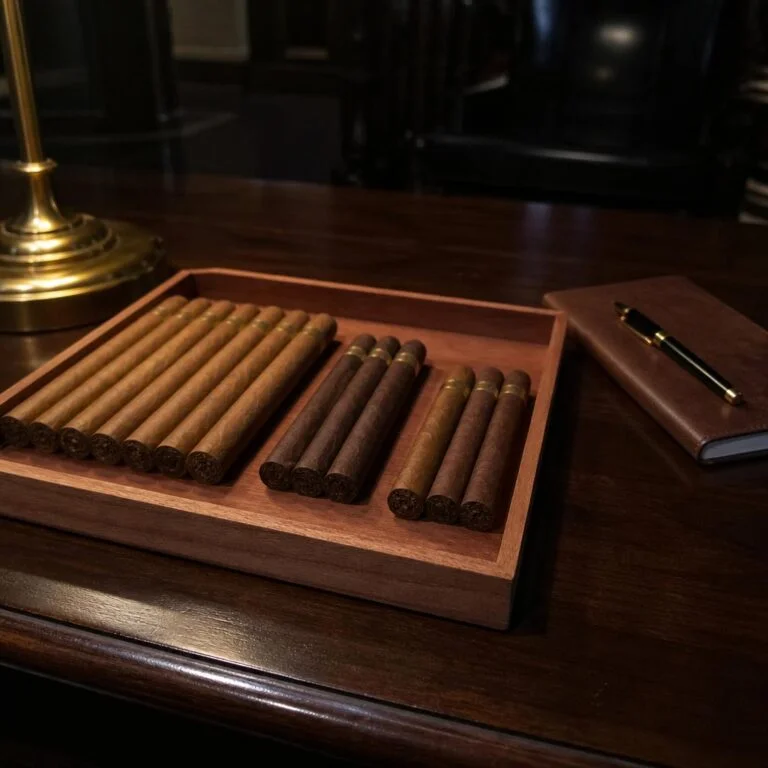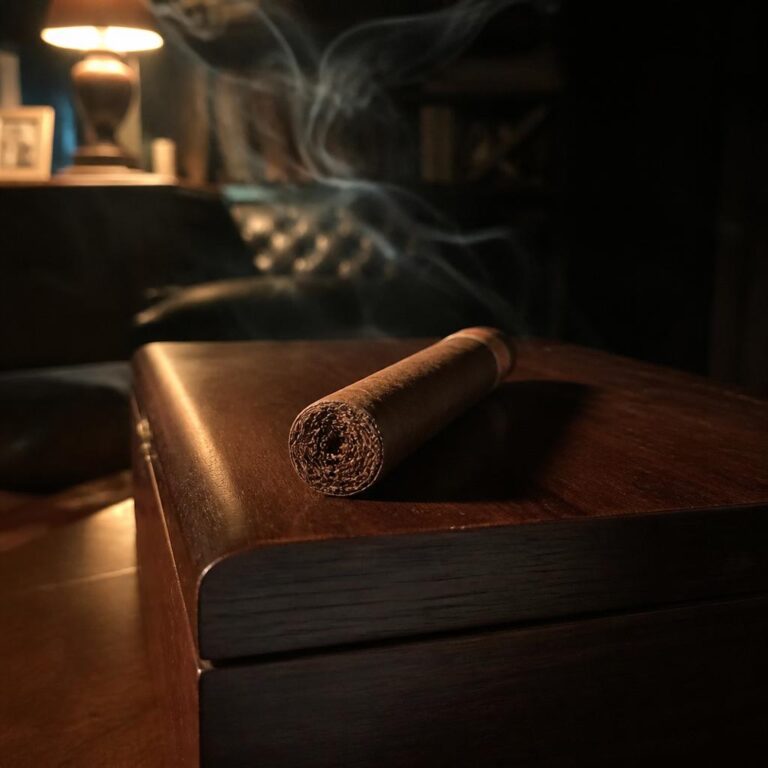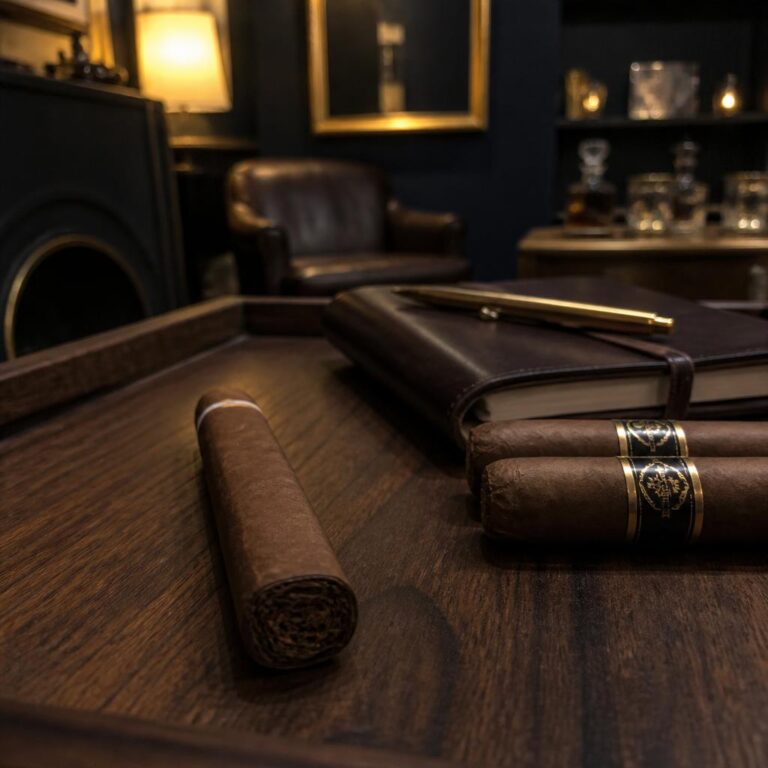
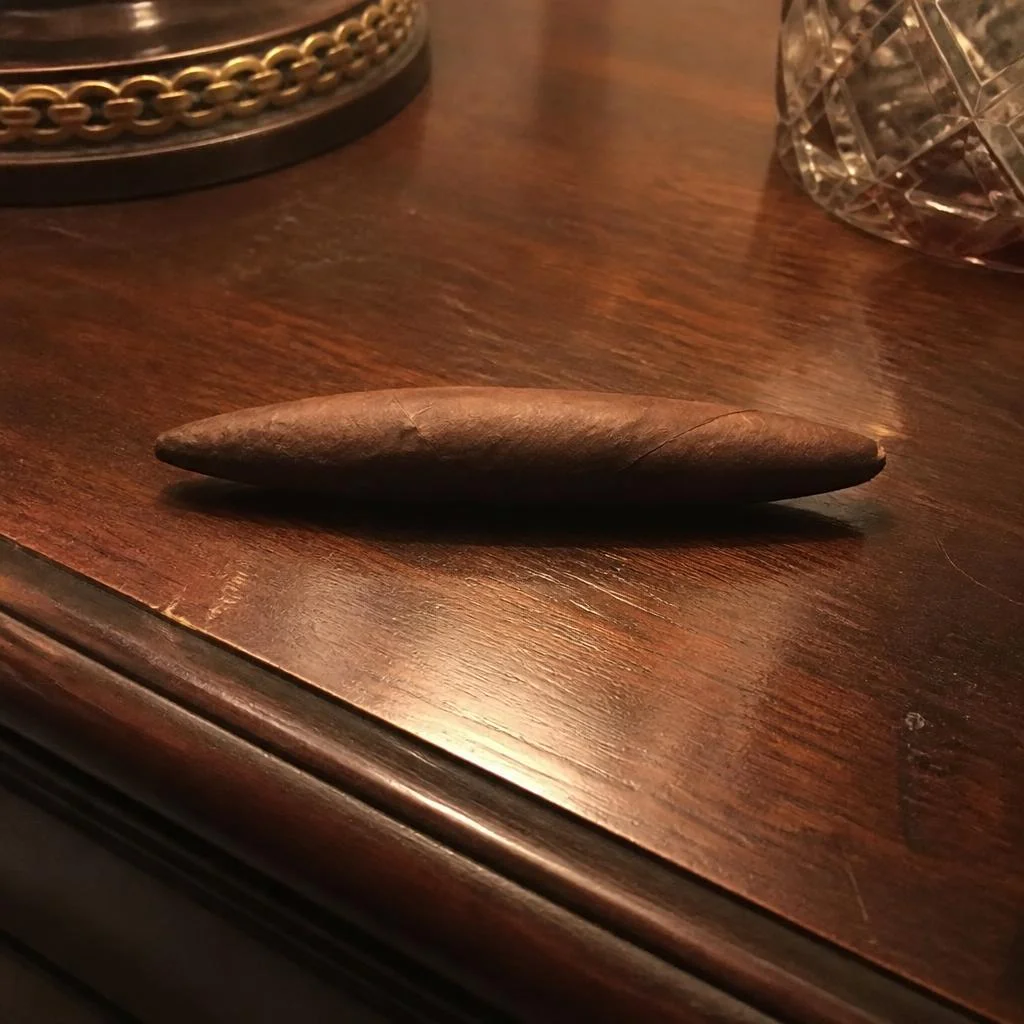
A perfecto is a cigar that tapers at both ends, with a bulge through the middle and a foot that closes to a small point. Cigar Aficionado defines it as a shape closed at both ends, with a rounded head and usually a bulge in the middle. It belongs to the figurado family, the cigars that depart from straight sides, and it is the one member of that family you cannot light the usual way.
The shape is more than a century old, and it has a name that tells you how to smoke it. A perfecto asks you to light only the small nipple at the foot and let the fire travel outward, which changes the first third of the cigar more than any other vitola does.
The Shape, Defined Properly
Most cigars have an open foot, a flat cut face of tobacco that you toast with a flame. A perfecto does not. Its foot is closed and tapers, in most cases almost to a point, and the head narrows too, finishing in a rounded cap. Between the two ends the body swells. Picture a slim spindle with the widest point somewhere around the middle.
That double taper is what separates the perfecto from its neighbours. A torpedo has a straight foot and a tapered head, so it narrows at one end only. A pyramid also narrows at the head only. The perfecto is the only figurado closed and shaped at both ends, which is why it is usually the first to be described when someone wants to explain what a figurado is.
Sizes vary widely by maker. Halfwheel reviewed a Cabañas Perfectos at 5 inches by a 44 ring gauge, a squat example, while other lines run longer and slimmer. There is no single standard, so treat any perfecto measurement as the maker’s own.
A Short History of the Shape
The perfecto is not a modern gimmick. According to Cigar Advisor, La Aurora created the first perfectos in 1903 and originally called them preferidos, all Dominican puros with a bulbous middle. Arturo Fuente followed in the 1920s, and the Fuente Hemingway line, introduced in 1983 and made from those first original perfecto molds, became one of the best known modern examples.
Today the shape is mostly a boutique and limited release favourite. To my eye you meet perfectos as a special edition far more often than as a line staple, and that is the right way to treat them: an occasional change of pace from the vitolas you smoke every week.
How the Closed Foot Changes the Light
The name is a clue. Cigar Advisor notes that the perfecto takes its name from how you light it: rather than toasting the whole foot, you light the nipple, the small stem at the end, and as it turns to ash the tobacco burns outward towards the wider part of the body. Holt’s gives the same instruction for any closed foot cigar, advising a brief touch of the flame to the foot, then letting it ignite slowly.
Practically, that means a gentler approach than usual. Hold the flame close to the point without pressing it in, rotate the cigar, and be patient. There is far less surface area at a perfecto’s foot than on a robusto, so it catches readily, and Cigar Advisor calls perfectos among the easiest cigars to light for that reason. What you should avoid is the habit of incinerating the whole tip. Overheating a closed foot scorches the wrapper before you have tasted anything.
The consequence is the signature of the shape. The draw can feel a touch more resistant at first, since the fire begins on a very small surface. As it climbs into the swell of the cigar, the draw tends to open. To my palate the flavour broadens with it, and I enjoy that arc. Flavour varies by blend, from mellow to full-bodied, so the shape sets the pace and the tobacco sets the taste.
Cutting One, and Who Should Try It
The cut is the only place a perfecto can go wrong before you light it. The head tapers, so a cut that is too deep removes the narrow part you want to keep. Cigar Advisor suggests clipping about a quarter to three-eighths of an inch from a tapered head, and a cautious first cut that you can always deepen is better than a generous one you cannot undo. If you want advice on the cutters themselves, our guide to cutting a cigar covers the options.
A perfecto suits a smoker who already knows how a standard cigar behaves and enjoys watching one change shape in the hand. It is a good second figurado after a torpedo, and a sound choice for a slow evening rather than a quick smoke. If you keep notes, it is also a rewarding cigar to review by thirds, because the shape gives the opening third a character of its own.
If you want a lighting walkthrough before you try one, how to light a cigar covers the basics that apply here too, with the closed foot as the single adjustment.
Tapered at Both Ends, Rewarding in the Middle
The perfecto will never be the cigar you reach for every day, and it was never meant to be. It is a shape for a patient evening, lit gently and watched as it changes. Try one from a brand you already trust, then judge the shape for yourself.