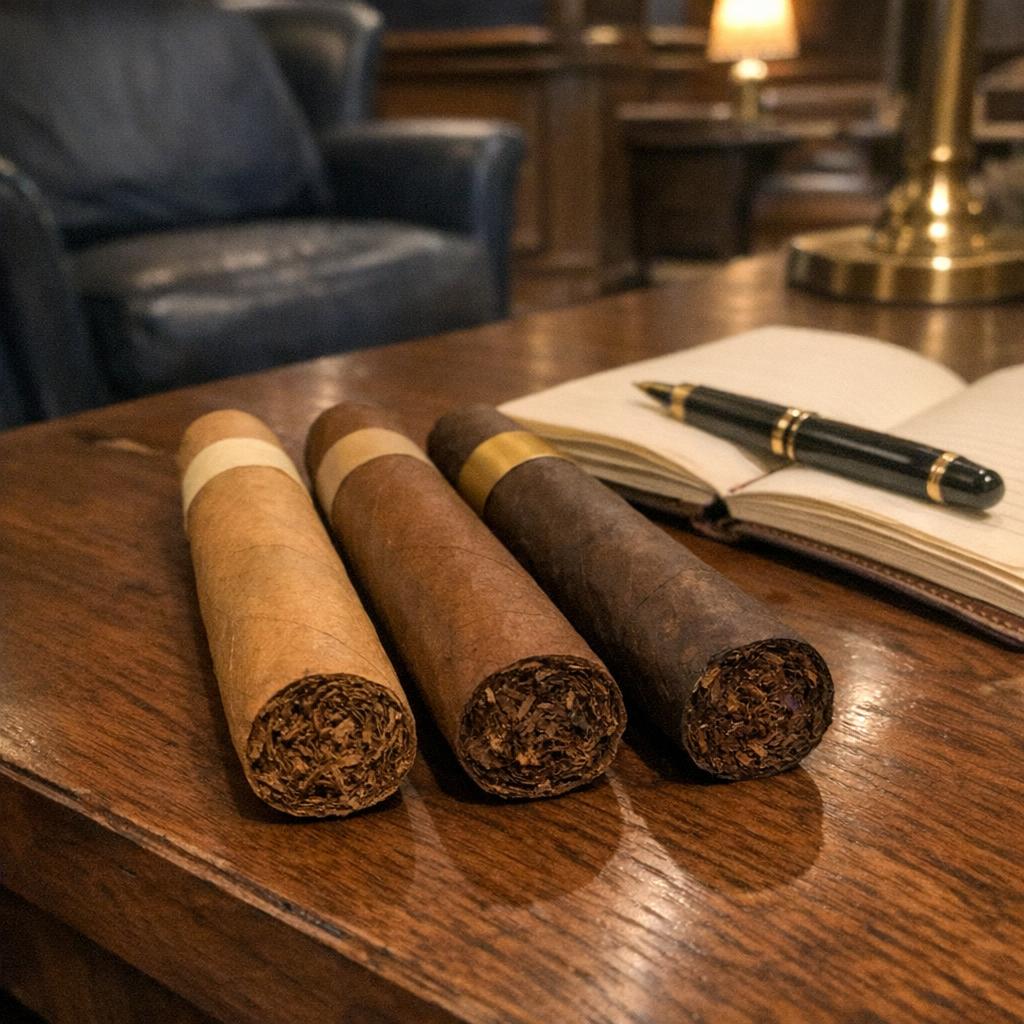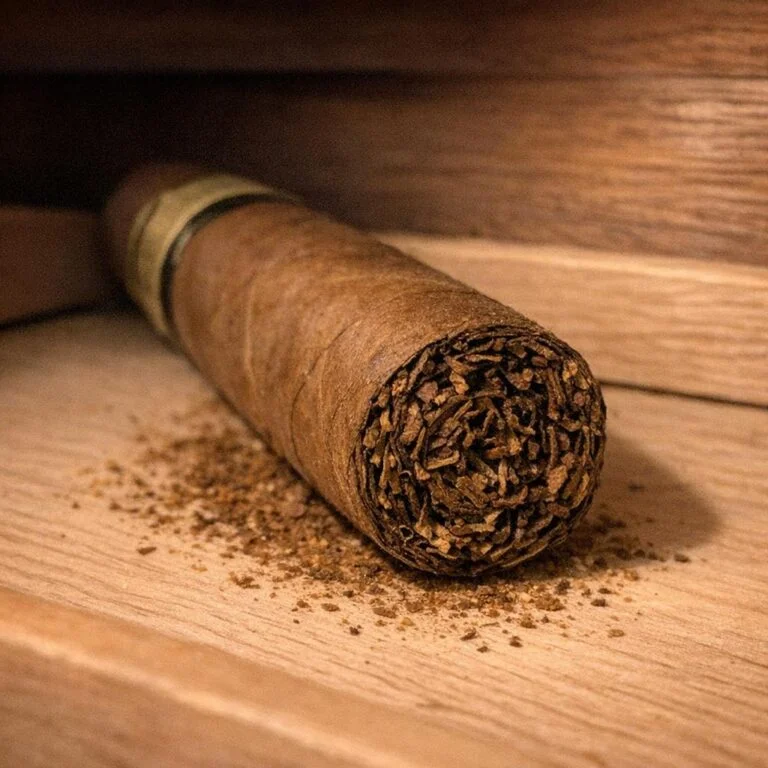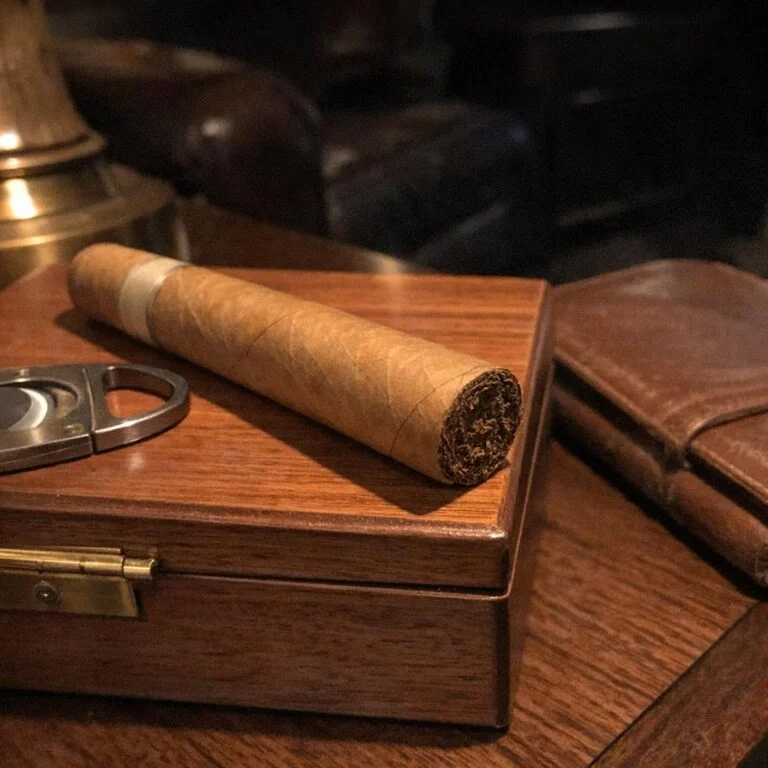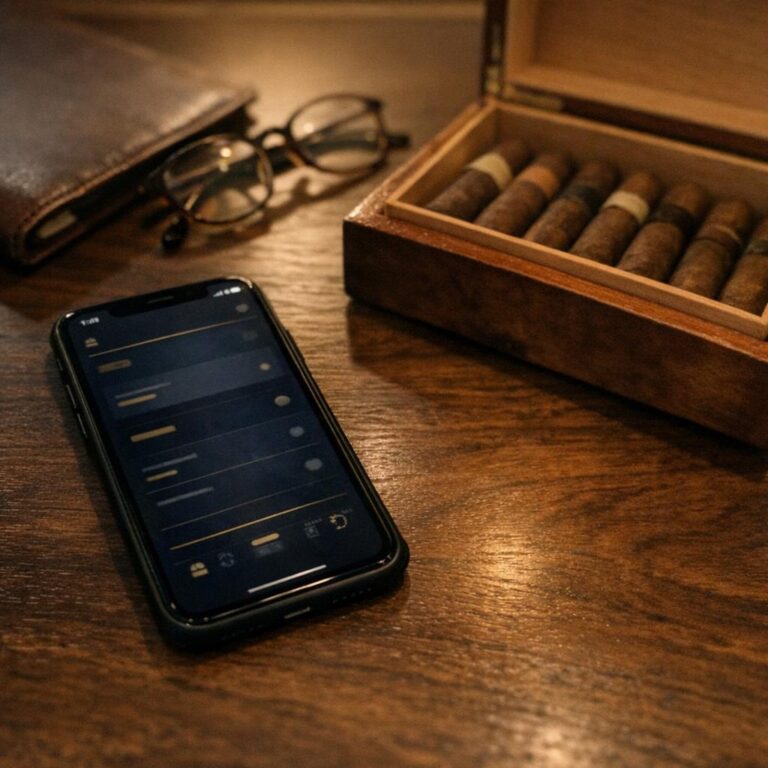
If you take one sentence away, take this one. Strength is nicotine, body is the weight of the smoke, and flavour is how loudly the notes speak. Three separate measurements, three separate scales, and the habit of collapsing all three into a single word is the reason so many people buy a cigar they do not enjoy and conclude the fault is theirs.
A cigar strength chart is a useful object, provided you know which of the three it is charting. Most of the charts on the internet do not say. They print a row of words from mild to full, hang a few brand names off each one, and leave the reader to assume that a cigar high on the scale is simultaneously heavy on the palate, loud in flavour and likely to flatten them before the band. Sometimes all three travel together. They are under no obligation to.
Below is the chart done properly, with the three axes kept apart, the one-to-five scale explained rather than assumed, and honest examples at each level. Then the part nobody puts on a chart: how to read a maker’s claim, why a dark wrapper tells you almost nothing about strength, and how to record all three so your own notes are worth reading a year from now.
| Level | Strength feels like | Body feels like | Typical examples |
|---|---|---|---|
| 1. Mild | Almost nothing. Comfortable before lunch, on a light breakfast | Clean and light. Passes through and leaves the room politely | Macanudo Café, Baccarat, Ashton Classic |
| 2. Mild to medium | A faint late warmth that is easy to miss entirely | Rounder, with a little more to hold onto mid-palate | Montecristo White, Arturo Fuente Flor Fina 8-5-8, AVO Classic |
| 3. Medium | A gentle lift in the last third, mostly if you have hurried | Present throughout. Comfortable rather than heavy | Romeo y Julieta 1875, Arturo Fuente Hemingway |
| 4. Medium to full | A definite kick after dinner, and sooner on a fast draw | Thick and mouth-coating, with a finish that outstays the draw | Oliva Serie V, Arturo Fuente Don Carlos |
| 5. Full | Real weight. Eat first, sit down, and take the hour | Dense and lingering. Coats the palate and stays there | Padrón Serie 1926, Liga Privada No. 9, My Father Le Bijou 1922 |
Three Axes, Not One
The trade has three words for three different things, and the trouble starts because two of them sound like synonyms in ordinary English.
Strength is chemistry. It is the nicotine load the cigar delivers and what that does to the person smoking it: the light head, the warm flush, the unhappy quarter of an hour that follows smoking something serious too quickly on an empty stomach. Strength is the only one of the three you feel somewhere other than your mouth.
Body is texture. It is how much the smoke weighs on the palate, from thin and watery through to something closer to velvet. A full-bodied cigar coats the mouth and lingers; a mild-bodied one passes through and leaves the room politely. Body has nothing to do with nicotine, and a cigar can be rich and mouth-filling while being chemically gentle.
Flavour intensity is volume. It is whether the notes murmur or announce themselves, and it is independent of the other two again. A delicate Cameroon-wrapped corona can be more flavourful, in the sense of having more to say, than a heavy Nicaraguan that says one thing loudly.
As the trade press puts it, the three usually travel together and are not required to. That last clause is the whole article. The cigars people remember as disappointments are almost always the ones where the three axes pulled apart and the buyer had only been told about one of them.
Reading the One to Five Scale
Nearly every published chart uses five steps: mild, mild to medium, medium, medium to full, full. There is no industry body policing those words, no laboratory measurement behind them, and no reason a level three from one house should match a level three from another. What the scale is genuinely good for is relative navigation. It tells you which direction to walk in, not how far.
Read the chart above as two columns rather than one. The strength column describes what the cigar does to you; the body column describes what it does in your mouth. On most cigars the two sit within a step of each other, which is why the single-word habit survives. The interesting cigars are the ones where they diverge, and those are worth seeking out deliberately once you know the vocabulary, because they teach the difference faster than any amount of reading.
A practical note on the examples. Levels one and two are where our own shortlist of the gentler shelf lives, and levels four and five are covered in detail in our guide to the full-bodied end. Between them sits the medium ground, which is where most smokers eventually settle and where the fewest arguments happen.
Strength Is Nicotine
Strength is the axis with physical consequences, so it deserves the plainest treatment.
The nicotine in a cigar comes overwhelmingly from the filler, and within the filler from the priming: the position on the plant a leaf was picked from. Leaves taken from the top of the plant, ligero, sit longest in full sun and carry the most nicotine and the most oils. The middle primings, seco, are more moderate. The bottom leaves, volado, contribute mainly combustion rather than power. A blender who wants strength adds ligero. A blender who wants a cigar you can smoke before lunch does not.
What strength feels like is easy to describe and hard to mistake once you have met it: a slight lightness behind the eyes, occasionally a warmth in the chest, and on the wrong day a queasy half hour. It arrives late rather than early, which is the part that catches people. A cigar that seems perfectly manageable through the first third can present its bill in the last, particularly if you have been drawing quickly.
The defences are unglamorous and they work. Eat first. Draw slowly, roughly once a minute rather than once every fifteen seconds, since a hot cigar delivers more of everything. Keep water or a coffee to hand. And put it down when it stops being pleasant, which is a discipline rather than a defeat: a half-smoked cigar you enjoyed beats a whole one you endured.
Body Is the Weight of the Smoke
Body is the axis most charts are actually describing when they say “full”, and it is the one the wrapper influences most.
Think of it the way you would think about wine or milk: watery, then light, then rounded, then thick enough to coat. A full-bodied cigar leaves a film across the palate and a finish that outstays the draw. A mild-bodied cigar is present, pleasant and gone. Neither is better. They are different registers, and the only sensible question is which one suits the hour and the company.
Body is also the axis that shifts most with handling. A cigar smoked too fast burns hotter and reads heavier and harsher than the same cigar smoked slowly. A cigar that has been kept dry burns quicker and thinner. The same stick out of a properly kept box in six months’ time will very often read fuller and rounder than it does today, which is one of the quieter pleasures of this hobby and an argument for buying in fives rather than ones.
If you have never deliberately separated body from strength, the exercise is simple. Smoke something from level one and something from level five in the same week, at the same time of day, and pay attention to the mouthfeel alone rather than the flavours. Our guide to tasting a cigar properly sets out the method; the separation becomes obvious after about three cigars and never really goes away again.
Flavour Is Volume, Not Weight
The third axis is the one charts almost never carry, which is odd, because it is the one most smokers actually choose on.
Flavour intensity describes how emphatically a cigar states its case. A quiet cigar offers cream, almond and a little cedar and asks you to lean in. A loud one arrives with cocoa, espresso and black pepper and does not require your cooperation. Neither of those descriptions says anything about nicotine, and neither says much about mouthfeel either.
Complexity is a fourth thing again, and worth naming because it is frequently confused with intensity. A complex cigar changes: it opens on one set of notes, turns in the second third and finishes somewhere else. A loud cigar may do that or may hammer the same chord for an hour. Some of the most complex cigars ever blended are gentle on both of the other axes, which is exactly why serious reviewers so often work in the mild-to-medium range when they want to test their own palate rather than their own constitution.
There is a practical benefit to keeping flavour separate in your own vocabulary. If you write “strong” in your notes when you meant “loud”, or “mild” when you meant “quiet”, your notes stop being useful to you within about a month, because you can no longer tell what you were reacting to.
Why a Dark Wrapper Is Not Strength
This is the single most durable myth in the hobby, and it survives because it looks so reasonable. Dark leaf, dark flavours, strong cigar. It does not follow.
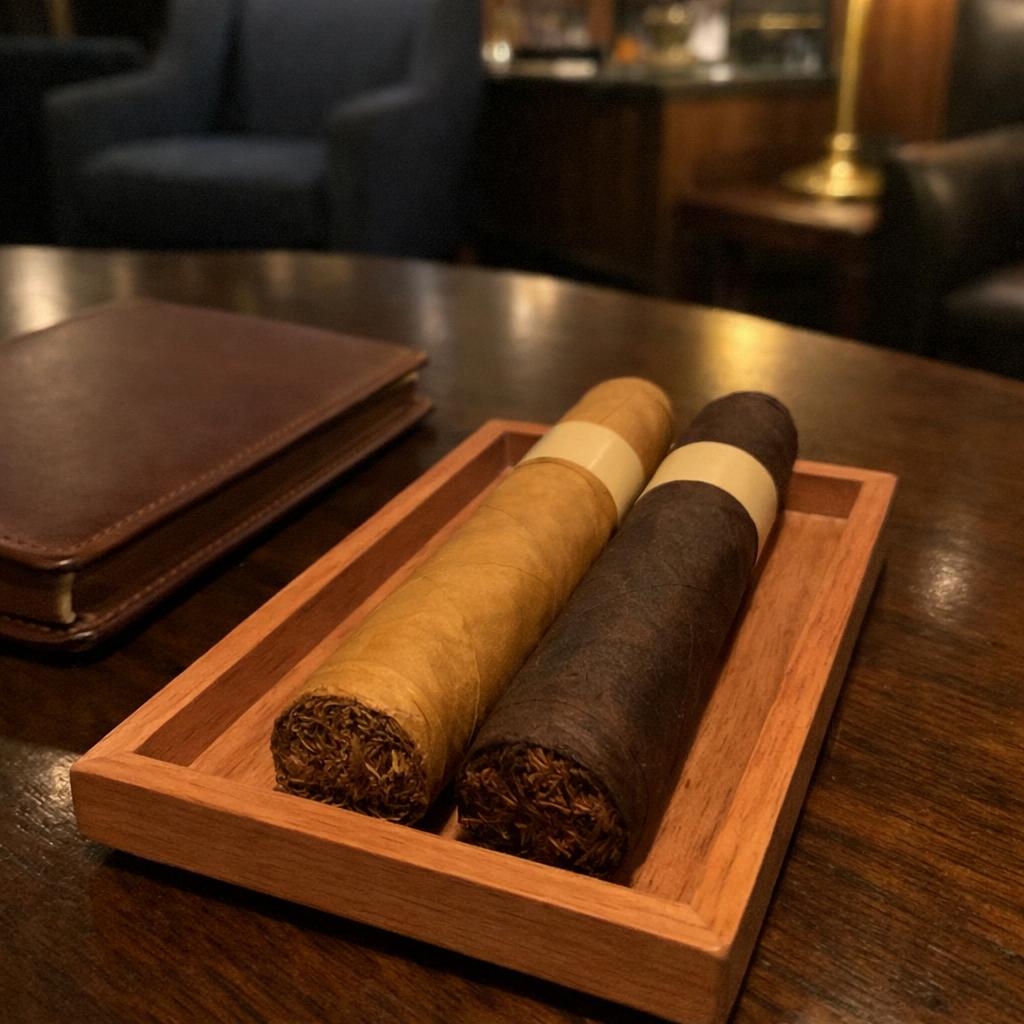
A maduro wrapper is dark because of what was done to it, not because of what is in it. Longer fermentation at higher temperatures and pressure, sometimes with additional heat and time, converts starches into sugars and darkens the leaf, and the result is characteristically sweeter and rounder rather than more powerful. Our short primer on what maduro actually means covers the process; the summary is that fermentation is a sweetening step, not a strengthening one.
There is a second reason the myth persists, which is that the wrapper is doing less of the work than its share of the surface suggests. Most of the nicotine sits in the filler, and the filler is invisible. Two cigars from the same house can wear the same dark wrapper over entirely different cores, one built with a generous helping of ligero and one built without, and no amount of looking at them will tell you which is which.
The reverse trap is just as common. Pale Connecticut shade is read as automatically feeble, and there are pale-wrapped cigars with real muscle underneath. If the wrapper genuinely interests you, the full survey lives in our guide to cigar wrapper types. For strength, the only honest answer is to ask what is inside, and the only reliable one is to smoke it and write down what happened.
How to Read a Maker's Claim
Every manufacturer and most retailers publish a strength rating, and they do not agree with each other. This is not dishonesty, it is the absence of a shared instrument.
A quick demonstration, using cigars from the chart above. Macanudo describes its Cafe line as mild and has built forty years of reputation on that promise. A major online retailer lists the same line as medium. Oliva’s Serie V is widely described in the trade as the bridge from medium to full, and that same retailer lists most of its sizes flatly as full. Nobody is lying. They are rating on different scales, against different reference points, for different customers.
Three habits make the ratings useful again. First, treat a rating as relative within its own house: a house’s medium tells you where it sits against that house’s mild, and nothing about anyone else’s shelf. Second, prefer the maker’s own description to a retailer category page, since the maker is describing a blend and the retailer is populating a filter. Third, and most usefully, calibrate against your own experience rather than the label. Once you have five cigars logged with your own reading of strength and body, you can place any new rating against your own scale in about ten seconds.
That is also the honest defence of a chart like the one above. It is a map with a legend, not a specification. Use it to choose a direction, then trust your notes over anybody’s marketing, including ours. If you want a fuller decision framework before you buy, our guide to choosing a cigar works through occasion, time and format alongside the three axes.
Recording All Three, Third by Third
Here is where the three-axis idea stops being theory. A cigar is not one experience, it is three in sequence, and the axes move at different speeds through them.
Body tends to build steadily. Flavour usually shifts around the halfway mark, which is the moment reviewers wait for. Strength very often arrives last, and arrives suddenly. Any note that records a single verdict for the whole hour has averaged away the only interesting information in it: a cigar that opened quiet and finished formidable and a cigar that was uniformly medium will both be written down as “medium” and will be indistinguishable in your own records a year later.
This is precisely why the Cigarro Method scores by thirds. You record strength, body and flavour separately at the first third, the second and the last, which produces a shape rather than a number. Six months of that and patterns start appearing that nobody could have told you: that you consistently prefer cigars whose body climbs while their strength stays flat, or that the Nicaraguan puros you thought you loved you actually only love before dinner.
It takes about forty seconds per third and no expertise whatsoever. The scale is yours, which is the point. You are not trying to match a magazine’s rating; you are building the reference set that lets you read everyone else’s.
How to Move Up
Moving up the scale is not compulsory. Plenty of experienced smokers spend their lives happily between levels one and three, and the notion that a palate must graduate to full-bodied is a piece of folklore that mostly benefits people selling ligero. But if you want to travel, the ladder below works, and it works because it changes one variable at a time.
Start by climbing body while holding strength still. Move from a mild Connecticut-wrapped cigar to something mild-to-medium in a Cameroon or Ecuadorian wrapper. The mouthfeel thickens, the nicotine barely moves, and you learn what body alone feels like. Next, hold body and let strength climb: a medium cigar with a Nicaraguan core will present a late warmth the previous step did not. Third, take on both at once and go to level four, but do it after a meal, in a chair, with an hour free and no plans afterwards.
Two rules govern the whole ladder. Give each step three or four cigars before you judge it, because a single stick can be badly stored or badly smoked and tells you very little. And drop back down deliberately every so often: returning to a level one cigar after a month at level four is genuinely startling and is the fastest way to discover how far your reading of the scale has moved.
The last step, when you get there, is the good one. Level five stops being a test of endurance and becomes a preference you exercise on purpose, on the right evening, at the right pace. That is not graduation. It is just having a wider shelf.
Questions Readers Ask
What is the difference between cigar strength and cigar body?
Strength is the nicotine the cigar delivers and what it does to you physically, which you feel somewhere other than your mouth. Body is how heavy the smoke feels on the palate, from thin and watery through to something that coats and lingers. The two often move together, which is why the words get used interchangeably, but they are independent. A rich, mouth-filling cigar can be chemically gentle, and a thin-smoking one can carry a late kick that catches you out.
Does a dark wrapper mean a stronger cigar?
No. A maduro wrapper is dark because it has been fermented longer and hotter, a process that converts starches to sugars and tends to make the leaf sweeter and rounder rather than more powerful. Most of a cigar’s nicotine comes from the filler, which you cannot see, and the same dark wrapper can sit over two entirely different cores. Colour is a reasonable clue to flavour character and a poor one to strength.
What does a 1 to 5 cigar strength chart actually measure?
Usually body, sometimes strength, and almost never both separately, which is the problem. There is no standard instrument behind the words mild, medium and full, no industry body defining them, and no reason one maker’s medium should match another’s. Read any chart as a relative map inside its own house: it tells you which direction to walk, not how far, and it is only genuinely calibrated once you have logged enough cigars to place it against your own palate.
Why do manufacturers and retailers disagree on strength ratings?
Because they are rating different things for different reasons. A maker is describing a blend it built and knows intimately, against the rest of its own portfolio. A retailer is populating a filter that has to sort thousands of cigars from hundreds of houses into three or four buckets. Both can be reasonable and still land two steps apart on the same cigar. Prefer the maker’s own description, then trust your own notes over both.
How do I stop a cigar making me feel unwell?
Eat properly beforehand, draw slowly at roughly one puff a minute rather than pulling hard, keep water or coffee within reach, and start lower on the scale than your pride suggests. Strength tends to arrive in the last third rather than the first, so a cigar that feels comfortable early can still catch up with you. Setting a cigar down before the band when it stops being enjoyable is ordinary good sense, not a failure of nerve.
Should beginners always start with mild cigars?
Starting gentle is sensible, because a forgiving cigar makes early mistakes cheaper and lets you learn the mechanics without the nicotine doing the talking. But mild is a register rather than a waiting room. Some of the most refined and most expensive cigars made are gentle by design, and plenty of smokers with decades of notes behind them keep a mild rotation on purpose. Move up if you are curious, not because someone told you the scale runs one way.
Three Columns, Not One
Charts are useful the way a map legend is useful. They tell you what the symbols mean and roughly where things sit, and then you have to walk the ground yourself. The chart above will get you pointed in the right direction on a shop shelf, and it will stop you buying a cigar that is loud when you wanted heavy or strong when you wanted rich. What it cannot do is tell you where your own line sits between pleasure and endurance, because that line is yours and it moves.
So keep three columns rather than one, and keep them per third. Strength, body, flavour, at the start, the middle and the end. Do that for a season and the disagreements between makers and retailers stop mattering, because you will have built the only scale that was ever going to be reliable. The Cigarro Method is the shape of it, the app is free to start, and the first ten cigars are the ones that change everything.