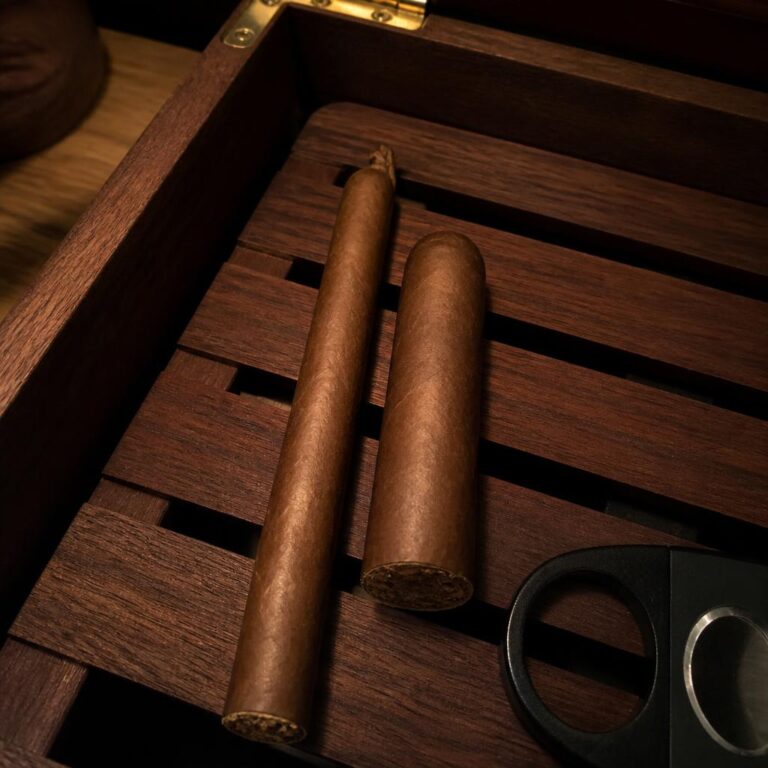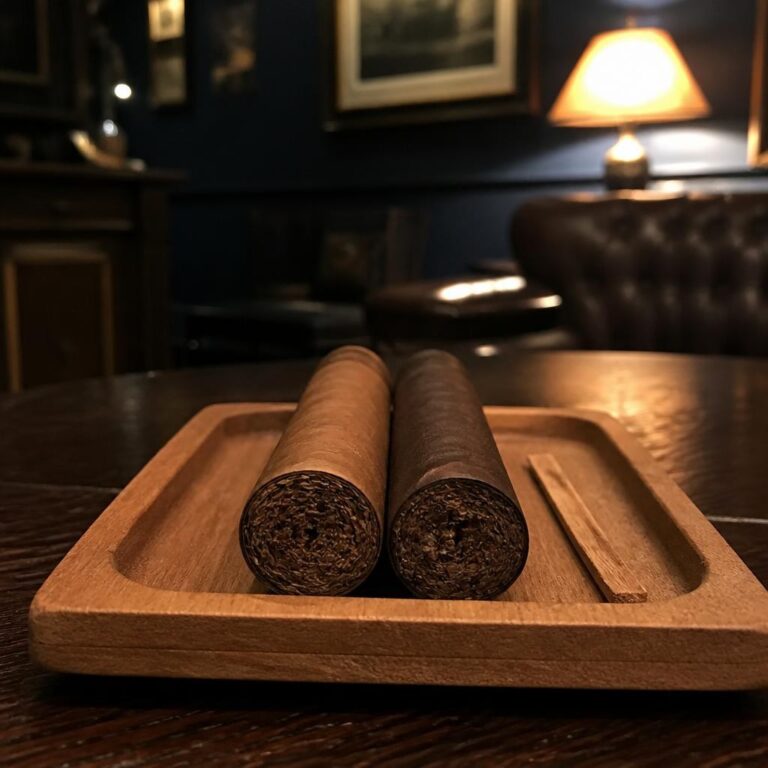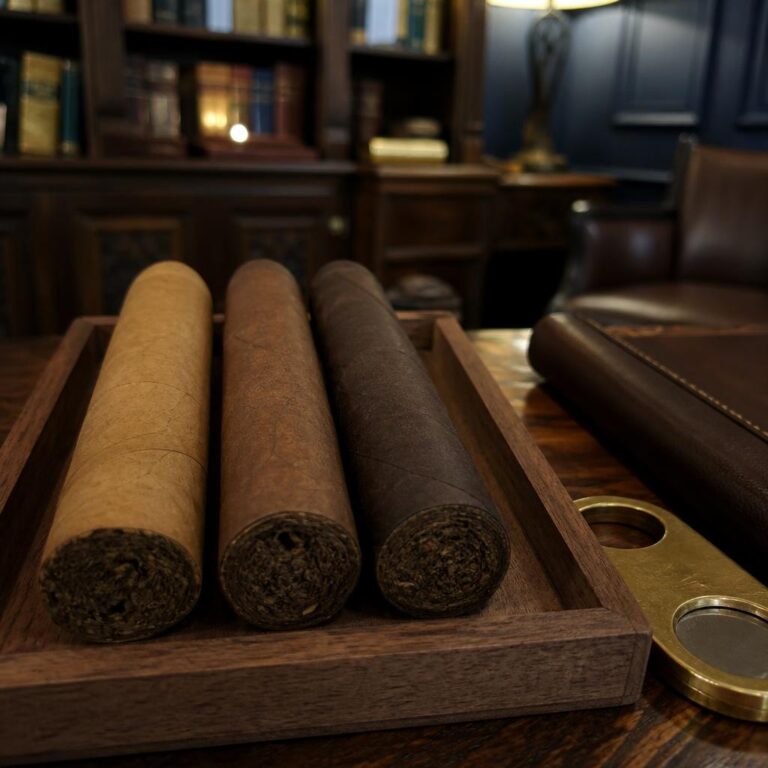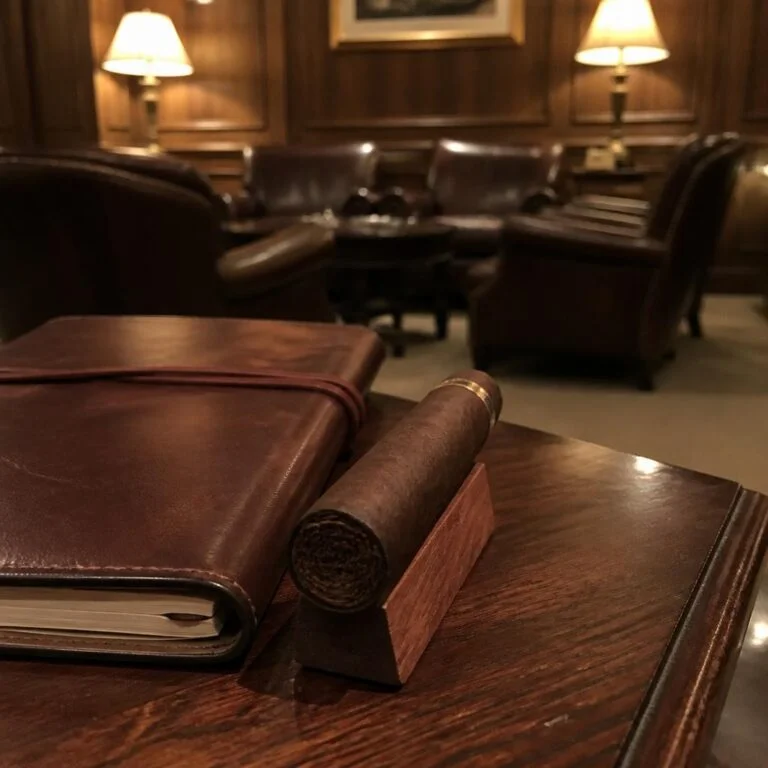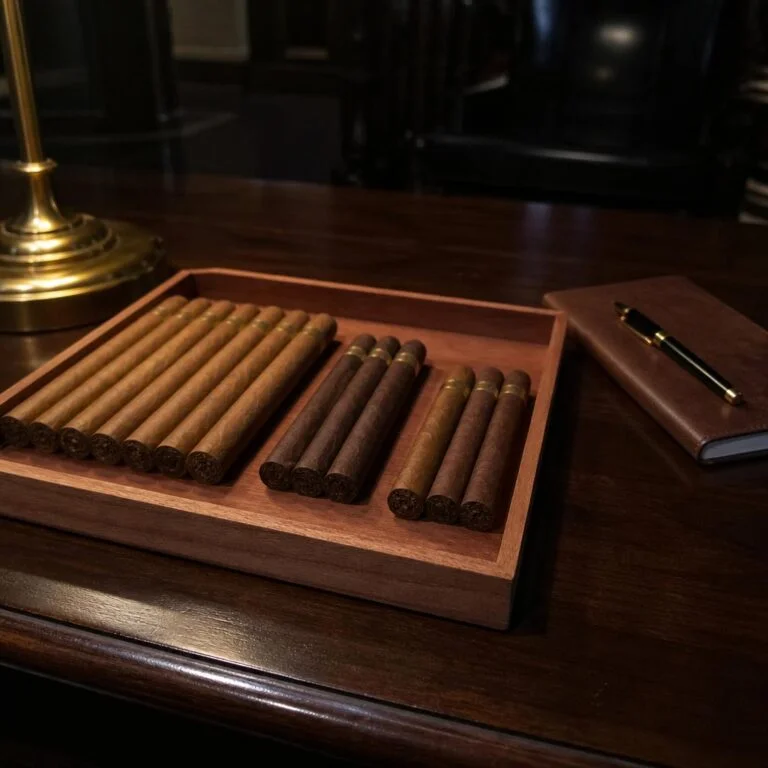
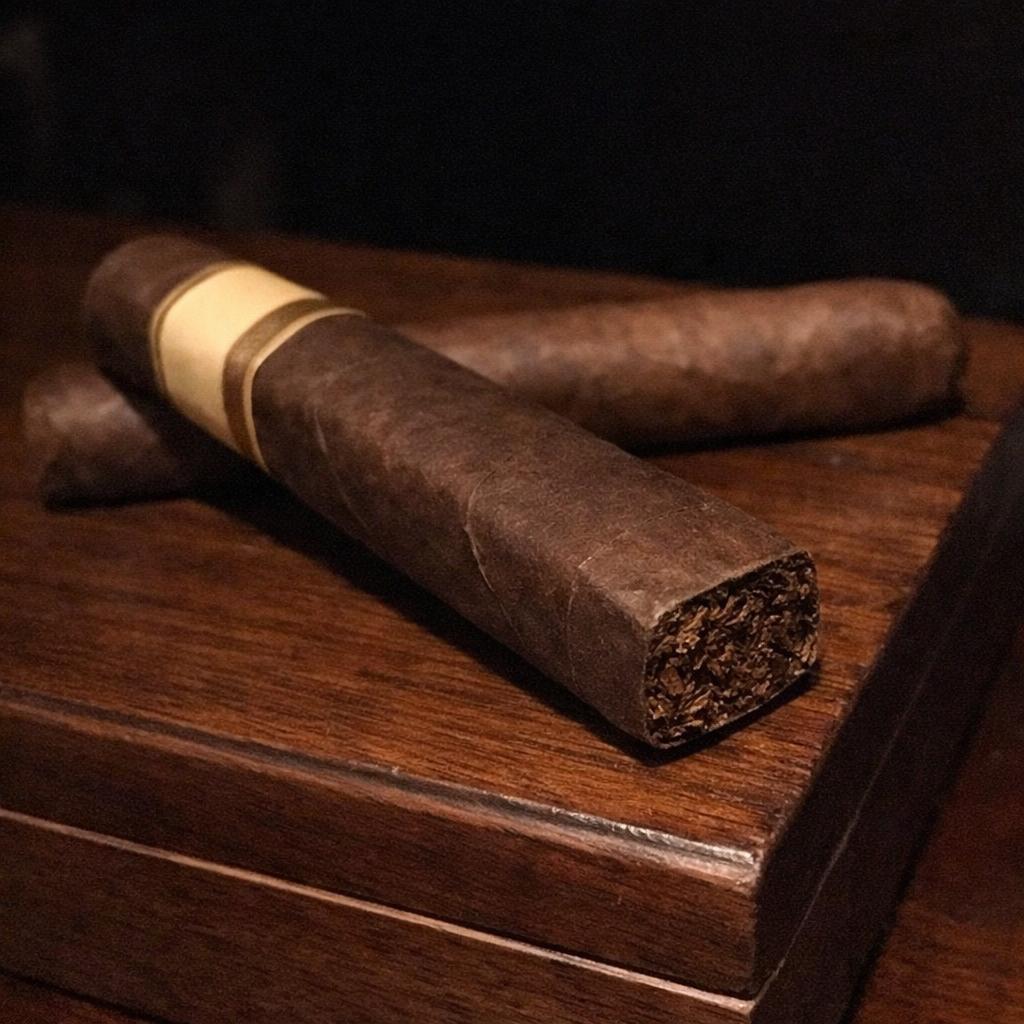
Walk any shop humidor and you will see them: cigars with flat sides and squared shoulders sitting among the round ones like books shelved beside scrolls. A box-pressed cigar is a cigar that has been pressed into a soft rectangle after rolling, rather than left in its natural round profile. The shape comes from pressure, not from a different way of rolling. Box-pressing is a finish, not a blend: the tobacco inside a pressed cigar is exactly what the maker chose, and the press only changes the geometry.
The format has collected a certain mystique anyway. Pressed cigars are said to draw more easily and burn cooler, and their owners tend to mention the hand-feel unprompted. Some of that holds up. Some of it is club-chair folklore. Telling one from the other is the point of this piece.
How a cigar gets its corners
The tidy version of the story is Cuban. Export cigars were packed snugly into wooden boxes, the boxes were stacked high for shipping, and the sticks at the bottom of the pile arrived with flattened sides. Buyers decided they rather liked them that way, and a packing accident became a house style. The honest version is that nobody can produce the invoice. Most industry accounts place the practice in Cuba around the turn of the twentieth century, driven partly by fitting more cigars into a box and partly by stopping them rolling about in transit, but there is no settled consensus on exactly where or when it began.
The modern method is gentler than the legend. Round cigars are packed into their boxes a touch more tightly than usual, the boxes are stacked, and controlled pressure is applied over a period of hours. The cigars gradually give up their curve and settle into softly squared edges. Nothing is re-rolled and nothing is added. The press does all the work.
Box-pressed versus trunk-pressed
Retail pages use the two terms interchangeably, which is a pity, because they describe different levels of conviction. Box-pressing proper is the method above: cigars pressed against their neighbours inside the box, which produces a rounded-off square with soft edges.
Trunk-pressing is the deliberate version. Wooden slats are placed between the individual cigars, the whole assembly is clamped, and pressure is held for anywhere from half an hour to twelve hours. The cigars are then turned and pressed again so the shape sets evenly on every side. The result is the sharp, well-defined corner you can feel with a fingertip, closer to a bar of dark chocolate than a flattened tube. It takes more time and more labour, which is why standard box-pressing remains the more common of the two. If the cigar in your hand has edges crisp enough to square a picture frame against, it was almost certainly trunk-pressed, whatever the box lid says.
What the press changes and what it leaves alone
Start with what it leaves alone: the blend. A pressed toro and a round toro from the same line carry the same wrapper, binder and filler. Anyone promising that pressing transforms flavour is selling you the shape.
What does change is geometry, and geometry has consequences. Pressing relaxes the bunch slightly as the cigar gives up its round profile, which is why pressed cigars are so often described as having a more open draw. The same slightly lower density sits behind the claim that they burn slower and cooler. Both claims appear on nearly every retailer’s education page as settled physics. Treat them as tendencies instead. Construction varies stick to stick, and a well-rolled round cigar will outdraw a badly rolled pressed one every day of the week.
The change you can count on is tactile. A pressed cigar sits flat between the fingers, rests differently on the lip, and will not roll off the arm of a chair, which sounds trivial until yours does. To my palate the rest is a matter of pace rather than taste. The fair test is to smoke a round and a pressed cigar of similar blend in the same week and log both honestly. The review-by-thirds framework was built for exactly this sort of question.
Pressed lines worth knowing
Two names carry the modern reputation of the format. Padron‘s 1964 Anniversary Series, introduced in 1994 for the company’s thirtieth anniversary, is box-pressed in the classic Cuban tradition: a Nicaraguan puro whose tobacco is aged a minimum of four years before release. It is the cigar most enthusiasts picture when they hear the words box-pressed, and it has spent three decades proving the shape belongs on serious cigars.
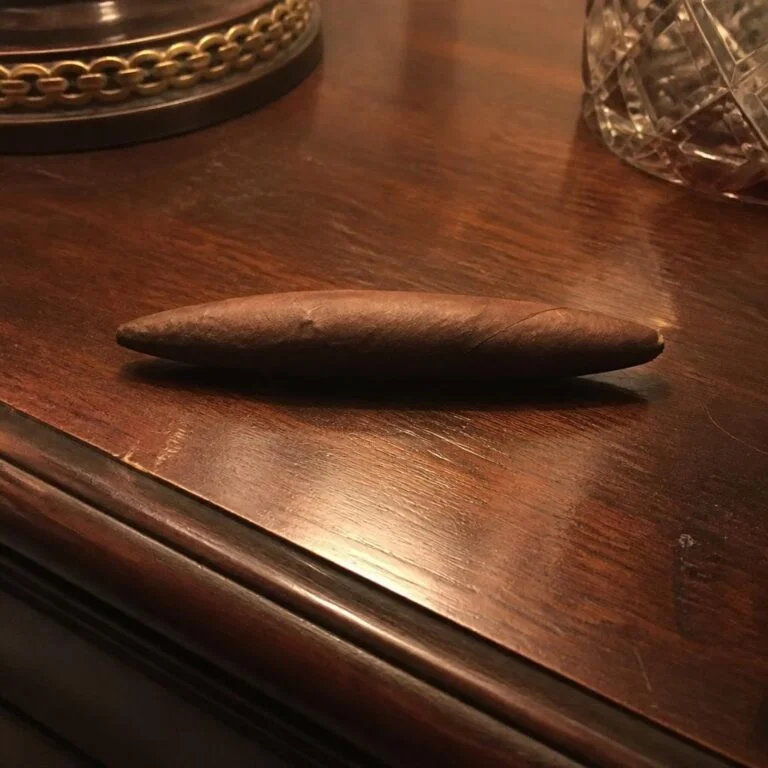
Oliva‘s Serie V Melanio makes the same argument from a different direction. The line is pressed across its vitolas, and its Figurado was named Cigar Aficionado’s Cigar of the Year for 2014 with a 96-point rating. When the trade press hands its top award to a pressed cigar, the format has stopped being a novelty. That name is worth knowing too, since a figurado is any cigar that breaks the cylinder.
Neither line needs to be your first pressed cigar. Any maker you already trust likely offers a pressed vitola somewhere in the range. Start there, with a shape you already know from the Churchill, toro and robusto, and change one variable at a time.
One round, one pressed and a note on each
The square cigar is not a gimmick and not an upgrade. It is a finish with a long history and a short list of honest effects, most of them about how the cigar feels rather than how it tastes. Whether any of that suits you is a question no retail page can settle. Smoke one round, smoke one pressed, and write down what actually differed. Your notes will be more use than anyone’s marketing.