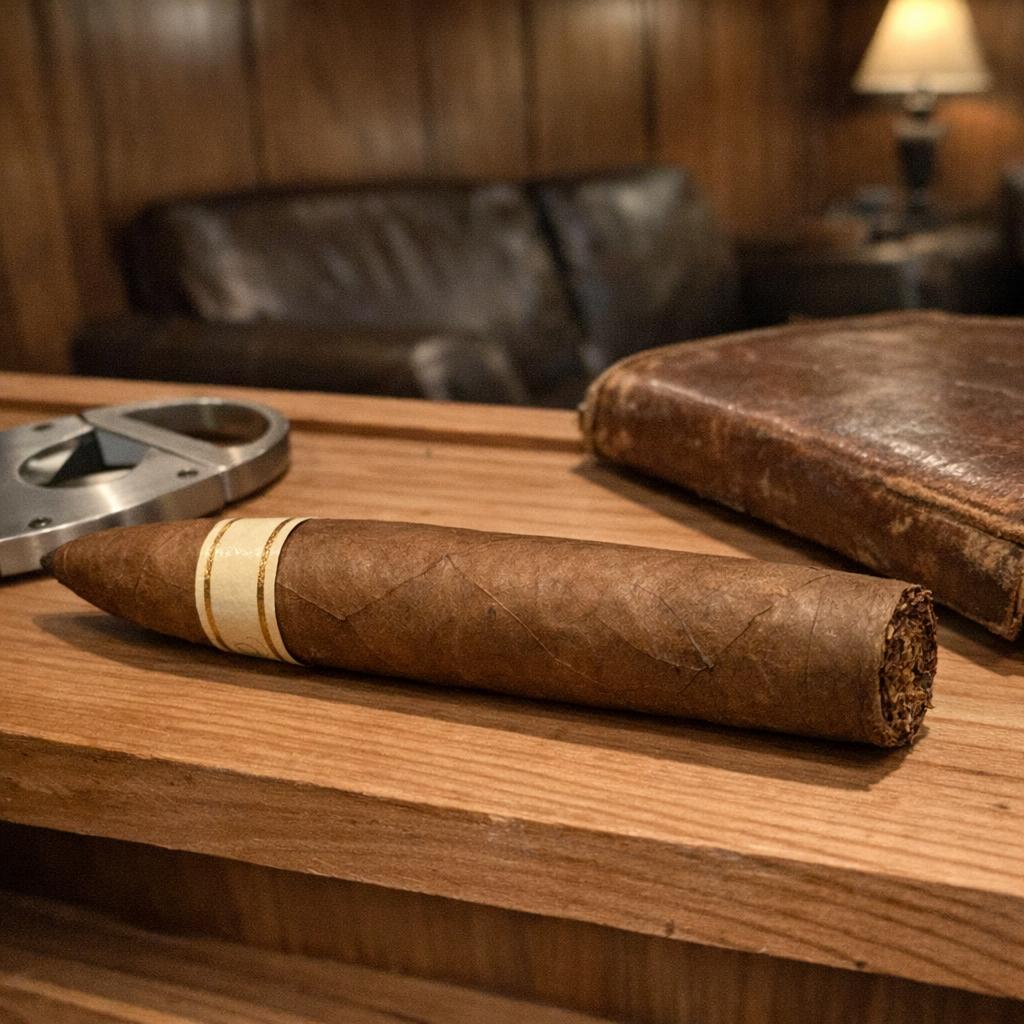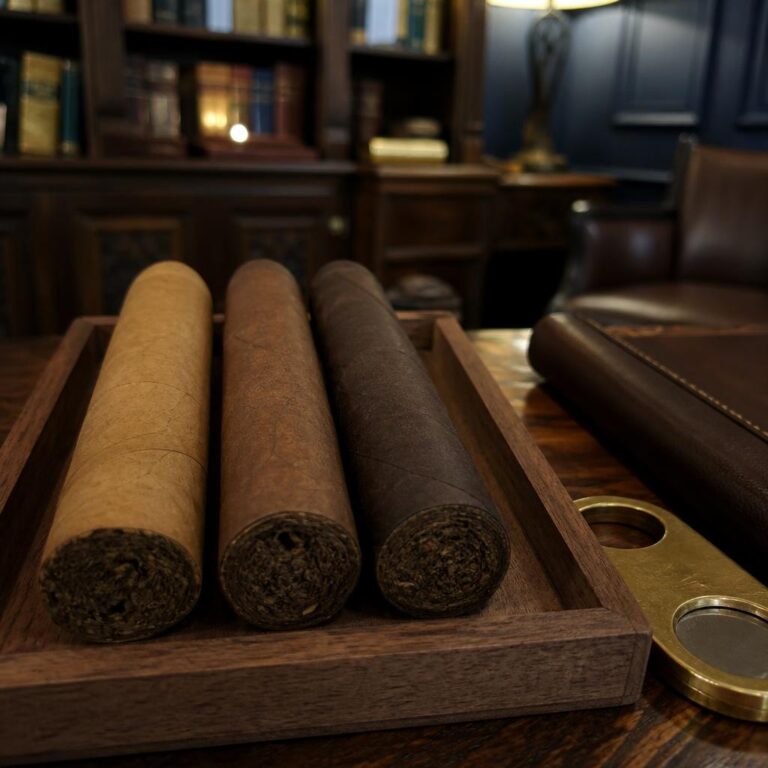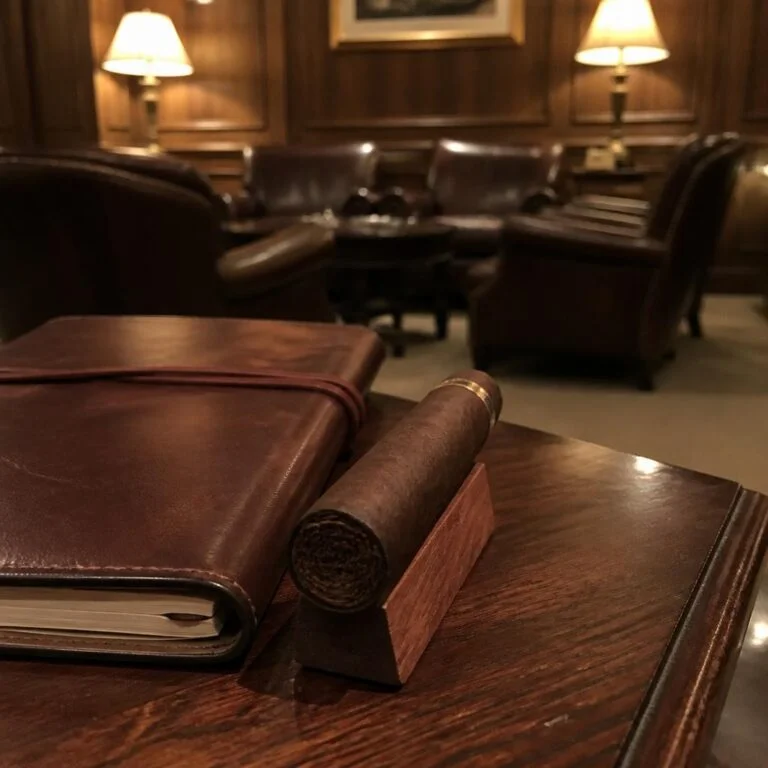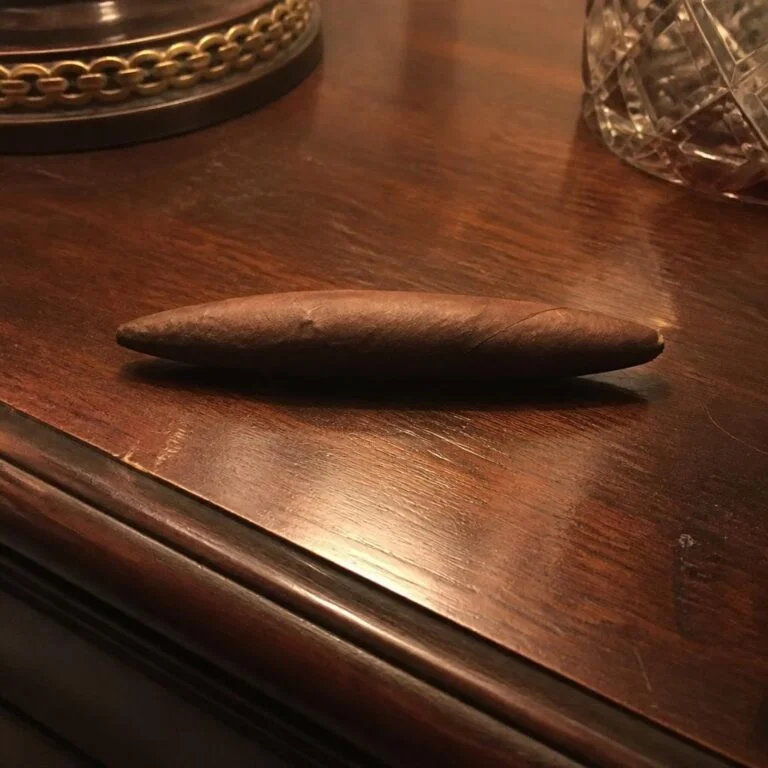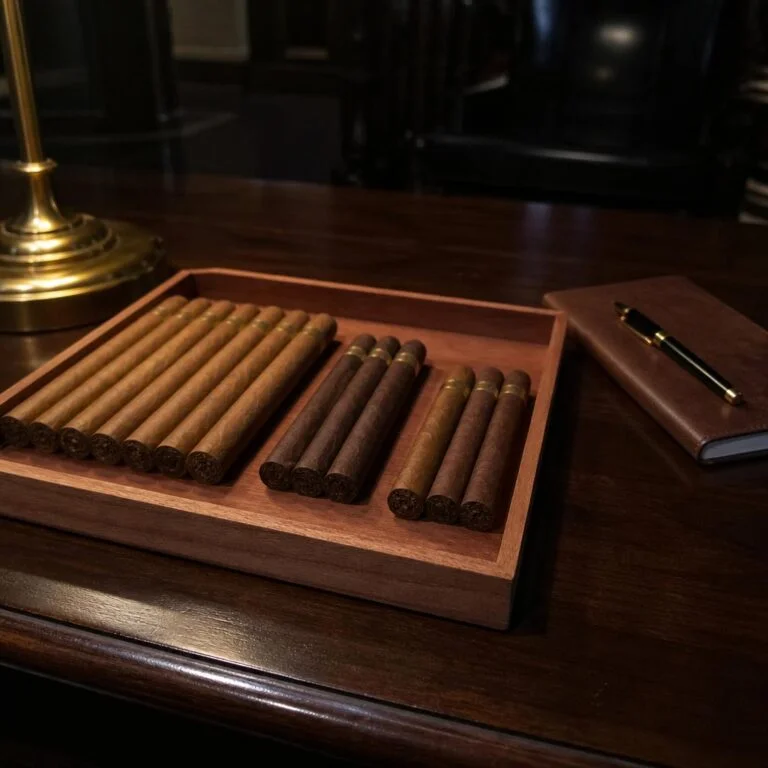
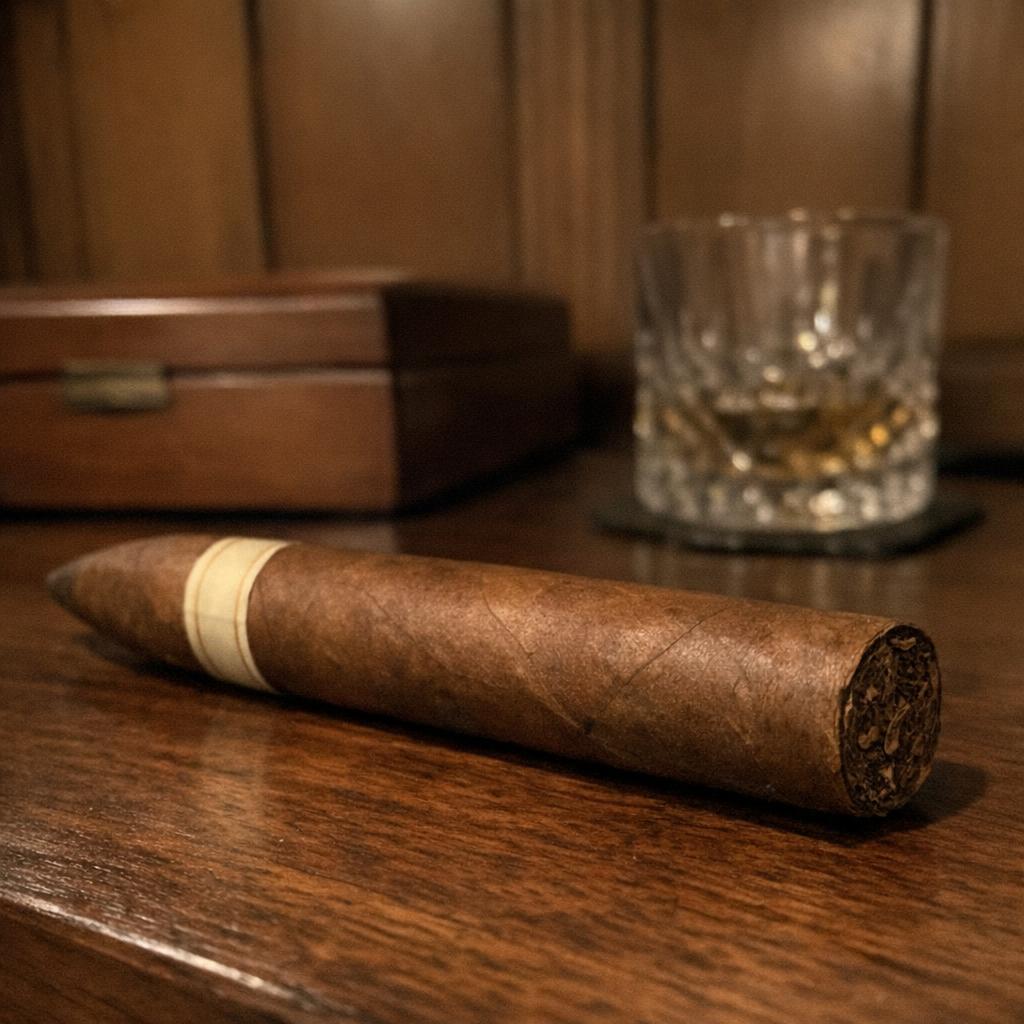
A torpedo is a cigar with a tapered, pointed head. It belongs to the figurado family, the shaped cigars that break from the straight-sided cylinder, and it is by some distance the most common shaped cigar you will meet on a shelf. Most torpedoes run around six inches with a ring gauge in the low fifties, and most have an ordinary open foot, so the only thing marking one out is the point at the end you put in your mouth.
That point is doing something. It narrows the opening, which concentrates the smoke as it arrives on the palate, and it asks for more care at the cutting stage than a rounded cap does. It also carries a reputation, because shaped cigars are harder to roll than straight ones and generally cost a little more for that reason. Here is what the shape is, what it does, and how to handle one.
The tapered head: what a torpedo actually is
Cigars are measured on two axes: length in inches, and ring gauge, which states the diameter in 64ths of an inch. A 52 ring gauge is 52/64 of an inch across. Torpedoes have never been tightly standardised, but the numbers cluster. Most sit around six inches by a ring gauge in the low fifties, and 6 1/8 by 52 is the figure the trade quotes most often, those being the dimensions of the Montecristo No. 2.
What defines the shape is the head. On an ordinary cigar the head is rounded and finished with a cap, and you clip a small disc off the top before lighting. On a torpedo the last inch or so narrows to a point instead. The foot, meanwhile, is usually open and cut flat like any other cigar, so it takes a light in the normal way.
Two things are worth clearing up early. Size tells you nothing about strength: an eight-inch cigar rolled with mild leaf will smoke mellow, and a short thin one packed with powerful tobacco will not. And the taper says nothing about the blend. A torpedo is a shape, not a flavour. What sits inside is whatever the maker put there, and the only reliable way to find out is to smoke it and write down what you found.
Torpedo, belicoso, pyramid: sorting the tapered trio
Three shapes share the tapered head, and the trade has spent a century blurring the lines between them.
The pyramid is the strict one. It tapers along its whole length, from a foot in the low fifties to a head around 40, and traditionally runs six to seven inches. The belicoso is the short one: five to five and a half inches, a ring gauge near 50, and a blunter, more rounded shoulder rather than a fine point. On a modern band, belicoso usually signals the shape of the head rather than any particular size.
The torpedo, traditionally, was the most demanding of the three. A true torpedo had a closed foot, a pointed head and a bulge through the middle, and that bulge is difficult work that calls for a genuinely skilled torcedor. Cigars built that way have all but left the shelves. The nearest surviving example anyone can readily name is the Cuban Cuaba Millennium, and that one sits close to being a perfecto.
What sells as a torpedo today is a pyramid with a sharper point and an open foot. Cigar Aficionado’s editors say as much plainly: torpedoes are not thoroughly classified and generally fit within the pyramid category. The tidy proof of the muddle is that the Montecristo No. 2, the cigar whose dimensions define the torpedo in most people’s heads, has neither the bulge nor the closed foot, which by the old rules makes it a pyramid.
None of this need slow you down at the counter. If a maker prints torpedo on the band, you are buying a tapered head, and that is the part that changes how the cigar smokes. The wider shaped-cigar family, from the perfecto to the culebra, is laid out in our guide to the figurado shapes.
What the point does and how to cut it
A narrower aperture concentrates the smoke as it reaches the palate. Cigar Aficionado credits the tapered head with letting the complex flavours of a cigar meld in the mouth, and the cutting guides make the same point from the other direction: the pointed head is deliberately built to land the smoke with more intensity. To my palate the effect is real and modest, a matter of focus rather than transformation, and it rewards a slow cadence.
All of which is undone by cutting too deep. Take too much off and you widen the very opening you paid for, you get loose tobacco in your mouth, and, because a torpedo is not capped the way a rounded head is, the wrapper can begin to unravel. Remove less than you think, then check the draw. You can always take more and never less.
A straight cutter is the ordinary choice. Place it about a quarter of an inch down from the tip, cut, and draw. If the air is tight, take another eighth of an inch and draw again. A useful trick is to lay the cutter flat on a table and press the cigar down through the blades, which caps how much you can remove by accident.
A V-cutter suits the shape particularly well. It leaves the taper intact and pulls smoke from the top and bottom of the cut equally, which is the concentrated draw the shape was built for. Choose one with an inverted blade, so the cutter does not crack the head under a single pressure point.
A punch is the one to avoid. A cylindrical bit cannot drill cleanly into a tapered head and will only chew the point up. If torpedoes are a regular part of your rotation, carry something else. The general principles behind all of this sit in our guide to cutting a cigar.
Who should smoke one and what the shape signals
A torpedo is a fair first shaped cigar, and a gentler introduction than the perfecto or the salomon, because everything except the head behaves exactly as you already expect. Light it normally, hold it normally, and the only new skill is a conservative cut.
Try one against a straight-sided cigar you already know well. The Montecristo No. 2 is the reference point, and there is plenty of non-Cuban company worth an evening: the Ashton VSG Torpedo, the Oliva Serie V Melanio Torpedo, the Padrón 6000, which is box-pressed as well as tapered, and the Rocky Patel 15th Anniversary Torpedo at the same 6 1/8 by 52 as the Montecristo.
The shape does carry one honest signal. Figurados take more skill to roll than parejos and generally cost a little more for it, so a torpedo from a serious house has usually passed through experienced hands. That is a signal rather than a guarantee. A well-made robusto will beat a careless torpedo on any evening of the week, and a point on the end has never made a cigar taste better on its own.
Cut it shallow, then write it down
Shape questions settle the way every question in this hobby settles. Smoke one, log the vitola honestly, note where you cut and what the draw did, and compare it against a straight-sided cigar from the same blend if you can find one. Review by thirds, as ever. The taper either earns its reputation on your palate or it does not, and your own notes are the only place that gets decided.