The first time someone properly notices a cigar, they tend to notice the wrapper. That outer leaf is the most visible third of the stick and, as most blenders will admit when pressed, a sizeable portion of what you taste. The trade press is consistent on the point: Halfwheel reviewers and the Cigar Aficionado glossary both place the wrapper among the dominant flavour contributors in any cigar, with industry educators putting the figure anywhere from a third of the smoke up to the majority depending on the blend. Either way, choose a wrapper carelessly and you choose a flavour carelessly.
This article is a working dictionary of the wrappers that actually matter. Not every leaf type ever grown, but the ones an enthusiast will see on cabinet shelves week after week: Connecticut Shade, Connecticut Broadleaf, Habano, Corojo, Cameroon, Sumatra, and the catch-all dark category of Maduro and Oscuro. Each gets a brief origin, a flavour reading you can take into the lounge, and a Concierge’s note on when it earns its place.
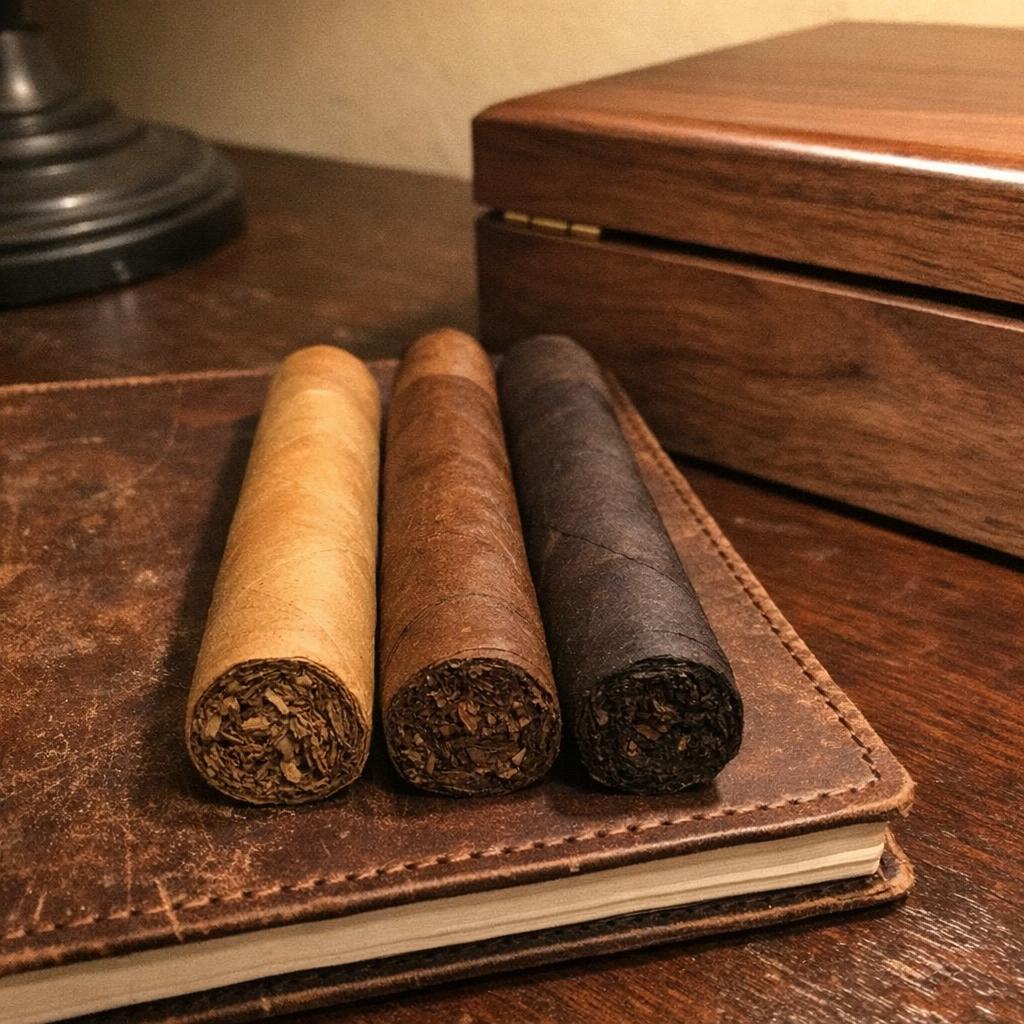
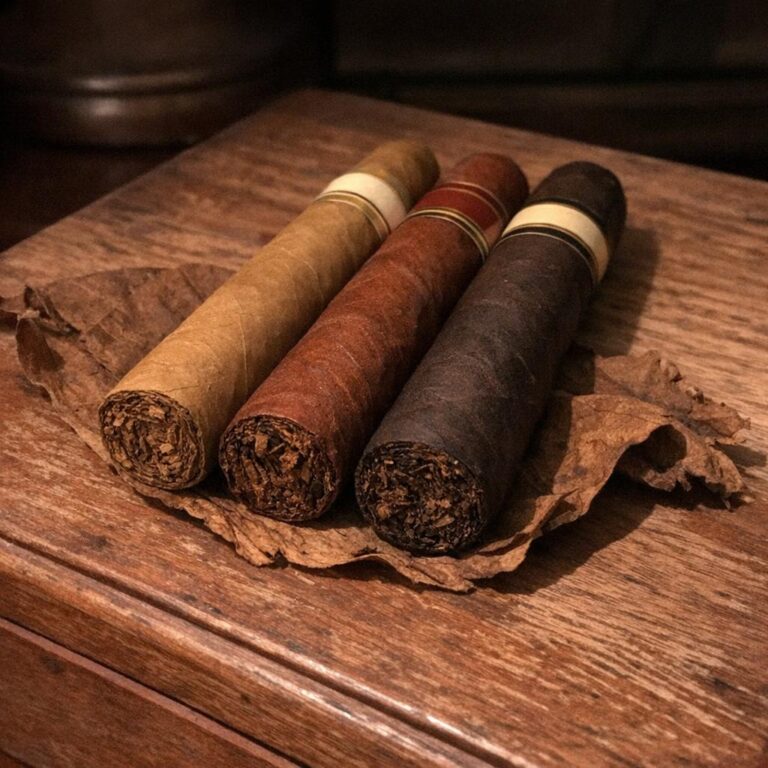
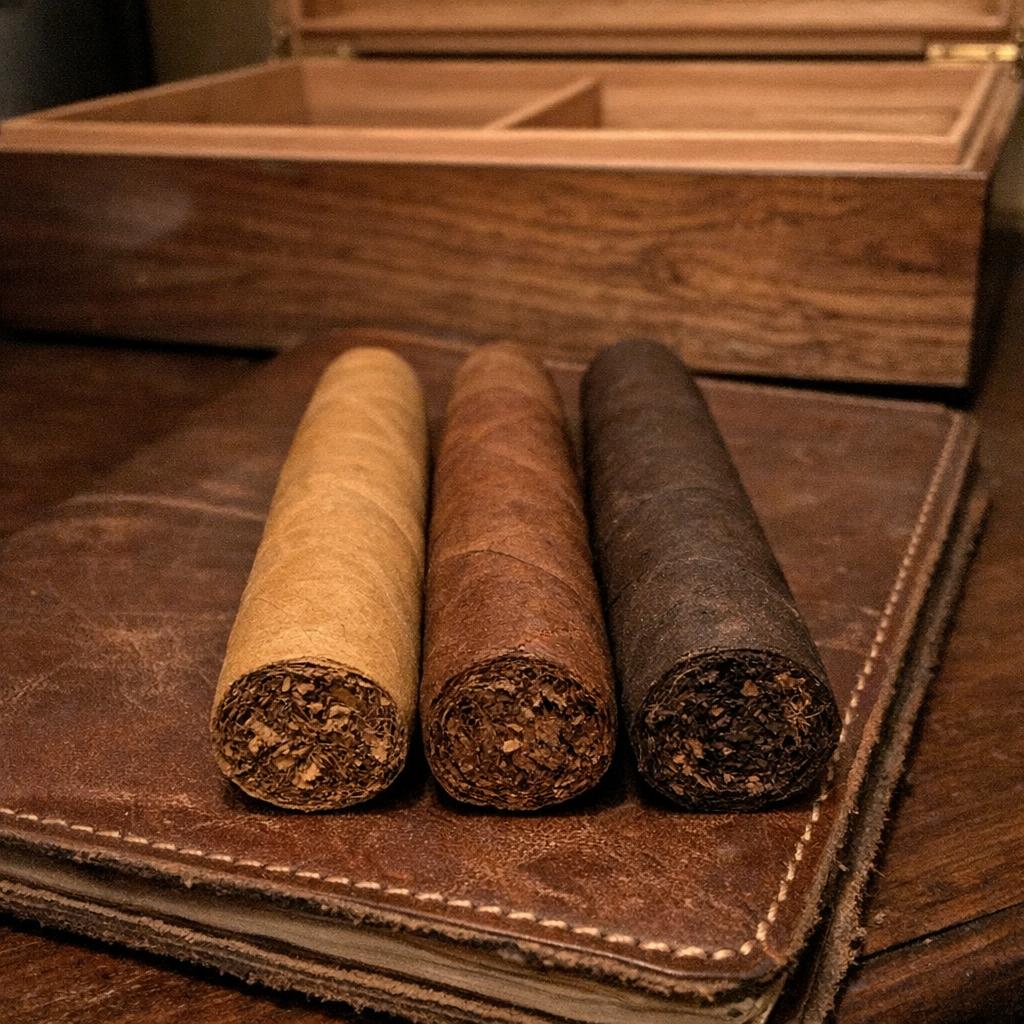
A small foundation first. The wrapper colour you see is described on a spectrum that runs from Double Claro at the pale end through Maduro and Oscuro at the dark end. The names are useful shorthand. The leaf itself is more interesting than the label.
The Shade Spectrum, A Vocabulary You Can Use
The colour ladder you will see referenced on retailer pages, in trade-press reviews, and on box descriptions runs roughly as follows, palest to darkest.
Double Claro (sometimes called Candela) is a green-tinged, light, faintly grassy leaf. Drying the tobacco at heat fixes the chlorophyll in place. It was popular through the 1960s and is uncommon today, kept alive by a few brands as a curiosity.
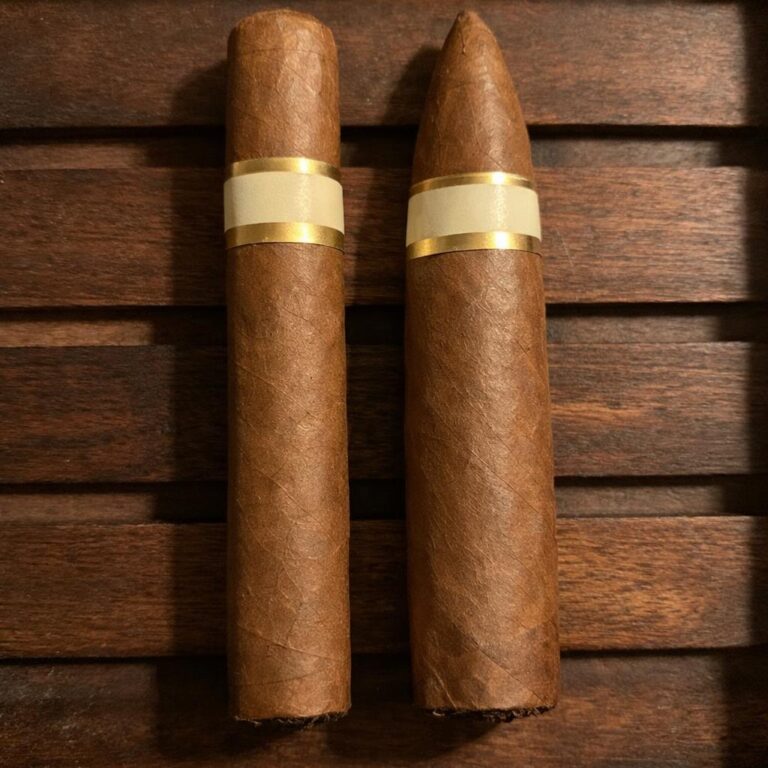
Claro is light tan, smooth, often Connecticut Shade. The mildest end of the everyday range.
Colorado Claro is a shade darker, gold-brown. It reads as gentle but with a touch more character.
Colorado sits in medium reddish-brown territory. The middle of the spectrum, and where many Habano-seed wrappers land.
Colorado Maduro is a deeper brown, the bridge between medium and dark.
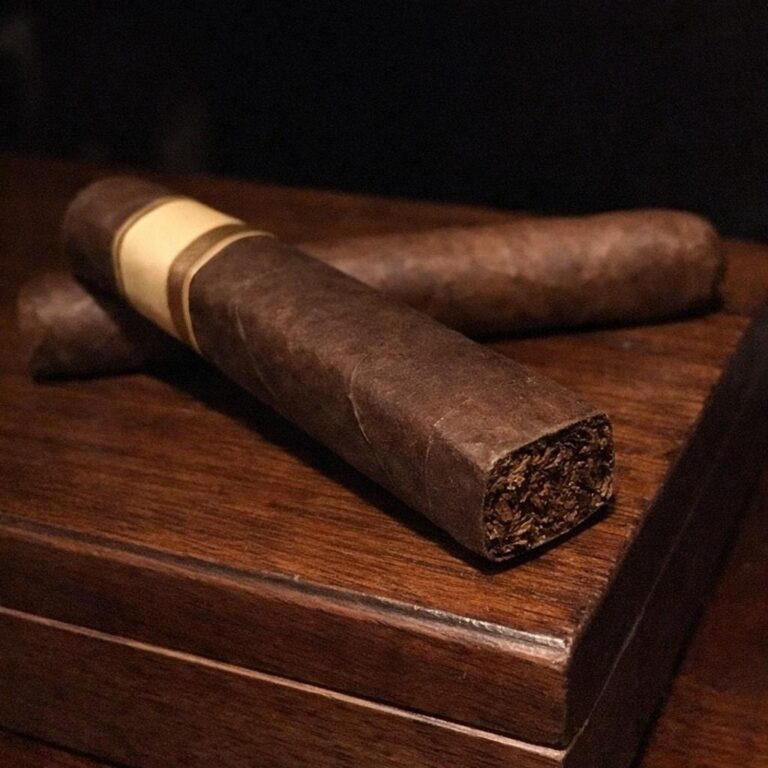
Maduro is dark, often nearly espresso-brown. The result of extended fermentation, not a single country of origin.
Oscuro is the darkest grade, almost black, the end of the spectrum, with the longest fermentation behind it.
Two things are worth fixing in mind before we go further. First, shade tells you nothing about strength. A Maduro can be calm; a pale Claro can deliver a thump if its filler is right. Second, shade tells you nothing definitive about origin. Maduro is a process. Connecticut Broadleaf grown in the Connecticut River Valley most often produces a Maduro shade, but plenty of Maduros come from Brazilian, Mexican, or Nicaraguan leaf as well.
The rest of this article walks through the wrappers by name, not by shade, because that is how blenders and reviewers actually talk about them.
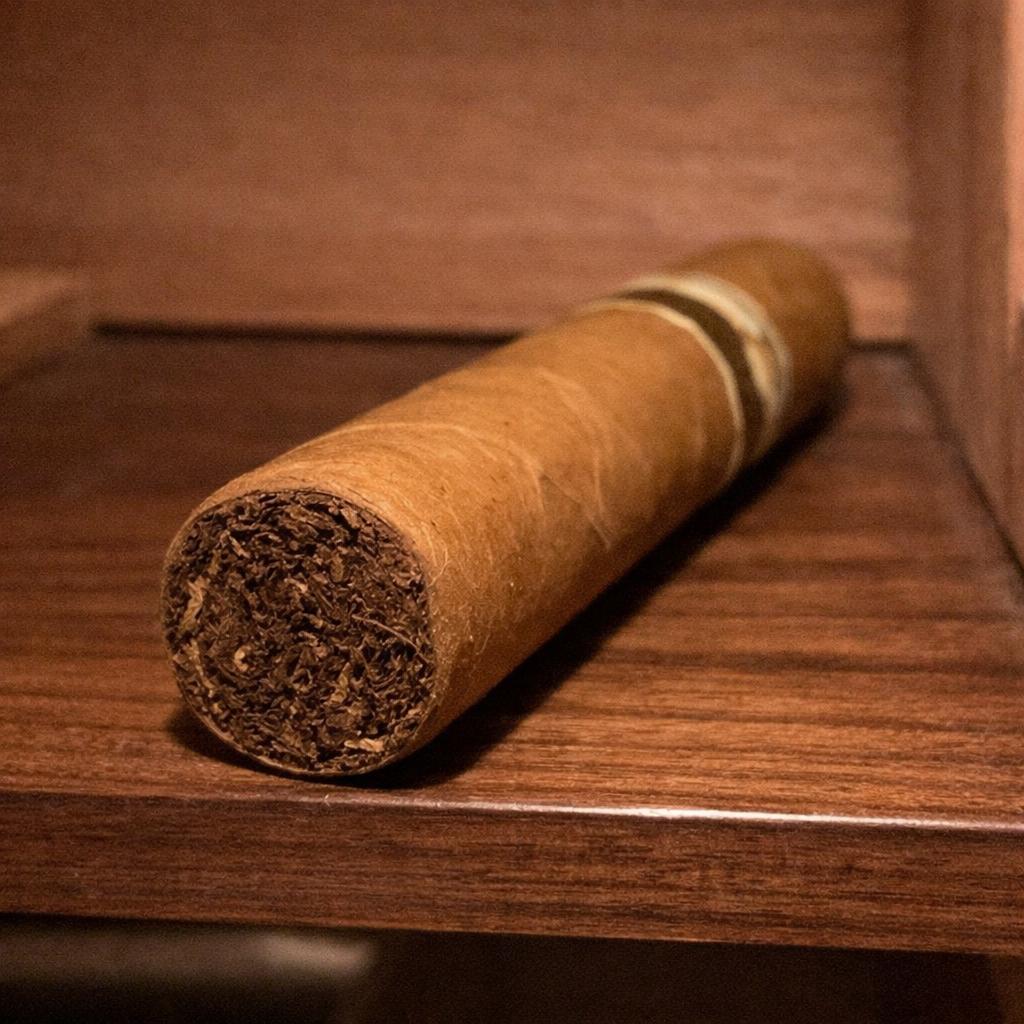
01 · The Polite Opener
Connecticut Shade, Cream and Cedar in a Quiet Leaf
Connecticut Shade is the wrapper most enthusiasts meet first, and for good reason. It is the lightest wrapper most lounges stock, with a pale tan colour, a thin leaf, and a flavour profile that tends toward cream, cedar, hay, and a clean almond finish. Strength sits low to medium, and the smoke rarely surprises you on the palate.
The leaf has an unusual biography. The original Connecticut Shade is grown in the Connecticut River Valley under cheesecloth tents, a practice that began in the late 1890s and continued through most of the twentieth century. Shading the plant from direct sun keeps the leaf thin, the colour pale, and the burn even. From the 1970s onward, Connecticut Shade seed was successfully planted in Ecuador, where the country’s natural high cloud cover provides the same effect without any cloth at all. Most “Connecticut Shade” wrappers on cigars today are actually Ecuadorian Connecticut, a fact the Cigar Aficionado feature Secrets of Connecticut Shade covers in detail.
The Concierge’s view is that Connecticut Shade is the wrapper of the morning cigar and the daytime conversation. It does not demand much from you, and on a busy day that is the right amount of demand. It is the natural starting point for any new smoker and one of the few wrappers a long-time enthusiast keeps in rotation for the early hours.
When you reach for one, look for the Macanudo Café (the textbook example), the Davidoff Aniversario No. 1, the Ashton Classic, or the Arturo Fuente Don Carlos. Each rewards a slow draw and good company. For a fuller shortlist, our roundup of Connecticut-wrapped cigars worth trying goes deeper into the category.
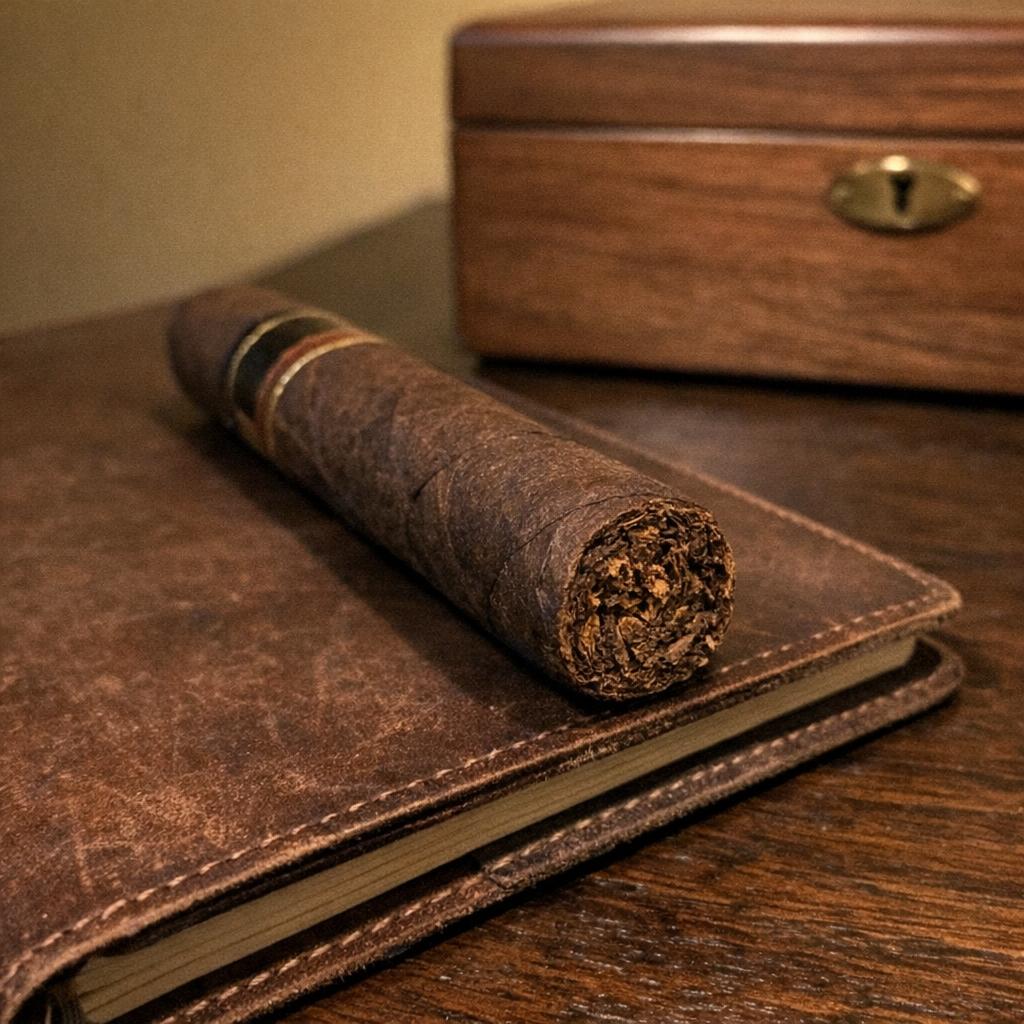
02 · The Maduro Backbone
Connecticut Broadleaf, Where Most Great Maduros Begin
Connecticut Broadleaf is the dark sibling. Same valley as Connecticut Shade, very different upbringing. Broadleaf is grown in full sun, which produces a thicker, more textured leaf with higher sugar content. Once cured and fermented to a Maduro shade, that sugar shows up as cocoa, espresso, raisin, dark chocolate, and a clean sweet finish that lingers.
The leaf is the dominant Maduro wrapper used in American cigars. Reach for almost any well-known Connecticut Broadleaf cigar and the same tasting notes appear in reviewer after reviewer: cocoa nibs, brewed coffee, dried fruit, a touch of toast. Halfwheel and the Cigar Aficionado glossary both place Broadleaf among the most consistently identified wrappers in blind tastings, partly because the flavour signature is so distinct.
A note on strength. Broadleaf reads richer than Connecticut Shade but not necessarily stronger. The fermentation that converts starches to sugars also softens the harsher compounds in the leaf, which is why most Broadleaf cigars are medium-bodied rather than full. Strong Maduros draw their strength from the filler, not the wrapper.
When you reach for Broadleaf, look for the Liga Privada No. 9 from Drew Estate, the Padrón 1964 Anniversary Maduro, the Tatuaje Black Label, or the Oliva Serie O Maduro. Each makes a quiet case for the wrapper.
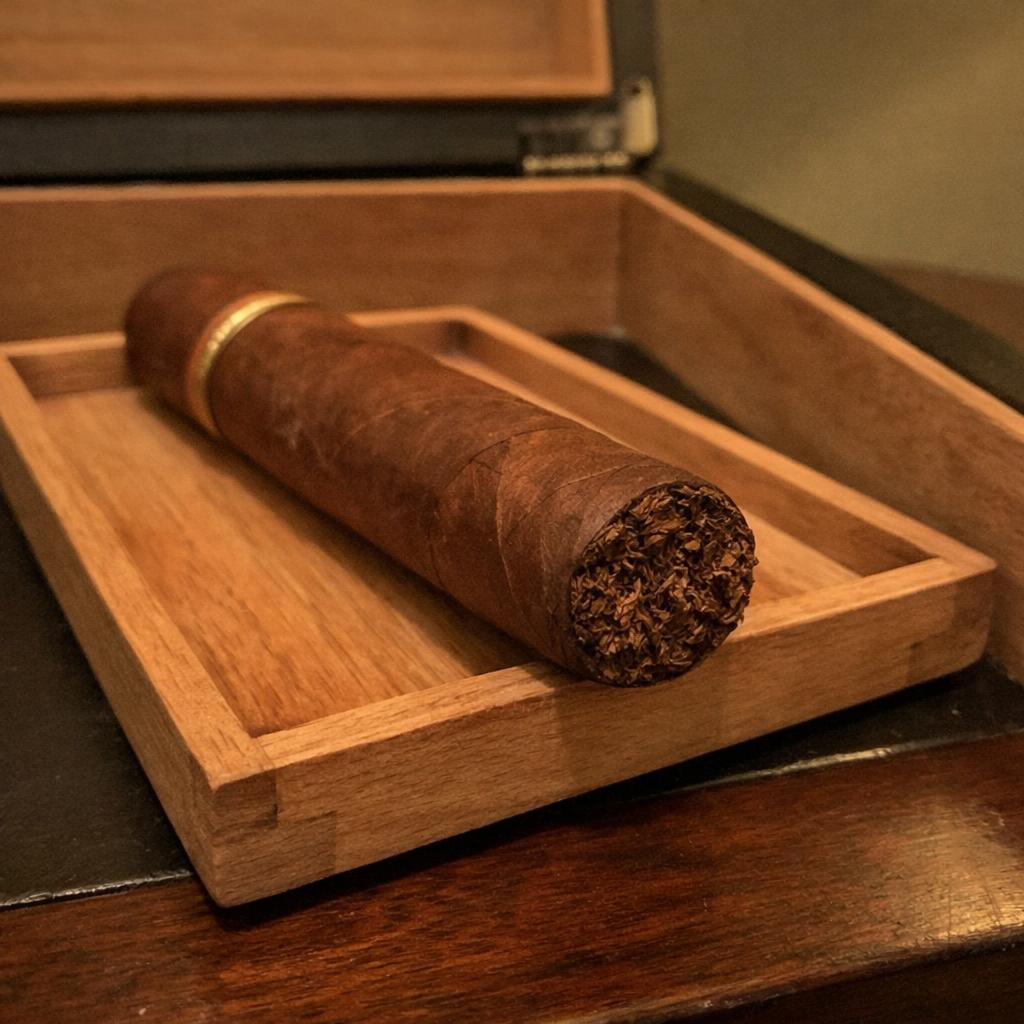
03 · The Cuban Seed Abroad
Habano, The Seed That Travels Well
The word Habano refers to seed, not country. Habano-seed tobacco is the Cuban seed line, originally developed in Cuba, now grown across Nicaragua, Honduras, and most prominently Ecuador. After blue mold devastated Cuban tobacco crops in the late 1970s and again in the 1990s, hybridised disease-resistant variants of the seed were developed and planted in the new world. The result, by the late 1990s, was a Habano-seed wrapper grown well outside Cuba that delivered much of the character Cuban smokers recognised: a fuller body, a peppery edge, leather and cocoa, and a longer finish.
Today the term “Habano wrapper” almost always means Ecuadorian Habano or Nicaraguan Habano. Ecuador’s natural cloud cover gives the leaf a thinner, more refined character; Cigar Aficionado has documented that much of the world’s Ecuadorian Habano comes from the Oliva family’s estates. Nicaraguan Habano grown in Estelí or the Jalapa Valley produces a more intense and naturally sweeter wrapper, with the Jalapa soil often compared to Cuba’s Vuelta Abajo region for its mineral character.
For the Concierge, Habano is the wrapper of the unhurried evening. It carries more weight than Connecticut Shade and more spice than Broadleaf without becoming aggressive. The Ashton VSG (Ecuadorian Sun-Grown, a Habano variant), the Padrón 1926 Series in either Natural or Maduro, and the My Father Le Bijou 1922 (Nicaraguan Habano) are all defensible introductions. Each one carries the seed in a different accent.
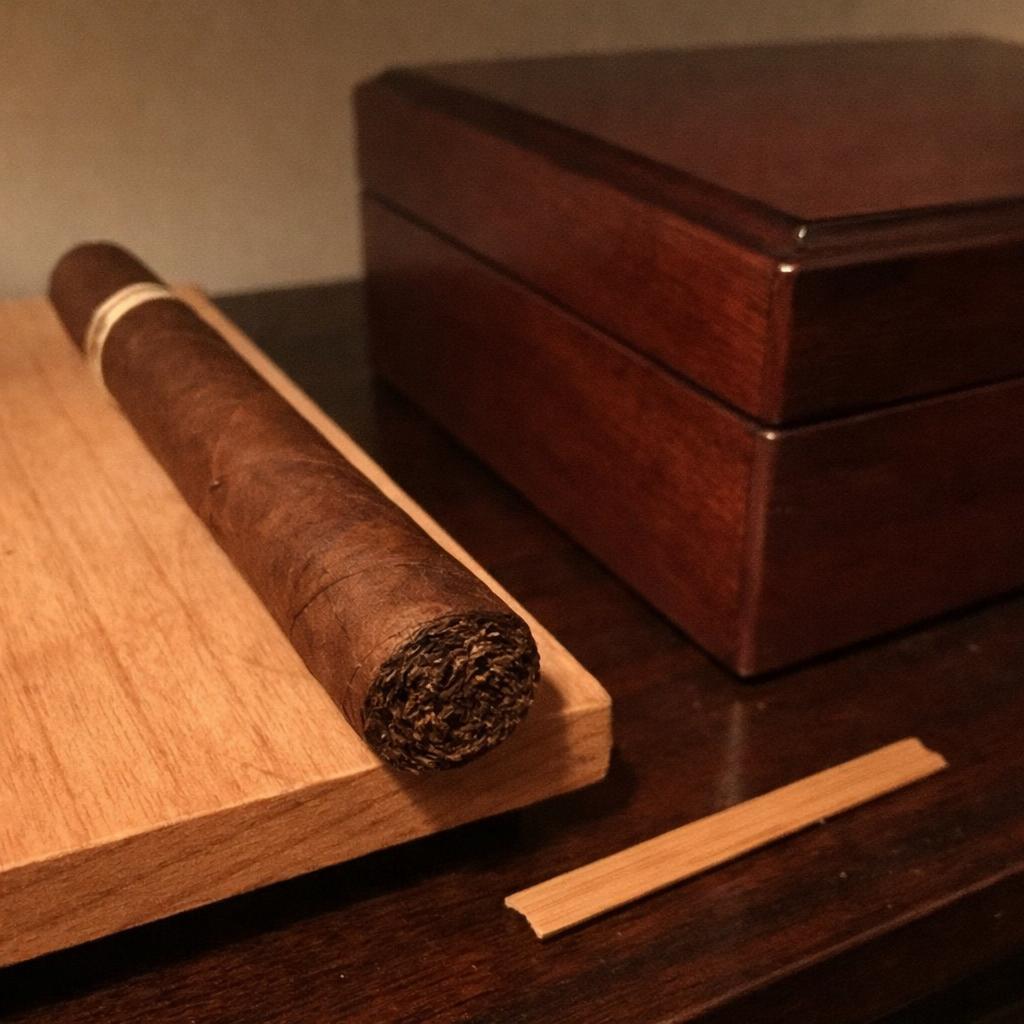
04 · The Spice Counter
Corojo, Cuban Pepper in a New World
Corojo is one of the original Cuban wrapper strains, named for the El Corojo farm in the Vuelta Abajo region. The same blue-mold disease wave in the late 1990s that prompted the hybridised Habano programme also forced Corojo growers to develop hybrid lines and replant outside Cuba. The result is the Honduran Corojo and Nicaraguan Corojo grown today, often referenced by the year the hybrid was developed (Corojo 99, for example).
The flavour signature is what enthusiasts reach for when they want spice. Black pepper across the palate, a touch of leather, cocoa underneath, and a long warm finish. Camacho built much of its modern reputation on Honduran Corojo, and the Camacho Corojo line remains a textbook entry into the wrapper. The Punch Rare Corojo and the La Aurora 1495 (Dominican Corojo) both lean on the leaf to carry the cigar’s character, each in a slightly different direction.
The Concierge’s note: if Habano is the wrapper of the unhurried evening, Corojo is the wrapper of the brisk one. It moves quickly across the palate, leaves a clear trace, and rarely fades into the background. Pair it with a good rye, a cognac with some age, or simply with attention.
05 · The African Wrapper
Cameroon, Toothy, Nutty, Quietly Beloved
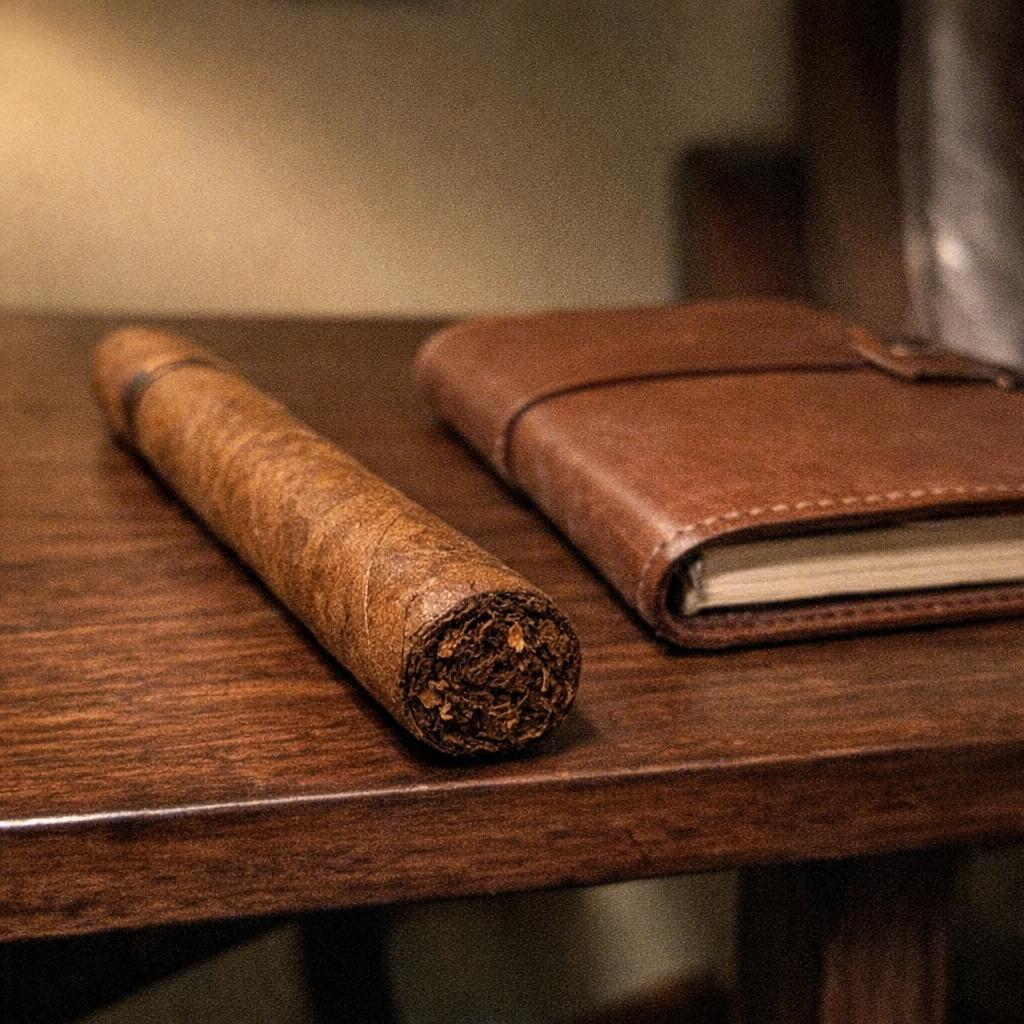
The Cameroon wrapper is one of the great underrated leaves in the modern cigar world. The story is colonial and unlikely. Dutch growers brought Sumatra-seed tobacco to central Africa in the early 1900s. The French agency SEITA expanded production in the 1950s. When the French withdrew in the 1990s, Rick Meerapfel kept the industry alive through a private partnership called CETAC. The wrapper most cigars now label “Cameroon” is grown across Cameroon and the Central African Republic, which is why Cigar Aficionado’s C’est L’Afrique feature refers to it more accurately as Central African.
The leaf is famous for its tooth, the small raised pockets you can see when you turn the wrapper to the light. Halfwheel reviewers tend to identify Cameroon by texture before they identify it by taste. The flavour profile is distinctive: roasted nuts, a faint cedar sweetness, a soft black pepper, and a warm earthy finish.
Cameroon is harder to source consistently than the major new-world wrappers, because the growing region has been intermittently disrupted by political instability. The wrapper has its loyalists nonetheless. The Arturo Fuente Hemingway, the La Aurora Preferidos (Gold Tube), the Don Lino Africa, and the CAO Cameroon are the standard entry points. Each one rewards a smoker willing to sit with a wrapper most lounges undersell.
06 · The Indonesian Workhorse
Sumatra, Quiet Spice from the Old World
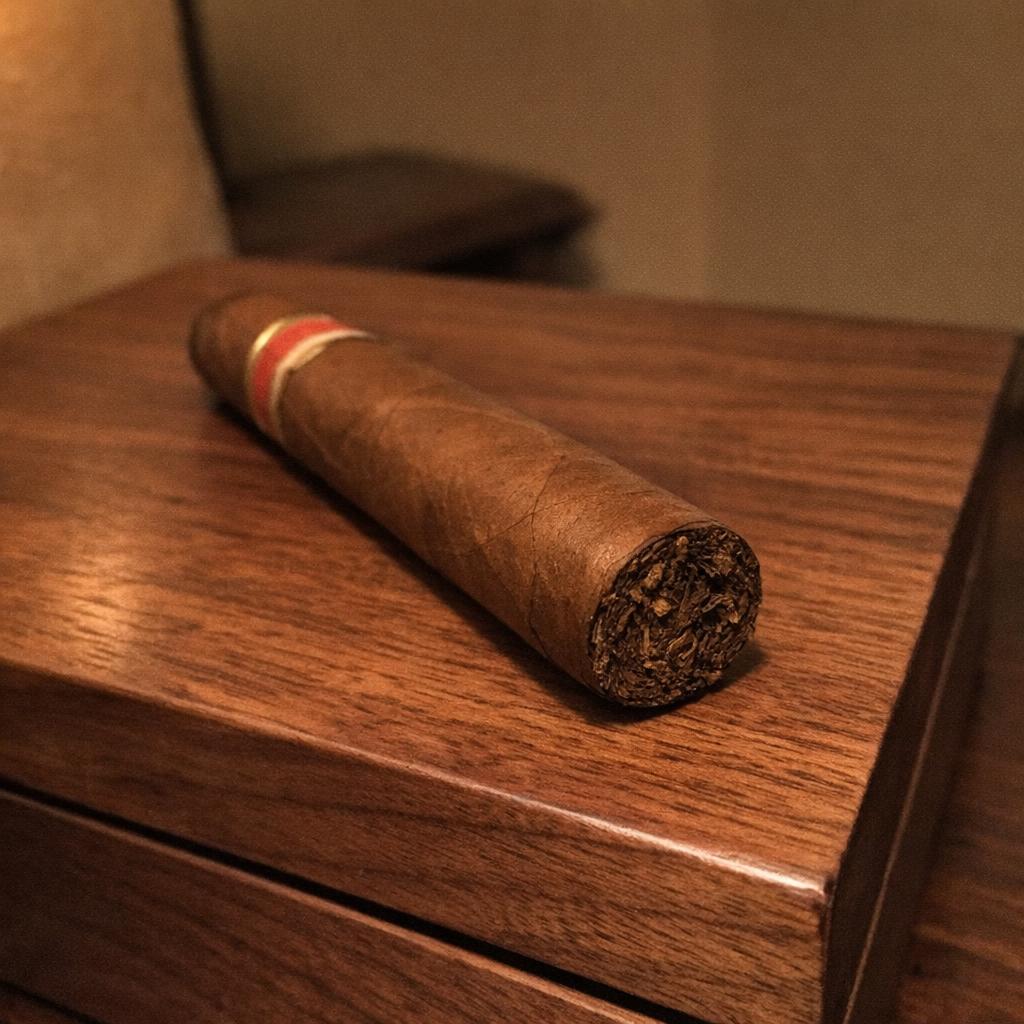
Sumatra is the workhorse wrapper of the modern cigar industry, even when smokers do not realise it. The leaf takes its name from the Indonesian island where it was first grown commercially in the nineteenth century. Like Habano, the seed has travelled. Today most Sumatra wrappers on premium cigars are Ecuadorian Sumatra, grown under Ecuador’s natural cloud cover, with a smaller proportion still produced in Indonesia itself.
Flavour reads as medium body with a gentle spice character. Soft cedar, dry earth, a touch of black pepper, and a clean finish. It is not as creamy as Connecticut Shade nor as forward as Habano, which is part of why blenders reach for it when they want a wrapper that lets the filler do most of the talking. Worth a small footnote: the Connecticut Shade leaf itself is descended from Sumatra-seed tobacco that was acclimatised in the Connecticut River Valley in the 1890s, which is why the two wrappers often sit closer together than enthusiasts expect.
Look for the Ashton Cabinet Selection (Ecuadorian Sumatra) and the Romeo y Julieta 1875 Vintage (Indonesian-Ecuadorian Sumatra) as honest introductions. Both are well distributed and reliably built. They are the kind of cigar you reach for when you want quality without ceremony.
07 · The Dark End
Maduro and Oscuro, Process, Not Place
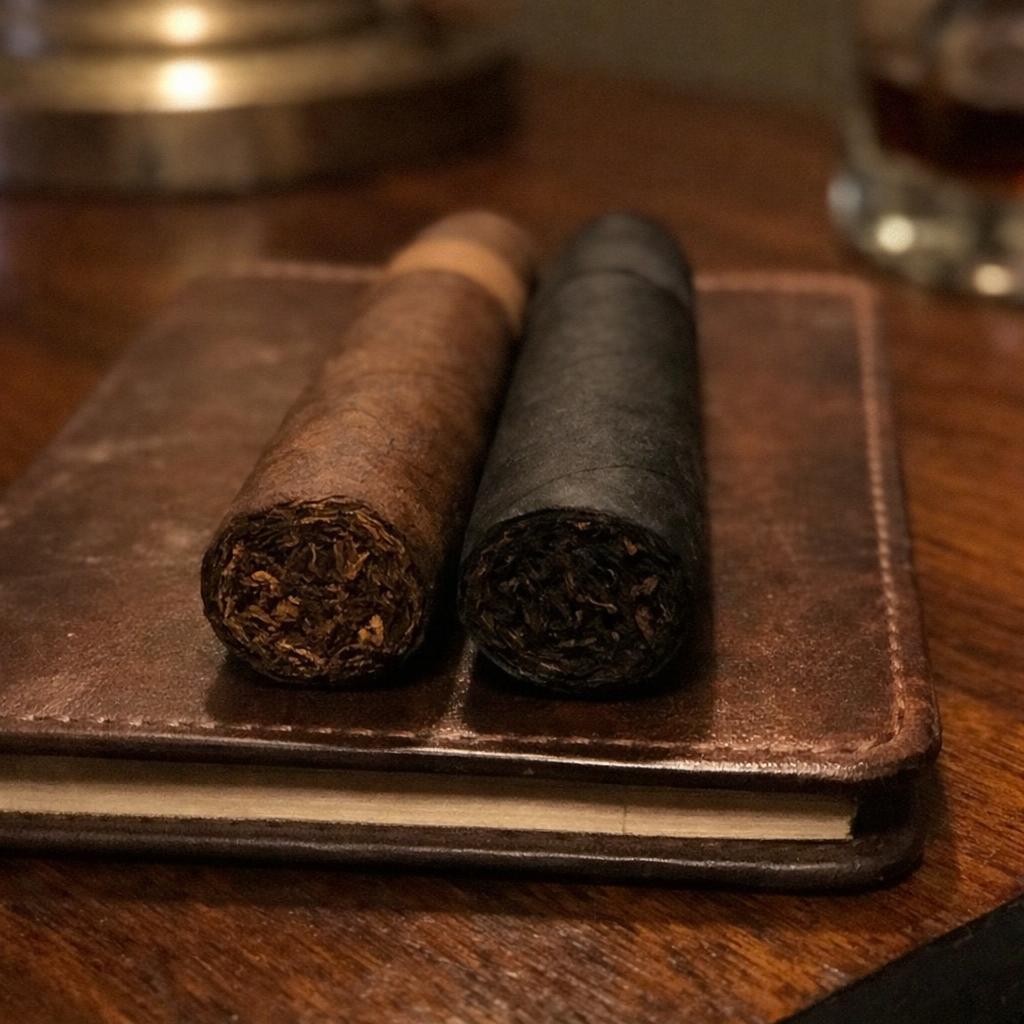
The most useful sentence in any wrapper conversation is this one: Maduro is a process, not a country. The same leaf can be cured to a Colorado shade or fermented further to a Maduro shade. The deciding factor is time, temperature, and patience.
To make a Maduro wrapper, the cured leaf is bulked into stacks for an extended fermentation. The weight of the pile and the moisture in the leaf produce heat. Cigar Aficionado’s reporting in That Old Black Magic documents temperatures climbing to roughly 150 degrees Fahrenheit during the longer fermentation cycles. The heat drives off ammonia and other harsh compounds, and crucially converts the leaf’s starches into sugars. The result is a darker leaf with the cocoa, molasses, coffee, and dried-fruit notes that Maduro lovers reach for again and again. Done well, a Maduro mellows rather than amplifies; in blind tastings, Maduro cigars often surprise smokers who expected something heavier on the palate than what arrives.
Oscuro is the same idea, pushed further. Longer in the bulk, higher temperatures, sometimes a darker base leaf to begin with. The colour reads nearly black; the flavour deepens the Maduro signature with richer coffee, bittersweet chocolate, and a slightly drier finish.
Both wrappers can be made from a variety of base leaves. Connecticut Broadleaf is the most common Maduro source in American cigars, but Brazilian Mata Fina, Mexican San Andrés, and Nicaraguan Habano are all fermented into Maduro grade frequently. The label tells you what the wrapper did, not always where the wrapper came from.
For first-timers, the Padrón 1964 Anniversary Maduro and the Liga Privada No. 9 remain reliable introductions to Maduro. Oscuro-shade cigars are harder to find by that exact label, but the Camacho Triple Maduro and the CAO MX2 lean into the very dark end of the spectrum if you want to taste the next step along.
Five Questions You'll Be Asked at the Counter
Is a Maduro cigar always stronger than a natural one?
No. Maduro describes the wrapper’s fermentation, not the cigar’s strength. The longer fermentation that produces a Maduro leaf converts starches into sugars and softens harsh compounds, which is why many Maduros are sweeter and milder than enthusiasts expect. Strength is governed by the filler underneath the wrapper.
What is the difference between Connecticut Shade and Connecticut Broadleaf?
Both are grown in the Connecticut River Valley, but Connecticut Shade is cultivated under cloth tents to keep the leaf thin and pale, while Connecticut Broadleaf is grown in full sun and produces a thicker, sugar-rich leaf almost always fermented to a Maduro shade. Most Connecticut Shade on modern cigars is actually Ecuadorian Connecticut, grown under Ecuador’s natural cloud cover.
What is a Habano wrapper if it is grown in Ecuador or Nicaragua?
The word Habano refers to seed, not country of origin. Habano-seed tobacco is the Cuban seed line, hybridised in the 1990s to resist disease and now grown in Ecuador, Nicaragua, and Honduras. Calling a wrapper “Ecuadorian Habano” is shorthand for Habano-seed leaf grown in Ecuador.
Why does the wrapper get so much credit for the cigar's flavour?
Because the wrapper is the only part of the cigar that touches your lips and the only part fully exposed to the air as it burns. Industry educators commonly cite the wrapper as one of the dominant flavour drivers in a cigar, with estimates ranging from roughly a third of the smoke up to the majority of it, depending on the blend.
Which wrapper should I start with as a new smoker?
Connecticut Shade is the most forgiving and the most widely available. From there, Habano is the natural next step for a fuller body, and Connecticut Broadleaf Maduro is the natural next step if sweetness rather than spice is the direction you want to go. The Cigarro Method walks you through how to record what each wrapper does to your palate, so the next pick is informed rather than guessed.
A Wrapper to Pull From the Shelf Tonight
A working knowledge of wrappers is the most efficient flavour vocabulary an enthusiast can build. It lets you predict roughly what the smoke will do before you cut it, and it lets you describe what the smoke did once it is done. The combinations matter too: a Connecticut Shade wrapper over a Nicaraguan filler will read very differently than the same wrapper over a Dominican filler, and a Maduro wrapper does its best work when the underlying blend respects the leaf instead of trying to muscle past it. The wider conversation about how those filler choices behave sits in our piece on Dominican versus Nicaraguan tobacco, if you want the longer view.
The Concierge’s three first-timer picks, then, drawn from the everyday cabinet rather than the hard-to-find shelf.
For Connecticut Shade, the Macanudo Café Hyde Park. It is the textbook of the category, easy to source, and easy to enjoy.
For Habano, the Padrón 1964 Anniversary Natural in the Exclusivo size. Honest Nicaraguan Habano on a quietly excellent filler.
For Maduro, the Padrón 1964 Anniversary Maduro in the same size. Same blend family, very different leaf. Smoking them within a week of each other is one of the best wrapper lessons a smoker can give themselves, and a clean way to understand what Maduro actually means on the palate rather than in print.
If you keep notes on what you smoke, and you really should, even briefly, wrapper is the field most worth tracking. Cigarro’s review-by-thirds framework asks you to record the wrapper alongside the binder and filler for every cigar you log, which means your notebook starts to teach you the shape of your own preferences over time. For a refresher on where the wrapper sits in the anatomy of a cigar and how to taste a cigar properly, the supporting articles are a short walk away.