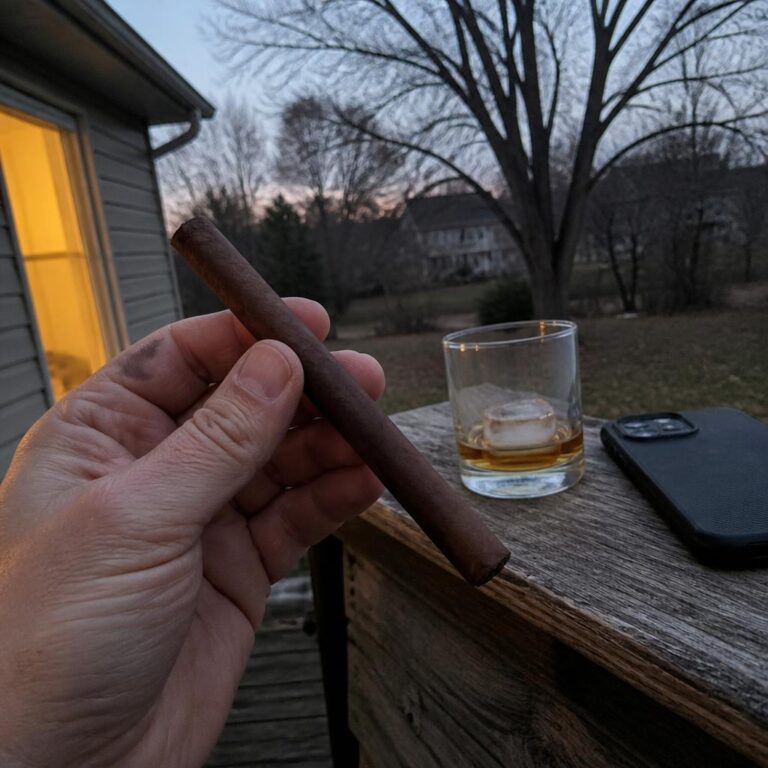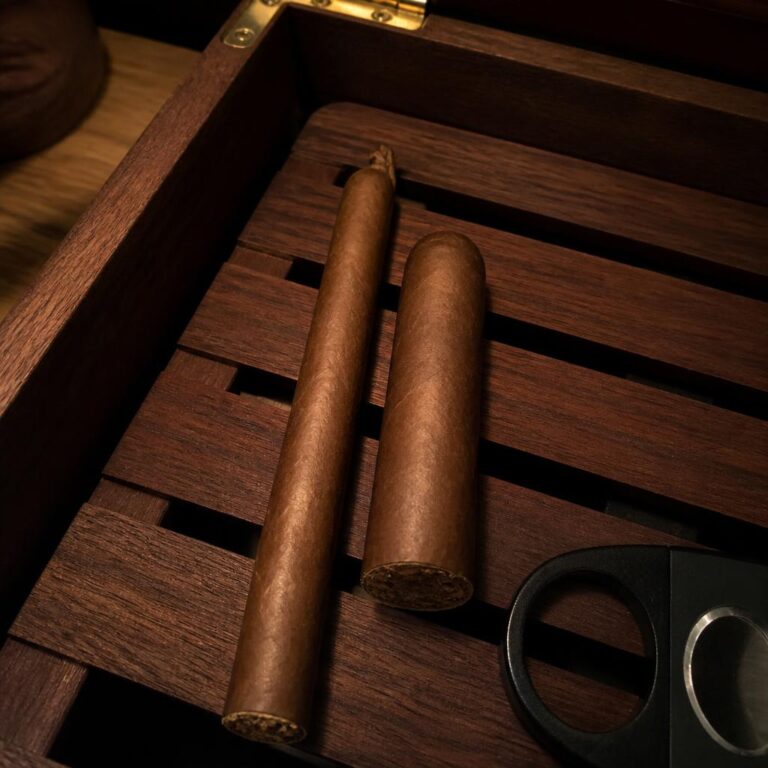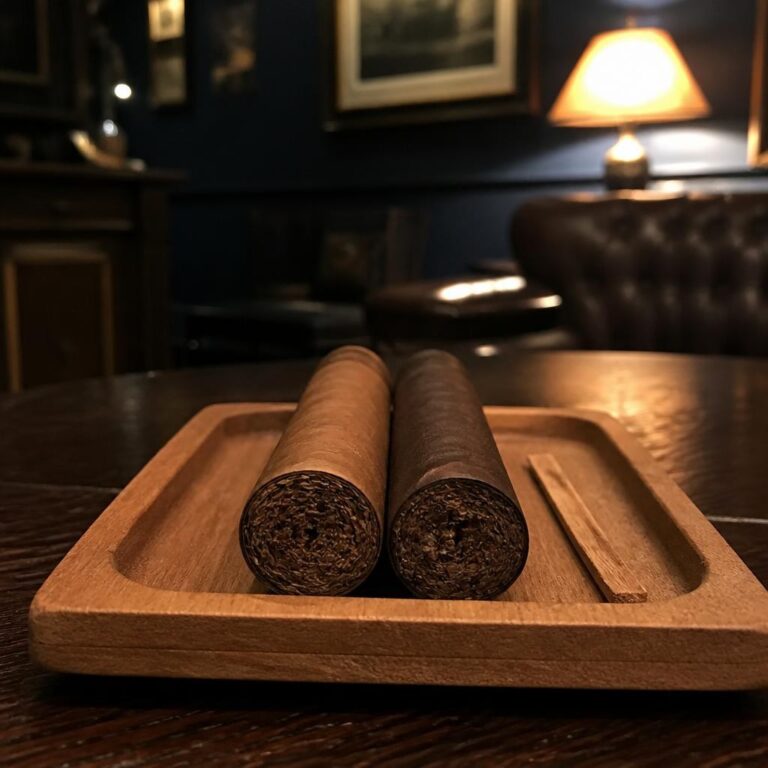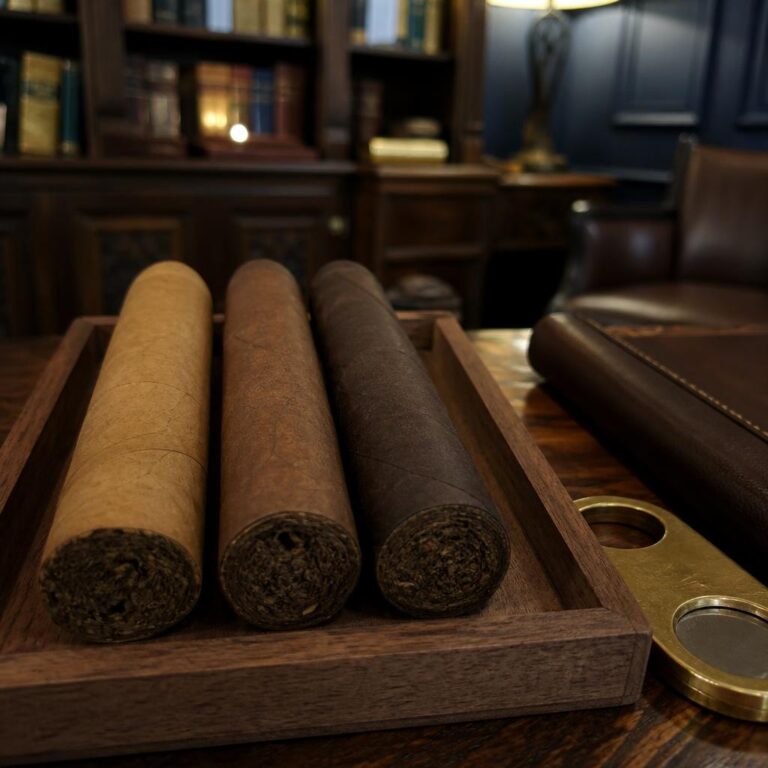
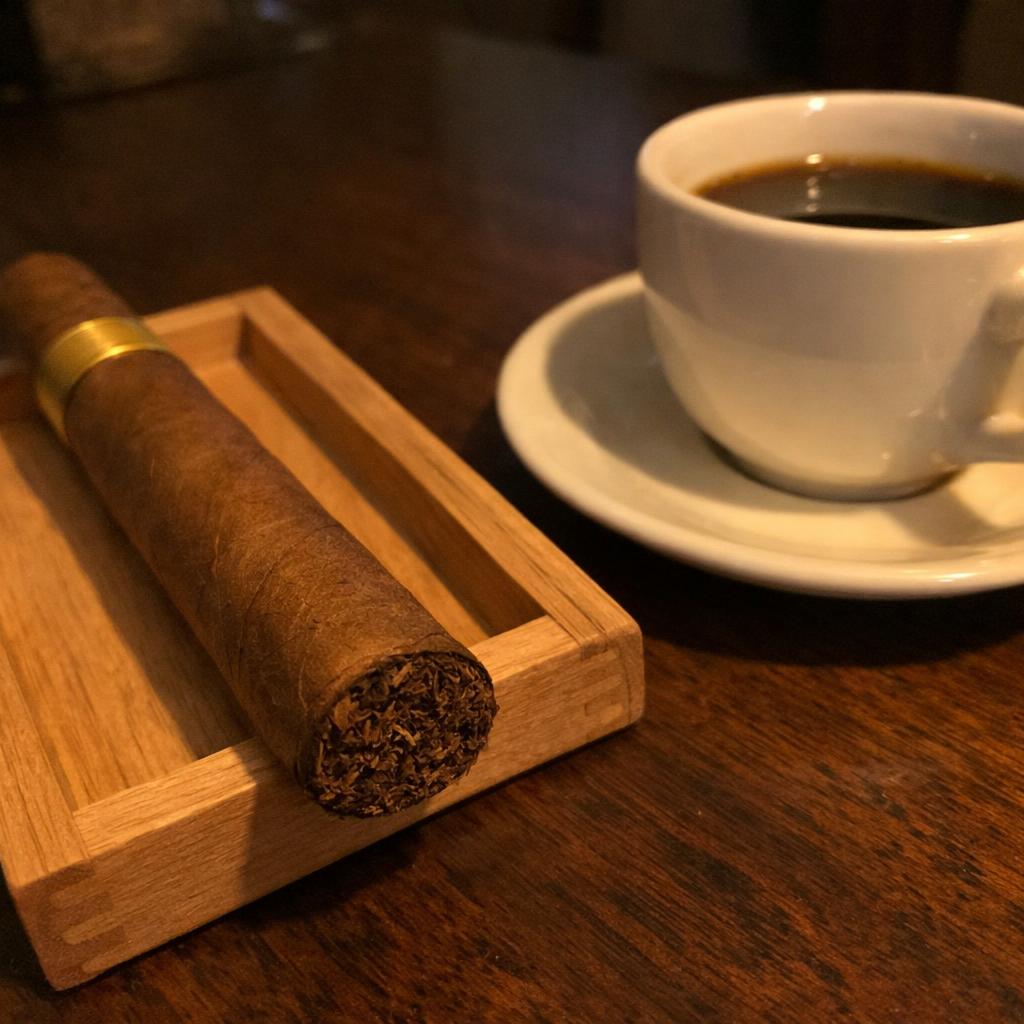
Coffee and cigars keep the oldest standing appointment in the smoking life. Long before anyone thought to set a whisky beside a cigar, there was the morning cup and the first smoke of the day, taken together on a quiet porch. Pairing cigars with coffee is the simple craft of matching a roast to a cigar’s body, so that the cup flatters the smoke rather than fighting it. A mild cigar wants a lighter roast. A dark, full cigar wants a cup with some weight behind it. That is the whole of the rule.
The rest is pleasant detail: why the two were made for one another, how to read a bag of coffee by its roast, where espresso earns its place, and three pairings you can set out tomorrow morning without a moment’s thought. For everything else that might be in the glass, our hub on cigar and drink pairing works through whisky, rum, port, wine, beer and tea.
Why coffee and cigars share a table
The kinship is not sentimental, it is agricultural. Tobacco and coffee are both crops of the warm equatorial belt, both shaped by the soil and weather of wherever they grow, and both transformed by patient processing before they reach you. Coffee is fermented and then roasted. Cigar tobacco is cured, fermented and then aged for months or years. Both arrive carrying the same family of flavours, the ones a flavour wheel files under cocoa, nuts, toast, cedar, earth and warm spice. When two things speak the same language, the conversation comes easily.
The rule that follows is the only one worth keeping: match the weight. A roast and a cigar should sit in the same weight class, so that neither shouts the other down. A delicate blonde roast vanishes beneath a full maduro, and a heavy dark roast will trample a mild Connecticut before it has said a word. Pair light with mild, medium with medium, dark with full, and you are most of the way to a good morning. Whether you then echo the flavours, cocoa meeting cocoa, or set them against each other, bright acidity against dark sweetness, is a question of mood. Both answers are correct. It helps to know how to taste a cigar before asking it to share the table, since the pairing is only ever as good as the attention you bring to it.
Reading the roast in three shades
Ignore the marketing names on the front of the bag and look for the roast. For pairing, coffee collapses neatly into three working shades, and the National Coffee Association sorts every bean into the same three.
Light roasts, sometimes sold as blonde, are stopped early. They keep most of the bean’s natural acidity and its origin character, which is why they taste bright and faintly fruity, with the least body of the three and a matte, unroasted surface. They are the gentlest companions, and they want an equally gentle cigar.
Medium roasts are the middle of the road for good reason. The flavour has grown stronger, the sharper acidity has softened, and a rounder body has arrived. This is the breakfast blend, the so-called American roast, and the most widely drunk of the three. It is also the most forgiving at the cigar table, content to sit beside most medium cigars without a fuss.
Dark roasts are taken furthest, until the beans turn glossy and near-black. The acidity falls away further still, the body thickens, and the flavour turns bold and frankly bitter, all dark chocolate, smoke and char. A dark roast has the shoulders to stand beside a full-bodied cigar, and it is the natural partner for anything wearing a maduro wrapper.
The case for espresso
Espresso is not a roast at all but a method, and it deserves its own paragraph because it changes the arithmetic. Forcing hot water through finely ground coffee under pressure concentrates everything: more body, more intensity, a syrupy weight, and a crema that carries the aroma straight to the nose. The beans behind it are usually roasted somewhere from medium to dark, chosen by the roaster for that method rather than for a fixed shade.
The result is the move for the fullest cigars and the darkest wrappers. Where an ordinary dark roast meets a full cigar as an equal, an espresso, or a small cup brewed Cuban style, meets it with a little in hand, which is exactly what a powerful maduro wants beside it. A double espresso after a good dinner, with a cigar that has earned the hour, is one of the quiet pleasures the evening keeps in reserve, and it asks almost nothing of you in return.
Pairing No. 1
The gentle morning
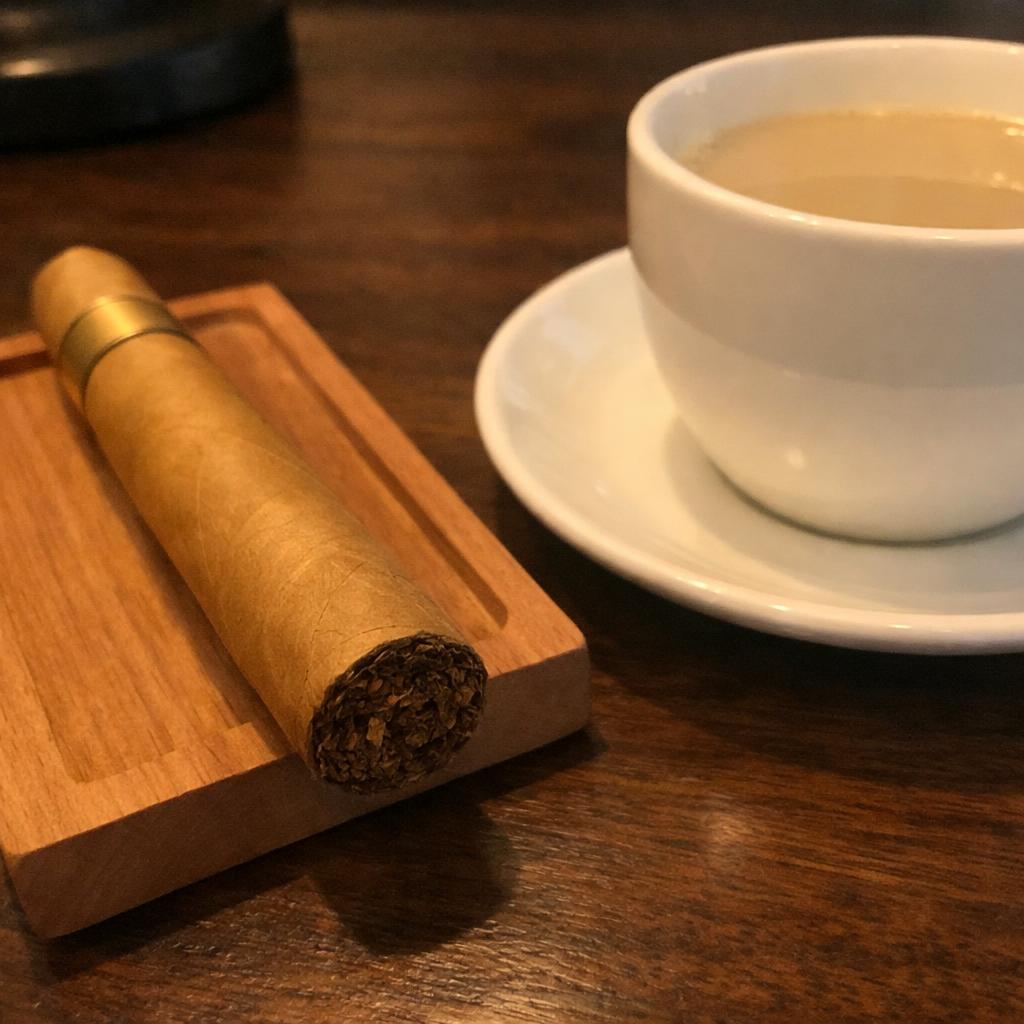
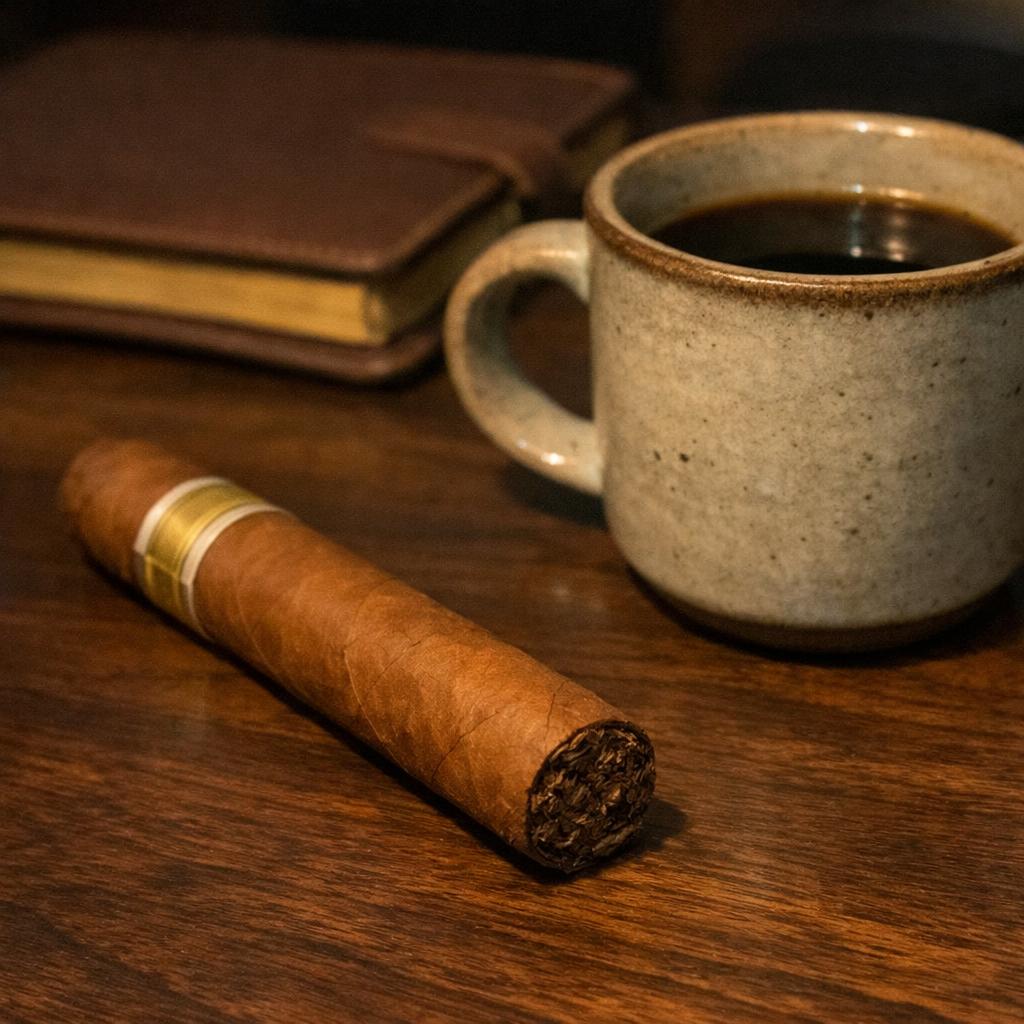
Macanudo Café has been the first cigar of countless mornings, and it has earned the post. A pale Connecticut Shade wrapper over Mexican and Dominican tobaccos gives a mellow, reliably smooth smoke of cream, toasted nut and a little sweet cedar. The maker itself lists coffee as the pairing, which tells you something. Set it beside a light blonde roast, the brighter and more floral the better, and the two keep quiet company. The coffee’s acidity lifts the cream in the smoke, the cigar rounds off the coffee’s edges, and neither asks more of you than you have to give before nine in the morning. This is the pairing for the first hour of the day, while the palate is still fresh and forgiving.
Pairing No. 2
The midday middleweight
When the day has properly started and the palate has woken up, the San Cristóbal Quintessence is ready for it. Rolled by the Garcia family at My Father in Nicaragua under a caramel-hued Ecuadorian Habano wrapper, it runs medium to full in body and, conveniently for our purposes, carries notes of coffee bean and cocoa alongside cedar and molasses. Cigar Aficionado thought enough of it to name it the number three cigar of its year at ninety-five points. Give it a medium roast, the most even-tempered coffee on the shelf, and the pairing very nearly makes itself. The coffee’s caramel meets the cigar’s molasses, the shared coffee-bean note doubles, and the whole thing settles into the easy middle ground where most good pairings live.
Pairing No. 3
The evening anchor
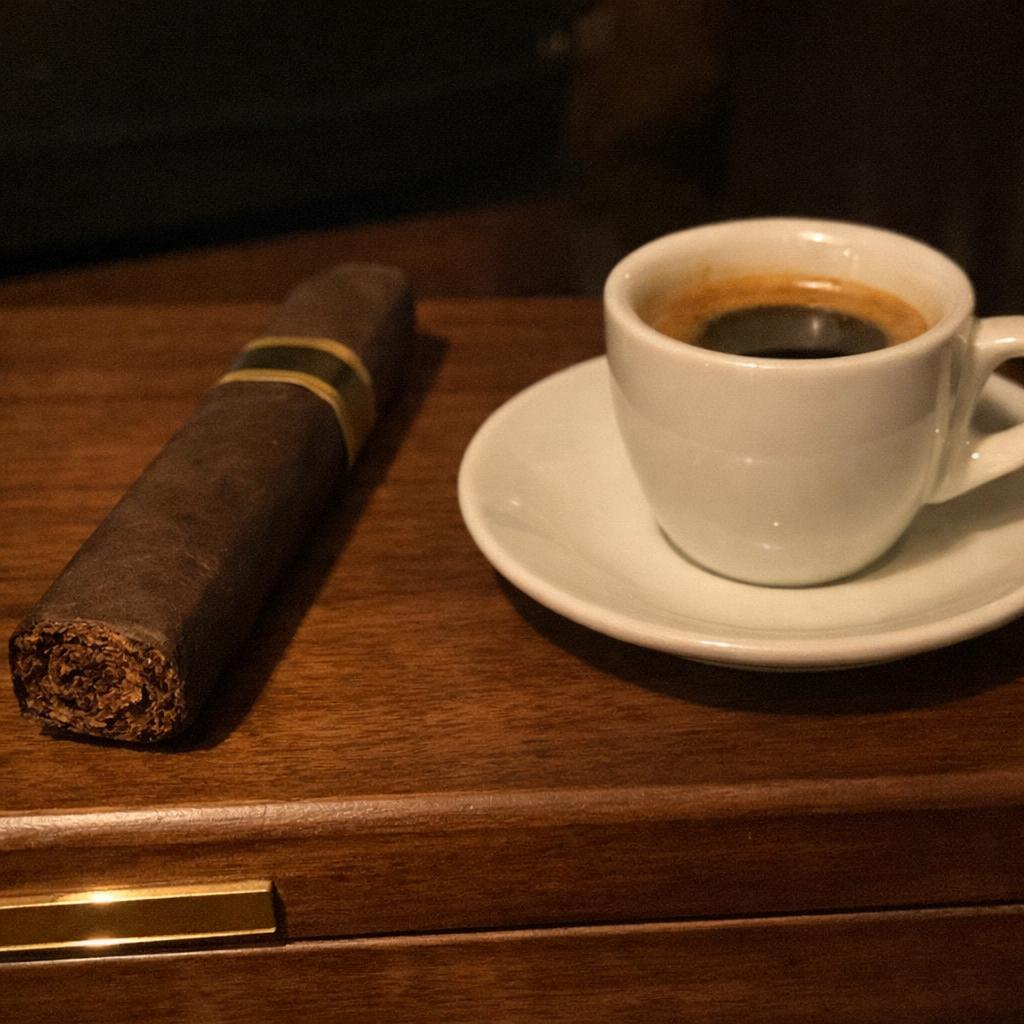
For the end of the day, or the end of a good meal, the Oliva Serie V Melanio Maduro is the cigar to reach for. It is the darker, sweeter follow-up to the Melanio that Cigar Aficionado crowned its cigar of the year in 2014, dressed now in a dark San Andrés wrapper over aged Nicaraguan tobaccos and box-pressed in the traditional way. It smokes medium to full, with German chocolate, malted chocolate, cedar and baking spice, and it wants a cup with real weight. A dark roast will match it, but an espresso, or a small Cuban-style coffee, suits it best, meeting the wrapper’s dark sweetness with a concentrated sweetness of its own. This is a contrast and an echo at once, the bitter edge of the coffee against the cigar’s chocolate, and the chocolate of each finding the other in the middle. Give it an unhurried hour.
Keep the pairings worth repeating
One last note from the porch. Every pairing here shifts as the cigar burns down through its thirds, and the coffee changes too as it cools in the cup. The blonde roast that flattered a Macanudo’s first third may taste thin by the last, and the espresso that crowded a maduro’s opening will settle beautifully an hour on. That drift is half the pleasure. Review the cigar by thirds with the Cigarro Method, note what sat in the cup beside each third, and log the matches worth repeating in Cigarro. And when the evening calls for something stronger than coffee, the whisky pairings follow the very same rule.