“Puro” gets thrown around a shop counter constantly and rarely gets explained properly. Ask what it means and you will likely get “all one country” tossed off as though that settles it. It is accurate. It also undersells what the word is actually promising you.
A puro is a cigar whose wrapper, binder, and filler are all grown in a single country. The word is Spanish for “pure,” and the definition earns its keep in what it reveals about flavour, not in the etymology lesson.
The literal answer one country, every leaf
Every component of a cigar carries a country of origin: the wrapper on the outside, the binder holding the bunch together, and the filler tobaccos providing the blend’s backbone. Most premium cigars mix these deliberately. A single stick might carry an Ecuadorian wrapper, a Nicaraguan binder, and filler leaves from two or three different countries, all rolled into one cigar. Blenders do this on purpose, reaching across origins for balance the way a whisky blender reaches across distilleries.
A puro skips that cross-border blending entirely. Wrapper, binder, and filler all come from the same country, sometimes the same valley or even the same farm. Cuban cigars are the clearest case: since every component is grown on the island by definition, every Cuban cigar is a puro whether the band bothers to say so or not.
Beyond Cuba the puro map widens
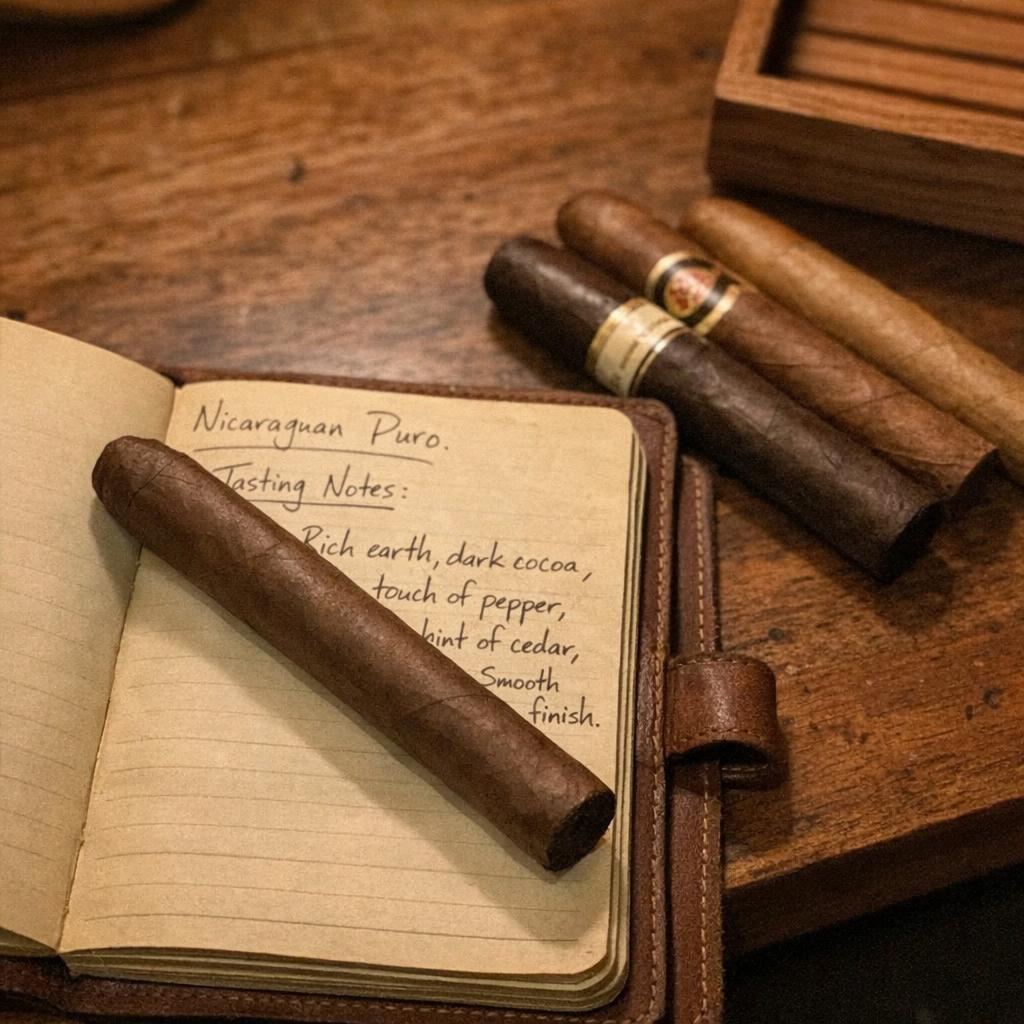
Nicaragua has become the puro’s second home. Padrón‘s 1964 Anniversary Series is the clearest working example: a Nicaraguan puro built from tobacco aged a minimum of four years before release, with every leaf, wrapper, binder, and filler, grown within Nicaragua’s own valleys rather than sourced from elsewhere and blended in.
Honduras holds its own corner too. Camacho’s Corojo line is built entirely from Corojo-seed tobacco grown in the Jamastran Valley, as complete a Honduran puro as the category gets, with wrapper, binder, and filler all drawn from the same ground the Eiroa family has farmed for generations.
What single origin actually does to the smoke
The appeal of a puro is not nationalism. It is terroir. Soil, altitude, rainfall, and curing method leave a specific fingerprint on tobacco, and that fingerprint carries through more cleanly when nothing else is blended in to soften or complicate it. A Nicaraguan puro tends to read earthier and peppery from root to tip, because every leaf in the cigar grew up in the same volcanic soil and humid valley air. A Cuban puro carries its own signature for the same reason: Vuelta Abajo’s particular red clay and coastal humidity, expressed without a single imported leaf to dilute it.
That does not make a puro automatically stronger or more serious than a blend. It makes it more transparent. What you taste is unmistakably the country’s tobacco, not a blender’s compromise, for better or worse depending on the leaf and the year.
Puro or blend neither one wins outright
It is tempting to treat puros as the purist’s choice and blends as some kind of concession, but that flatters one style at the other’s expense. Blended cigars exist because blending is a genuine skill. Pulling character from three or four countries into one coherent smoke is harder than it sounds, and the best blenders in the industry built their reputations doing exactly that. A puro simply asks a different question: how far can one country’s tobacco carry a cigar entirely on its own.
Worth knowing before you light one: a puro from a single country can still vary enormously between farms, crop years, and primings within that country. “Nicaraguan puro” tells you the passport, not the palate. The more useful habit is tasting a few side by side and logging what actually separates them, because the differences inside one nationality are often the more interesting story.
Track the puros you actually taste
The next time a band claims “Nicaraguan puro” or “Honduran puro,” you will know exactly what that phrase is promising, and what it is not. It is a claim about where every leaf grew, not a guarantee of strength or quality. The only way to test the claim properly is by tasting, ideally logged somewhere more permanent than memory, so the differences do not blur into “that Nicaraguan one, whichever it was.”