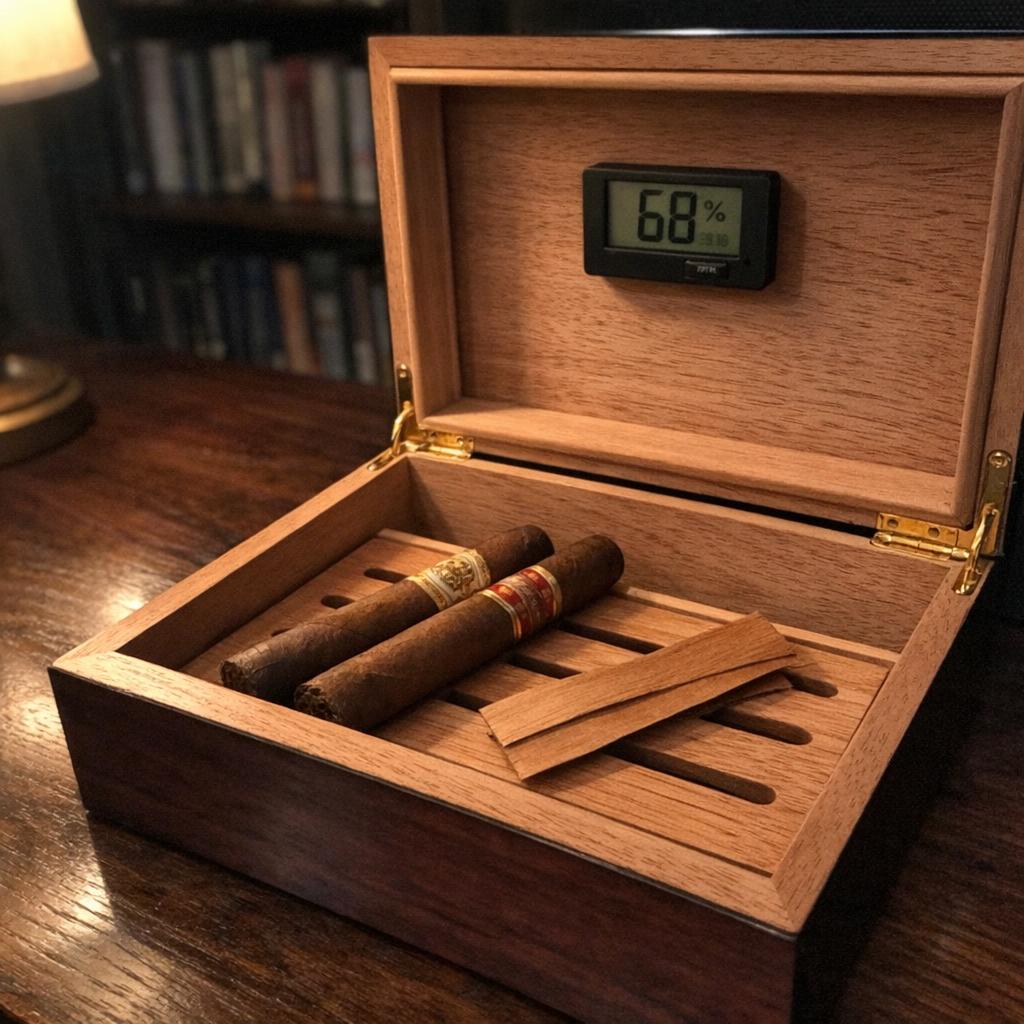
Ask five cigar smokers what humidity they hold their humidor at and you will get five different numbers, each defended with genuine conviction. That disagreement is not confusion. It reflects a real shift in the accepted wisdom. The figure most smokers still repeat, 70 percent relative humidity at 70 degrees Fahrenheit, is a rule of thumb from the 1990s cigar boom rather than a specification handed down by any tobacco authority. It works well enough. For most modern smokers, though, it also sits higher than they actually want to be.
This guide sets out where 70/70 came from, why the quieter modern consensus sits closer to 65, and how to choose the right number for your own climate and what is actually sitting in your humidor.
Where the 70/70 rule came from
The 70/70 figure traces back to the cigar boom of the early 1990s, when a wave of new smokers needed a number simple enough to remember and forgiving enough to survive a beginner’s mistakes. Seventy degrees and seventy percent humidity roughly echoes the tropical conditions of Cuba and the Dominican Republic, where a large share of the world’s premium leaf is grown, so as a rough stand-in for the climate the tobacco comes from, it made intuitive sense.
It is not, however, a manufacturer specification or the product of any formal study. It is a practical guideline that worked well enough for casual collectors under ordinary conditions, and that is exactly why it stuck around for three decades after most serious smokers had quietly moved on from it.
Why 65 is the quieter modern standard
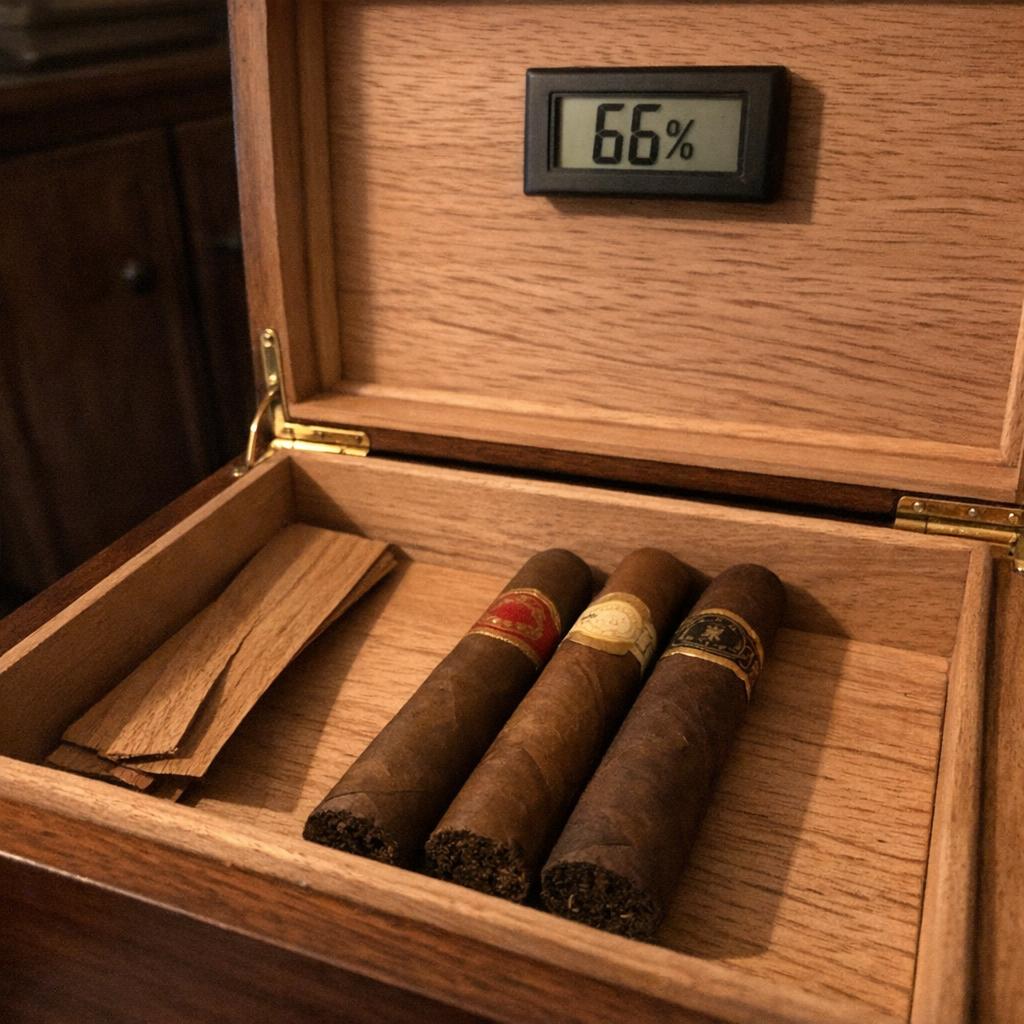
Habanos S.A., the state company behind every genuine Cuban cigar, recommends storage at 65 to 70 percent relative humidity and 16 to 18 degrees Celsius, roughly 61 to 64 Fahrenheit, noticeably cooler and drier than 70/70. One common explanation: Cuban wrappers tend to be thinner and more absorbent than their Central American counterparts, so a slightly lower number is thought to keep them supple rather than spongy.
The same logic tends to hold for most other origins. A cigar sitting at 65 to 68 percent generally draws more freely, burns more evenly, and lets the tertiary flavours built up in ageing come through more clearly than the same cigar held at 70 or above. The lower number also buys a genuine safety margin. Mould becomes a real risk above roughly 72 to 75 percent, and tobacco beetle larvae need both warmth and moisture together to hatch, with the danger climbing sharply once temperature and humidity both push past the low seventies at the same time. Sitting a few points under 70 is quiet insurance most smokers never think about until the day they need it.
The 65 vs 69 vs 72 decision
There is no single correct number, only the right number for what is in the humidor and how it is being stored.
| RH target | Best suited to | Trade-off |
|---|---|---|
| 65% | Cuban and Cuban-seed cigars, long-term ageing, humid climates | Draw can feel slightly tight on very young, unaged sticks |
| 69% | Most Central American and Nicaraguan cigars in regular rotation | A genuine middle ground for a mixed humidor |
| 72% | Freshly rolled or very young cigars that still need to soften | Edges toward the range where mould and beetle risk start to climb |
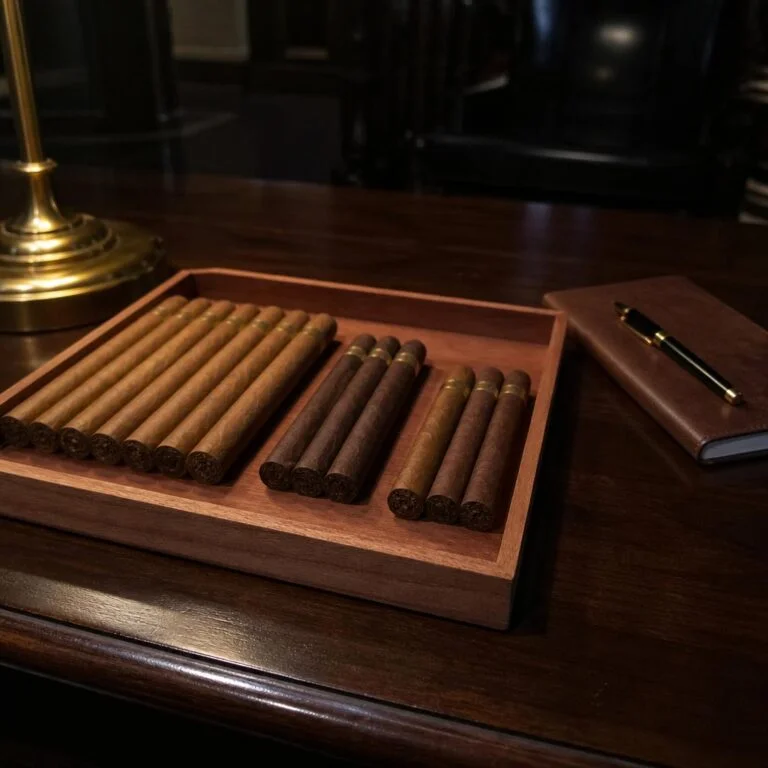
A well-organised humidor holding a mixed collection, Cuban-seed and Nicaraguan puros side by side, tends to age best somewhere in the 65 to 69 band. Reserve 70 and above for cigars that are genuinely young and still stiff to the touch, and treat it as a temporary measure rather than a permanent setting.
Climate variables: winter homes and humid homes
The number on the hygrometer only tells half the story. A house in a dry winter climate, where indoor heating can push ambient humidity down into the twenties, will fight a humidor constantly and may need a stronger solution, propylene glycol rather than distilled water, just to hold a steady 65. A home in a naturally humid climate faces the opposite problem: the humidor barely has to work, and the real risk becomes overshooting into mould territory during a warm, wet summer.
Both situations share the same fix in principle. Know your ambient conditions before you set a target, check the reading weekly rather than assuming it holds, and treat any number in this guide as a sensible starting point to adjust from, not a fixed law handed down from elsewhere.
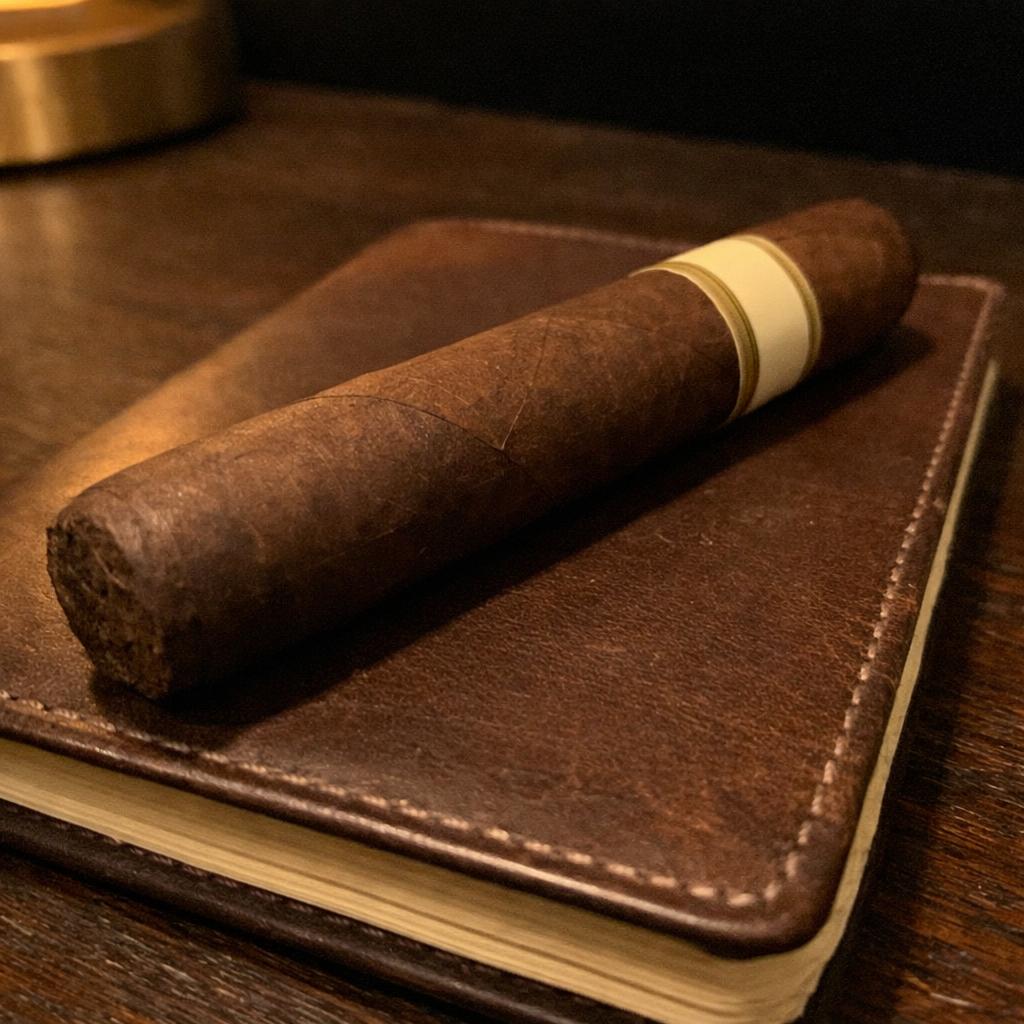
The pinch test: signs you have it wrong
You do not need a hygrometer to know when something is off. A cigar that has dried out cracks or crackles gently when flexed, burns hot and fast, and tastes flat and papery. One that has taken on too much moisture feels spongy under a light pinch, resists staying lit, and can carry a musty or sour note that has nothing to do with the blend.
The standard is simple. A properly humidified cigar yields slightly to a gentle pinch, the way a fingertip does under light pressure, then springs back to its original shape. If it stays dented, it is too wet. If it feels stiff and unyielding, it is too dry. Trust that test over any single number on a dial, especially in the first weeks after a new humidor is seasoned and settling in. If you would rather have the readings charted for you, we look at what a monitoring app adds in Cigarro against the Boveda app.
Log it, and the number stops being a guess
None of this needs to be complicated. Pick a number in the 65 to 69 range as a sensible default, adjust it for your climate and for what is actually sitting in the humidor, and let the pinch test settle any argument the hygrometer cannot. The wider practice, from box to shelf, is set out in our guide to how to store cigars properly, and the longer game in ageing cigars over years.
Humidity mistakes show up in a review before anything else does, in a burn that fights you or a draw that feels wrong from the first third, so getting storage right is not just housekeeping. It protects the smoke you are about to sit down and write about. Log the reading alongside the cigar in the Cigarro Method and the number stops being a guess and starts being part of the record.