Most pairing advice is a list of brand names attached to other brand names, which helps nobody, because the reader rarely owns either. The useful version is a set of principles small enough to remember at the moment of choosing: match weight, contrast sweetness, mind the finish. Everything below is those three ideas applied to the things people actually have in the house.
We have separate guides that go deep on the two most common partners, pairing cigars with whisky and pairing cigars with coffee. This is the hub above them, and it covers the rest of the table: rum, port and sherry, red wine, beer, tea, water, and the three cocktails that turn up often enough to deserve an answer.
One thing before we start. Nothing here is sponsored. Cigarro takes no money from cigar makers, distillers or retailers, and there are no shopping links in this article, so what follows is only ever a view about what tastes good together.
The Principle: Weight, Sweetness, Finish
Match weight. This is the rule that does most of the work. A cigar and a drink should be roughly equal in presence, because whichever is heavier will simply erase the other. A delicate Connecticut-wrapped corona beside a cask-strength whisky is not a pairing, it is a whisky with a faint smell of tobacco somewhere behind it. Weight here means body rather than strength, and the distinction is worth having straight before you start: our guide to strength versus body separates the two properly.
Contrast sweetness. Tobacco smoke is dry, savoury and faintly bitter, and a little sweetness on the other side of the table gives it something to lean against. This is the whole reason rum, port and sherry work so reliably, and it is why a dry, tannic red so often does not. Contrast is not the same as sugar, though: the sweetness that helps is the round, cooked kind you find in aged spirits and fortified wines, not the sharp kind in a mixer.
Mind the finish. A cigar has a long finish by nature, an hour of it, and anything with a finish that fights over the same territory will be exhausting rather than complementary. Peat is the classic offender. It is not that heavily peated whisky and cigars cannot be enjoyed together; it is that they occupy the same room and only one of them can be listened to.
There is a fourth idea, quieter than the others, which is temperature. Very cold drinks numb the palate and flatten a cigar’s mid-range. Anything you intend to taste alongside tobacco should be at cellar temperature or above, which is why the pairings in this article lean warm.
| Cigar body | Whisky | Rum & fortified | Wine & beer | Coffee & tea | Cocktail |
|---|---|---|---|---|---|
| Mild | Lowland or Speyside single malt, unpeated, a splash of water | Light aged rum, or a chilled fino sherry | Wheat beer or a dry sparkling wine | Filter coffee, or a lightly oxidised oolong | Not really. Let a mild cigar speak |
| Medium | Bourbon or a sherry-cask Highland malt | Aged Caribbean rum, or a tawny port | Amber ale, or a soft ripe Rioja | Espresso, or a roasted hojicha | Old Fashioned, built spirit-forward |
| Full | High-proof bourbon or rye, or an older sherried malt | Navy-strength or Demerara rum, or a vintage port | Imperial stout, or an aged Douro red | Dark-roast espresso, or a well-aged pu-erh | Manhattan, or a Negroni for the bitter edge |
Whisky, the Default Answer
Whisky is the default for a good reason: barrel-aged spirit and fermented tobacco share a vocabulary. Vanilla, dried fruit, wood spice and leather appear on both sides of the table, so the two do not have to be introduced to each other.
The choices that matter are cask and proof rather than country or age statement. Sherry-cask whiskies bring the round dried-fruit sweetness that tobacco likes best, and they are the safest bet across the whole range of cigars. Bourbon brings sweetness of a different sort, vanilla and caramel from new charred oak, and it sits particularly well with a medium Nicaraguan. Rye brings pepper, which suits a cigar that is already peppery if you want emphasis rather than contrast.
Proof is the lever most people forget. A cask-strength bottling will bully a mild cigar and can numb your palate for the second third. A few drops of water in the glass are not a compromise, they are the adjustment that lets both things be tasted.
On peat, our position is unfashionable and firmly held: heavily peated Islay malts and cigars are a duel rather than a duet. If you love both, have them, but have them in sequence. The full treatment, including the cask-by-cask detail, lives in our guide to pairing cigars with whisky.
Rum, the Natural Cousin
If whisky is the default, rum is the better answer more often than people expect. Cane and tobacco grew up in the same climate and frequently on the same islands, and aged rum carries exactly the round, cooked sweetness that the contrast rule asks for. Where whisky meets a cigar, rum embraces it.
Style matters more than age here. Spanish-style rums from the Spanish-speaking Caribbean are lighter and drier and suit mild to medium cigars. English-style rums, particularly the Demerara ones, are heavier, treacly and smoky in a molasses sort of way, and they are the ones to reach for when the cigar is full. French-style agricole is a different animal, grassy and sharp, and it pairs oddly with most cigars but beautifully with a young, green-tasting one if you like the surprise.
The trap is sweetened rum. A good deal of what sits on the shelf has sugar added after distillation, and against a cigar that reads as cloying within ten minutes. If a rum tastes like dessert on its own, it will taste like a great deal of dessert beside tobacco. Drier is safer.
Port and Sherry, the Quiet Experts
The fortified wines are the most reliable pairings in this entire article and the least often suggested, probably because they read as old-fashioned. They are old-fashioned. They are also right.
Tawny port is the one to start with. Years in cask give it a nutty, dried-fig character and a gentle grip that carries a medium cigar all the way to the band without ever raising its voice. Vintage port is bigger, more fruit-forward and more tannic, and it belongs with a full cigar or with nothing.
Sherry deserves better than it gets. Oloroso is the natural partner, dry despite tasting rich, walnut and orange peel and a long savoury finish that runs alongside tobacco rather than across it. Pedro Ximenez is the opposite proposition, thick and sweet as syrup, and a very small glass of it beside a full maduro is one of the great combinations, provided it stays small. Fino and manzanilla are lighter and saltier, and they work with a mild cigar in a way that surprises people the first time.
Serve all of these cool rather than cold. Fifteen degrees or so for tawny and oloroso, a little cooler for fino. Straight from the fridge and you lose half of what you came for.
Red Wine, the Difficult One
Wine and cigars have a difficult relationship, and it is worth saying so rather than pretending otherwise. The problem is tannin. Tobacco smoke leaves a drying, faintly bitter coating on the palate, and a tannic red adds a second drying agent on top of it. Two astringencies do not cancel out. They compound, and the mouth gives up somewhere in the second third.
What works, then, is red wine chosen against type: soft, ripe, generous, with the tannins already resolved by age. A mature Rioja, a warm-climate Grenache, an older Douro red, a good Amarone. What does not work is a young, structured, high-tannin bottle, however good it is on its own. A serious young Bordeaux or a firm Barolo deserves better company than a cigar, and so does the cigar.
White wine is generally a mismatch of weight rather than texture, with one exception worth trying: a dry sparkling wine beside a mild cigar. The acidity and the bubbles clean the palate between draws, and the effect is refreshing in a way nothing else on this list manages. It is not a classic pairing. It is a rather good one.
Coffee, and the Case for Daylight
Coffee is the pairing that rescues the daylight hours. Not everything worth smoking has to wait for the evening, and a cigar with a coffee at eleven in the morning is one of the more civilised things available to anybody.
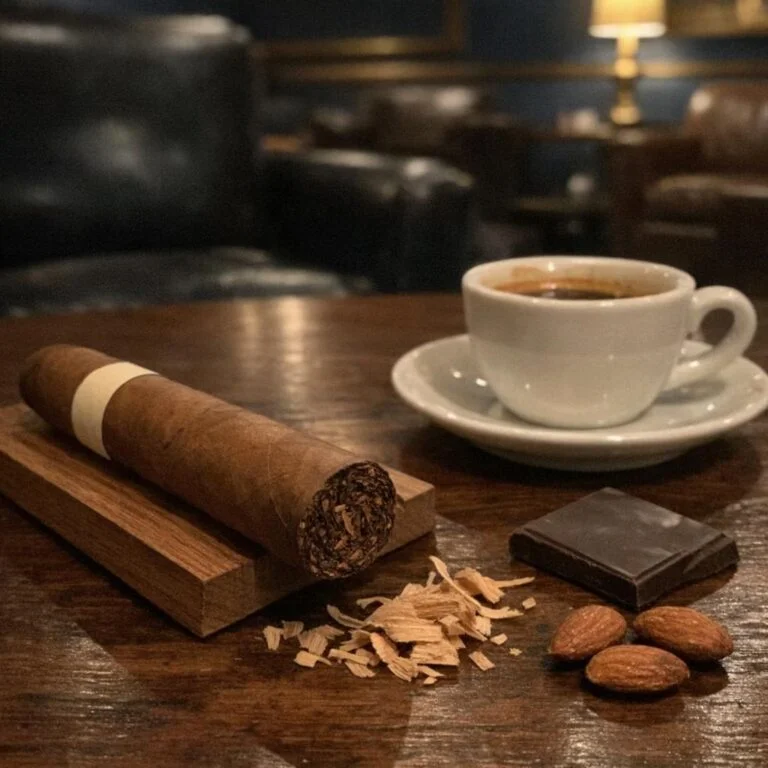
Roast level is the dial. A light filter coffee, floral and acidic, is a lovely counterpoint to a mild cigar and will be trampled by anything heavier. Espresso, with its concentration and its bitter-sweet edge, is the workhorse and pairs happily from medium upward. A dark, almost burnt roast has enough weight to stand beside a full maduro, which is the pairing most people find first and many never leave.
Milk complicates things. It rounds the coffee off and softens the contrast that made the pairing interesting, so a flat white is a pleasant drink beside a cigar rather than a pairing. Sugar does the same thing more bluntly. If you want to taste the pair rather than just enjoy them, take the coffee black.
There is one caution. Coffee dehydrates and so does smoke, so the water glass is not optional. Our full write-up is in pairing cigars with coffee, and the question of which hour suits which cigar is worked through in our piece on the best time of day to smoke.
Beer, and Why It Is Underrated
Beer gets left out of pairing articles because it is not felt to be grand enough, which is snobbery and also a mistake. Dark beer and cigars are an excellent match, and beer has one advantage nothing else on this list can claim: the carbonation lifts smoke residue off the palate between draws, so the cigar tastes as clear at the band as it did at the first inch.
Imperial stout is the headline pairing. Roasted malt, dark chocolate, a coffee bitterness and enough body to stand up to anything full-bodied. Porter does a gentler version of the same job for a medium cigar. Belgian dubbel and quadrupel bring dark fruit and a candied sweetness that behaves rather like a tawny port at a fraction of the ceremony. Amber and brown ales are the safe middle.
Two to avoid. Aggressively hopped IPAs bring a resinous bitterness that duels with tobacco in the way peat does, and cold pale lager is mostly cold water as far as a cigar is concerned. If lager is what is open, let it warm a little and expect refreshment rather than a pairing.
Tea, Water and the Ones Nobody Mentions
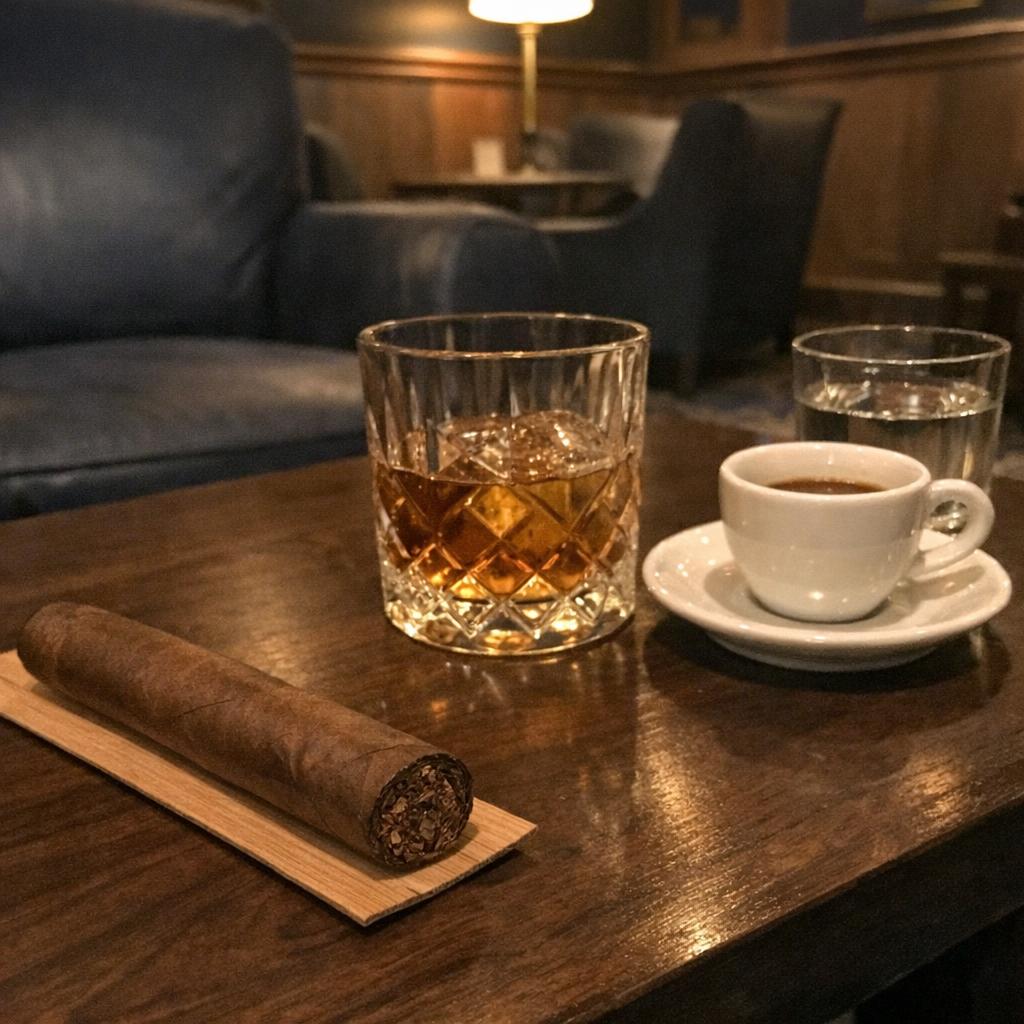
Water. This is the pairing that should be on the table every single time, and it is the one nobody writes about because it sounds like an absence rather than a choice. Still water at room temperature resets the palate between draws and stops the drying that makes the last third of a long cigar taste harsher than it is. Sparkling water does the job more energetically and is genuinely worth trying as a pairing in its own right: the carbonation clears smoke the way beer does, without adding anything of its own. If you take one suggestion from this article, take the glass of water.
Tea. Underexplored and rewarding. Roasted oolong, particularly a darker Wuyi style, has the toasted, mineral character that meets a medium cigar beautifully. Aged pu-erh is the serious option: earthy, deep, faintly barnyard, and it can hold its own beside a full maduro in a way no other non-alcoholic drink manages. Lapsang souchong is smoked tea, which sounds obvious and is in fact the same duel as peat, so approach it knowing that. Avoid delicate greens and anything floral, which vanish entirely.
The others. Cognac and armagnac work on the same logic as aged rum and need no defence. Cola and sweet mixers do not work, because the sugar and the acid together strip the mid-palate. And a very cold anything, however good, will numb your tongue for ten minutes and cost you the part of the cigar you were waiting for.
Three Cocktails That Earn Their Place
Most cocktails are the wrong shape for a cigar. They are cold, they are diluted, and they usually contain citrus, which is exactly the sharp acidity that fights tobacco. The three that survive the test are the three that are essentially spirit with a little seasoning.
The Old Fashioned is the safest. Whisky, a whisper of sugar, bitters and an orange twist, stirred rather than shaken so it stays dense. It is a pairing that behaves like a slightly sweetened whisky, which is precisely why it works. Build it spirit-forward and go easy on the ice.
The Manhattan is the better one for a full cigar. Rye and sweet vermouth give it a herbal, faintly bitter depth with real weight behind it, and vermouth’s dried-fruit character does the same job that a sherry cask does in a whisky.
The Negroni is the interesting one, and it divides people. The bitterness of Campari against tobacco is either the best thing on this list or completely wrong, and there is no middle ground. It suits a medium to full cigar, and it suits the hour before dinner rather than the hour after.
Serve all three with a single large piece of ice, or none. A drink full of small cubes dilutes into cold water halfway through a cigar, and cold water is the enemy of tasting anything.
Pairing by Occasion
The matrix answers the question of what goes with what. The occasion often answers it faster.
Morning, alone, an hour to yourself. A mild or medium cigar, a filter coffee, a glass of water. The palate is fresh, which means small flavours register, so this is the moment for the quiet cigar you would waste after dinner.
Late afternoon, before dinner. Something medium, and something with bitterness to sharpen the appetite. A Negroni, or a fino sherry, or a good amber ale. Keep it short, because a Churchill at six o’clock ruins your dinner and probably your evening.
After a long dinner. The classic slot, and the one where a full cigar earns its place. Tawny port, aged rum, a sherried malt. The palate is tired and the food has done half the work, so weight is welcome and subtlety is wasted.
With company, talking. Choose the cigar for its length rather than its complexity, because you will not be paying attention. Something medium and forgiving that will not sulk if you let it go out. Beer or a highball, and keep the water coming.
Outdoors, in the cold. Wind and cold air flatten flavour, so go a step heavier than you would indoors, and pick a drink that keeps its temperature. This is one of the few times a cigar and a hot drink together are genuinely the right answer.
A word on the company you keep while doing it: the conventions around all this are covered in our short guide to cigar etiquette, which mostly comes down to not making anyone else’s evening about your cigar.
The Mistakes Worth Avoiding
Over-proofing the palate. The commonest error by a distance. A high-strength spirit taken neat in the first ten minutes anaesthetises the tongue, and everything after that is guesswork. Water in the glass, small sips, and let the cigar set the pace rather than the drink.
Serving everything too cold. Cold constricts and numbs, and a numb palate cannot read a cigar’s mid-range at all. Spirits at room temperature, fortified wines cool rather than chilled, beer at cellar temperature rather than fridge temperature.
Choosing on prestige instead of weight. The most expensive bottle in the house is not the right pairing unless it happens to match the cigar’s weight, and the pairing that flatters an old and delicate spirit is usually no cigar at all.
Changing two things at once. If you switch the cigar and the drink together, you learn nothing about either. Hold one still.
Drinking to keep up with the cigar. A cigar lasts an hour or more, and matching it sip for sip is neither pleasant nor sensible. One measure across a whole cigar, with water alongside, is the ordinary way to do this properly.
Forgetting to taste the cigar on its own first. Give it the first ten minutes unaccompanied. You cannot tell what a pairing has done if you never knew what the cigar tasted like without it, which is the same principle our guide to tasting a cigar is built on.
Writing the Pairing Down
A pairing is only useful the second time if you wrote down the first one, and nobody remembers a pairing three months later with any accuracy at all. A single line in the review note is enough, and it should record four things: what the drink was, when in the cigar you had it, what it did to the cigar, and what the cigar did to it. That last one is the half most people leave out and the half that matters, because a pairing that improves the cigar while flattening the drink is worth knowing about before you open a good bottle.
Because the Cigarro Method scores by thirds, the pairing note fits naturally into it. Note the drink in the first third and again at the last, and you will start to see the pattern nobody tells you about in advance: that most pairings are excellent for twenty minutes and then become an argument, and that the ones which hold all the way to the band are rare enough to be worth writing in capitals.
After a season of that you will have something no chart can give you, which is a record of what your palate actually likes rather than what it is supposed to like. That is the point of keeping notes at all.
Questions Readers Ask
What is the best drink to pair with a cigar?
There is no single best, but the most reliable answer for a medium cigar is an aged spirit with sweetness in it: a sherry-cask whisky, an aged Caribbean rum, or a tawny port. All three carry dried-fruit and wood-spice notes that tobacco already shares, so the two sides meet without effort. The principle underneath is more useful than the list: match the weight of the drink to the body of the cigar, and let a little sweetness sit against the smoke’s dryness.
How do I pair a cigar with rum?
Match style to body. Lighter, drier Spanish-style rums suit mild and medium cigars; heavier English-style and Demerara rums, with their treacle and molasses depth, belong with something full. The trap is added sugar, which is common and turns cloying against tobacco within minutes, so a drier bottling is the safer choice. Serve at room temperature, neat or with a few drops of water, and let one measure last the whole cigar.
Can you pair cigars with wine?
Yes, but choose against type. Tannin is the difficulty: smoke already dries the palate and a tannic red adds a second drying agent on top, so the two compound rather than balance. What works is soft, ripe, mature reds with resolved tannins, such as an older Rioja or an aged Douro. Young, structured bottles are best kept for another evening. A dry sparkling wine beside a mild cigar is an unexpected success worth trying.
Does the drink have to be alcoholic?
Not at all, and some of the best pairings are not. Black coffee is the classic daytime partner, roasted oolong and aged pu-erh tea both stand up well, and still or sparkling water is the pairing that should be on the table regardless of what else is. Smoke dries the mouth as it goes, so the last third of a cigar tastes harsher than it is when nothing has been resetting the palate along the way.
Which cocktails work with a cigar?
The spirit-forward ones. An Old Fashioned is the safest, a Manhattan suits a fuller cigar, and a Negroni’s bitterness either delights or offends with no middle ground. What fails is anything cold, diluted or citrus-driven, because sharp acidity fights tobacco and cold numbs the palate. Serve with one large piece of ice or none, so the drink does not become cold water halfway through the cigar.
Should I pair by cigar strength or by cigar body?
By body. Body is how heavy the smoke feels on the palate, and that is what a drink is competing with. Strength is nicotine, which you feel physically rather than taste, and it has little bearing on whether a pairing balances. The two often travel together, which is why people conflate them, but the cigar that ruins a delicate whisky is the mouth-filling one rather than the merely powerful one.
Match the Hour, Not the Rules
Pairing has acquired more ceremony than it can carry. The truth is that three ideas cover almost everything: match the weight, put a little sweetness against the dryness, and do not let two long finishes fight. Everything else in this article is those three ideas applied to whatever happens to be open.
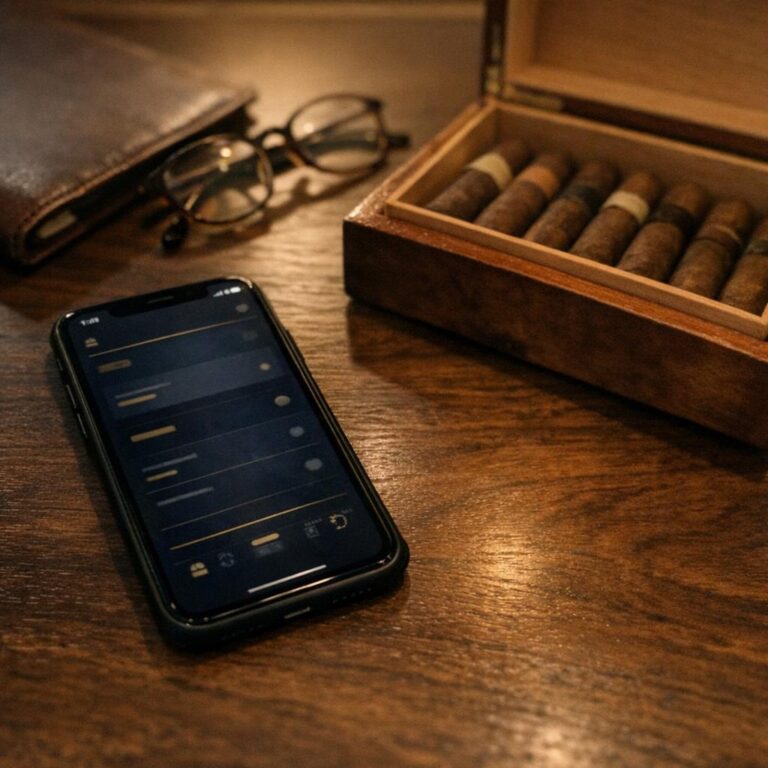
So take the matrix as a starting direction rather than an instruction, keep a glass of water on the table whatever else is there, and write down the one that surprised you. In a year you will have your own version of this article, built out of evenings rather than opinions, and it will be worth more to you than ours. That is what the Cigarro Method is for, and the app is free to begin with.