Yes, and almost never. Freezing is a pest treatment rather than a storage method, and the only sound reason to put a cigar in a freezer is that something may be living inside it. Small round holes in a wrapper, a scatter of fine dust on the cedar, or a box that has just arrived after a fortnight in a hot lorry: those are the cases where freezing is the right answer, and in those cases it works completely.
For everything else it is the wrong tool. Freezing will not improve a cigar, will not accelerate ageing, will not rescue one that has dried out, and does nothing useful about mould. What it will do, if you rush it, is crack wrappers, because tobacco holding roughly seventy percent humidity does not enjoy being moved between temperature extremes in a hurry.
What follows is the method as the trade actually runs it: sealed, chilled, frozen hard, then walked back up in stages. The stages are the part most people skip, and they are the part that protects the cigars.
When Freezing Is Warranted
There are three situations that justify it, and they are all evidence-based rather than precautionary.
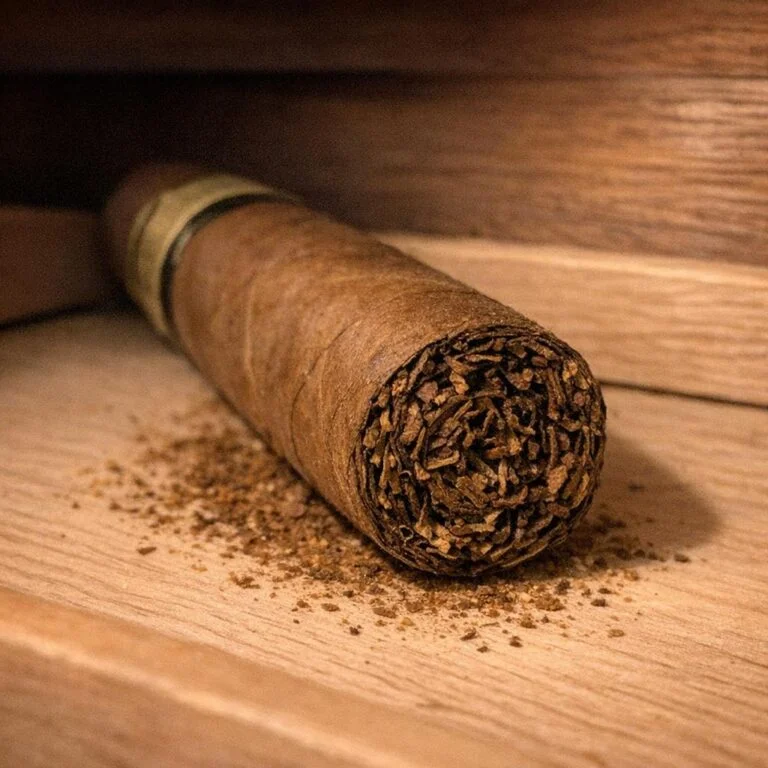
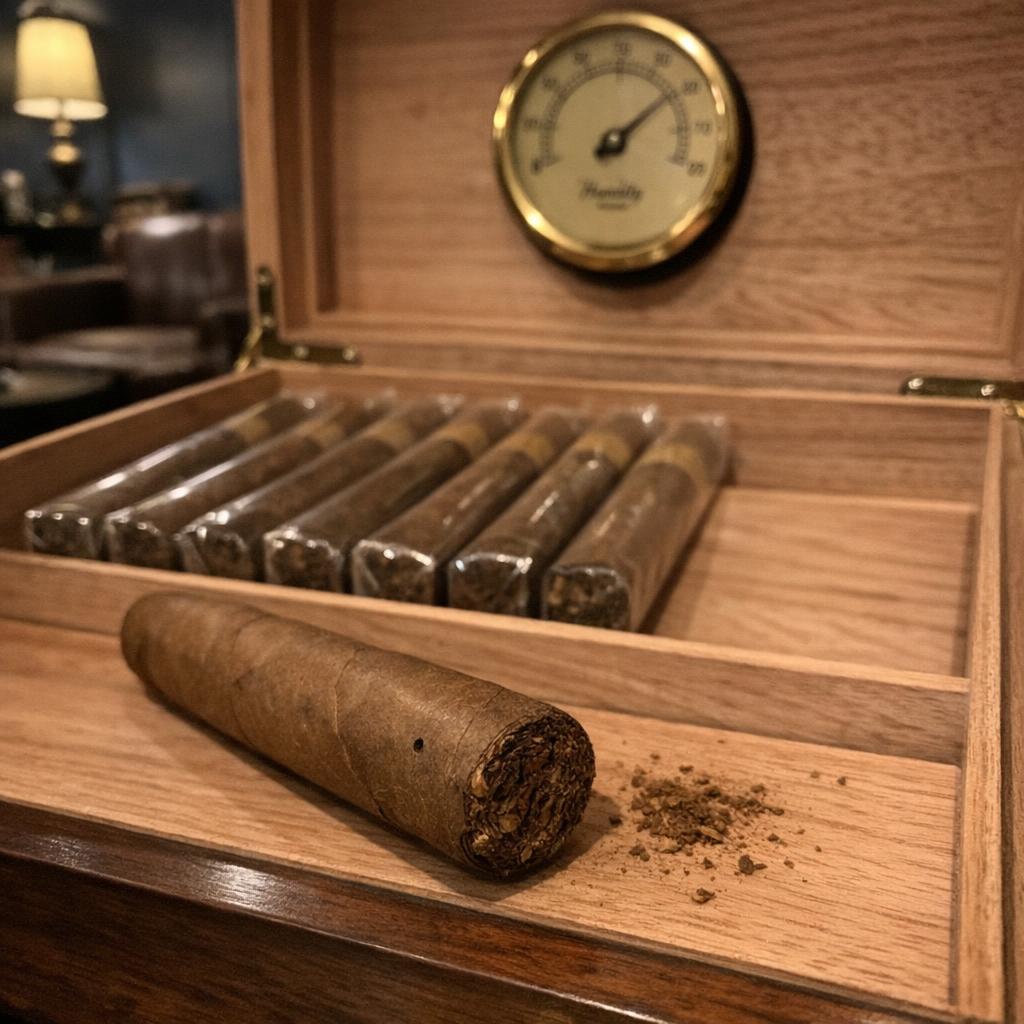
The first is visible damage. The tobacco beetle, Lasioderma serricorne, is two or three millimetres long and leaves a tell-tale exit hole roughly the diameter of a pin. One hole in one cigar is enough. Where there is one there are others, because a single female lays around a hundred eggs and the eggs are invisible even if you unroll the cigar looking for them.
The second is dust. A small pile of fine, pale powder on the cedar beneath a cigar is pulverised tobacco, and it means larvae have been eating. If you find dust and no holes, look harder; the holes are there.
The third is circumstantial and it is the one worth acting on before anything hatches. A box that has spent a fortnight in a hot warehouse or a summer delivery van has been sitting in exactly the conditions that wake dormant eggs. If a shipment arrives warm to the touch, treating it is cheap insurance, and it is what many manufacturers already do before the box ever reaches a shop.
Outside those three cases, leave your cigars alone. A humidor kept in the right band does not need annual freezing, and every trip through the freezer is a small mechanical risk taken for no reason. Our short answer on cigarette beetle prevention covers the day-to-day habits that keep you out of this article entirely.
The Method, Step by Step
Treat the whole humidor, not the affected cigar. Leaving one stick behind defeats the entire exercise, because the one you left is very probably carrying eggs too. Discard anything visibly riddled, then process the rest together.
Bag them twice. Cigars go into a sealed freezer bag, and that bag goes inside a second one. Two layers keep freezer moisture out and keep the cigars’ own moisture in, which is the whole trick. Leave the cellophane on if it is there. Press most of the air out without crushing anything.
Refrigerator, twenty-four hours. Not the freezer yet. This first step lets the cigars cool gradually and is the single most effective thing you can do to avoid cracked wrappers.
Freezer, seventy-two hours, at or below minus eighteen degrees Celsius, which is zero Fahrenheit. Most domestic freezers run at about that temperature as standard, and three full days at it kills adults, larvae, pupae and eggs alike. Colder is faster and warmer is much slower: at freezing point itself you would be waiting well over a week. If your freezer is a shallow one built into a fridge, give it four days rather than three.
Refrigerator again, twenty-four hours. The same gradual step in reverse.
Room temperature, twenty-four hours, bags still sealed. Do not open the bags while they are cold or the air will condense on the cigars. Wait until they have come all the way back up, then unseal.
Back to the humidor, and give them a fortnight. Meanwhile wipe the empty humidor out with a barely damp cloth. No sprays, no cleaners, no disinfectant: the wood will hold the smell and hand it straight back to the cigars.
| Step | Where | How long | Why |
|---|---|---|---|
| 1. Double bag | Kitchen bench | Minutes | Holds the cigars’ own humidity in and freezer air out |
| 2. Chill | Refrigerator, about 4 C / 40 F | 24 hours | Gradual descent, so the wrapper is not shocked |
| 3. Freeze | Freezer, at or below -18 C / 0 F | 72 hours | Fatal to every life stage, eggs included |
| 4. Chill again | Refrigerator | 24 hours | Gradual ascent, same reason in reverse |
| 5. Rest sealed | Room temperature | 24 hours | Bags stay shut, or condensation forms on cold tobacco |
| 6. Rehumidify | Humidor, 65 to 70 percent | 2 weeks | Settles the cigars before anyone smokes one |
Why the Steps Are Gradual
A cigar is a bundle of leaf holding a great deal of water, wrapped in the thinnest and most highly stretched leaf on the whole object. The wrapper is under tension by design. Water inside it expands as it freezes, and it contracts again as it thaws, and the wrapper has to accommodate both movements without splitting.
Go straight from a seventy percent humidor to a domestic freezer and that movement happens over minutes rather than hours. The filler swells before the wrapper can give, and the result is the fine longitudinal split every forum thread about this eventually shows a photograph of. The refrigerator step spreads the same total change across a day, and the wrapper takes it in its stride.
The step on the way back matters just as much, for a different reason. Cold tobacco brought straight into a warm room pulls moisture out of the air onto its surface, and a wet wrapper is a mouldy wrapper waiting to happen. Keeping the bags sealed until the cigars have reached room temperature means the condensation forms on the outside of the plastic, where it belongs. Our guide to humidity explains why that same principle governs everything else you do to a cigar.
What Freezing Cannot Do
Three claims circulate about freezing that are simply not true, and they are worth dismissing plainly.
It does not age a cigar, or improve one. Ageing is slow enzymatic and chemical change in tobacco held at stable warmth and humidity. Freezing halts that process rather than hastening it. A cigar removed from the freezer is the cigar you put in, minus whatever was living in it. If ageing is what you are after, the honest answer is time in a well-kept box, and our piece on how long cigars last sets out what actually happens over months and years.
It does not fix mould. Freezing does not reliably kill mould spores, and even if it did, the spores are not the problem: the damage is already done and the spores are already everywhere. Mould is a humidity and airflow fault. Wipe the affected cigars gently, discard anything genuinely furred, and correct the conditions that caused it. Nothing in a freezer will help.
It does not restore a dried-out cigar. That is a slow rehumidification job, measured in weeks at a gently rising humidity, and freezing has no bearing on it at all.
The Risk Worth Naming
The honest warning is this: even done properly, you may open the bags to find a cracked wrapper or two. Moisture shock is the mechanism, the gradual steps reduce it a great deal, and they do not eliminate it entirely. Thin, delicate wrappers and cigars that were already sitting a little damp are the usual casualties.
Two smaller risks are worth knowing. Cigars left loose in a freezer without a proper seal will lose humidity to the very dry air in there and come out brittle, which is what the second bag is guarding against. And a cigar that has been through a full freeze wants a fortnight back in the humidor before anyone lights it, because a cigar smoked the day it comes out will draw and burn poorly and get blamed for it.
Set against those risks is the alternative. An untreated infestation moves quickly, and a serious one can take a whole box in a matter of days. Weighed properly, a couple of cracked wrappers is a cheap outcome.
The Temperature That Wakes Them
Beetle eggs can sit dormant in finished cigars for a long time and do nothing at all. What rouses them is warmth, and the number the trade quotes is around twenty-two degrees Celsius, or seventy-two Fahrenheit, in company with humidity above roughly seventy-two percent. The neat mnemonic is seventy-two and seventy-two, and while it is a rule of thumb rather than a laboratory constant, it is a good one to keep.
The entomology behind it is consistent. Development is quickest in the low thirties Celsius, slows sharply as the temperature falls, and stops altogether around seventeen degrees. So a humidor sitting at a steady twenty degrees is not a hospitable nursery, and one that drifts to twenty-six on a summer afternoon on a sunny windowsill very much is.
That is why the practical target for storage is not a single number but a ceiling. Keep the box below about twenty-one degrees Celsius, or seventy Fahrenheit, and keep the humidity in the sixty-five to seventy percent band, and the eggs stay asleep indefinitely. Our guide to storing cigars properly works through how to hold that in an ordinary house.
Prevention Is the Cheaper Habit
Four habits between them make the freezer almost unnecessary.
Watch the temperature as carefully as the humidity. Most people own a hygrometer and read only half of it. The temperature figure is the one that decides whether anything hatches, so keep the box off windowsills, away from radiators, and out of the path of afternoon sun.
Look, every week. Thirty seconds with the lid open and the light on. You are looking for pinholes and for dust on the cedar. Caught in the first week, an infestation costs you one or two cigars rather than a box.
Quarantine new arrivals. Beetles almost always arrive as passengers on cigars bought elsewhere. Keeping a new box in a separate container for a fortnight, checked twice, keeps a problem from meeting your collection.
Do not overshoot the humidity. The upper end of the sixty-five to seventy percent band is comfortable for cigars and uncomfortable for beetles; well above it, both change their minds. Overshooting invites mould as well.
Logging the Quarantine
The most common mistake after a freeze is impatience. The cigars are back in the humidor, they look perfectly well, and a fortnight is a long time to wait when the box is sitting right there. So people smoke one after four days, find it draws oddly and tastes flat, and quietly conclude the treatment ruined it.
Writing down the date solves this entirely, which is the least glamorous piece of advice in the article and the one that changes the outcome most. Cigarro was built for rest tracking of exactly this kind: log the day the cigars went back into the humidor, set the rest period, and the app counts the fortnight so you do not have to remember which Tuesday it was. It is the same mechanism regular smokers use for resting cigars after shipping, pointed at a different problem.
There is a second benefit, and it only shows up later. If you note that a box was frozen, then a year on you find one of those cigars smoking beautifully, you have an answer to the question everybody asks and nobody can usually settle: whether the freeze did any lasting harm. Ours is that a properly run cycle does not. Your own notes are the only version of that answer you should actually trust.
Questions Readers Ask
Can you freeze cigars?
Yes, but only as a pest treatment. Freezing is the accepted way to deal with a tobacco beetle infestation, and it kills every life stage including the eggs. It is not a storage method, not an ageing shortcut and not a fix for mould or for a cigar that has dried out. If nothing is living in your cigars, there is no reason to put them in a freezer, and each cycle carries a small risk of cracking a wrapper.
How long should cigars stay in the freezer to kill beetles?
Seventy-two hours at or below minus eighteen degrees Celsius, which is zero Fahrenheit, the temperature most domestic freezers hold as standard. Colder works faster and warmer takes considerably longer: near freezing point you would need well over a week. If your freezer is the small compartment inside a fridge and you are unsure of its true temperature, give it four days rather than three.
Do I need the refrigerator steps, or can I go straight to the freezer?
Use them. Twenty-four hours in the refrigerator before the freezer and another twenty-four after it spread the temperature change over hours instead of minutes, which is what stops wrappers splitting. A cigar holds a lot of water and its wrapper is stretched thin over the top of it, so sudden movement in either direction is the thing that does the damage. The extra two days cost nothing but patience.
Does freezing cigars ruin them or change the flavour?
Done properly, no. A cigar that goes through a controlled cycle and then spends a fortnight settling back in the humidor smokes as it did before. What can go wrong is mechanical rather than chemical: a cracked wrapper from a rushed thaw, or a poor draw and flat taste from smoking one too soon after it comes out. Neither is the freezer’s fault so much as the hurry’s.
Will freezing kill mould on cigars?
No, and it is worth being clear about that. Mould is a humidity and airflow problem, and freezing does not reliably kill spores or undo the damage already done. The remedy is to isolate the affected cigars, wipe surface growth away gently, discard anything genuinely furred, and correct the conditions that caused it. Bluish plume and greenish mould are different things, and telling them apart before you act saves cigars.
At what temperature do tobacco beetle eggs hatch?
The figure the trade works to is around twenty-two degrees Celsius, seventy-two Fahrenheit, in company with humidity above about seventy-two percent. Below that, dormant eggs generally stay dormant, and the entomological work puts a full stop on development at around seventeen degrees. The practical instruction is a ceiling rather than a target: keep the humidor below roughly twenty-one degrees Celsius and the humidity in the sixty-five to seventy percent band.
A Freezer Is Not a Humidor
There is a particular kind of panic that comes with finding the first hole, and it tends to produce either paralysis or overreaction. Neither is warranted. The treatment is well understood, it is nearly free, it takes six days of which five require nothing from you, and it works completely. Bag them twice, chill, freeze hard for three days, walk them back up, and give them a fortnight to settle.
Then put the freezer out of your mind and go back to the thing that actually prevents the problem, which is a box kept cool and steady and looked at once a week. Freezing is what you do when the temperature has already got away from you. The Cigarro Method is how the rest of it gets recorded, so that when someone asks whether the box you froze last spring came out fine, you can actually say.