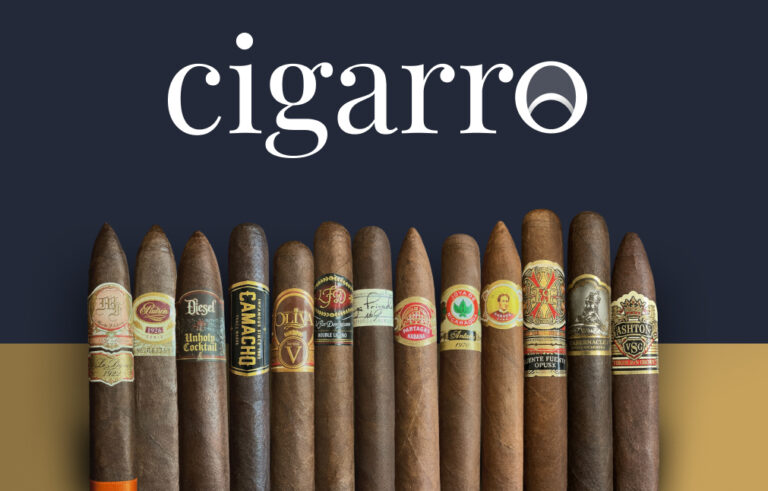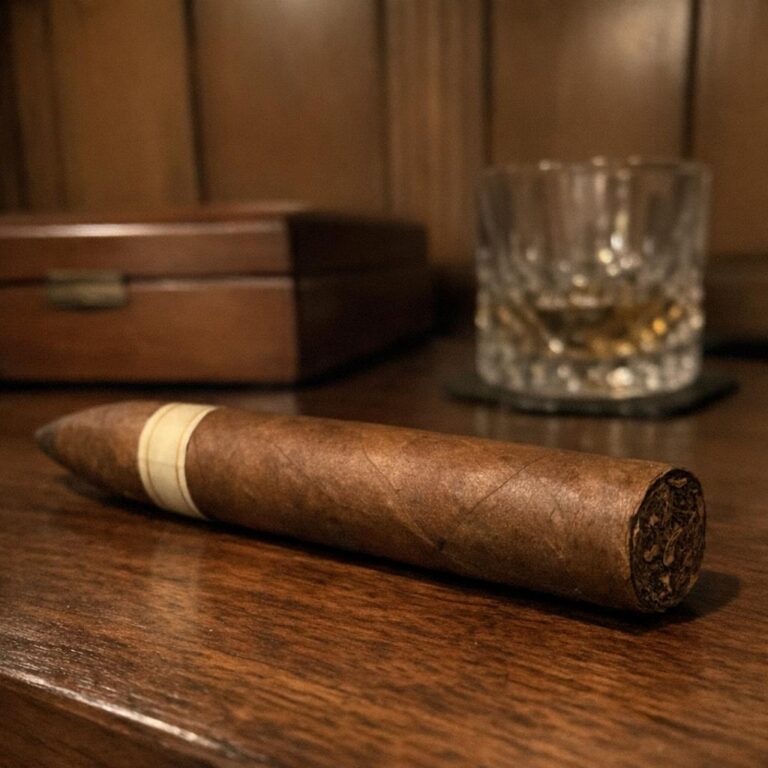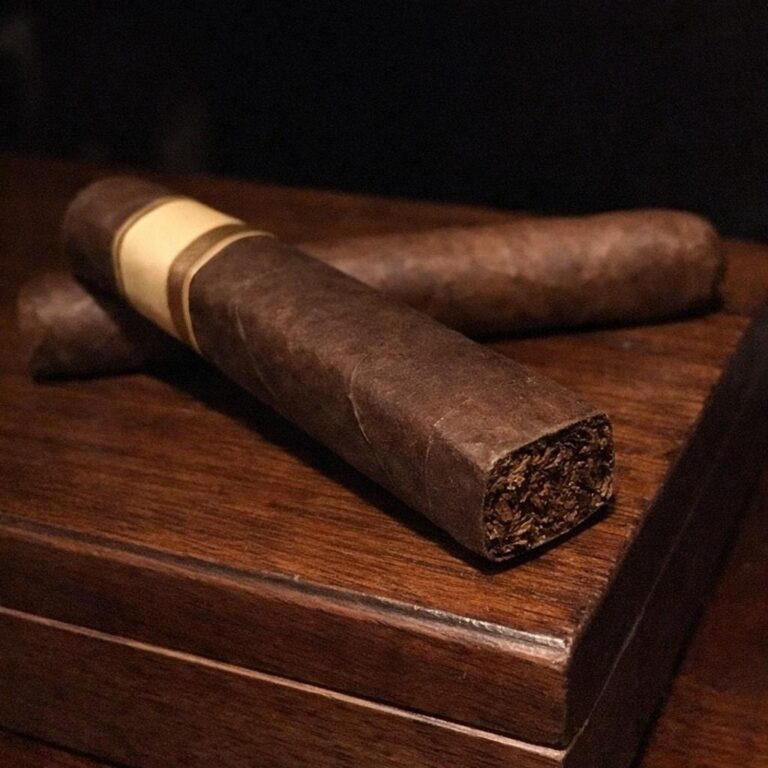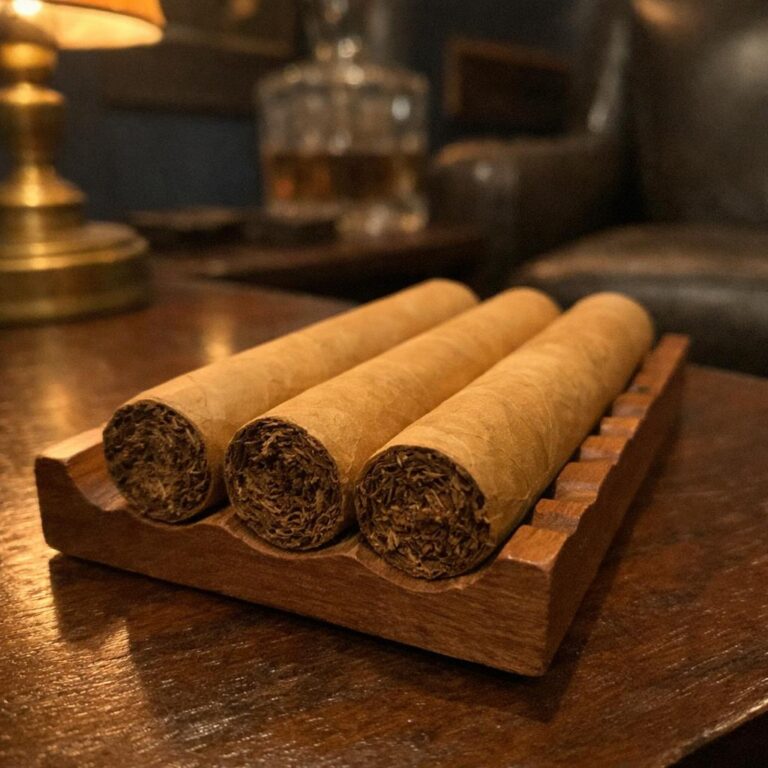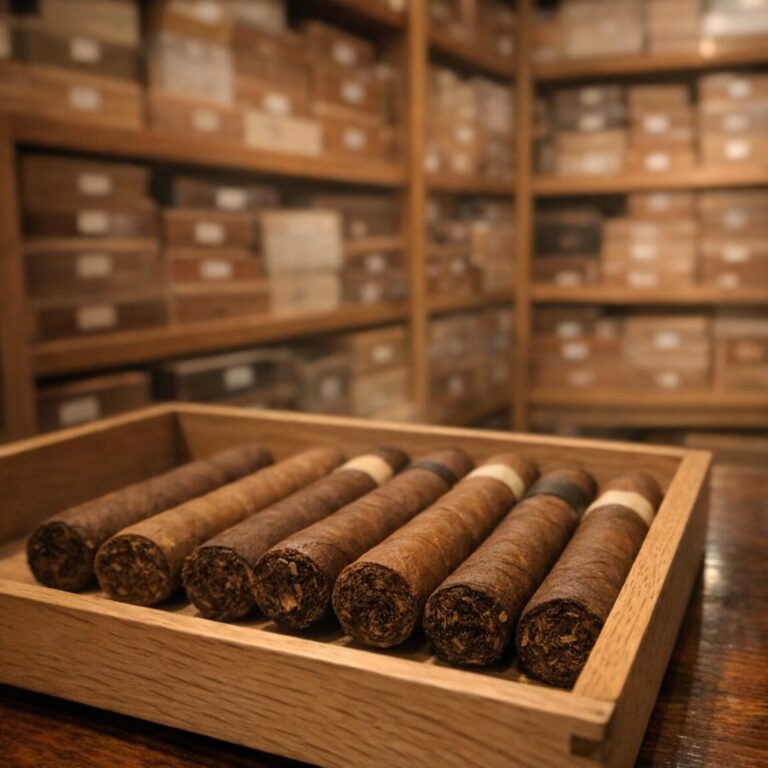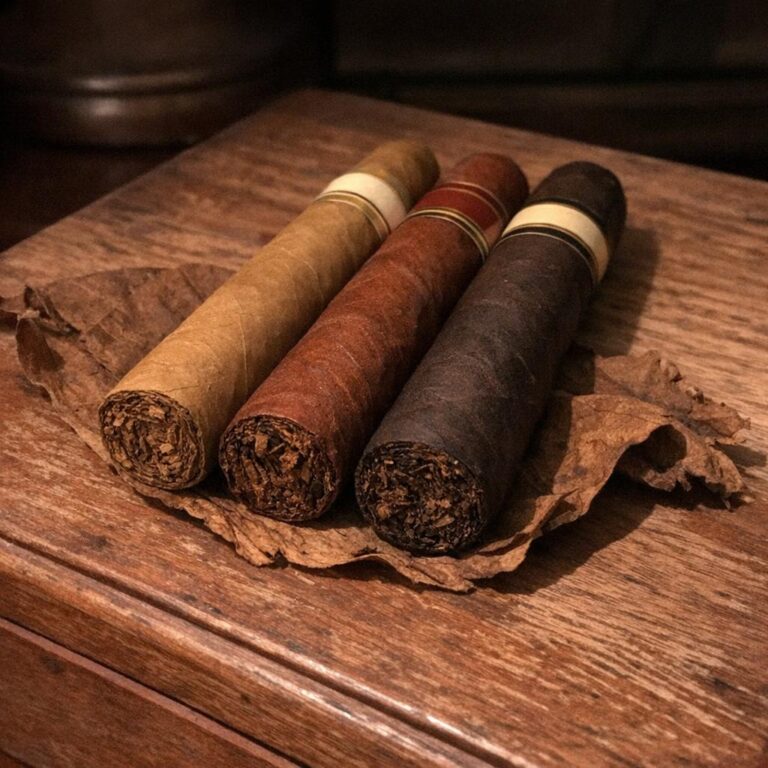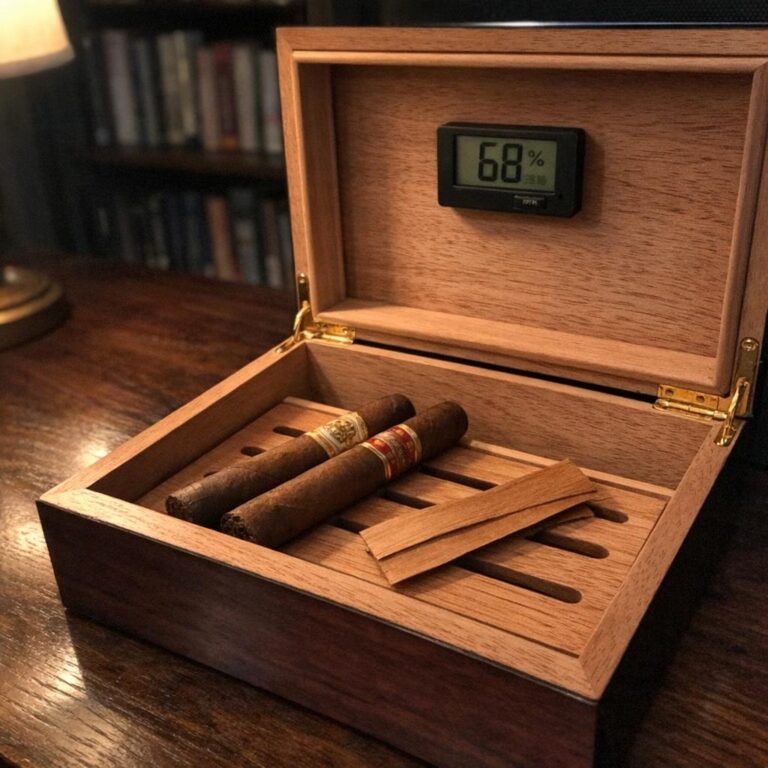
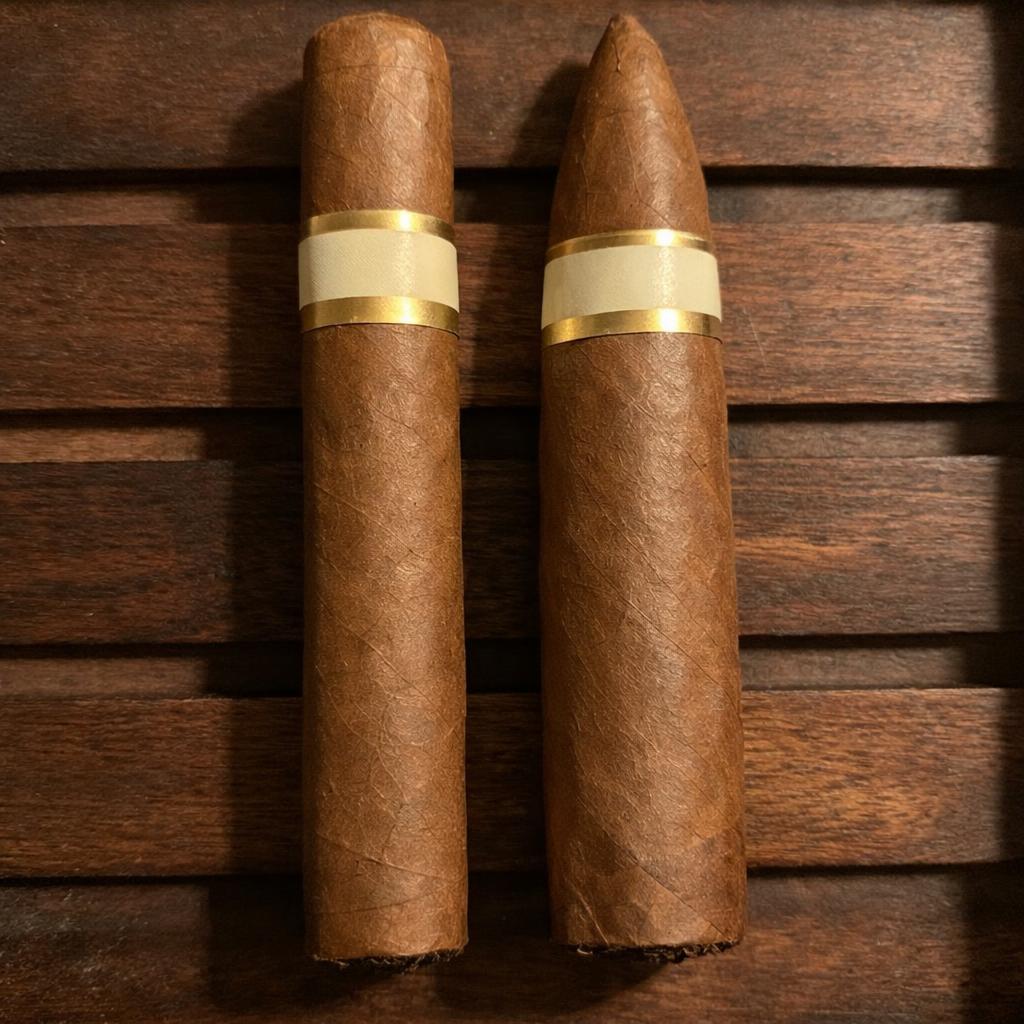
A figurado is any cigar that is not a straight-sided cylinder. The straight-sided cigar is called a parejo, and it accounts for nearly everything in the average humidor: the Churchill, the toro and the robusto are all parejos, round-shouldered and open at the foot. The figurado family covers the rest: the pyramid, the belicoso, the torpedo, the perfecto, the salomon and the culebra, every cigar with a taper, a bulge or, in one memorable case, a braid.
The word is Spanish for figured, which is a tidy way of saying shaped. A taper does not make a cigar better, and the shape tells you nothing about the blend inside. What the shaped cigars do carry is a particular reputation in the trade, partly for what the taper does to the smoke and mostly for what the shape says about the hands that rolled it. Here is the family, properly introduced.
The two families: parejo and figurado
Every vitola belongs to one of two families. The parejo is the default: straight sides, a rounded head finished with a cap, and an open foot that takes a light evenly. Parejos may be round or box-pressed, and the majority of cigars on any shelf are one or the other. The Churchill, toro and robusto that anchor most collections are all parejos, and the vitola dictionary is, for the most part, a catalogue of their variations.
A figurado is anything that breaks from the cylinder. The taper might sit at the head, as on a pyramid. It might sit at both ends, as on a perfecto. The body might swell in the middle, or, in the culebra’s case, three thin cigars might be plaited together like rope. If the silhouette does anything other than run straight from foot to shoulder, the trade files it under figurado.
The distinction matters more than it first appears, because the two families are rolled differently and, fairly or not, judged differently. A shaped cigar announces ambition. Whether the ambition is justified is a question for your review notes rather than the shelf.
Pyramid, belicoso, torpedo and the naming muddle
The three tapered-head shapes are the figurados you will actually meet, and the trade has spent a century blurring the lines between them.
The pyramid is the reference point: an open, cut foot like a parejo, then a steady taper to a pointed head. Classic dimensions run six to seven inches, with a ring gauge around 40 at the head widening to the low fifties at the foot. The Montecristo No. 2, at six and one eighth inches by 52, is the shape’s standard-bearer.
The belicoso is traditionally a short pyramid, five to five and a half inches with a ring gauge around 50, and its taper is blunter, more a rounded shoulder than a point. On a modern band the word mostly signals the head shape rather than any particular size. The Bolivar Belicoso Fino remains the Cuban benchmark.
The torpedo is where the muddle lives. The traditional torpedo had a closed foot, a bulge through the middle and a pointed head, a difficult shape to roll and one that has nearly vanished. What sells as a torpedo today is, strictly speaking, a pyramid with a sharper point, and most makers now use the two words interchangeably. By the old definitions, the world’s best-known torpedo, the Montecristo No. 2, is really a pyramid. Nobody minds, but it is a fine thing to know.
Perfecto, salomon, culebra: the rarer company
The perfecto tapers at both ends: a closed or nearly closed foot, usually a swell through the middle, and a tapered head. Lengths vary enormously, from stubby examples under five inches to grand ones. The shape’s modern reputation rests with the Arturo Fuente Hemingway series, a family of freeform perfectos in Cameroon wrapper, and the Fuentes are often credited with bringing the shape back into fashion decades ago when few other makers would spend the training time on it.
The salomon and the diadema are the giants. A diadema is any very large double-tapered figurado, sometimes passing eight inches; the salomon is its best-known size, usually running past seven. Every salomon is a diadema, though not every diadema is a salomon, a sentence worth rehearsing before you next deploy it at the lounge.
The culebra is the eccentric of the family: three thin panetelas plaited together, tied with string and sold as one cigar. You untie the braid and smoke the three crooked sticks separately, which is the traditional justification for keeping two friends whose taste you trust. Usually five to six inches with a 38 ring gauge, culebras were once more common than they are today, and finding one is now a small occasion in itself.
What the taper does and what it signals
There are two honest reasons to reach for a figurado. The first is the draw. On a tapered head you choose the aperture: cut shallow and the opening stays narrow, take more and it widens. Start a touch above the tip, try the draw, and trim again only if the cigar needs it; you can always remove more and never less. Cigar Aficionado’s editors prize the pyramid precisely because the tapered head lets the flavours meld in the mouth. To my palate the effect is real but subtle, a matter of focus rather than transformation, and it rewards an unhurried pace.
The second reason is the signal. Shaped cigars are demanding work. The bulge of a true torpedo or a perfecto calls for a truly skilled torcedor, and when the Fuentes revived the shapes, few other makers wanted to spend the time training rollers for them; the family treated great figurados as a badge of honour. A figurado from a serious house has usually crossed a senior roller’s bench. That is a signal, not a guarantee. Shape alone has never made a better cigar, and a well-rolled robusto will beat a careless torpedo every evening of the week.
Smoke the shape, then write it down
The shape question settles the way every question in this hobby settles: smoke the thing and write it down. Next time a figurado crosses your path, log the vitola honestly, note where the taper sat and what it did to the draw, and compare it against a straight-sided cigar of similar blend. Review by thirds, as ever. The shapes have carried a century of mystique; your notes will tell you how much of it they earn.