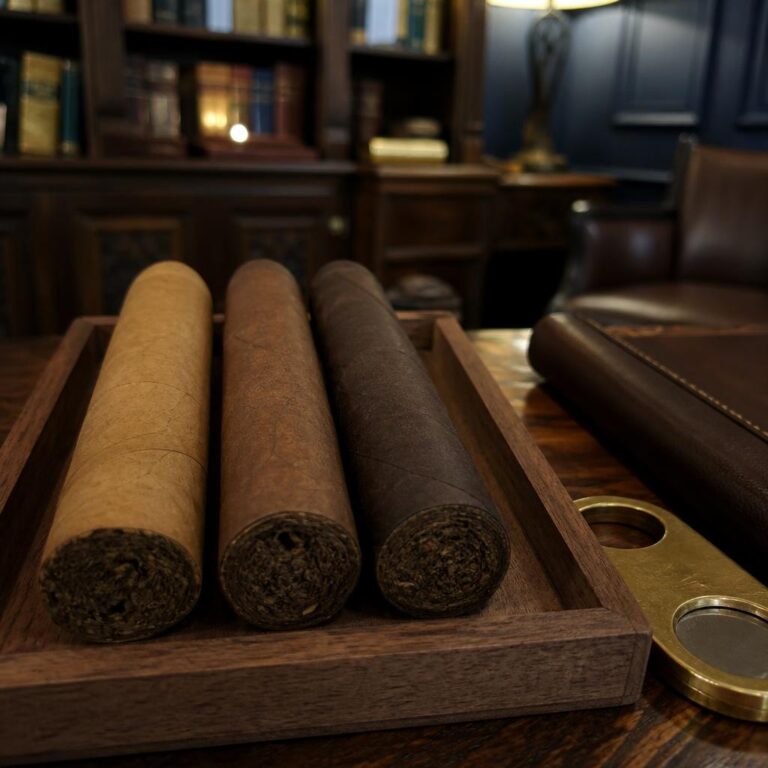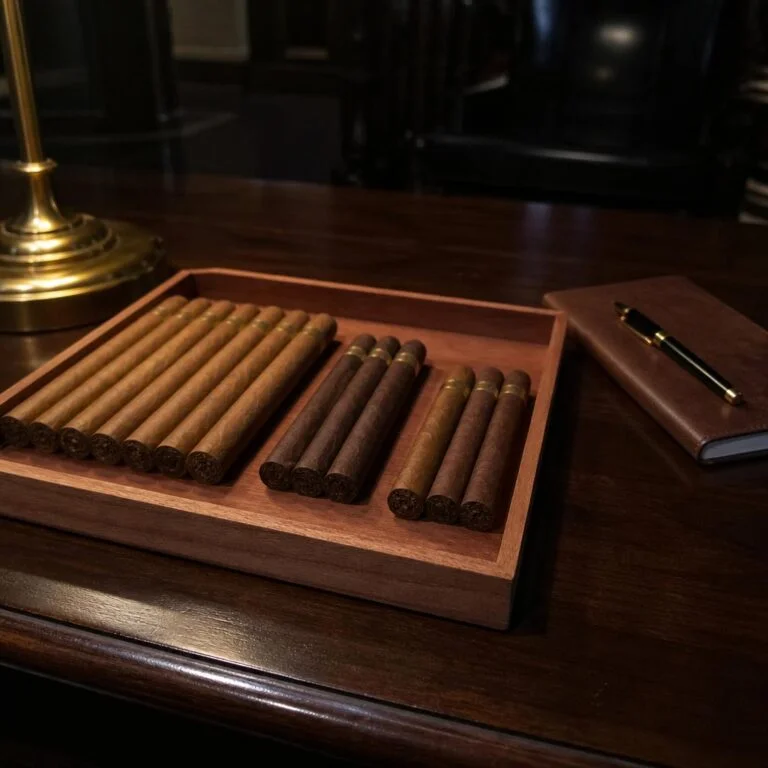
Ask a room of enthusiasts to name the great cigar origins and you will hear Cuba first, Nicaragua second and the Dominican Republic third, usually in that order and usually with conviction. Honduras tends to arrive late in the conversation, if it arrives at all. This is odd, because Honduran cigars are the third school of New World cigar making, with a lineage running unbroken from the Cuban embargo to the present day. Danlí is the cigar capital of Honduras, a working town in the southeast where a remarkable share of the country’s production is rolled. The Jamastran Valley, just outside Danlí, is Honduras’s most celebrated tobacco region, and the place where authentic Cuban-seed corojo found its second home.
So consider this the third chapter of an origin story we began with Dominican and Nicaraguan cigars. Honduras earned its seat at the table decades ago. The country simply never hired a publicist.
The country that carried the torch and rarely got the credit
The story starts, as so many cigar stories do, with the embargo. When the United States closed its ports to Cuban goods in 1962, the owners of Cuba’s great marques scattered, and the question became where the exiles would plant next. Fernando Palicio, whose portfolio included Punch and Hoyo de Monterrey, passed the American rights for both to Frank Llaneza and Dan Blumenthal of Villazon and Company in the mid-1960s. Llaneza looked at Honduras, liked what he saw, and set up production there. By the close of the decade, Honduran-made Punch was sitting on American shelves, and Danlí, then a quiet agricultural town in the southeast, had its first cigar factory.
That factory mattered. Honduras American Tabaco, known in the trade as HATSA, seeded what Danlí has since become: the principal cigar-making town in the country, ringed by farms and workshops, the name behind more premium boxes than most smokers realise. Through the 1970s and 1980s, when an American smoker wanted something with more spine than the mild Connecticut-wrapped norm, the Honduran Punch and Hoyo de Monterrey were the usual answer. Honduras was the full-flavoured alternative for a generation.
Then the plot moved elsewhere. The boom of the 1990s pulled hundreds of new brands into the market, Nicaragua recovered from its war years and began its extraordinary run, and the storytelling gravity shifted south across the border. Hurricane Mitch battered Honduras in 1998, and the recovery, on farms especially, took years. Honduran cigars, which had never depended on celebrity blenders or origin mythology, kept being made in large numbers with very little noise.
That quietness is the heart of the matter. The Dominican Republic has its royal houses. Nicaragua has its volcanic soil and a fleet of boutique darlings. Honduras has working farms, working factories, and a reputation among people who pay attention. It is the origin a good tobacconist recommends with a slight lean over the counter, the way one recommends a producer’s second label that drinks like the first. We have made the case for the two louder schools elsewhere. This chapter belongs to the one that carried the torch through the lean years and rarely got the credit for it.
Two valleys and a borrowed seed Jamastran, San Agustín and the corojo line
Two growing zones matter most to the modern Honduran cigar, and they sit at opposite ends of the country.
The first is the Jamastran Valley, in the department of El Paraíso, hard against the Nicaraguan border and a short drive from Danlí. It is warm, consistent farm country with fertile soil, and it grows both Honduran corojo and Connecticut-seed leaf. Growers like to compare Jamastran’s conditions to those of Cuba’s finest tobacco country, and the comparison gets made often enough that it has become the valley’s calling card. Treat it as shorthand rather than science, but the leaf gives the shorthand some backing.
Corojo is the reason the comparison lands at all. The varietal takes its name from El Corojo, the celebrated Cuban farm where it was grown, and Daniel Rodríguez, the Cuban farmer who ran that farm, is credited with carrying the seed out of Cuba after the revolution and establishing it in Honduras in the 1960s. That migration is the founding story of Honduran tobacco, and unusually for this industry, it is documented rather than embroidered. The seed took to Jamastran. The Eiroa family in particular built their name on growing what they call authentic corojo, keeping the old line going while much of the industry moved on to hardier hybrids, and the phrase has since become the badge Honduran growers reach for the way Burgundians reach for terroir.
The second zone sits in the western highlands, out towards the Guatemalan border. General Cigar grows proprietary leaf in the San Agustín area for its all-Honduran Punch Gran Puro programme, high country that gives a sturdier, more mineral expression of the same national character. Between the two, Honduras fields leaf for every job: wrapper, binder and filler, pale Connecticut-seed through dark, toothy maduro.
A note on vocabulary before we go further. Corojo names a seed lineage rather than a shade, which is why a corojo wrapper can run from reddish brown to nearly black depending on priming and fermentation. If wrapper terms are still settling for you, our primer on cigar wrapper types walks every shade from Double Claro to Oscuro, and it will make the tasting section below considerably more useful.
The first family of Danlí Camacho, Aladino and the Eiroas
Every origin needs a family to hang its story on, and in Honduras that family is the Eiroas.
Julio Eiroa, Cuban-born and long established in Honduran tobacco, acquired the Camacho brand with his family in 1995 and did something quietly radical: he moved its production to Honduras and built the whole house identity around Honduran corojo. From Rancho Jamastran, the family farm and factory on the outskirts of Danlí, Camacho became the loudest advocate Honduran tobacco has ever had. The flagship Camacho Corojo was, and remains, a Honduran puro: corojo wrapper, corojo binder, corojo filler, all from the valley. In a market that was busily blending across four countries per cigar, a single-valley puro was a statement of confidence.
The statement was heard. In October 2008 the Eiroas sold Camacho to the Oettinger Davidoff Group, the Swiss house behind Davidoff, and Christian Eiroa, Julio’s son, stayed on to steer the transition until late 2011. Camacho is still made in Honduras today, and the Corojo line still anchors the marque.
What the sale did not do was retire the family. Julio Eiroa returned in 2016 with JRE Tobacco Co., founded with his son Justo, and the Aladino brand, rolled at the family’s Las Lomas operation in the Jamastran Valley. The name is a small piece of Danlí memory: El Cine Aladino was the town cinema the family ran in the 1970s. The Aladino core line is authentic corojo through and through, a Honduran puro built from the family’s own farms, and it has become the connoisseur’s shorthand for what old-fashioned Honduran tobacco tastes like when nobody hurries it. Christian, for his part, now runs his own house, CLE.
Hold that arc in mind, because it is the Honduran story in miniature. A Cuban seed, carried into exile. A family that grew it for decades while fashion looked elsewhere. A sale to one of the great European houses, which is about as strong an endorsement as this industry issues. And then, rather than a comfortable retirement, a return to the valley to do it all again under a name borrowed from the town cinema. Countries do not get better founding families than that.
The wider Danlí bench Prensado, Excalibur, Gran Puro
Danlí’s bench runs deeper than one family.
Raíces Cubanas, a factory in town that rolls for several well-known brands, produced the cigar that did more for Honduras’s modern reputation than any advertising could have. The Alec Bradley Prensado, launched in 2009, is box-pressed as the name promises and dressed in a corojo wrapper from Trojes, a Honduran growing area near the Nicaraguan border, over a Nicaraguan binder and a Honduran and Nicaraguan filler core. In 2011, Cigar Aficionado named the Prensado Churchill its number one cigar of the year, on 96 points. A Honduran-wrapped, Danlí-rolled cigar at the top of the most-watched list in the industry: for one news cycle at least, the third school led the conversation.
General Cigar, meanwhile, never left. Its Villazon unit in Honduras still produces the non-Cuban Punch and Hoyo de Monterrey lines, and the Hoyo de Monterrey Excalibur remains the classic of the house: a Connecticut Shade wrapper over a Connecticut Broadleaf binder and a Dominican, Honduran and Nicaraguan filler blend, an amiable, cedary smoke that has been a great many people’s first Honduran-made cigar, with a maduro version for the darker register. For the purists, Punch offers the Gran Puro, an all-Honduran cigar built on that San Agustín leaf from the western highlands. Cigar Aficionado rated the Gran Puro Santa Rita 93 points and placed it in its Top 25 for 2016, which is respectable company for a cigar that rarely gets mentioned at dinner parties.
Rocky Patel keeps a Honduran thread running too. The Vintage 1990 is wrapped in Honduran maduro leaf the company says it ages a dozen years before rolling, and it is the gentlest way into the country’s tobacco: mellow, nutty, and a standing rebuttal to the idea that Honduras only does strength.
None of these houses shouts. That is rather the point. The cigars come out of Danlí year after year, the ratings arrive when they arrive, and the smokers who know, know.
What Honduras tastes like to this palate, at least
Generalising about a country’s flavour is a mug’s game, and I will now play it, carefully.
To my palate, and to the broad consensus of people who smoke a lot of these, the Honduran register sits on the savoury side of the shelf. Earth first. Then leather, oak and cedar, a white pepper that builds through the final third, and sometimes a bready, toasted note through the middle that corojo devotees recognise on sight. Where the Nicaraguan school tends to open with sweetness and spice, and the Dominican school with cream and grass, the Honduran classics lean drier and more austere, with a finish that ends crisp rather than dessert-like. Reddit’s r/cigars crowd reaches for words like earthy and leathery whenever Honduras comes up, and for once the crowd and the critics are saying roughly the same thing.
Strength deserves a caveat. The old reputation, full-bodied or nothing, is out of date. The corojo puros from Camacho do arrive with authority and are best taken after a proper dinner, and several of them appear in our list of full-bodied cigars worth your evening. But an Aladino runs gentler, the Excalibur is a genuinely mild-to-medium smoke, and the Vintage 1990 is downright polite. Honduras spans the whole body spectrum. It simply declines to be sugary at any point along it.
The way to test all this is not to take my word for it but to run the comparison yourself, one cigar per evening, notes as you go. Smoke a Honduran puro alongside last week’s Nicaraguan and notice where the sweetness went. Our guide on how to taste a cigar covers retrohaling and the flavour families, and The Cigarro Method gives you the review-by-thirds discipline that makes the comparison worth something a year later. If the darker end appeals, Honduran maduro behaves as maduro always does, and this short explainer will spare you a common misreading. And should the evening involve a pour of something aged, the fuller Hondurans hold their own next to a dram, as our piece on pairing cigars with whiskey sets out.
Four Hondurans worth an evening the concierge's shortlist
Four, then, for the shortlist. No maker paid to be here. Cigarro does not accept sponsorship or consideration of any kind from cigar companies, so this list is exactly what it appears to be: one concierge’s honest recommendation for a fortnight of Honduran evenings.
Camacho Corojo Robusto, 5 x 50. The standard-bearer. A Honduran puro with corojo in all three positions, full-strength and unapologetic about it: pepper, earth, leather and a dark toasted sweetness that never tips into dessert. Smoke it after dinner, fed and unhurried, and give the final third your full attention. If you log one cigar from this article, log this one. It is the taste the whole country is shorthand for.
Aladino Corojo, robusto. The same seed in a different mood. Julio Eiroa’s authentic-corojo puro from Las Lomas is smoother-tempered and old-fashioned in the best sense, all cedar, toast and gentle baking spice. Smokers chasing the profiles of older Cuban cigars keep ending up here, and they rarely leave. An afternoon cigar of real class.
Alec Bradley Prensado, Churchill. The award-winner, and the award was deserved. Trojes corojo wrapper, box-pressed, richer and rounder than the puros above, with cocoa and pepper trading places through the thirds. The 2011 Cigar of the Year nod made it famous. The consistency since is why it stays on lists like this one. If the sizes are new to you, the Churchill format rewards a slow evening.
Punch Gran Puro Santa Rita. The dark horse. All-Honduran, built on the western San Agustín leaf, 93 points from Cigar Aficionado and a Top 25 spot in 2016, and still priced like the working cigar it is. Earthy, robust and completely uninterested in impressing anyone, which is of course precisely why it does.
Smoke the four across two weeks and you will have a better practical education in Honduran tobacco than most retail counters can offer. Log each one by thirds as you go: construction, first third, second, finish. Patterns emerge by the third cigar. By the fourth you will know whether you are a corojo person. Most people who make it that far are.
The third school deserves a page in your ledger
Honduras will probably never hire that publicist. The families who grow there seem constitutionally incapable of shouting, and there is something fitting about a cigar country you have to discover rather than be sold. But quiet is not the same as minor. The third school has the seed, the valleys, the families and the ratings. All it asks of you is a little curiosity and a free evening.
So take the shortlist above and write your own chapter. Add the four to your Cigarro humidor, smoke them properly, log what you actually taste rather than what the marketing says, and see where your palate lands. The country has waited six decades for its due. It will not mind waiting the fortnight it takes you to catch up.