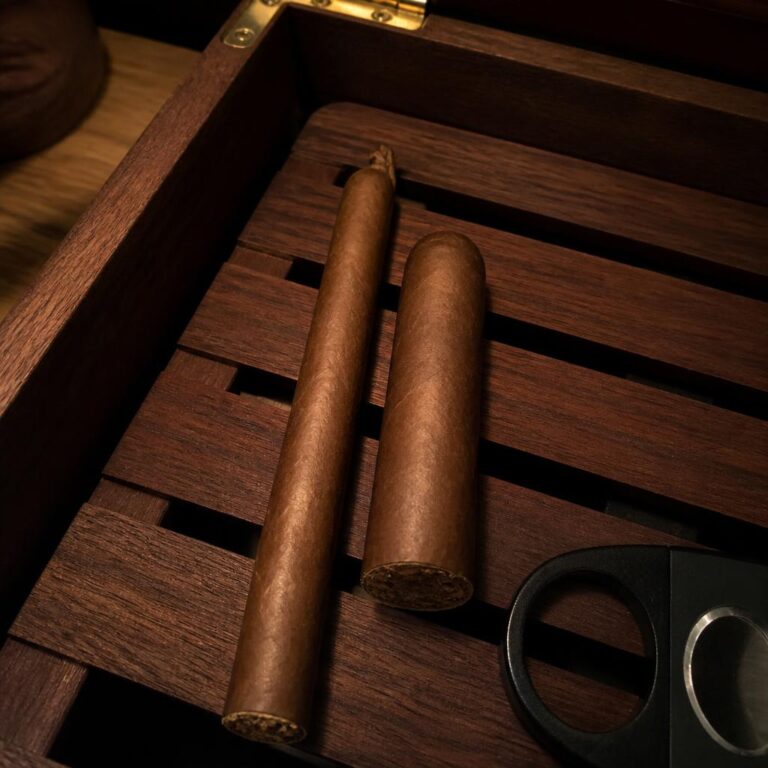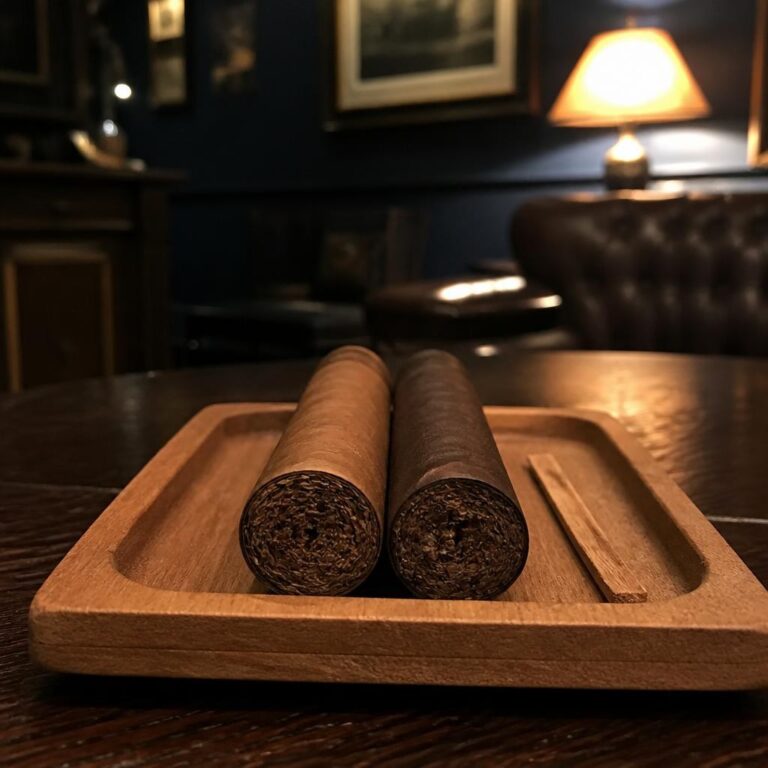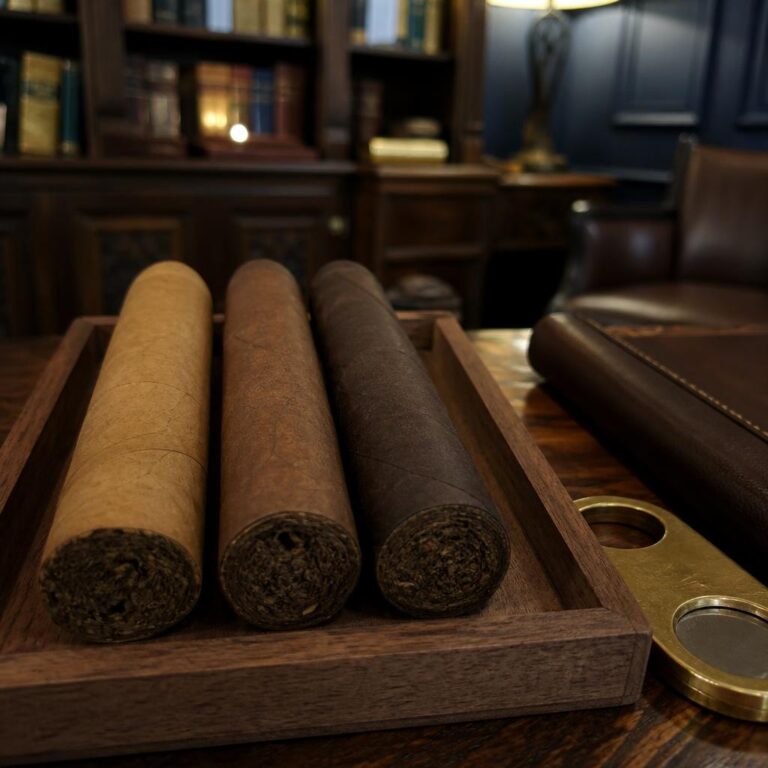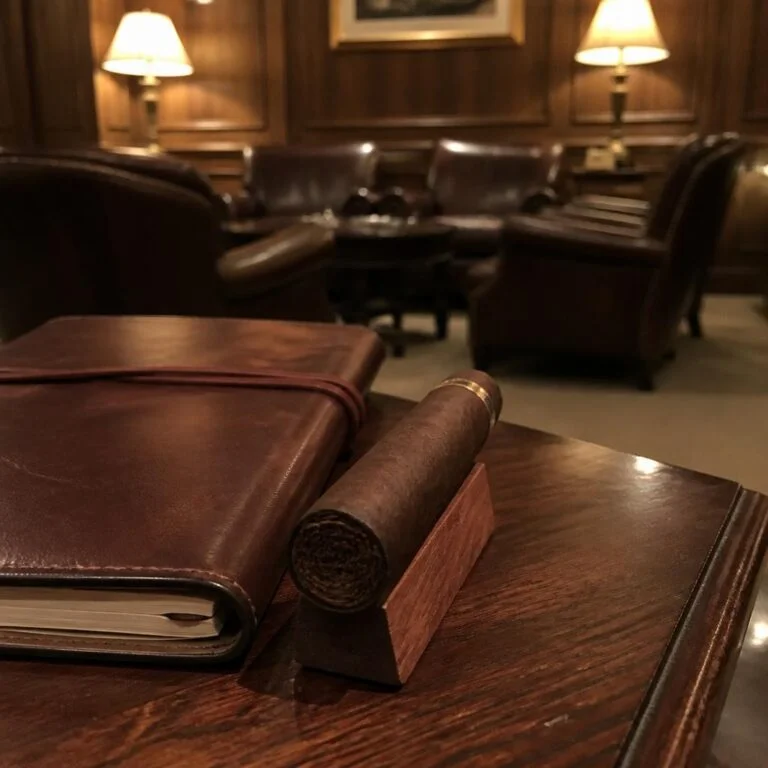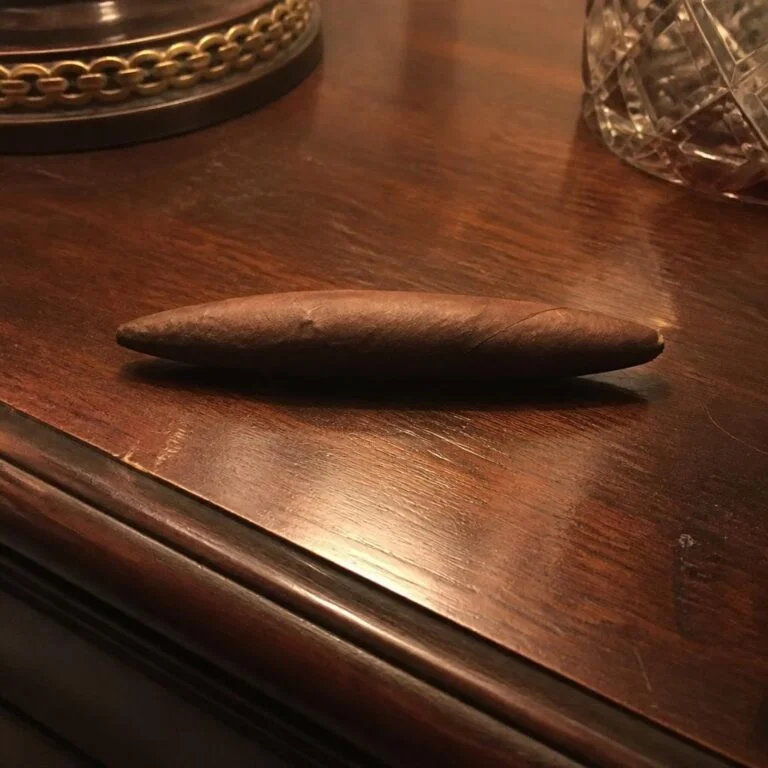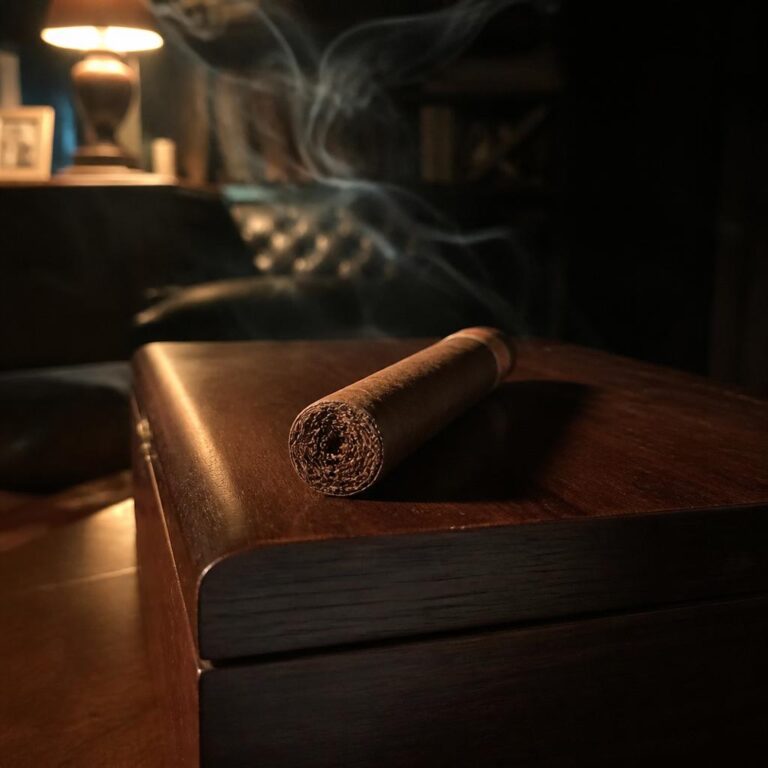
Every cigar goes out eventually, and most go out at least once before you have finished with them. A coal left too long between draws simply cools and dies, and there is nothing in that worth a moment’s embarrassment. Relighting a cigar is a normal part of the evening, not a mark against your technique.
What matters is doing it well. A careless relight scorches the wrapper, sours the smoke, and turns a fine cigar bitter through its final third. A patient one brings the cigar back so cleanly you would never know it had paused. The difference is a minute of care and a little understanding of why the coal went out in the first place.
Why a Cigar Goes Out
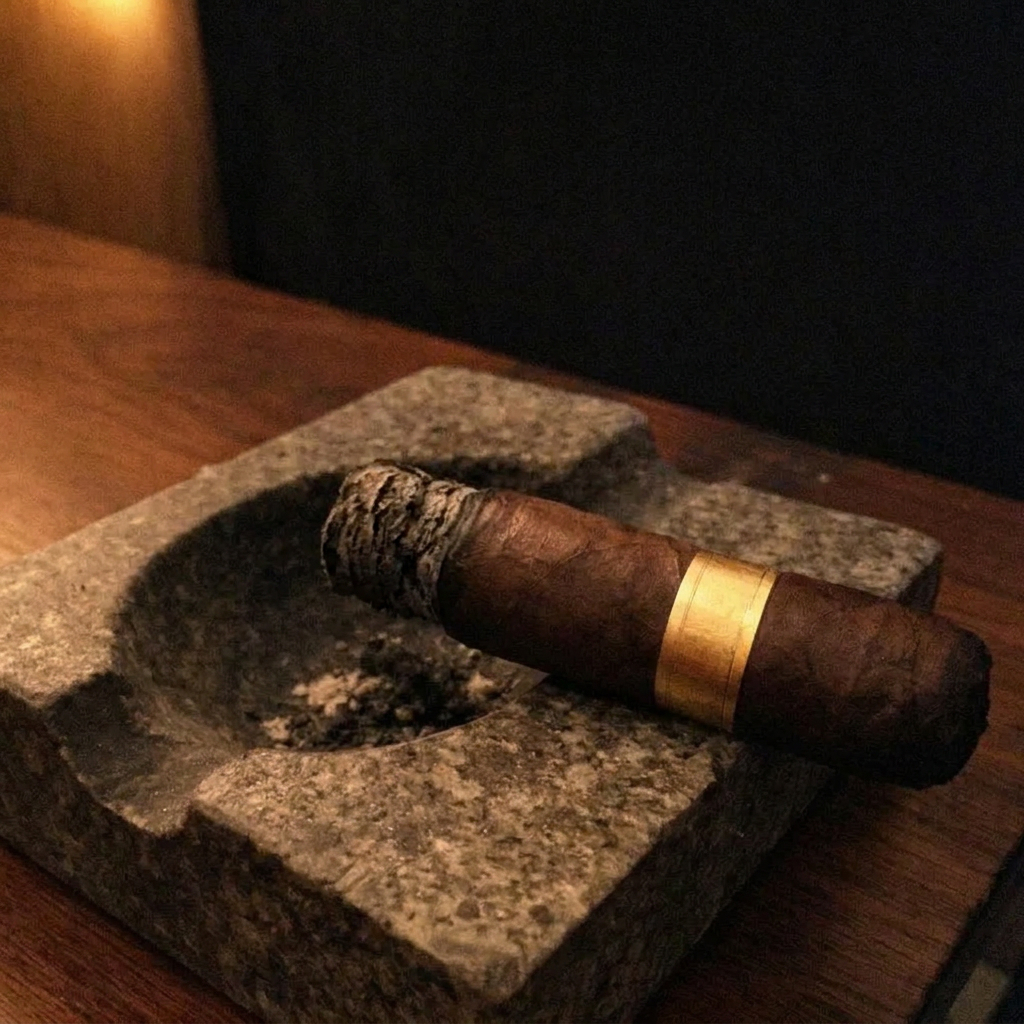
A cigar stays lit only while air moves through it, which means it wants a gentle draw every minute or so to keep the coal alive. Leave it in the ashtray through a long story or a refilled glass and it will quietly go out. This is the commonest cause by far, and the least worrying, since you did nothing wrong beyond enjoying the company.
The other reasons are worth knowing, because they tell you whether to expect trouble later. A cigar stored too wet burns reluctantly and dies often, the damp interior fighting the flame the whole way; a humidor held at a steady, sensible humidity, which starts with seasoning it properly, spares you most of that. An uneven light at the outset tends to become an uneven burn, one side racing ahead while the other stalls and cools. A head cut badly at the start narrows the draw and starves the coal. A draughty room, an over-full ashtray that smothers the foot, or simply smoking too slowly will each put a coal out before its time. None of these is fatal. They are the ordinary friction of a hand-rolled thing made of leaf, and every one of them has a remedy.
Purge First, Then Relight
Here is the step most people skip, and the one that saves the cigar. Before you bring a flame anywhere near a cigar that has gone out, purge it. Turn it around, point the dead foot away from your face, and blow gently backward through the cigar as though clearing a straw. A little stale smoke and grey haze will puff out of the foot.
That haze is the point. When a coal dies, the smoke and gases already inside the cigar cool and settle against the tobacco, and they taste sharp and sour if you draw them back through on the next light. Purging pushes them out before they can spoil the first few minutes, which is where a neglected relight most often tastes of nothing but char, a poor way to read what you are smoking. Do it over an ashtray, since a little ash tends to come with it, and keep it gentle. You are clearing the cigar, not trying to blow out a candle. One good breath is usually enough.
How to Relight It
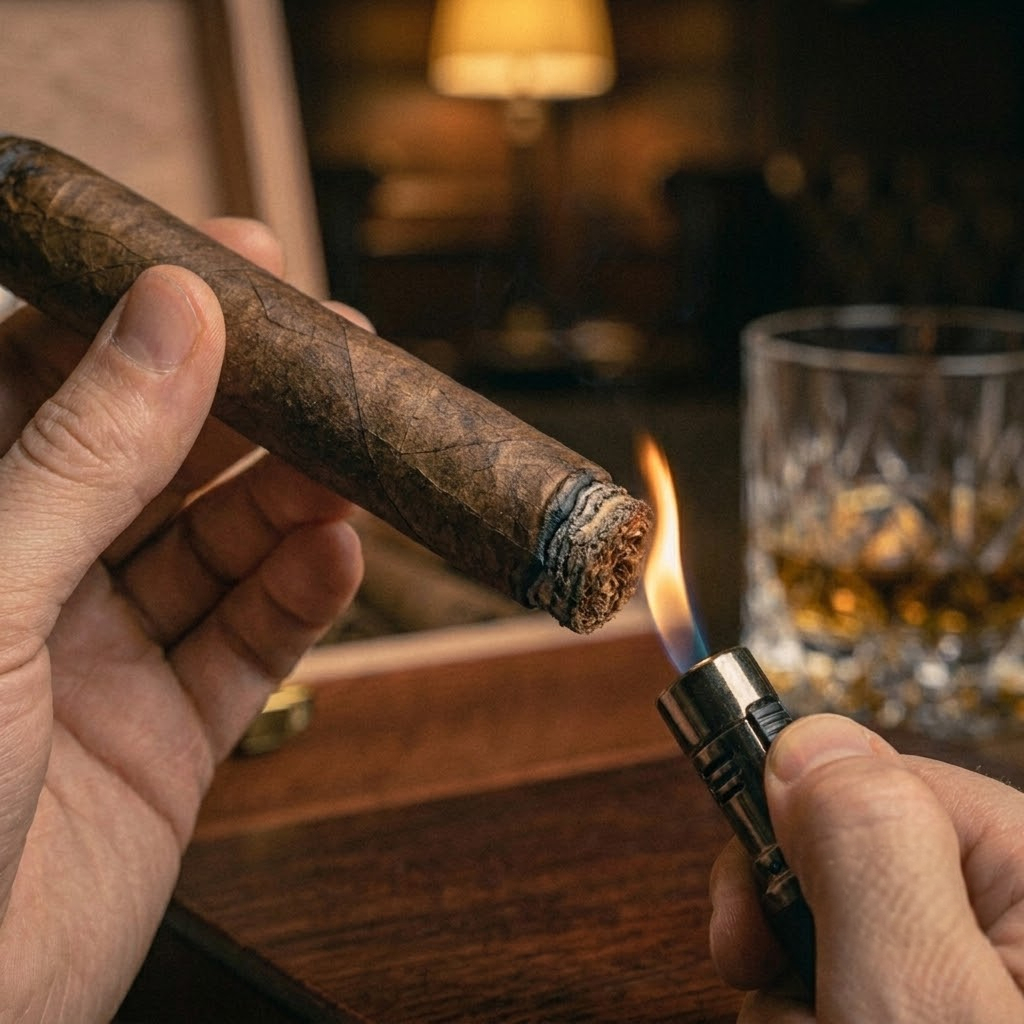
Begin by tapping the spent ash off the foot against the edge of the ashtray. A relight through a cap of old ash burns unevenly, so you want a clean, flat foot to work with. Then hold the cigar much as you would when lighting it fresh, at a slight angle with the foot just above the flame rather than buried in it.
Use a butane torch, a soft-flame butane lighter, or a cedar spill. Never a petrol lighter, whose fuel taints the smoke in a way no seasoned smoker will forgive. Rotate the cigar slowly and let the heat draw across the whole foot until it glows an even orange right to the edges. Only then bring it to your mouth and take two or three gentle puffs to pull the burn back into the body of the cigar. Draw softly. A relit cigar wants coaxing rather than force, and puffing hard to hurry it along is the surest way to overheat the tobacco and turn it harsh. Once the smoke runs freely again and the foot is evenly lit, you are back where you were.
When the Burn Runs Crooked
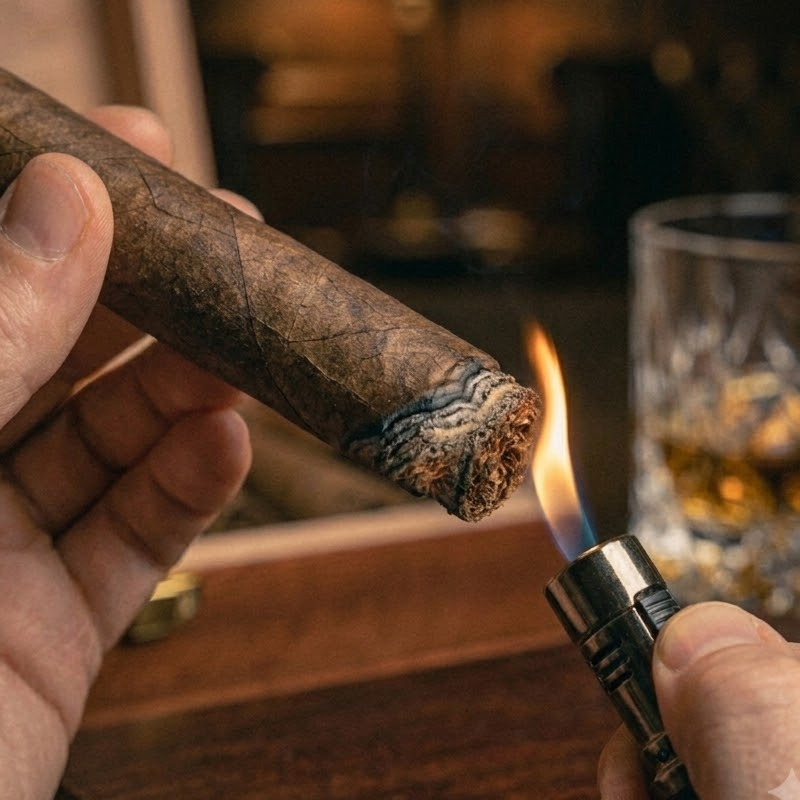
Sometimes a cigar does not go out so much as burn badly, and it helps to know the fix before a crooked burn forces a relight. Two faults come up again and again. Tunnelling is when the filler down the middle burns ahead of the wrapper, hollowing the cigar out like a chimney, and the first sign is a sudden drop in the volume of smoke. Canoeing, sometimes called a runner, is when one side burns down faster than the other, leaving a long shape like the hull of a boat. Both make more sense once you know how the filler and the wrapper sit together inside the cigar.
Both usually trace back to the same handful of causes: a cigar slightly too moist inside, an uneven light at the start, or drawing too hard and too fast. The remedy is much the same in each case. Rotate the cigar as you smoke so the coal heats evenly all the way round, and when one side lags, touch it up by holding a soft flame to the trailing edge alone until it catches up. Left unchecked, a bad burn eventually puts itself out, at which point you tap it flat, purge, and re-toast as before. A well-made cigar of even construction wanders far less than a rough one, which is one quiet argument for starting with reliably rolled beginner cigars while you find your feet.
When to Let It Go
There is a limit, and part of smoking well is knowing it. A cigar relit within the hour comes back close to its old self. Past two or three hours the case weakens quickly, and by the next morning it is gone. As a dead cigar sits, the tars and oils from the burn cool and gather in the unsmoked tobacco, and when you finally relight, those settled compounds burn together into something bitter and stale that no amount of purging quite clears.
So a cigar you set down at the interval and return to twenty minutes later is entirely fine. The half-smoked stub rescued from last night’s ashtray is not, whatever thrift suggests. Fighting a stale relight is one of the least rewarding half-hours in the hobby, and a good cigar deserves better than to be met that way. When one has been out too long, the graceful thing is to let it go and begin again another evening.
Back to Life, Not a Verdict
None of this should make relighting feel like a test. A coal that dies while you are deep in conversation is a sign of a good evening rather than a poor smoker, and bringing it back is a small, satisfying ritual once the steps are second nature. Purge, tap, toast gently, and mind your pace, and a cigar will forgive almost anything short of neglect.
If you keep notes as you smoke, a relight is worth a line of its own. A cigar that went out three times and tunnelled from the first inch is telling you something about how it was stored, and that is exactly the sort of detail the Cigarro Method is built to catch. Note it, and next time you will know to give the cigar longer to settle before you light it.