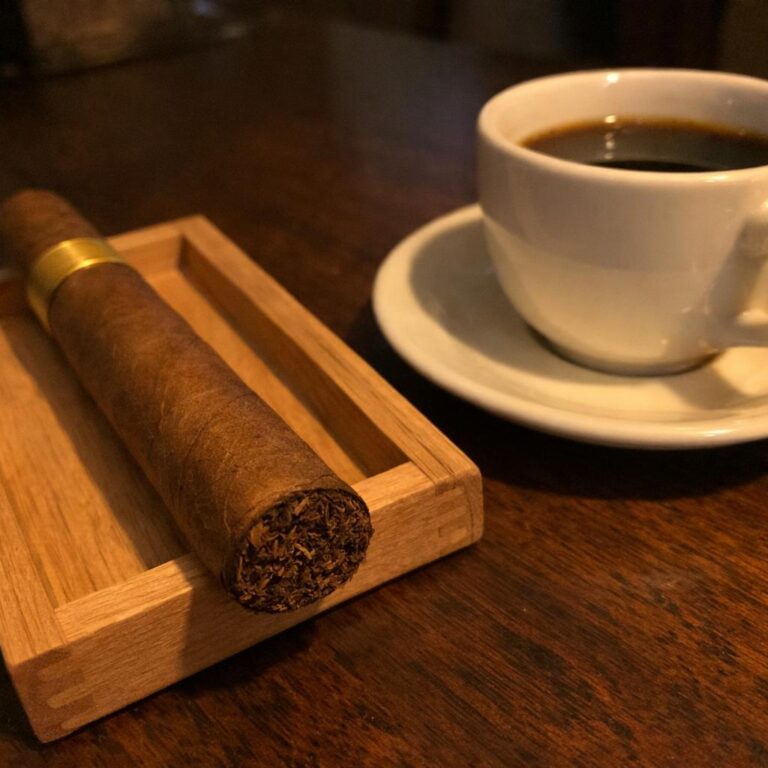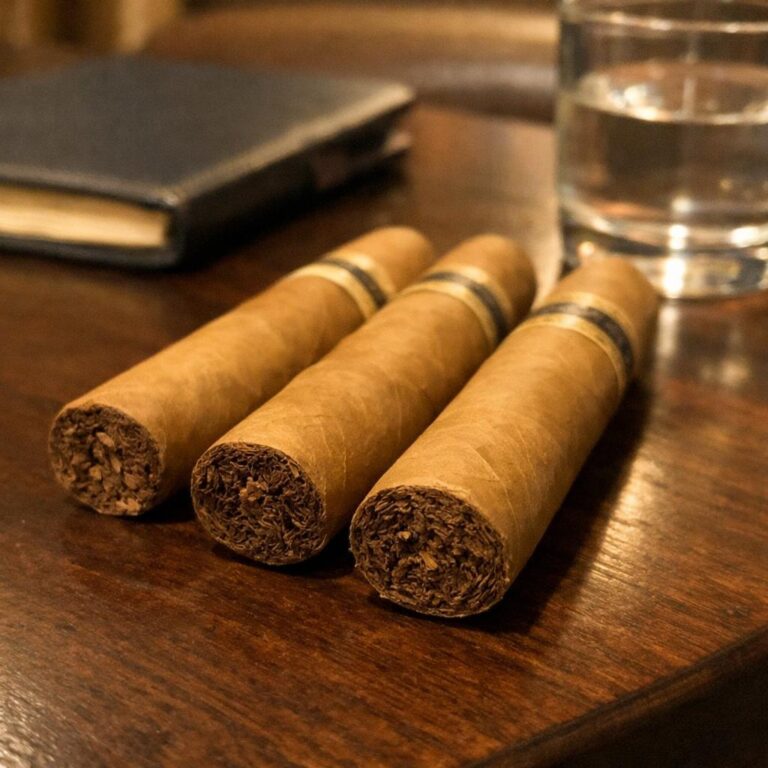
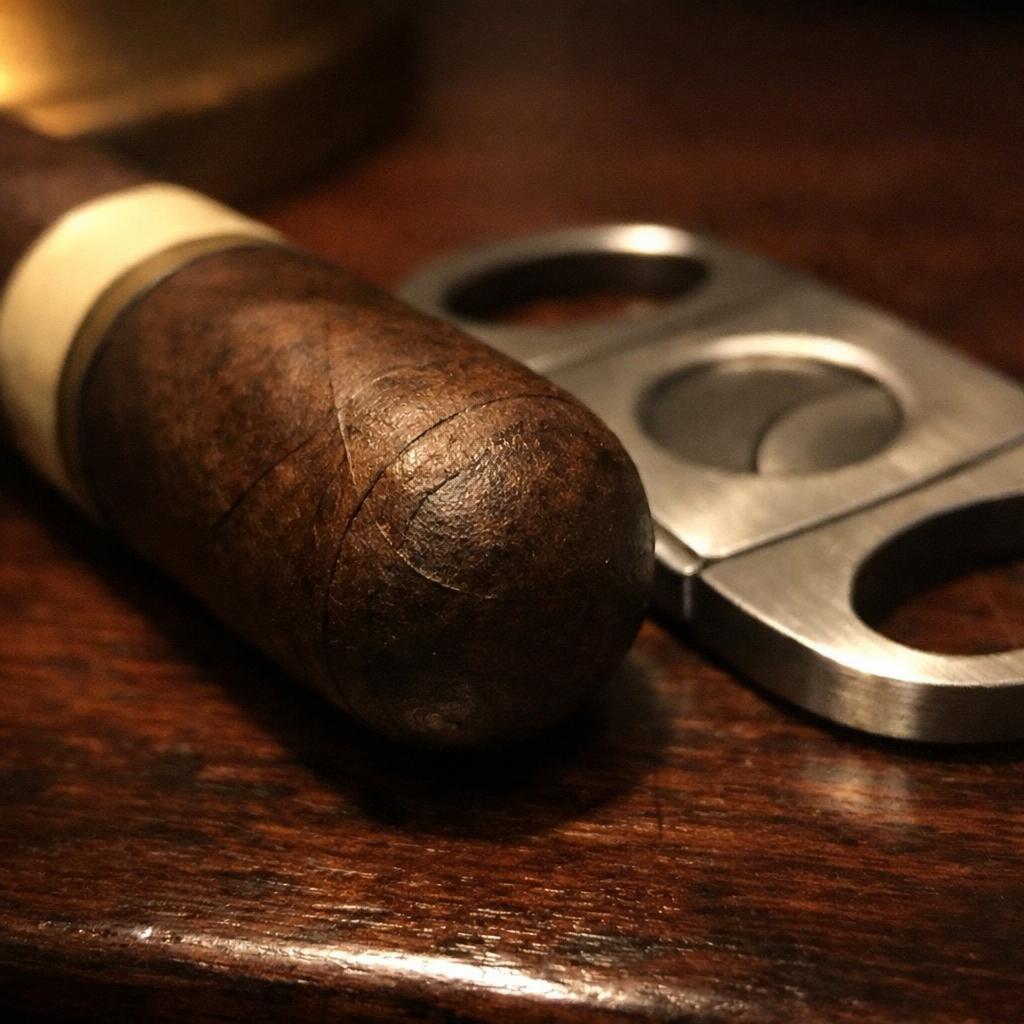
A cigar arrives sealed. The head, the rounded end you put to your lips, is closed off with a small piece of wrapper called the cap, and until you open it the cigar will not draw. Cutting a cigar is the act of removing just enough of that cap to let smoke through cleanly, without loosening the leaves underneath. A guillotine, a V-cutter, and a punch are the three tools that do it. It is the first thing you do to a cigar, and the easiest thing to get wrong.
Most people get it wrong in one of two directions. They cut too little and fight a tight, grudging draw for an hour, or they cut too deep, past the point where the cap ends, and watch the wrapper peel away between their fingers. Both are avoidable, and avoiding them costs about thirty seconds of understanding: where the cap actually ends, what each of the three cutters does to the draw, and which of them belongs on the cigar in your hand.
What follows is the whole of it. The anatomy of the head and the one line you must not cut past. The three cuts, straight, V, and punch, and what each does to the smoke. Which cut belongs on which cigar, from a broad Churchill to a tapered torpedo. The short list of mistakes that spoil a cigar before it is lit. And, at the end, a word on recording the cut and how it drew, because in Cigarro the draw is part of a cigar’s record as surely as the flavour is.
Why the Cut Comes First
There is a reason the cut is treated as a small ceremony rather than a chore. It is the one irreversible thing you do to a cigar. You can relight a cigar that has gone out, you can set it down and come back to it, you can change your mind about the drink beside it, but you cannot un-cut a head. A cigar that has been cut badly is cut badly for the rest of its life, which is usually about an hour, and there is no recovering the hour.
The object is simpler than the fuss around it suggests. You are making an ample, smooth opening for the smoke to come through, while leaving enough of the cap glued in place to hold the wrapper and the filler together at the head. That is the whole of it. Take away too little and the draw is tight and hot. Take away too much, or cut in the wrong place, and the head comes apart in your hand. The good cut sits in the space between those two failures, and the space is wider than nervous beginners think.
One small point of order, since it trips up newcomers: you cut the cigar before you light it, never after. The head, the end you cut, is the end you draw from; the foot, the open end at the bottom, is the end you light. Putting the cutter to the foot, or the flame to the cut head, are errors that announce themselves at once and are just as easily avoided once they are said plainly.
It used to be a far more colourful business. Watch the actors in old films and you will see every method that has since fallen out of fashion. Some characters worried a neat V-shaped notch into the end with a pocket knife. Others carried a horseshoe nail and pierced a hole straight down the middle. The tough guys bit the end clean off and spat it across the room, which looked marvellous and tasted of nothing good. Cutting has become quieter and more elegant since then, which is a small loss to cinema and a considerable gain to the cigar.
Whatever tool you settle on, the manner matters as much as the instrument. A cigar should be cut in one clean, deliberate stroke, the way a good surgeon makes an incision, confidently and without sawing back and forth. Hesitation tears wrappers. The cut that ruins a cigar is almost never the bold one. It is the timid one, made twice.
Where the Cap Actually Ends
Before you cut anything, it helps to know what you are cutting. The closed end of a cigar is the head, and the head is sealed with the cap, a small disc or strip of wrapper leaf laid over the end to hold everything in. On a great many cigars, and on almost every Cuban one, that cap is built in the traditional way: three small seams of wrapper mounted flat over the head, which the trade calls a triple cap, a three-seam cap, or a mounted head. It is a sign of careful rolling, and it is also the thing you are about to trim.
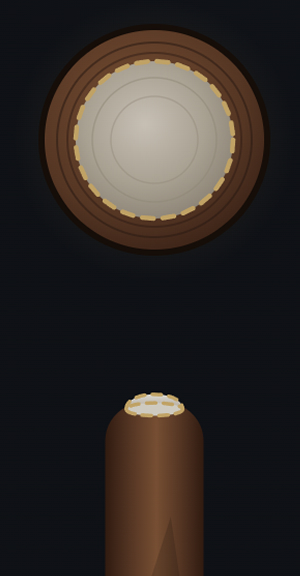
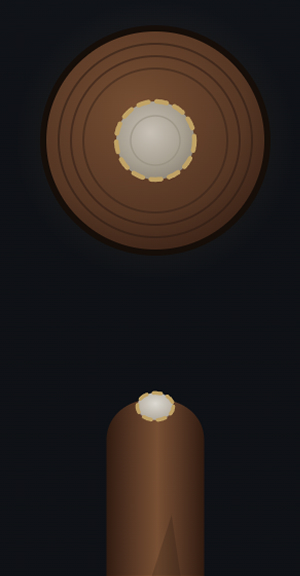
The part you must learn to see is the shoulder. The shoulder is the gentle curve where the rounded cap stops curving and the straight body of the cigar begins. It is the single most important landmark on the whole cigar, because it marks the line you must not cross. Cut at the shoulder, or a hair above it, and you remove the working part of the cap while leaving a thin collar of glued wrapper to hold the head together. Cut below the shoulder, into the body, and you have removed the very leaf that was holding the wrapper down. From there the cigar unravels, and an unravelling wrapper cannot be put back.
In practice this means taking off very little. On most cigars the cut falls about one-sixteenth of an inch, roughly two millimetres, from the end. A useful way to picture it, borrowed from the tobacconists at Holt’s, is to remove a disc about the circumference of a dime from the head and no more. You are not lopping the end off. You are shaving the dome to a flat, open face. When in doubt, cut shallow. You can always take off a touch more, and you can never put any back.
Two heads break this pattern, and both are worth recognising. A flag, or pigtail, is a twist of wrapper left curling off the head instead of a flat cap; you snip it at its base, or simply twist it off, and the head opens cleanly. A torpedo or other tapered figurado has no flat face at all, only a point, which changes how you approach it. We will come to both. For the ordinary rounded or flat head, though, the rule never changes: find the shoulder, and stay above it.
Read the head first
The One Line You Must Not Cross
Cap. The disc or strip of wrapper laid over the head to seal it. The part you trim.
Shoulder. The curve where the cap stops and the straight body begins. The line you must not cut past.
The rule. Cut at the shoulder or a hair above it, about a dime’s width of cap, no more. Go below the shoulder and the wrapper unravels.
Three Ways to Open a Cigar
Almost every cutter you will ever pick up does one of three things, and the three are worth understanding on their own terms before you choose between them.
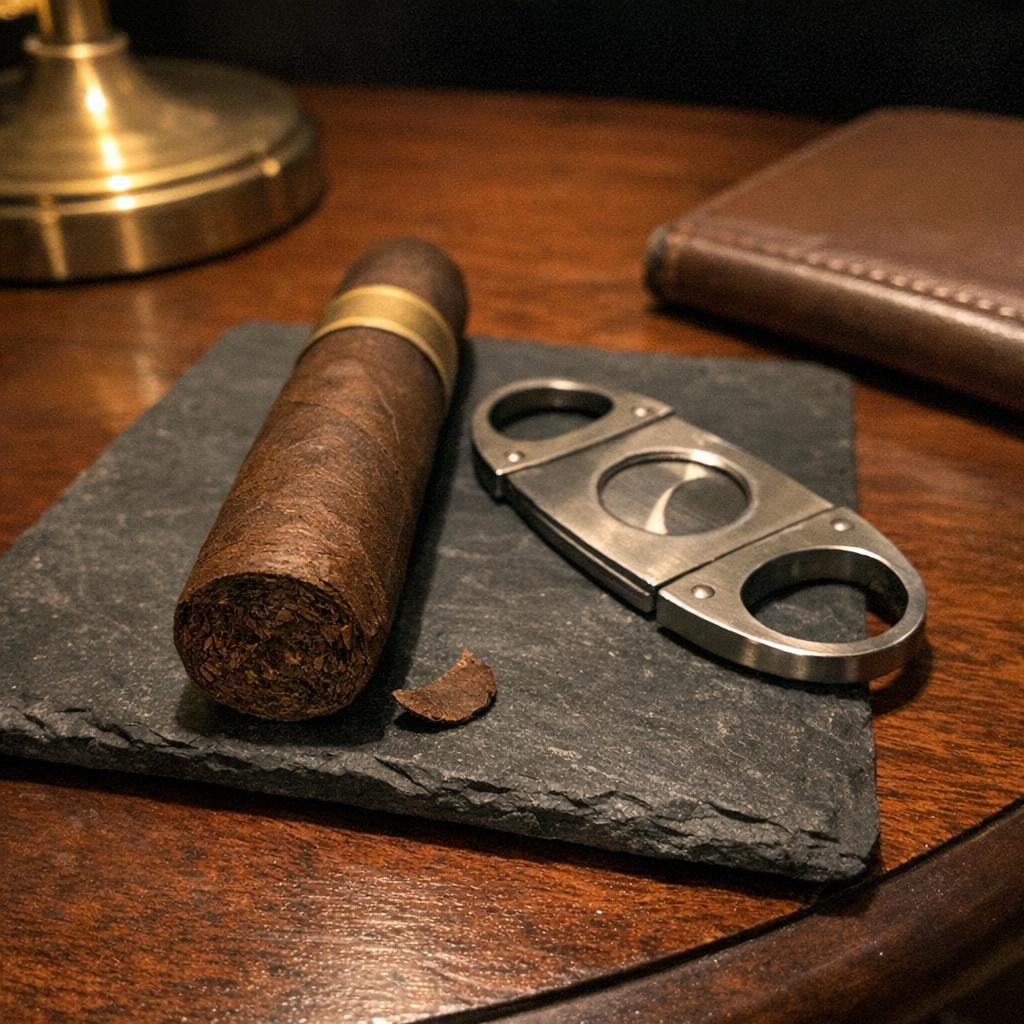
The straight cut, made by a guillotine, is the plain one and the most common. The cutter lays a single straight blade, or a pair of them, across the head and takes off the dome in one stroke. It gives the coolest, loosest, easiest draw of the three, because it opens the largest face of filler to the air, and it works on essentially any cigar you can fit through the hole. For a beginner the double-bladed guillotine is the sensible first tool: the two blades close from both sides at once, meeting in the middle, so the wrapper is far less likely to be dragged and torn than it is under a single blade. Rest the head against the far side of the opening, close the blades until they kiss the wrapper, and cut in one move.
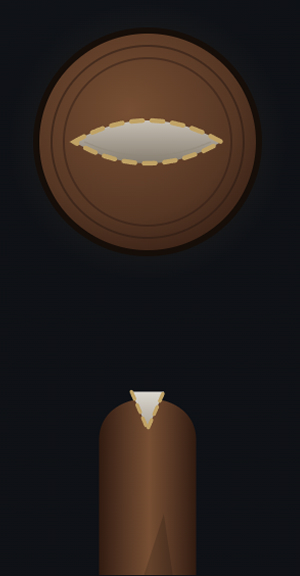
The V-cut, sometimes called a wedge or cat’s-eye, is the considered middle option. A V-cutter is really a single guillotine fitted with a curved blade, and instead of removing the whole dome it presses a wedge-shaped groove across the head. The channel it leaves is narrower and cleaner than a straight cut but bites deeper than the cap, so the smoke is drawn from a greater surface than the opening alone suggests. The result is a draw fuller than a punch and more focused than a straight cut. The V asks for more precision than the guillotine, and it has one real vice: cut too deep, or chew the head while the wedge sits horizontal, and the groove can collapse and pinch the draw shut.
The punch, or bullet, is the smallest cut of all. A short circular blade presses into the centre of the head and twists out a neat cylinder of cap, leaving the rest of the cap in place. Because the opening is small and central, the smoke is concentrated as it reaches the palate, the cap stays mostly intact and smooth against the lip, and very little loose tobacco finds your tongue. It is also the hardest cut to botch: press, turn, done. Its limits are particular. Bore too deep and the draw opens up too far and runs hot; smoke too fast and tar gathers at the small hole, so a punch rewards a slow puff; and if you tend to wet the head, the little opening can clog.
A word on scissors, which are really a variation on the straight cut rather than a fourth kind of opening. A good pair of cigar scissors makes an exceptionally clean cut and is the most elegant tool in the drawer, and also the most demanding. The balance matters the way it does in a good pair of shears: the blades and handles must sit easily in one hand, so you can hold them steady through the cut while the other hand holds the cigar. Try a pair before you buy them. In a sure hand they are a pleasure, and in an unsure one they tear more wrappers than they spare.
At a glance
The Three Cuts Compared
| Cut | What it does | Best for | Watch out for |
|---|---|---|---|
| Straight (guillotine) | Removes the dome and opens the full face | Any shape, the truest draw, beginners | A 60-plus ring needs a wide cutter |
| V-cut (wedge) | Presses a wedge groove deeper than the cap | Rounded heads, a fuller and focused draw | Cut too deep or chew it and the groove collapses |
| Punch (bullet) | Bores a small central hole, cap left intact | Parejos on the go, concentrated flavour | No good on a figurado, runs hot if bored deep |
Matching the Cut to the Cigar
The best cut, as Cigar Aficionado has long put it, is the one that suits the individual. That is true, and it is also a little too easy, because the cigar in your hand has opinions of its own. The shape of the head, more than anything, decides which cuts are even available to you.
Start with the head. A parejo, the straight-sided cigar with a flat rounded head that makes up most of any humidor, will take all three cuts happily, so on a robusto or a corona the choice is genuinely yours. A figurado will not. A torpedo, a piramide, a belicoso, any cigar that tapers to a point, has no flat face for a punch to bite, so the punch is simply off the table; a pointed head wants the head-lopping action of a guillotine or a pair of cigar scissors. This is the one place where the wrong tool is not a matter of taste but of physics.
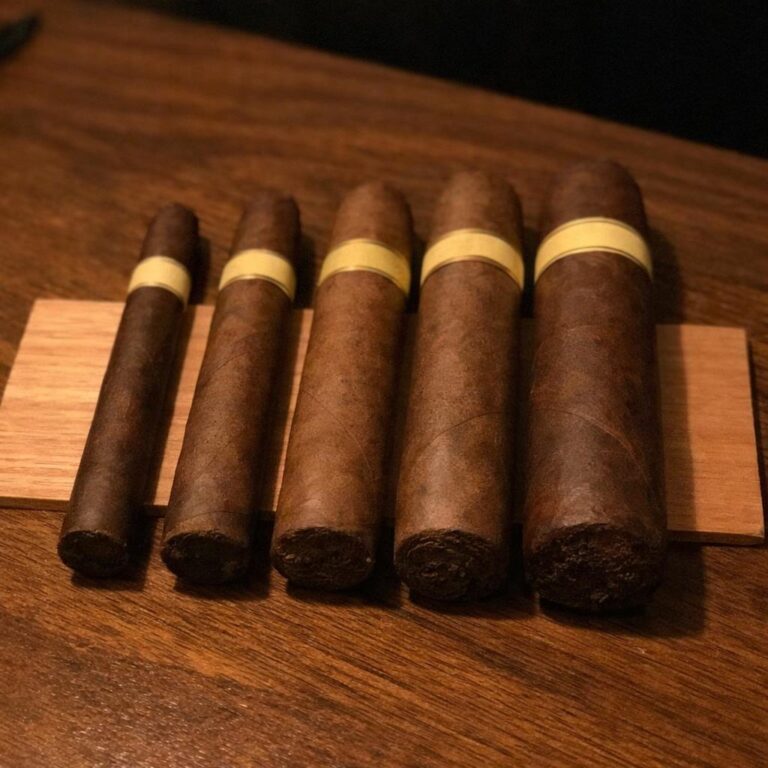
Ring gauge matters next. The thin end of the range is no trouble, but the fashion for very fat cigars has outrun some older cutters, and a 60-ring or larger cigar will not fit through a small guillotine at all. If you smoke the big ones, own a cutter built for them. A punch sidesteps the problem, since it ignores the cigar’s diameter entirely and opens only the centre, which is part of why a small punch on a key-ring has saved many a fat cigar in a bar that only stocked a narrow cutter.
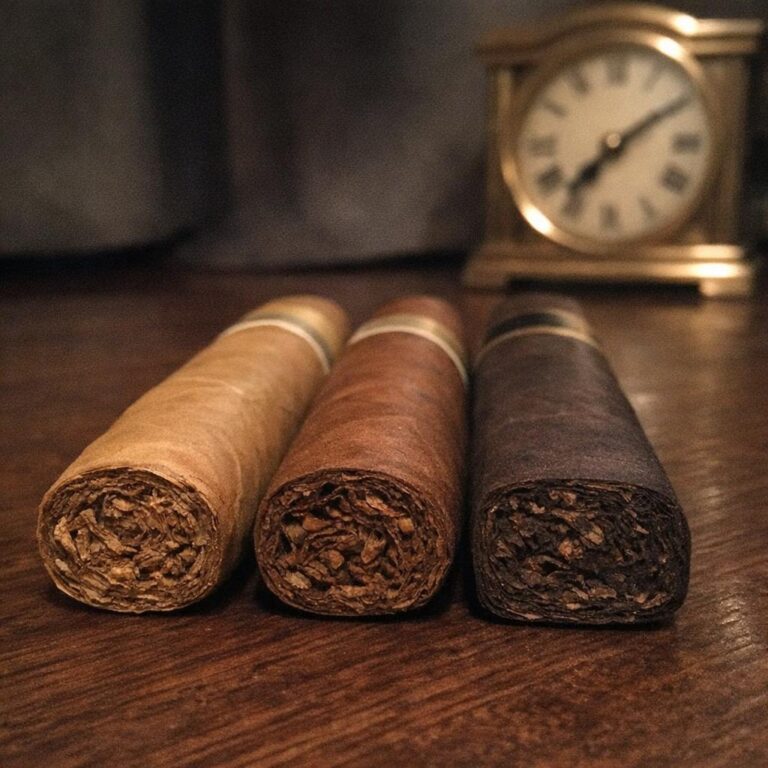
Wrapper matters less to the cut than shape or size, though it is not nothing. The cut is the one moment you ask the wrapper to take a clean blow, and a thin or delicate leaf is the least forgiving of a clumsy one. That is the quiet argument for a double guillotine on a cigar you care about: with two blades closing from each side at once, the wrapper is pressed evenly and far less likely to drag and tear than it is under a single blade or a tired one. The finer the cigar, the more that small margin earns its keep.
The torpedo deserves its own note, because it is the cigar most often murdered at the first step. Cut a tapered head conservatively. Take only the very tip with a straight cutter, then draw on the cold cigar and see how the air moves. If it is tight, take a little more and test again. The point is engineered to funnel smoke onto the palate, and that is a pleasure worth protecting; cut too much off in one go and you lose the taper, fill your mouth with loose filler, and risk the wrapper letting go. As a worked example, take the Cuban Montecristo No. 2, a piramide of six and one-eighth inches by a 52 ring. There is no punching a No. 2. You take the tip with a guillotine, a few millimetres at most, and you let the draw tell you whether to take any more. Nine times in ten, it does not need it.
The Mistakes That Ruin a Draw
Most ruined cigars are ruined in the same few ways, and every one of them is avoidable once you have seen it named.
The first and worst is cutting past the shoulder. It is the beginner’s instinct to take a confident slice and end up a quarter-inch down the body, and it is the surest way to watch a wrapper unwind. Find the shoulder, cut above it, and resist the urge to take more than the dome.
The second is a dull blade. A sharp cutter parts the wrapper; a blunt one drags and crushes it, leaving a frayed, flattened head that draws poorly and looks worse. Cutters are not lifetime tools by default. Keep them sharp, keep the channel clear of old tobacco, and replace the cheap ones when they tire.
The third is cutting too little, which is the timid cousin of the first mistake. A nick in the cap is not an opening; it is a tight, hot, frustrating draw that no amount of puffing will fix. If a cigar draws hard from the first, the cut is the first suspect, and a touch more off the head often rescues it.
The fourth is using the wrong cut for the shape, which almost always means trying to punch a torpedo. The point will not take it, and forcing the issue tears the head. Match the tool to the head before you reach for it.
The last two are the old methods, and they earn their retirement. Biting the end off leaves you unable to see what you are doing, working with teeth nowhere near as keen as a blade, and holding a wad of wet tobacco for your trouble. Piercing the head with a nail or a lance is worse than it looks: the narrow tunnel it bores burns hot, draws unevenly because it never opens the full face of the filler, and concentrates tar at the single small hole, sending more of it to your mouth. Both look like shortcuts. Both cost you the cigar.
Avoidable, once named
Six Ways to Ruin a Cut
1.Cutting past the shoulder. Take only the dome; go lower and the wrapper unravels.
2.A dull blade. Sharp parts the leaf, blunt drags and crushes it. Keep it keen.
3.Cutting too little. A nick is a tight, hot draw. Take a touch more off the head.
4.The wrong cut for the shape. A punch will not open a torpedo; match the tool to the head.
5.Biting the end. You cannot see, your teeth are not a blade, and you are left chewing tobacco.
6.Piercing the head. The narrow tunnel burns hot, draws unevenly, and concentrates tar.
What I Reach For
Having laid out the case for all three, I should be honest about which one I actually use, since a guide that refuses to take a side is no use to anyone deciding what to put in a pocket.
For most cigars, on most evenings, I reach for a straight cut from a sharp double guillotine. My reasons are not romantic. It is the most forgiving cut to make well, the two blades closing from both sides to spare the wrapper the drag a single blade inflicts on an unsteady hand. It fits every shape worth smoking. And it gives the truest reading of a blend, because the full, cool draw of a straight cut hides nothing: if a cigar is going to show you its cedar and its pepper and its long sweet finish, an open face is how it does it. When the whole point of the evening is to taste what the blender built, I want the draw out of the way, and the straight cut gets out of the way. The one lesson I learned the hard way was to carry a cutter wide enough for the cigar: a 60-ring Maduro and a slim travel guillotine make a standoff the guillotine loses, usually by crushing the head, and I have left more than one fat cigar half-opened in a hotel bar for exactly that reason.
That is preference, not law, and the other two earn their place in the drawer. A punch on a key-ring is the cut I travel with, small and unloseable and impossible to misuse on the rounded head of a robusto in an unfamiliar lounge. And on a cold, clear morning, with a medium-bodied cigar and a strong coffee, the slightly fuller, warmer draw of a V-cut can be the right kind of company. The cigar, the hour, and the mood all get a vote. The only firm rule is the one about the shoulder, and the only real error is the cut made in fear. Everything past that is yours to settle, and settling it for yourself is part of the pleasure.
A cutter’s only real job is to get out of the cigar’s way.
The Cut Is Part of the Record
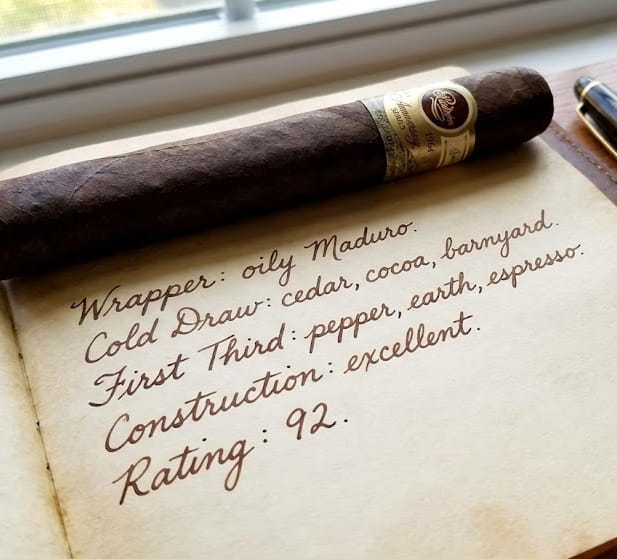
It is easy to think of the cut as something that happens before the cigar, a bit of throat-clearing that ends the moment the smoke begins. It is closer to the truth to call it the first line of the review. How a cigar draws is one of the things you are judging when you judge a cigar, and the draw begins with the cut. A robusto that drew beautifully on a straight cut and a sister robusto that ran hot on a too-deep punch are telling you something, and the something is worth remembering the next time the same blend is in front of you. A draw also shifts as the cigar burns, and the cut decides where it starts: open the head too far and the first third races and overheats before the cigar has found its feet; open it too little and you spend that same first third fighting for smoke instead of reading the cedar and the spice. Either way, the cut has shaped the first of the three readings before you have written a word.
That is the quiet argument for writing it down. Memory rounds a cigar off; it keeps the broad verdict and loses the detail, and the detail is exactly what would have saved you a poor draw a year later. The cut you made, how the cigar took it, whether you would cut it the same way again: these belong in the record beside the flavour notes and the rest dates, and together they are what turn a stack of half-remembered evenings into something you can actually learn from.
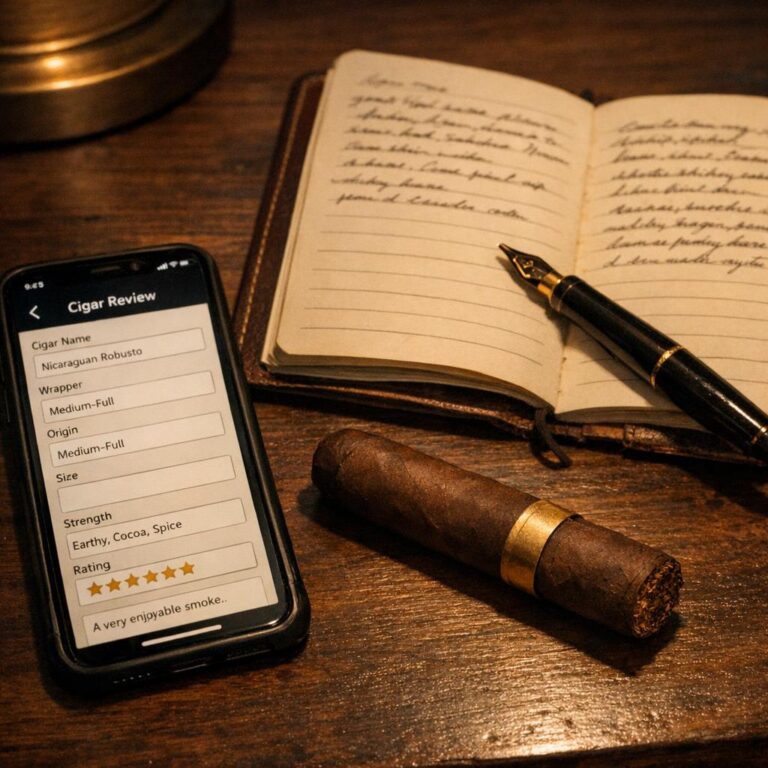
In Cigarro, that is where the cut lives. When you log a cigar you can note how you opened it and how it drew, so the entry holds not just what the cigar tasted of but how you got there. Set this June’s note beside last December’s on the same blend and you can see whether the punch really did run hot, or whether the straight cut was the right call all along. The first attention a cigar deserves is a clean cut. The second is to remember what the cut taught you. The review by thirds at the heart of the Cigarro Method is built to hold both.
The order
How to Cut a Cigar, in Order
Step 1.Find the shoulder. The curve where the cap meets the body is the line you cut at, never below.
Step 2.Choose the cut. Straight for any cigar and the truest draw, punch for a flat head on the go, V for a fuller draw on a rounded head.
Step 3.Seat the cigar. Rest the head against the far side of the cutter and close the blades until they touch the wrapper.
Step 4.Cut once, boldly. One clean, even stroke, like a surgeon. Hesitation tears the wrapper.
Step 5.Test the draw. Pull on the cold cigar before lighting. If it is tight, take a touch more; if it draws freely, light it.
On Cutting a Cigar
Where exactly do I cut a cigar?
At the shoulder, the curve where the rounded cap meets the straight body, or a hair above it. That takes off about a dime’s width of cap, roughly one-sixteenth of an inch. Cut below the shoulder and the wrapper begins to unravel.
Straight, V, or punch, which cut is best?
There is no single best; it is a matter of draw and shape. A straight cut gives the coolest, easiest draw and suits any cigar. A punch concentrates the smoke but works only on a flat head, and a V-cut sits between the two.
How do I cut a torpedo or other pointed cigar?
With a straight cutter or scissors, never a punch, since there is no flat face to bore. Take only the very tip, draw on the cold cigar to test the air, and cut a little more if it is tight. Cutting too much costs you the taper and risks the wrapper.
How much of the cigar should I cut off?
As little as opens the draw. Aim for the dome of the cap, about a dime’s width, and no further than the shoulder. You can always take a touch more; you can never put any back.
Can I cut a cigar without a cutter?
You can, though none of the old methods flatter the cigar. A sharp knife works in a steady hand. Biting leaves a wad of tobacco and a ragged head, and piercing the cap bores a hot, narrow tunnel. A modest guillotine is worth owning.
A Clean Beginning
For the smallest and first of all the acts a cigar asks of you, the cut carries a surprising weight. It decides, in a single stroke, whether the next hour draws cool and easy or tight and hot, whether the wrapper holds or lets go, whether you taste the blend the maker intended or a hot, mean ghost of it. Thirty seconds of attention buys the whole hour that follows.
And then, done well, it disappears. The mark of a good cut is that you never think about it again, that the cigar simply draws as it should and lets you get on with the evening. That is the aim: not a flourish, not a party trick, but a clean opening made once, confidently, in the right place, and then forgotten. Find the shoulder, choose your tool, cut like you mean it, and let the cigar do the rest.