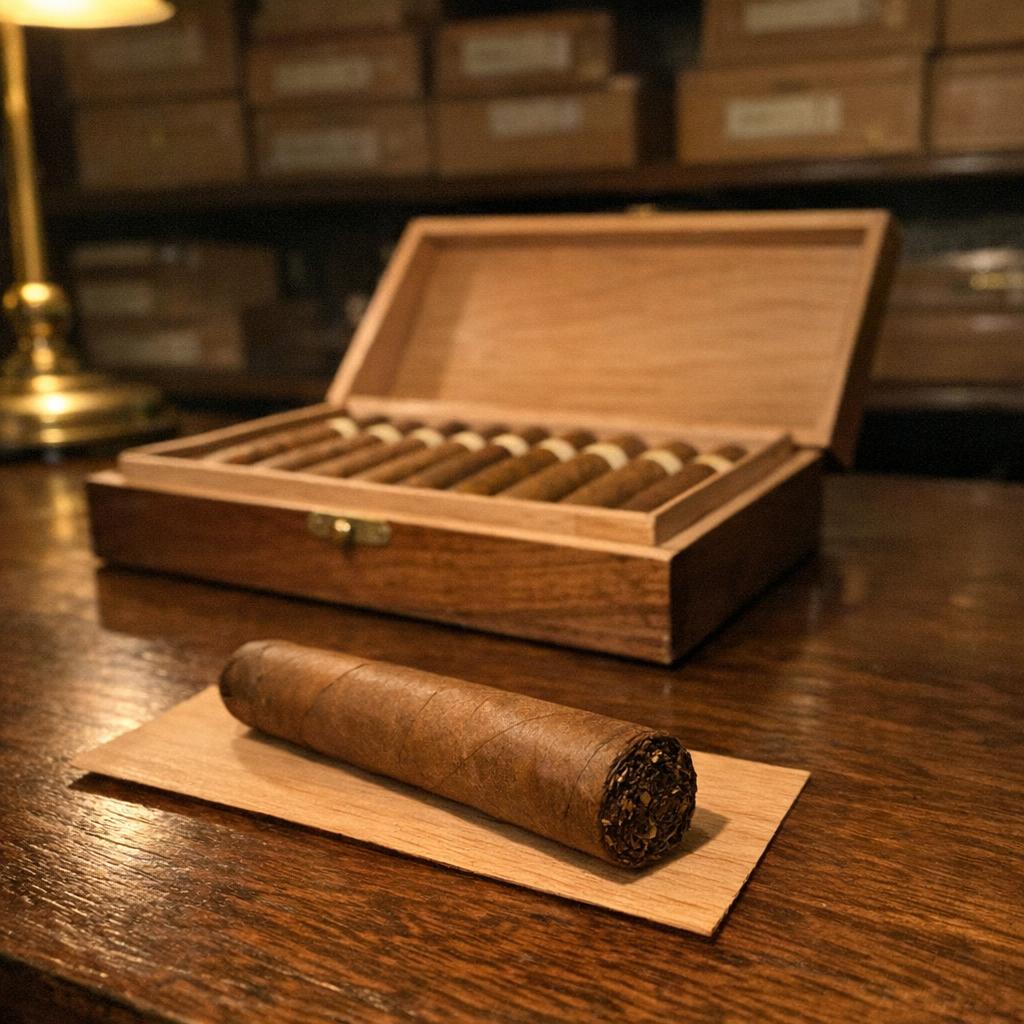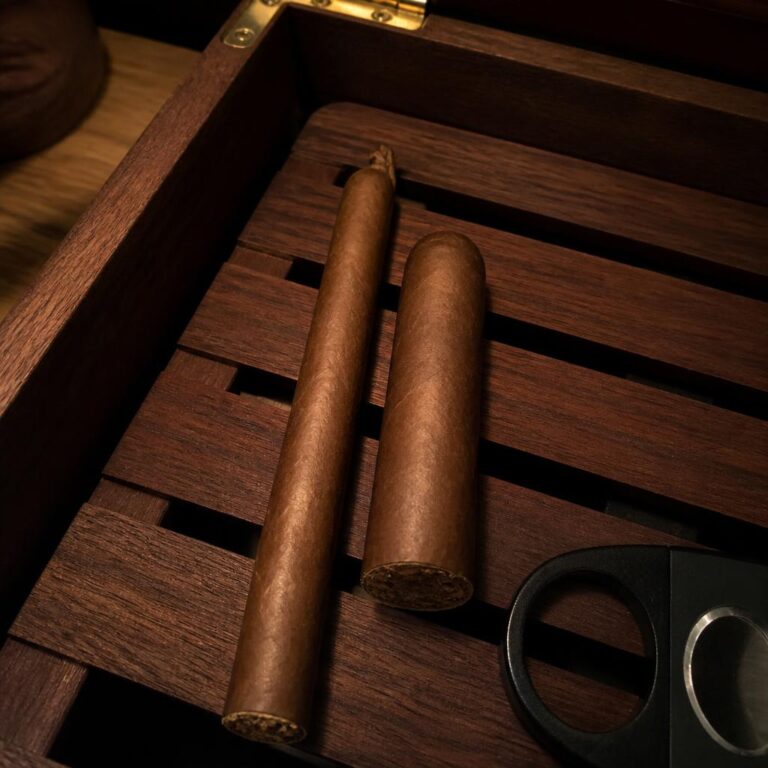
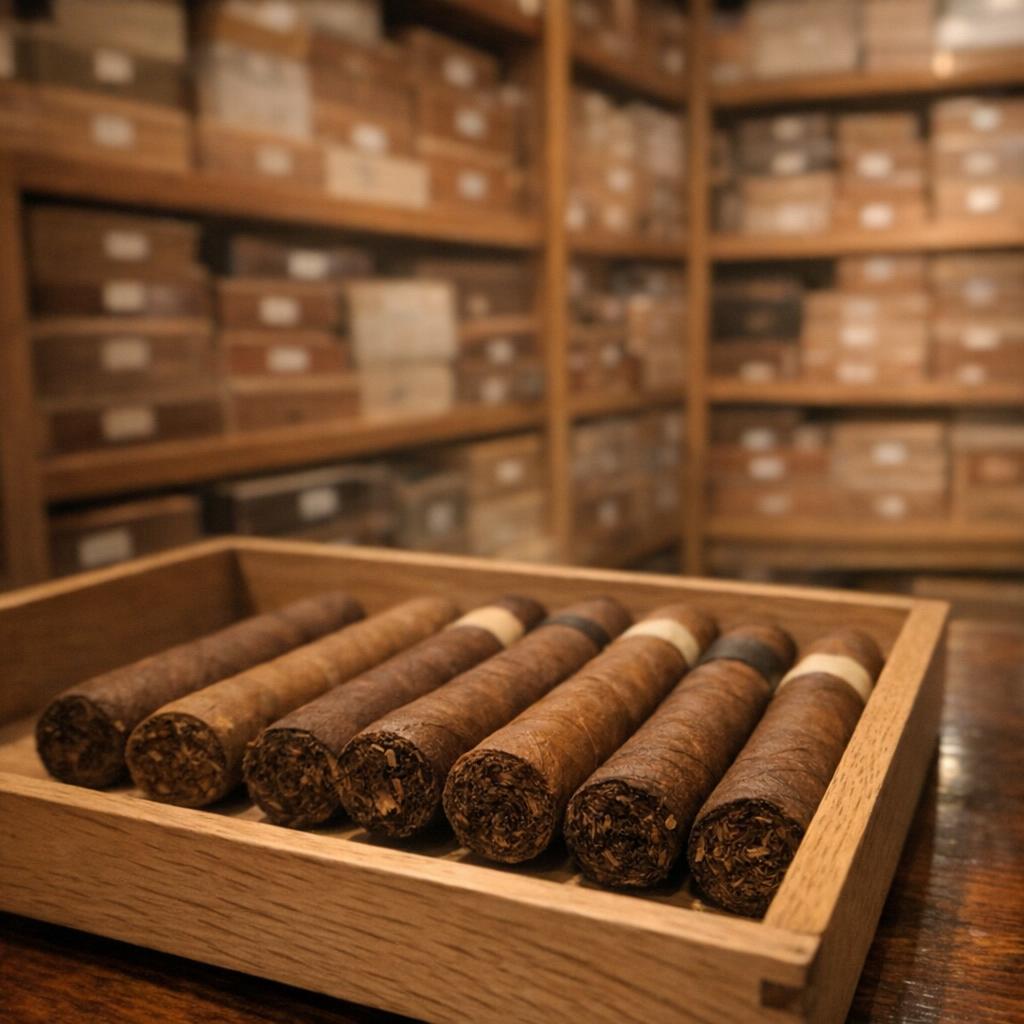
Every good tobacconist keeps a room that is designed, politely, to overwhelm you. Cedar from floor to ceiling, boxes stacked ten deep, bands in every colour a printer can manage, and somewhere behind you a voice asking if you need a hand. Choosing a cigar is the craft of matching a leaf to an occasion, and it is a craft, which means it can be learned.
Two words before we begin. A cigar’s wrapper is its outermost leaf and the first honest signal you can read from the shelf. A vitola is a cigar’s format, its length and its ring gauge, and it sets the clock on your evening before you ever strike a match. That is the glossary dealt with. Back to the room.
Most advice on the subject either drowns you in vocabulary or hands you a list of ten cigars to memorise. Neither survives contact with an actual counter. What you want instead is a framework: four questions you answer before you walk in, a few plain signals you can read once you are there, and the confidence to let the person behind the counter do the job they are usually rather good at.
That is what follows. The four questions, the three words the trade uses precisely, how to read a shelf by wrapper shade without falling for the oldest myth in the room, how to match a vitola to the hour you actually have, what you may politely check with your hands, what to ask, and how two very different smokers walk out of the same shop with two very different and equally correct cigars. It ends, as these things should, with a record.
In this guide
How to Choose a Cigar
Four Questions Before the Shop
The work of choosing well happens before you touch a single cigar. Four questions, answered candidly on the drive over, will do more for you than any encyclopaedia of brands, because they shrink the wall of boxes to a shelf and the shelf to a handful.
First, the occasion. A cigar for a quiet Tuesday on the back step is not a cigar for a friend’s retirement, and neither is the cigar you hand to a guest who has never smoked one. Celebration argues for ceremony, and ceremony at a counter means something you can point to: a larger or more formal vitola, a storied marque, the box-worthy stick you would not open on an ordinary Tuesday. Company argues for something forgiving, since you will be talking, not concentrating. Solitude is where the demanding cigars belong, the ones that reward attention and sulk without it.
Second, the time. Not the time you would like to have, the time you actually have. A cigar wants to be finished in one sitting, and the size you buy is a promise about the next hour or two of your life. We will put numbers to this shortly, but the discipline starts here: decide the window first and let the window veto the format. A half-smoked cigar abandoned at the fence line helps nobody.
Third, the palate. You know more than you think. If your coffee is black and your chocolate is dark, the maduro end of the shelf will likely make sense to you. If you take cream, if you would rather a biscuit than a bitter, the pale gold wrappers are your country. And if you are new enough that none of this maps yet, that is an answer too: start mild, start unhurried, and let your preferences introduce themselves one cigar at a time.
Fourth, the budget. Say the number to yourself before the room can embarrass you out of it. You will notice I decline to print a figure here, and the refusal is deliberate: the useful anchor is relative, the shop’s everyday singles rather than its glass case, and every room sets its own shelves. There are superb cigars at single-stick money and forgettable ones at trophy money, and the correlation between price and pleasure is far looser than the price tags imply. A tobacconist worth their cedar will take a budget cheerfully and work inside it. The ones who sniff at it have told you where the door is.
Occasion, time, palate, budget. Four answers, held loosely. They are not rules but coordinates, and coordinates are precisely what a counter conversation runs on.
Hold them loosely
The Four Questions
- Occasion. Ceremony, company, or solitude; each points at a different shelf.
- Time. The window you actually have vetoes the format, not the other way round.
- Palate. Black coffee and dark chocolate point to maduro; cream and biscuits point to pale gold.
- Budget. Say the number first; a good shop works happily inside it.
Strength, Body and Flavour
Three words the rest of the world uses interchangeably do three precise jobs in the trade, and learning to keep them apart is the single fastest upgrade to your shop vocabulary.
Strength is the nicotine. It is the physical effect of the cigar, the thing you feel in your chest and your knees rather than taste on your tongue, and it runs from gentle to formidable. Strength comes principally from where the leaf grew on the plant: ligero, the sun-soaked leaf from the top primings, carries the horsepower, and blenders dose it into the filler the way a chef doses chilli.
Body is the weight of the smoke itself. Think of the difference between skimmed milk and cream: same category, different heft on the palate. A full-bodied cigar is the cream, filling the mouth, coating it, lingering. A light-bodied cigar is the skimmed pour, passing through cleanly and sitting lightly. Body is about texture and presence, not effect.
Flavour is what you actually taste and smell: the cedar, the cocoa, the pepper, the toast, the leather, the espresso. It is the vocabulary of tasting notes, and it is the reason any of us bother.
The point of keeping the three apart is that they travel independently. A cigar can be mild in strength and rich in flavour; the great Cameroon-wrapped Dominicans have been proving that for decades. A cigar can be dark, sweet, and gentle. And nothing in a pale wrapper forbids a filler full of ligero, since strength lives where you cannot see it. When you can say to a tobacconist, quite casually, that you are after something medium in strength but full in flavour, you have given them coordinates instead of adjectives, and you will watch the quality of their suggestions improve on the spot.
For a newer smoker the counsel is old and sound: keep the strength modest while your palate learns the flavours. Strength is the dimension that punishes overreach. Flavour never hurt anyone.
Keep them apart
Three Words, Three Jobs
| The word | What it means | What to say at the counter |
|---|---|---|
| Strength | The nicotine; the physical effect you feel rather than taste, carried principally by ligero filler | “Nothing that will knock me over” or “medium strength, please” |
| Body | The weight and texture of the smoke on the palate, skimmed milk to cream | “Light and easy” or “something that fills the mouth” |
| Flavour | What you actually taste and smell: cedar, cocoa, pepper, toast | “I lean toward coffee and dark chocolate” |
Reading the Shelf
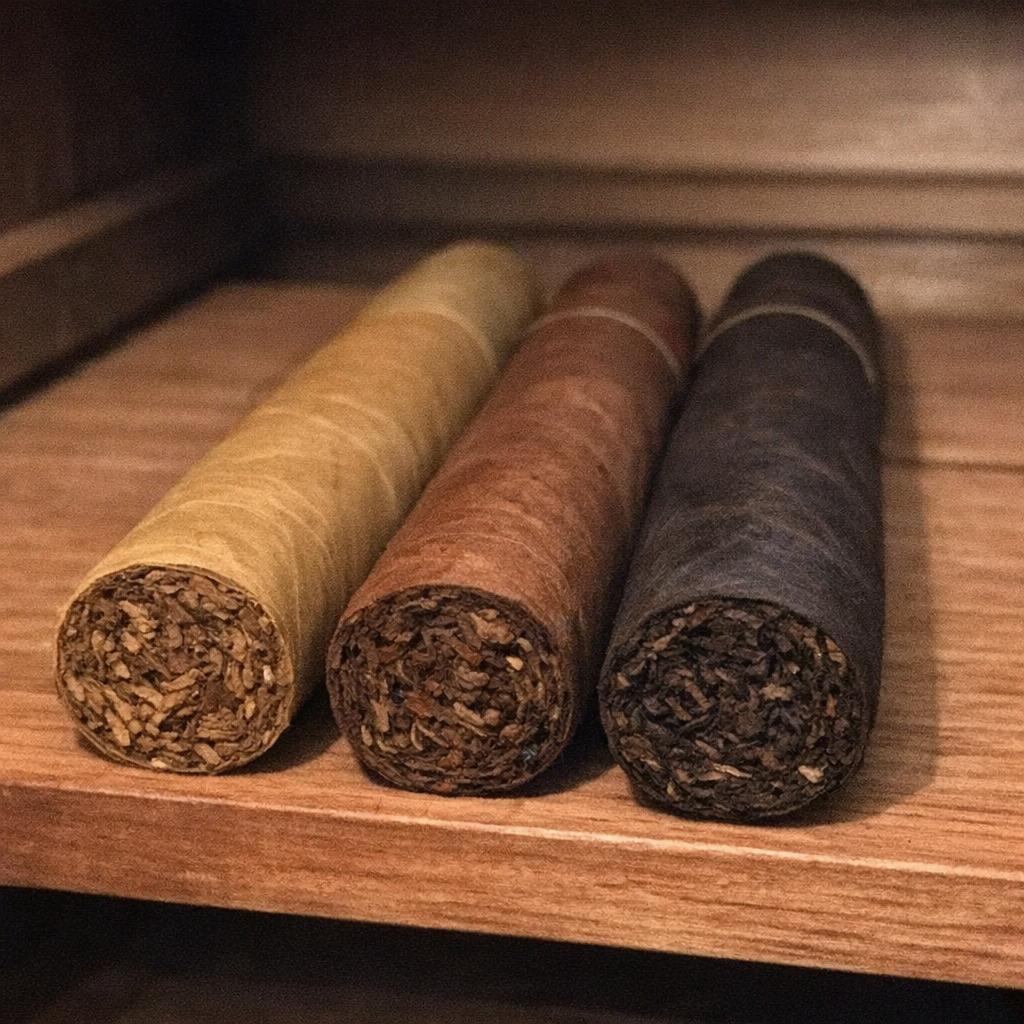
Stand back from the shelf and the first thing you can read, before a single band means anything, is colour. Wrapper shade is the shop’s first filter, provided you know what it does and does not promise. The bands come into their own once you can decode what a cigar band tells you.
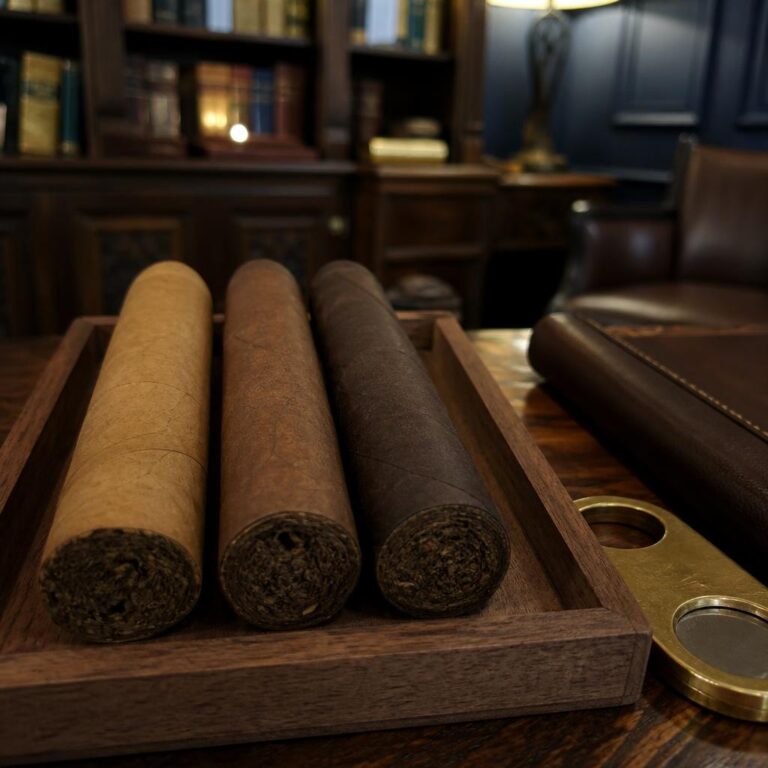
At the pale end sit the Connecticut Shade wrappers, golden to light brown, grown under cloth to keep them thin and mild. They tend toward cream, cedar, almond, a gentle sweetness, and they are where most smokers sensibly begin. In the middle live the Habano and Corojo leaves, reddish brown and more assertive, where pepper and earth start to carry the tune. At the dark end are the maduros, fermented longer and warmer until the leaf turns the colour of espresso and its sugars come forward: cocoa, coffee, molasses, a natural sweetness that surprises people expecting a bruiser.
Which brings us to the oldest myth in the room: that dark means strong. It does not. A maduro’s darkness comes from extended fermentation, and that process mellows the leaf while deepening its flavour. The strength of a cigar lives in the filler blend, in the ligero, where you cannot see it. The shelf will happily prove the point in both directions. Macanudo‘s Café line wears a golden Connecticut wrapper and is famously mild; Oliva’s Serie V wears a mid-brown Sumatra-seed wrapper, nowhere near black, and is emphatically full-bodied, its filler stacked with Jalapa ligero. Colour forecasts the flavour weather. It says almost nothing about the wind speed.
Read, then verify
Shade Against Strength
| Shade | Typical flavour country | What it says about strength |
|---|---|---|
| Pale gold (Connecticut Shade, grown under cloth) | Cream, cedar, almond, a gentle sweetness | Nothing; check the filler |
| Reddish brown (Habano, Corojo) | Pepper and earth carry the tune | Nothing; check the filler |
| Espresso-dark (Maduro, long-fermented) | Cocoa, coffee, molasses, natural sweetness | Nothing; strength lives in the ligero, not the colour |
So read the shelf like this: shade tells you roughly what the cigar will taste like, and the tobacconist tells you how hard it will hit. Pick your colour country first by palate, then ask about strength inside it. Two moves, and the wall of boxes is suddenly a district instead of a continent.
A note on surface while you are looking. A healthy wrapper has a soft sheen to it, a suppleness you can see, with seams laid so flat you have to hunt for them. Dry, cracked, or lifting wrapper leaf is the shop’s problem showing, and it is allowed to lower your opinion of the whole room.
Vitola by the Clock
A vitola, the combination of length and ring gauge, is really a clock face. Buy a format, and you have bought a duration. The figures are approximate, since draw, construction, and your own pace all move them, but the trade’s rough arithmetic is dependable enough to plan an evening around: a corona gives you somewhere around forty minutes, a robusto forty-five to fifty, and a proper 7 x 49 Churchill an hour and often well beyond it.
The rough arithmetic
Vitola Against the Clock
| Vitola | Rough clock | The window it fits |
|---|---|---|
| Corona | Around 40 minutes | The fixed forty minutes before dinner |
| Robusto | 45 to 50 minutes | The unhurried hour |
| Churchill (7 x 49) | An hour and often well beyond | The open evening |
| Short perfecto (Hemingway Short Story, 4 x 49) | About 45 minutes | The complete short arc |
Figures are approximate; draw, construction, and pace all move them.
Two physical rules sit underneath the numbers. Thinner cigars burn hotter and faster than thicker ones, which burn cooler and slower. And length buys the smoke time to cool before it reaches you, which is part of why long, slender formats feel so composed. None of this is trivia; it is why the same blend can read differently across its vitolas, and why the format you pick is a real decision rather than a matter of shelf aesthetics.
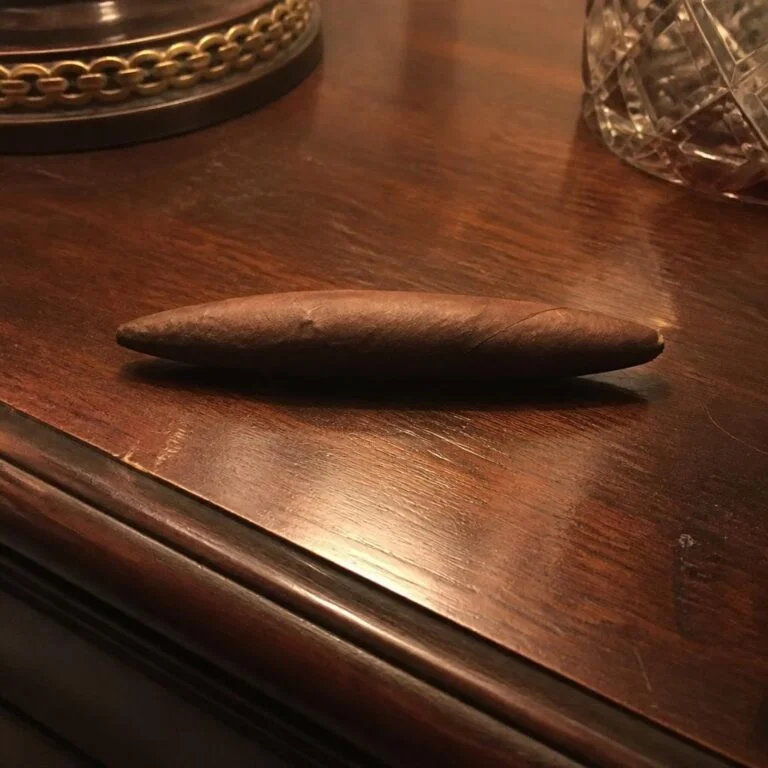
The discipline is to let your actual window choose. Forty minutes before dinner is a corona or something smaller, and there is no shame anywhere in small. The petit corona and the short perfecto are where some of the trade’s best blending lives, precisely because they have to say everything quickly. Fuente’s Hemingway Short Story, a 4 x 49 perfecto with a tapered foot that lights almost eagerly, delivers a complete arc of cedar and sweet toast in about three quarters of an hour, standing proof that a short cigar can be a complete one.
What you should not do is start what you cannot finish. A cigar does not pause well. Set down for an hour, it goes out, goes stale on the tongue, and relights into a flatter version of itself. Rushing is the other failure: pushed hard, any cigar overheats and turns bitter, and the last third, which is where the whole performance has been heading, arrives scorched. The clock question from the first section was never really about scheduling. It is about giving the cigar the conditions under which it can actually be good.
Ring gauge, incidentally, is also a comfort question. A 60-ring cigar is a lot of cigar to hold in the mouth, and plenty of experienced smokers prefer the classic 42 to 50 range. Ignore fashion in both directions and pick what sits well.
Checks in Hand
Everything until now you could do from the doorway. At some point a cigar ends up in your hand, and there is a short, polite inspection that tells you most of what touch can tell you.
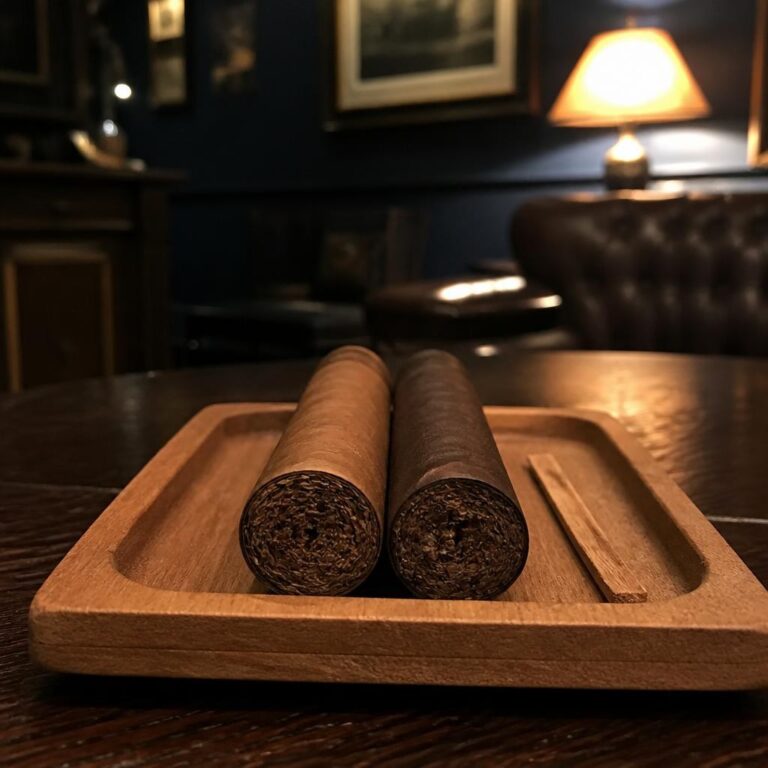
Look first, and look at the foot, the open end. The bunch should be even: a tidy mosaic of leaf ends filling the whole circle, no gaping channels, no dense dark clot in the middle. Then the wrapper along its length. You are hoping for that soft sheen, flat seams, an intact cap at the head, and no cracks. Small cosmetic freckles and water spots are the leaf’s biography and change nothing about the smoke. Tears, lifted seams, and dryness are different: they are storage sins, and they follow the cigar home.
Then, once, gently, the squeeze. Held between thumb and two fingers around its middle, a well-made cigar gives slightly and springs back, like the back of your hand rather than the palm. What you are checking against are the two construction failures touch can find: soft valleys, which are underfilled spots that will burn hot and fast, and hard knots, which are overstuffed passages that will fight the draw. Run the fingers slowly along the length once and you have learned what there is to learn.
Here is the part worth underlining, the one the good guides say and the shop floor forgets: in a shop, restraint is the better manners. Every squeeze compresses someone else’s future cigar, and a box that has been worked over by a day of thumbs is a small tragedy for whoever buys from it. Handle what you intend to buy. If something concerns you about a cigar’s condition, say so, and let the tobacconist check it; a good one would rather inspect it with you than sell you a doubt. And leave the theatrics at home. Rolling a cigar beside your ear to listen to it tells the room a great deal about you and nothing whatsoever about the cigar.
The plain summary is that in a well-kept shop, the checks will almost always come back clean, which is rather the point. You are not auditing the tobacconist. You are learning the feel of right, so that the one time something is wrong, your hand knows before you do.
Once, gently
The Short Inspection
- The foot. An even mosaic of leaf ends, no gaping channels, no dense clot in the centre.
- The wrapper. Soft sheen, flat seams, intact cap, no cracks; freckles are biography, tears and dryness are storage sins.
- The squeeze. Once, gently, around the middle; slight give and a spring back. Soft valleys burn hot, hard knots fight the draw.
- The manners. Handle only what you intend to buy, and let the tobacconist inspect anything that concerns you.
What to Ask the Tobacconist
The best instrument in any cigar shop is the person behind the counter, and most people never quite work out how to play it. The trick is the same one that works with sommeliers and booksellers: give coordinates, not a blank cheque.
The blank cheque is the question they hear forty times a day: what is good. In a shop worth your custom, most of the shelf is there because somebody meant it, which is precisely why the question gets you nowhere. The coordinates version hands over your four answers from the start of this guide in one breath. I have about forty-five minutes, I lean toward coffee and dark chocolate, I want nothing that will knock me over, and I would like to stay at single-stick money: now the tobacconist has a real brief, and you will see them physically turn toward a specific corner of the room. That turn is the framework working.
A few questions earn better answers than average. Asking what is smoking well right now respects the truth that cigars are agricultural and shops have runs of form. Asking what they are smoking themselves at the moment gets you real enthusiasm rather than a rehearsed one. Asking what deserves more attention than it gets flushes out the shelf’s quiet excellence, the boxes that sit beside the famous names at half the fame.
At the counter
Three Questions That Earn Better Answers
| What is smoking well right now? Cigars are agricultural and shops have runs of form. |
| What are you smoking yourself at the moment? Buys real enthusiasm rather than a rehearsed answer. |
| What deserves more attention than it gets? Flushes out the shelf’s quiet excellence. |
Listen to the shape of what comes back. A good tobacconist answers a question with two or three of their own, about your time, your palate, your evening. They are running the same framework from the other side of the counter, and when you feel that happening you are in trustworthy hands. Be warier of the counter that answers every enquiry by reaching for the most expensive box in the case. That is not expertise; that is a commission with a lighter.
One last courtesy. If the recommendation lands, say so on your next visit. Shops remember the customers who report back, and the second conversation is always better than the first, because now you are two people building a file rather than strangers starting over.
The Counter, Worked
Frameworks earn their keep in the field, so let me send two smokers into the same shop on the same Saturday and let the four questions do the work.
The framework
How to Choose a Cigar, in Order
- Before you enter, answer the four questions: occasion, time window, palate, budget.
- Translate palate into trade coordinates: target strength (modest while learning), body, and the flavours you lean toward.
- Pick your colour country by shade: pale gold for cream and cedar, reddish brown for pepper and earth, maduro for cocoa and coffee.
- Let the window choose the vitola: about 40 minutes for a corona, 45 to 50 for a robusto, an hour or more for a Churchill.
- Give the tobacconist the coordinates in one breath and listen for questions coming back; that is the sign of trustworthy hands.
- Inspect the cigar you intend to buy: even foot, clean wrapper, flat seams, one gentle squeeze that springs back.
- Smoke it inside the window you named, then record what you made of it while it is true.
The first is new to all of it. The occasion is a free afternoon and a book; the window is a genuinely unhurried hour; the palate takes coffee with cream and would choose the biscuit over the espresso; the budget is single-stick money, held to firmly. Run the framework and it answers almost by itself: mild strength while the palate learns, lighter body, the pale gold end of the shelf, a corona or robusto for the hour. At the counter that brief lands on the mild Connecticut school, and there is a reason the same names keep being handed across it. A Macanudo Café is the textbook case: a twice-aged Connecticut Shade wrapper over a San Andrés binder and Dominican and Mexican fillers, made in the Dominican Republic, and mild in exactly the way a first unhurried hour wants. The names a good shop offers alongside it, a Romeo y Julieta 1875, an Ashton Classic, a Fuente Chateau, are all answering the same brief with different accents. Our newcomer takes the Macanudo and the afternoon goes well, which is the entire object of the exercise.
The second smoker has years on the clock and three quarters of an hour before a dinner. The occasion is a pause, not a ceremony; the window is short and fixed; the palate is educated and leans sweet-and-toasty; the budget is relaxed but the time is not. The framework closes in fast: a short vitola with a complete arc, flavour-dense, medium at most in strength so the dinner survives it. That brief has a famous answer. The Hemingway Short Story, 4 x 49, its Cameroon wrapper over Dominican tobaccos giving cedar and sweet toast from the first minutes off that tapered foot, fits the window as if measured for it.
Two people, one shop, two different answers in wrapper, format, and occasion, and no ranking anywhere in sight. That is what choosing well looks like. The wall of boxes never had a correct answer hidden in it. It had your answer, and the framework is simply how you find it on the first try instead of the fortieth.
Building the Shortlist
The framework gets you out of the shop with a good cigar today. The record is how you get out with a better one next month, because the four questions improve with every answer you keep.
Memory will not do this job. Memory is a charming, unreliable narrator that remembers the patio and the company and loses the cigar entirely. Six weeks on, the stick that impressed you is a colour and a vague sense of approval, which is no brief at all. The fix is the same one this house recommends for everything: write it down while it is true. What you smoked, when, what the occasion was, and what you actually made of it, ideally read in thirds the way the Cigarro Method teaches, since a cigar that opens beautifully and dies in the final third is a fact worth recording precisely.
Do this for a season and something rather powerful happens: the shortlist writes itself. Five or six cigars keep earning their place, and your notes start telling you why in your own words: this one for the short evening, this one for company, this one when the palate wants pepper, and this one for no reason your notes can defend, because you love it beyond argument. That list, plus the occasions it maps to, is the whole game. The wall of boxes stops being a test you might fail and becomes a library you have already partly read.
This is, not incidentally, what Cigarro is for. The humidor log holds what you own and where it came from; each smoked cigar takes its review by thirds; and the record of what you actually reached for, as opposed to what you meant to reach for, accumulates into the most honest tasting profile you will ever own. Bring that to a counter, in the app or simply in the habits it builds, and the conversation changes register entirely. You are no longer asking a stranger what is good. You are telling a colleague what works, and asking what is next.
The best chooser in any cigar shop is not the one with the deepest trivia. It is the one with the best records.
From the counter
Questions on Choosing a Cigar
What is a good first cigar for a beginner?
Start at the pale gold end of the shelf with the mild Connecticut school. A Macanudo Café is the textbook case, and a Romeo y Julieta 1875, an Ashton Classic, or a Fuente Chateau answers the same brief with a different accent. Keep the strength modest while your palate learns the flavours.
Are darker cigars stronger?
No, and it is the oldest myth in the room. A maduro’s darkness comes from longer, warmer fermentation, which mellows the leaf and brings its sugars forward. Strength lives in the filler blend, in the ligero, where you cannot see it.
How long does it take to smoke a cigar?
Roughly, a corona gives you forty minutes, a robusto forty-five to fifty, and a 7 x 49 Churchill an hour and often more. Draw, construction, and your own pace all move the figures. Buy the format that fits the window you actually have.
What is the difference between strength and body in a cigar?
Strength is the nicotine, the physical effect you feel rather than taste. Body is the weight of the smoke on the palate, skimmed milk against cream. Flavour is what you actually taste and smell, and the three travel independently.
How do I check a cigar's quality before buying it?
Look at the foot for an even bunch with no channels or dense knots, then check the wrapper for a soft sheen, flat seams, and no cracks. One gentle squeeze around the middle should give slightly and spring back. In a shop, handle only what you intend to buy, and let the tobacconist inspect anything that concerns you.
Do thinner cigars smoke differently from thicker ones?
They do. Thinner cigars burn hotter and faster; thicker ones burn cooler and slower, and extra length gives the smoke time to cool before it reaches you. That is why one blend can read differently across its vitolas.
The Fifth Question
There is a version of this hobby that treats the shop as an examination hall, every counter conversation a viva, every purchase a verdict on your taste. Decline it. The wall of cigars is not testing you. It is a few hundred answers waiting for a well-put question, and you now know the four parts the question comes in.
So start anywhere. Ask plainly, buy modestly, smoke unhurriedly, and write down what you find. The framework forgives every error except not noticing, and in a year the shelf that once overwhelmed you will read like a map of places you have been. The cigar you choose matters less than you fear. That you chose it, on purpose, for reasons you could name, matters more than you know.
Which leaves the fifth question, the one the heading above has been holding. You answer it afterwards, once the final third has said its piece: what did I make of it. That answer, written down, is the record; the record becomes the shortlist; and the shortlist is how you walk into the next shop already knowing the way. Cigarro will keep it for you, and a notebook will serve. Either way, answer it every time, and you will find the other four start answering themselves.